

Most dummy ticket mistakes come from treating the document like a cosmetic checklist item. That is the wrong mindset. Embassy officers do not need a pretty PDF. They need travel proof that makes the trip easier to understand.
This guide cuts through the myths that push applicants into avoidable risk: “any ticket is fine,” “dates can be random,” “nobody checks,” and “a flight document fixes everything.” A strong dummy ticket should work with the rest of the file, not cover for weak planning.
Key facts before using a dummy ticket:
- A dummy ticket should reflect a real travel plan, not random placeholder dates.
- A polished PDF is not enough if the booking details are wrong or unverifiable.
- The route should match the visa country, trip purpose and return or onward logic.
- The flight dates should match leave approval, insurance, hotel proof and the application form.
- A dummy ticket supports the file; it does not replace funds, ties, purpose or credibility.
Need a cleaner travel-proof document? Create a dummy ticket with route, date and passenger details aligned before your visa file reaches the counter.
Create Your Dummy TicketIn This Guide
Official-source check: official guidance supports the core idea behind proper dummy ticket use: many applicants should show planned travel without rushing into fixed airfare before approval. A German Schengen tourism checklist asks for confirmed hotel and flight reservation with “no ticket purchase needed,” and the same guidance says flight bookings are not required and applicants should book only after receiving the visa. Another German mission FAQ says a non-binding reservation is enough and recommends not buying fixed tickets before the visa is granted. Sources: German Embassy Schengen tourism checklist and German Embassy visa FAQ.
Myth: “Any Dummy Ticket Is Fine As Long As It Looks Real”
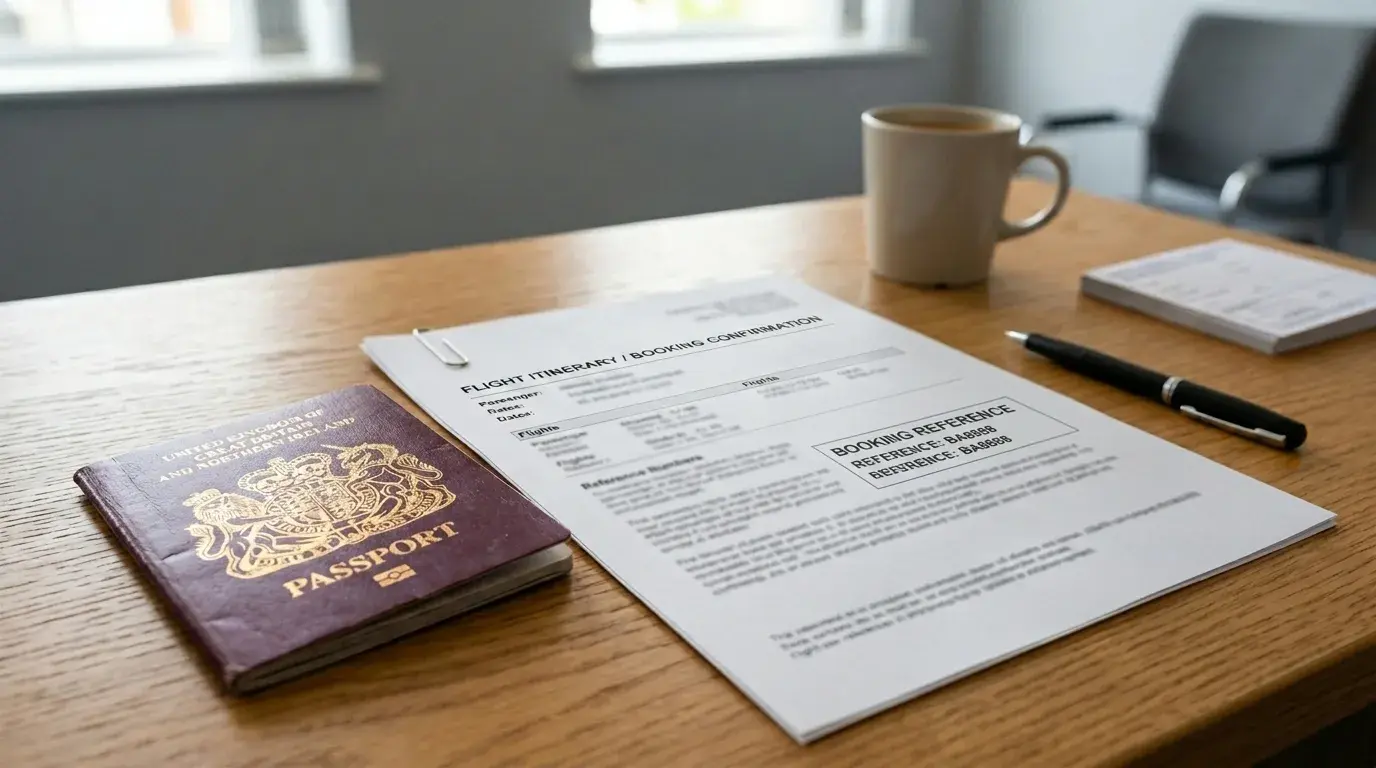
A neat flight PDF can make a file look organized, but appearance is not the same as credibility. A dummy ticket should support the trip you say you are taking. If it only looks like a flight document while the details are wrong, it can damage the application.
Why a polished PDF can still hurt
A proper dummy ticket is a temporary travel-proof document that shows planned flight details without requiring full airfare purchase upfront. The useful part is not the design. The useful part is the alignment: passenger name, route, date, return or onward movement and booking reference should all make sense inside the application.
A tiny spelling issue can create doubt. “Jonathan Miller” and “Johnathan Miller” may look close to a human, but visa files are reviewed through exact identity details. The same risk appears with reversed names, missing middle names, wrong titles, or routes that do not match the destination.
Before submission, check:
- Name spelling matches the passport exactly.
- Route supports the destination and visa purpose.
- Return or onward plan is visible when needed.
- Booking reference or PNR is readable when provided.
- Reservation timing still fits the appointment or upload window.
How officers may read it differently from applicants
Applicants often see the dummy ticket as one checklist item. Officers see it as part of the travel logic. If the application says France but the flight proof points to Italy, the officer has to resolve the contradiction. If the cover letter says ten days but the reservation shows twenty-eight days, the file looks less controlled.
A round-trip dummy ticket does not guarantee approval, but it helps answer a basic question: when does the applicant intend to leave? For short-stay visitor files, that answer matters.
Myth: “I Can Choose Random Dates Now And Fix Them Later”
Flight dates are not harmless placeholders. They influence how the officer reads the trip length, funds, leave approval, insurance and return intention.
Random dates make the travel story weaker
A dummy ticket gives flexibility before buying the final ticket, but the flexibility should follow a real travel plan. If the form asks for a 12-day trip and the reservation shows 24 days, the officer may question which trip is real. If the leave letter ends on the 15th but the return flight is on the 29th, the return story gets weaker.
Event travel has the same problem. If the conference is from September 10 to September 13, arrival after the event or a two-week unexplained stay after it can make the file look careless.
Date mismatches create avoidable questions
Visa files are read as a bundle. A date mismatch may not be fatal by itself, but it can trigger extra scrutiny. The flight proof, hotel proof, invitation, insurance and funds should all point toward the same stay length.
A strong date pattern answers:
- When do you plan to arrive?
- How long do you plan to stay?
- When do you plan to return or leave onward?
- Which document explains the reason for those dates?
Choose dates from the strongest fixed document
Start with the document that controls your trip timing. For tourism, that may be the itinerary and leave approval. For business, it may be the invitation. For family visits, it may be the host letter. For events, it may be the event schedule.
Build the dummy ticket around those fixed points. If plans shift before submission, update the related documents too. Do not fix only the flight PDF while the form, cover letter and hotel dates still say something else.
Myth: “Embassies Never Check Dummy Tickets”
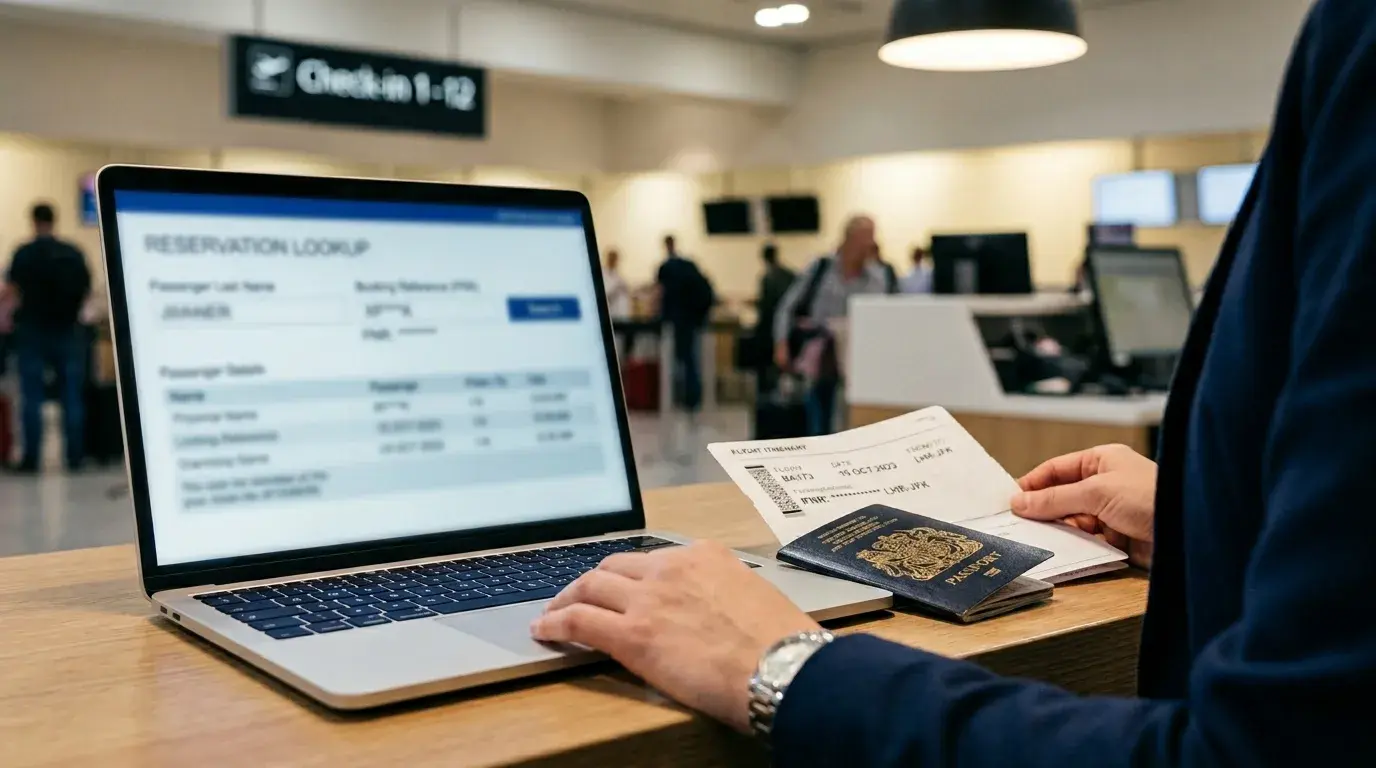
Assuming nobody will check is one of the easiest ways to weaken a clean file. The point is not that every officer checks every booking live. The point is that the reservation should be able to survive basic review if it is questioned.
Verification still matters even when checks are not obvious
A legitimate dummy ticket is different from an edited PDF. The safer document is built around believable booking data, readable passenger details and route logic that supports the visa file. A fabricated document may look attractive, but it can fail when someone checks the reference or compares the route with the rest of the file.
Free ticket generators are especially risky because they may create a document without a real reservation behind it. If the PDF cannot support its own details, the applicant carries the risk.
What can go wrong during review
Common review problems:
- Booking reference cannot be found or explained.
- Passenger name does not match passport spelling.
- Reservation has expired before the appointment or upload review.
- Route does not support the visa country or trip purpose.
- One-way proof appears where return or onward proof is expected.
- PDF looks manually edited, reused or inconsistent.
Make verification less stressful before the appointment
Review the document before submission, not after a counter problem appears. Check whether the route exists, whether the carrier details make sense, whether the dates match, and whether the PDF you upload is the latest version.
Different airlines and booking systems display reservation data differently, so do not panic over every display variation. Focus on the core facts: name, route, dates, reference details and consistency with the file.
Myth: “A Dummy Ticket Protects Me From Every Visa Risk”
A dummy ticket reduces one major risk: paying for a flight before approval. It does not fix weak funds, weak ties, vague purpose, missing employment proof, unclear accommodation or a story that does not make sense.
It supports the journey, not the whole application
A flight document shows intended movement. It does not prove that you can afford the trip, that you will return on time, or that your reason for travel is credible. Those points come from the full application.
If the bank statement supports a short trip but the ticket shows a long stay, the reservation creates pressure. If the employment letter says you must return on the 12th but the flight returns on the 20th, the ticket weakens the return logic.
It can expose weak points
A dummy ticket can accidentally highlight problems that already exist. A confusing route can expose a weak itinerary. A long stay can expose weak funds. A late return can expose weak ties. A different arrival city can expose a mismatch between the claimed destination and the actual route.
High-risk mismatches:
- Trip length does not match funds.
- Return date does not match work, school or family obligations.
- Route does not match the stated travel purpose.
- Arrival date creates hotel or invitation gaps.
- Exit airport feels disconnected from the itinerary.
The answer is not to add more documents blindly. The answer is to align the documents you already submit.
Final Review Framework Before You Submit
Before submission, do not ask only, “Does this dummy ticket look real?” Ask whether it makes the whole file easier to believe.
Use this final five-part review
Before uploading or printing, confirm:
- Purpose: the dates match the reason for travel.
- Duration: the stay length matches funds, leave and visa category.
- Route: the entry, destination and exit points are logical.
- Documents: insurance, hotel proof and cover letter do not contradict the ticket.
- Reviewability: the PDF is current, readable and not manually edited.
If one answer feels weak, fix the travel story before changing the PDF. A better-looking document cannot protect a file where the underlying timeline remains inconsistent.
Use dummy tickets as proof, not a shortcut. When the route, dates, return plan, funds, leave approval and itinerary all point in the same direction, the reservation feels natural inside the file. That is the version that helps rather than harms.
Want a dummy ticket that supports the file instead of creating questions? Prepare the route, dates and passenger details correctly before submission.
Create Your Dummy TicketFrequently Asked Questions
Is using a dummy ticket a mistake for visa applications?
No. The mistake is using a fake, mismatched, expired or unverifiable document. A clean dummy ticket can support a visa file when the checklist allows planned travel proof and the details match the application.
Can random dummy ticket dates hurt my application?
Yes. Random dates can create conflicts with your form, leave approval, insurance, hotel proof, invitation or funds. Choose dates from your real travel plan, not from convenience alone.
Do embassies check dummy ticket PNR details?
Not every reservation is checked live, but the document should be ready for review. If the PNR, route or dates are questioned, the details should be consistent and explainable.
Is a fake PDF the same as a dummy ticket?
No. A fake PDF is an edited or fabricated document. A proper dummy ticket is a temporary travel-proof document built around believable reservation details for the applicant’s intended trip.
Can a dummy ticket guarantee visa approval?
No. A dummy ticket can support planned travel evidence, but approval depends on the full file, including purpose, funds, ties, documents and the officer’s assessment.
What should I check before submitting a dummy ticket?
Check passport name, route, entry and exit dates, hotel alignment, insurance dates, application form dates, booking reference readability and whether the document looks current and unedited.
Should I buy a full ticket instead of using a dummy ticket?
Only if the authority clearly asks for paid proof or your trip is fixed and the fare is safely refundable. Many applicants use reservation-style proof to avoid financial loss before approval.
What is the safest way to use a dummy ticket?
Use it as one supporting document inside a consistent visa file. The ticket should match your route, dates, purpose, accommodation, insurance and return or onward plan.
Friendly reminder: DummyFlights provides temporary travel-proof documents for planning and application support. Requirements vary by destination, airline, route and applicant situation. A dummy ticket can support a file, but it does not promise approval, boarding or entry.