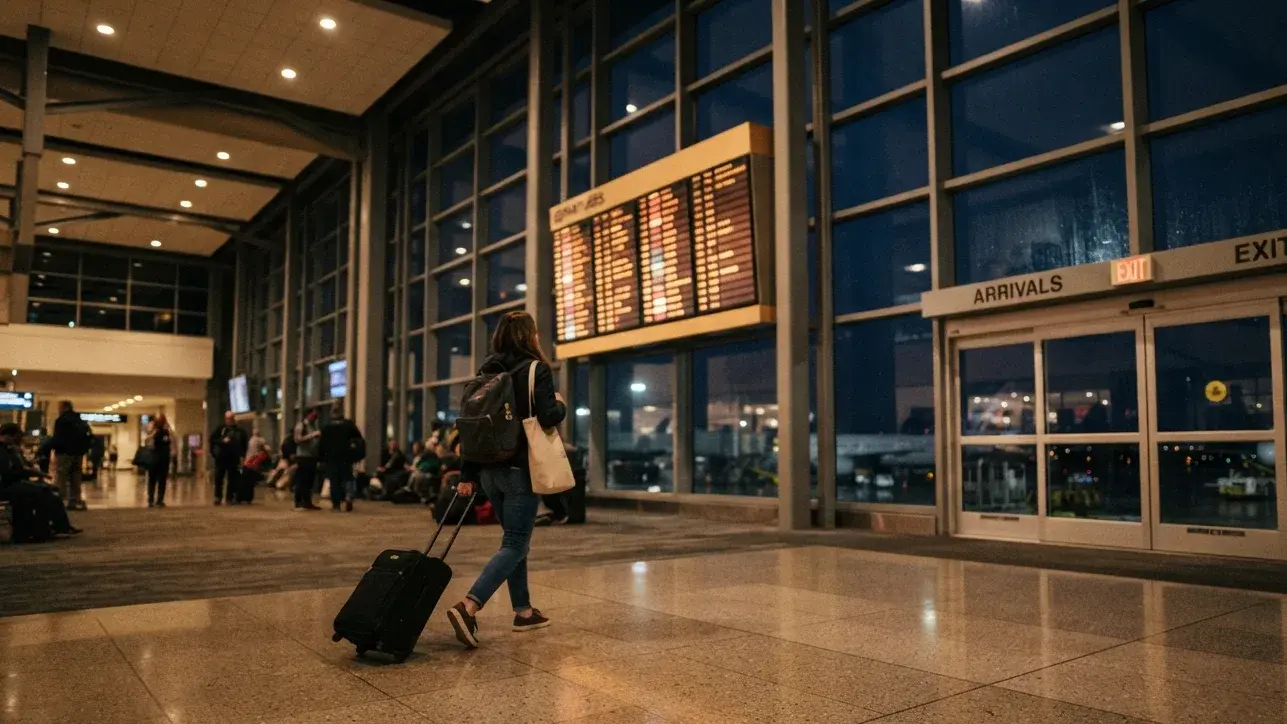

A Bali visa hotel itinerary should show one clean timeline from Denpasar arrival to final departure, with flight dates, hotel nights, guest names and dummy booking proof aligned before you upload. Use one combined PDF only when the file reads clearly; use separate flight and hotel files when the portal has separate slots, your hotel proof is split, or a merged file makes the timeline harder to verify.
Your Bali visa packet looks solid until the portal shows one upload slot and your flight and hotel proofs live in different files. A reviewer scans fast. Dates, names and the Denpasar arrival night must line up on the first pass. One messy merge, one missing page, or one unclear check-in date can trigger follow-up questions or slower processing.
This guide helps you choose the cleanest format for Bali: one combined PDF or separate uploads. It also covers when separate files protect you from weak hotel confirmations, how to arrange flight and hotel proof, how to label files, and how to avoid Bali-specific date gaps around late arrivals, Ubud-to-beach moves and island add-ons.
The goal is not to impress anyone with a thick document bundle. The goal is to make the Bali trip easy to understand: you arrive at DPS, stay in named places on clear dates, and leave on a route that matches the rest of your file.
Key facts before you build a Bali visa itinerary:
- Use one combined PDF only when the flight and hotel timeline is simple and clean.
- Use separate uploads when the portal has separate flight and accommodation fields.
- DPS arrival time and first hotel check-in date must not create an uncovered night.
- Ubud, Canggu, Seminyak and Nusa Dua moves should read like a logical route, not random hotel fragments.
- Every flight, hotel and dummy ticket detail should use the same passport name format.
Need Bali flight proof to match your hotel itinerary? Create a clean dummy ticket with DummyFlights before you merge, upload or submit your Bali visa document pack.
Create Your Dummy TicketIn This Guide
Official-source check: Indonesia’s official e‑Visa website says applicants should prepare the required documents before applying, make payment through accepted card channels, download the approved e‑Visa after approval, and submit the arrival card within three days before arriving in Indonesia. That makes the practical rule simple: your flight proof, hotel proof and uploaded files should be clean, current and consistent with the visa route you are using. Source: Indonesia official e‑Visa website.
Reviewed for: Bali visa itinerary packaging, DPS arrival and hotel-date logic, split-stay accommodation clarity, dummy ticket wording, PDF upload practicality, route-date consistency and official-source alignment.
The One-File vs Separate-Files Rule for Bali Visa Itineraries

Bali visa files rarely fail because the travel plan itself looks wrong. They get delayed or questioned because the flight and hotel proofs are hard to verify in one quick scan. The cleanest format is the one that makes the timeline obvious the moment someone opens the upload.
When one combined PDF works best
A single combined PDF works best when your Bali trip reads like one straight line: arrive, stay, leave. A reviewer should confirm the dates, name and travel flow without hunting through attachments.
Combine into one PDF when:
- You have one arrival and one departure tied to Bali.
- Your hotels cover the full stay with no gaps.
- Your stays are limited to one or two properties.
- Every document shows the same traveler name format.
- The merged PDF stays readable and does not become a compressed blur.
For Bali, a combined file is especially clean when you land at Denpasar and check in the same day. Even if your first stay is in Ubud, the flow still makes sense if the dates align and you do not create a missing arrival night.
Use this order inside the combined file:
- Flight itinerary page first.
- Hotel proof pages in date order.
- If you have two hotels, place the second hotel immediately after the first and make the switch date easy to see.
- If you include a cover page, keep it to trip dates, entry airport and hotel sequence.
Keep it tight. If a hotel sends a long email thread, do not dump all of it into the PDF. Include the pages that show guest name, property, dates and status. The cleaner the packet, the faster it gets understood.
When separate uploads are safer
Separate files are safer when the application channel expects separate categories or when one piece of proof is weaker than the rest. Bali trips often include split stays, late arrivals, quick add-ons and different hotel confirmation formats. Those are normal, but they can create inconsistencies that look bigger when everything is glued together.
Upload separately when:
- The portal has distinct slots such as Flight Itinerary and Accommodation.
- The portal has strict file limits and the combined PDF gets compressed too hard.
- Your hotels are split across three locations and each confirmation looks different.
- One hotel confirmation is missing a detail, such as guest name or clear status wording.
- You may need to replace one hotel page without rebuilding the whole packet.
If your flight proof is crisp but one hotel page looks incomplete, a combined file forces the reviewer to keep seeing the weak page while evaluating the whole timeline. Separate uploads let each document stand on its own and make later corrections simpler.
Pick the format in 60 seconds
Use this quick rule set and you will rarely regret the format:
- If the portal has labeled upload fields, follow them and upload separately.
- If there is one upload slot, combine only when flight and hotel details match perfectly.
- If you have more than two hotels, choose the layout that makes the timeline easier to scan.
- If arrival time is close to midnight, be conservative with date presentation.
- If any document is non-standard, do not bury it inside a merged PDF.
A good Bali rule: if the trip includes Ubud plus a beach area and the switch date is clear, one combined file can still work. If the trip includes island add-ons, different confirmation styles or missing guest names, separate files usually read cleaner.
What reviewers scan first
Visa review is often a fast consistency scan. Your job is to make the obvious details impossible to miss.
- Identity match: the same name appears across the flight and each hotel page.
- Date logic: arrival date matches first hotel check-in, and final checkout matches departure.
- Location logic: you land in Bali, stay in Bali and move through believable areas.
- Coverage: every night is covered by a hotel booking or clearly continuous stay.
The common Bali friction point is the Denpasar arrival night. If you land late and your first hotel check-in shows the next day, the file can look like it has an uncovered night. That does not automatically ruin an application, but it can create questions. Packaging matters because it controls how quickly the reviewer understands the timeline.
Build a Bali-Ready Itinerary Pack in 7 Steps

A Bali visa itinerary pack should read like a clean timeline, not a folder dump. These seven steps preserve the original travel logic while making the upload easier to review.
Step 1 — Lock the timeline before you touch PDFs
Start by freezing the trip spine in plain text:
- Arrive: date, flight route and Bali entry point, usually DPS Denpasar.
- Stay: city areas and dates, such as Ubud first and Seminyak later.
- Depart: date and route out of Bali.
Hotel nights should cover every calendar night from arrival to departure. If your flight lands late evening or after midnight, decide how the first hotel check-in will be shown. This single choice affects whether the pack looks seamless or looks like it has a missing night.
Step 2 — Choose the file strategy based on the submission channel
Look at the application portal like a reviewer would. Your format should follow the portal, not your personal preference.
- If the portal has separate upload slots, prepare separate PDFs that match those labels.
- If the portal gives one upload slot, build one combined PDF with clean page order.
- If the portal has strict size limits, use lean files instead of stacked screenshots.
- If you may need edits, keep both a combined version and a separate-files version saved.
This swap-ready approach protects you from last-minute upload problems. If the portal rejects one file or asks for a recheck, you can replace the specific item without rebuilding everything under pressure.
Step 3 — Put flight proof first
Your flight proof should let a reviewer confirm three items in five seconds: name, route and dates.
- Use a PDF page that shows the passenger name clearly.
- Show the route into Bali and out of Bali in an obvious way.
- Avoid adding multiple versions of the same itinerary.
- Keep transit dates readable if the route crosses midnight.
The risk is not transit itself. The risk is a layout that makes the Bali arrival date look different from the hotel check-in date. A clean dummy ticket for visa should support the timeline instead of creating another explanation problem.
Step 4 — Add hotels like a timeline
Hotel proof should feel like a calendar, not a booking inbox. Arrange it in date order:
- Hotel 1: check-in and check-out dates, guest name and property name.
- Hotel 2: starts the same day Hotel 1 ends, with no unexplained gap.
- Extra stays: continue the same pattern through departure.
- Final hotel: checkout date should match the departure date or be logically explained.
For Bali, split stays are normal. Ubud, then beach area, then maybe a short add-on. What matters is that the hotel pages show a continuous flow with no gaps. If a confirmation includes policies, marketing content or long email history, leave those out unless the portal requires them.
Step 5 — Name files so a stranger understands them
File naming is not cosmetic. It prevents confusion when the portal lists uploads without previews.
- Bali Visa — Flight Itinerary — [Dates].pdf
- Bali Visa — Hotel 1 Ubud — [Dates].pdf
- Bali Visa — Hotel 2 Seminyak — [Dates].pdf
- Bali Visa — Flight + Hotels — [Dates].pdf
If you submit one combined PDF, name it like a finished packet. If you submit separate files, make each file label match its content exactly.
Step 6 — Run a fast consistency check
Do a tight scan that catches the mismatches that trigger questions:
- Name format: same spelling and order across flights and hotels.
- Arrival alignment: Bali arrival date matches first hotel check-in.
- Departure alignment: last checkout matches departure date.
- No overlaps: hotel dates do not stack on top of each other.
- No gaps: every night is covered by a stay.
- Location logic: the accommodation sequence is believable.
If you spot a mismatch, fix it before uploading. A one-day gap can look like missing accommodation. A swapped name order can look like a different traveler.
Step 7 — Keep a backup version ready
Create two final outputs and store both:
- A combined PDF for portals that allow one upload.
- Separate PDFs for portals with category slots.
- A folder labeled with your travel dates.
- A final version marker so you do not submit an older file by mistake.
If you need to re-upload at the last minute, you should not be rebuilding files from scratch. Your backup version is a stress reducer, not a duplicate-content problem.
Mistakes That Make Bali Itineraries Look Suspicious

A Bali visa file can be accurate and still feel inconsistent when someone reviews it fast. These mistakes are common because Bali trips often mix late arrivals, split stays, beaches, temples, day trips and flexible hotels.
DPS arrival vs hotel check-in timing
The most common Bali confusion starts at Ngurah Rai International Airport and ends at the first hotel line. If your flight proof shows a late landing, your accommodation dates must cover that first night in a way that reads cleanly.
Red flags usually look like this:
- You land late, but the first hotel check-in starts the next day with no obvious coverage.
- Your flight crosses midnight, but hotel dates stay on the prior date.
- One document uses DPS while another names a different airport or city label carelessly.
- The hotel is far from the airport, but the timing gives no realistic transfer buffer.
Pick one timeline and align everything to it. If you arrive after midnight, the hotel proof should still show continuous nights without a gap that forces the reviewer to guess where you stayed.
The Ubud, Canggu, Seminyak and Nusa Dua jump problem
Bali plans often mix inland areas and beach areas. That is normal. What looks odd is a hotel sequence that jumps every night without a date-supported reason.
- One night near Kuta, then one night in Seminyak, then one night in Nusa Dua.
- A quick move from Jimbaran to the Bukit Peninsula with no clear timing.
- A plan that mentions beach clubs and nightlife while hotel dates point elsewhere.
- A day-trip note that accidentally looks like an overnight stay.
If your plan includes Ubud mornings, Canggu cafes, Seminyak evenings or Nusa Dua resort time, group hotels into sensible blocks. Two or three clear chunks usually look more believable than five single-night hops.
Booking proof that is incomplete in the wrong way
Many Bali confirmations are short. That is fine. Problems start when key fields are missing or vague.
- A private villa page shows dates but no guest name.
- A PDF shows Indonesian rupiah charges but no booking status.
- A message reads like an inquiry instead of a confirmation.
- A screenshot cuts off the property name or date range.
- The lead guest is different from the visa applicant with no explanation.
Do not thicken weak proof with unrelated attachments. Bali tour package brochures, attraction screenshots, restaurant plans and activity confirmations do not help a reviewer understand where you sleep.
What to leave out of the upload
Bali inspires big plans, but a visa officer does not need your full sightseeing dream. They need verifiable dates and names.
- Do not upload temple lists unless asked.
- Do not add jet ski, Bali swing or activity receipts as accommodation proof.
- Do not attach shopping receipts, local SIM receipts or restaurant reservations.
- Do not include long travel-package marketing pages.
- Do not let day-trip notes replace hotel coverage.
If you include a one-page day plan, keep it consistent with where you sleep. You can mention Ubud Palace or a Nusa Penida day trip, but the hotel dates still anchor the trip.
Print-this-before-upload checklist
Before you upload, confirm:
- Your flight clearly shows how you reach Bali.
- Your arrival date matches your first hotel night.
- Your last hotel checkout matches your flight out.
- Hotel dates do not overlap and do not leave gaps.
- Each proof shows guest name, dates and clear status.
- File names match the content inside the PDFs.
- Your upload avoids extras that do not prove travel or stay.
- Your dummy ticket, hotel proof and application dates tell the same story.
If you need a deeper route-document foundation, this visa flight itinerary requirements guide is the cleaner BookForVisa cross-reference. Keep the DummyFlights page focused on dummy ticket, dummy booking and onward-proof clarity, while using itinerary guidance only where it supports the reader.
Exceptional Bali Trips That Still Need Clean Proof
Some Bali visa applications look messy only because the trip is not a simple arrive-stay-leave pattern. The answer is not to hide the complexity. The answer is to package it in a way that still reads like a continuous trip.
Island-hopping plans: Nusa Penida, Gili or Lombok
Island hops are normal, but the file must show continuous nights and a readable route. If you are doing a multi-night add-on, structure proof like a timeline:
- Mainland Bali accommodation block.
- Island accommodation block.
- Final Bali accommodation block if you return before departure.
- Transport notes only when they clarify the overnight location.
A day trip to Nusa Penida does not usually require a separate hotel night if you return to mainland Bali. Keep the “where you sleep” story stronger than the activity list.
Open-jaw or multi-city routing
Sometimes you fly into Bali and exit from a different city, or you enter Indonesia elsewhere and visit Bali in the middle. These routings can be valid, but they need careful alignment.
What usually goes wrong:
- Hotels cover Bali dates, but flight proof shows you leaving earlier.
- Flights show a later arrival than the first check-in.
- One segment is missing, so Bali presence looks assumed.
- The return or onward route does not explain how you leave the stay area.
Keep it simple: show the segment that places you in Bali, show the segment that takes you out, and keep accommodation proof strictly inside those Bali dates. If your route is uncertain, the what is a dummy ticket guide explains how temporary travel proof should be used without pretending a plan is final airfare.
Flexible hotels without looking undecided
Sometimes you confirm one stay and keep the rest flexible. That can work, but you must avoid a file that looks undecided. Use one rule: your nights stay covered even if your travel style stays flexible.
- Keep at least one confirmed booking that covers the full span, or
- Use a confirmed split that covers every night with no gaps, and
- Do not submit overlapping options for the same dates.
Overlapping hotel options look like placeholders. If you are tempted to write “Bali depends on last-minute plans,” keep that out of the upload and let the proof show a stable travel plan.
Group travel with different hotels or dates
Group trips create confusion when one file tries to represent everyone. If companions have different stays, do not merge everything into one combined PDF unless the portal explicitly asks for a group pack.
- Create one set of flight and hotel proofs per applicant.
- Clearly label shared hotels versus separate rooms.
- Use separate accommodation proofs if dates differ by even one night.
- Keep children, spouses and friends aligned with the correct booking pages.
This matters in Bali because groups often split locations. One person may stay near the beach while another stays inland. A single combined file can make it look like everyone is moving together when they are not.
Myth-busting: packaging beliefs that cause bad uploads
- “More pages look stronger.” No. More pages can hide the important details.
- “Sightseeing plans prove accommodation.” No. Hotel dates prove where you sleep.
- “A merged PDF is always more professional.” Only if it is clear and readable.
- “Separate files look incomplete.” Not when the portal asks for separate categories.
- “One missing night is minor.” It can create unnecessary questions.
Your Bali packet should be boring in the best way: easy to scan, easy to match, and free from distracting extras.
Make Your Bali Visa Itinerary Easy to Verify
Your Bali visa file should read like one clean timeline from Ngurah Rai arrival to the last hotel night and departure. Whether you upload one PDF or separate files, keep flight and hotel dates aligned so the hotel itinerary for visa to Bali looks complete on the first review.
Before you submit, check the basics one more time: name consistency, continuous nights, file order, clear Bali route, and readable proof. If you are traveling in a mixed group, give each applicant a clean document set instead of one confusing bundle.
If your flight proof is not ready yet, create the dummy ticket for visa layer after the hotel timeline is stable. That keeps the Denpasar arrival, Bali hotel sequence and departure route aligned before the final upload.
Building a Bali visa packet today? Create your dummy ticket with DummyFlights, match it to your hotel itinerary, and upload a cleaner travel-proof set.
Create Your Dummy TicketFrequently Asked Questions
Should I upload one combined PDF or separate files for a Bali visa?
Use separate files if the portal has separate flight and accommodation slots. Use one combined PDF only when your flight and hotel timeline is simple, readable and fully aligned.
What should a hotel itinerary for visa to Bali include?
It should include guest name, hotel or property name, check-in date, check-out date, booking status, and enough address or location detail to show the stay is in Bali.
Does my first Bali hotel need to start on the arrival date?
Usually yes, if you land on that calendar date. If your flight lands after midnight, make sure the hotel proof still explains the first night clearly so the file does not look like it has a gap.
Can I use split hotels in Ubud and Seminyak?
Yes. Split stays are normal in Bali. The key is to show the hotel pages in date order with no unexplained gaps, overlaps or name mismatches.
Should I include sightseeing plans in my Bali visa upload?
Only if the checklist asks for it or it clarifies the route. Sightseeing plans do not replace hotel proof, and extra activity receipts can make the file harder to review.
Can a dummy ticket help with a Bali visa itinerary?
Yes, a dummy ticket can support the flight-proof layer when it matches the Bali entry date, departure date, passenger name and hotel timeline. It should not contradict the accommodation proof.
What if my Bali hotel confirmation shows only the lead guest?
If the visa applicant is not clearly shown, add stronger proof or request an updated confirmation. A lead-guest-only booking can create questions for family or group applications.
Do I need to show every internal movement inside Bali?
No, not unless the portal asks. Your file should prove where you arrive, where you stay overnight, and when you leave. Internal day trips usually do not need separate proof.
What is the most common Bali itinerary mistake?
The most common mistake is a date gap between DPS arrival and the first hotel check-in, especially when the flight lands late or crosses midnight.
Does a clean Bali itinerary guarantee visa approval?
No. A clean itinerary can support the travel-proof part of the file, but approval depends on the full visa requirements, applicant situation and official review.
Friendly reminder: DummyFlights provides temporary travel-proof documents for planning and application support. Requirements vary by destination, airline, route and applicant situation. A dummy ticket can support a file, but it does not guarantee approval, boarding or entry.