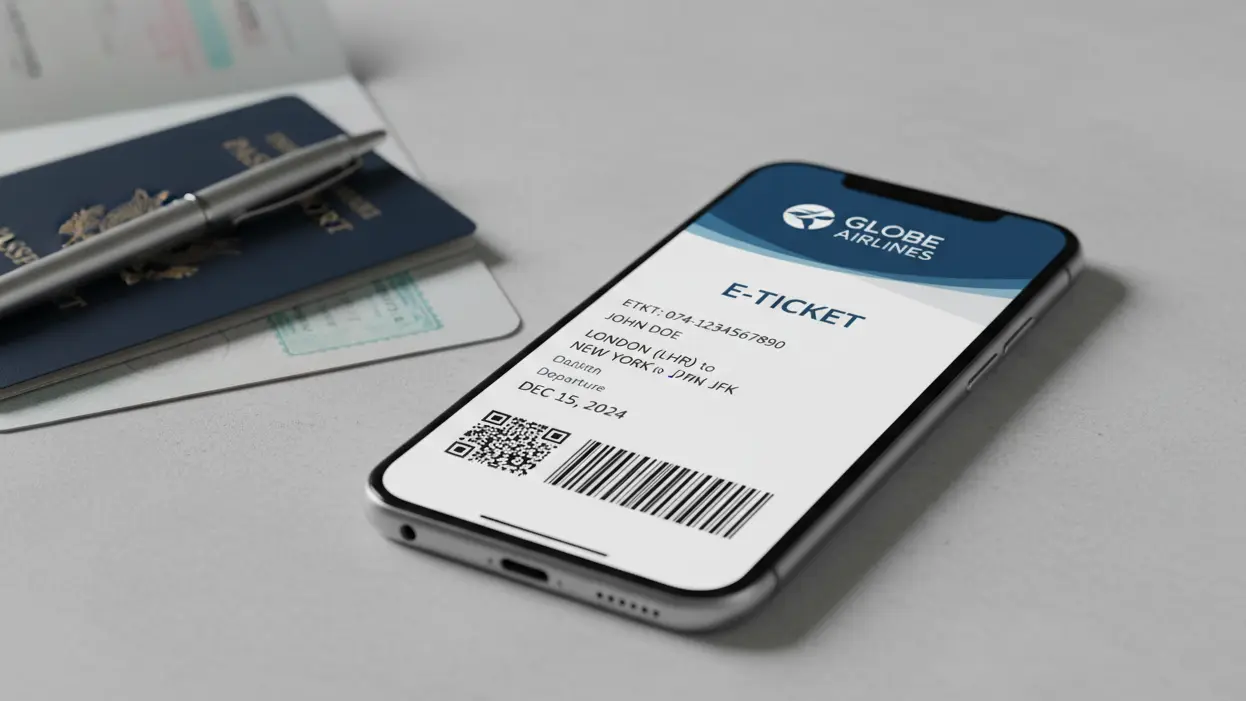

A dummy ticket for a tourist visa is a temporary travel-proof document used to show intended travel dates, route, passenger details and return or onward movement before buying final airfare. It works best when the document is current, readable, PNR-supported when available, and aligned with the visa form, cover letter, hotel plan, insurance dates and trip purpose. A strong dummy flight ticket supports the tourist story without pretending to guarantee approval, boarding or entry.
Your tourist visa file lands on a desk, and the travel proof is scanned fast. One mismatch can make the officer slow down: dates that clash with leave approval, a route that makes no sense for a short trip, a return plan that does not match the itinerary, or a booking reference that cannot be checked when someone tries to verify it.
This guide shows what embassies and visa reviewers generally expect from a dummy ticket and how to meet that expectation without locking money into a paid fare too early. You will learn how to choose the right format for your trip, whether return, one-way, open-jaw or multi-city, and how to stress-test the document before upload.
The aggressive but clean rule is simple: your tourist visa file should tell one believable travel story. The dummy ticket should support that story with clear dates, normal route logic, matching identity details and a visible exit plan. If the document makes the officer ask fewer questions, it is doing its job.
Key facts before using a dummy ticket for tourist visa:
- A dummy ticket should support your tourist plan, not replace a clear itinerary.
- Return or onward proof is strongest when the exit plan is easy to understand.
- Dates should match the visa form, cover letter, hotel proof and insurance window.
- Route logic should look like a normal traveler’s route, not paperwork routing.
- PNR or booking-reference details help only when the document is current and consistent.
- Paid-ticket wording should not be used unless the ticket is actually paid and ticketed.
Preparing tourist visa documents now? Create a clean dummy ticket with realistic route, dates, passenger details and return or onward proof before you upload your file.
Create Your Dummy TicketIn This Guide
- Official-source check
- What officers try to confirm
- What can be verified on a dummy ticket
- Choose the right ticket format
- 48-hour build and verification workflow
- Red flags that get dummy tickets doubted
- Where standard tourist-ticket strategy breaks
- How to choose a reliable source
- Final file check
- FAQ
Official-source check: the U.S. Department of State says visitor-visa applicants may be asked for evidence of trip purpose, intent to depart and ability to pay trip costs, and also says not to make final travel plans or buy tickets until a visa is issued; see Visitor Visa guidance. UK visitor guidance says applicants must show they will leave, can support themselves and can pay for return or onward travel; see UK Standard Visitor guidance. The European Commission says Schengen applicants may need supporting documents for purpose of stay, means, accommodation and intention to return; see Schengen visa guidance. The practical takeaway is clear: tourist travel proof should be coherent, temporary and financially sensible.
Reviewed for: tourist-visa travel-proof logic, return and onward ticket wording, PNR verification clarity, route-date consistency, identity matching, document-risk reduction and claim safety.
What Officers Try to Confirm From Your Travel Proof
A dummy ticket can look polished and still fail the only test that matters: whether the trip reads as believable beside the rest of the file. Reviewers are not rewarding applicants for spending money early. They are checking whether the travel plan fits the applicant’s profile, documents and temporary intent.
Your dummy ticket supports a story, not a seat purchase
Think of the document as a story anchor. It pins down when you plan to go, where you plan to enter, and when you plan to leave. If those points make sense, the file feels calmer. If they create puzzles, the officer starts scanning for more puzzles.
A common example looks harmless. You claim a nine-day vacation, but the ticket returns on day six. Or you claim you will visit one city, but the arrival airport is far away with no transfer logic. The officer does not need to accuse anyone of anything. The credibility downgrade happens quietly.
Your travel proof also signals whether you understand your own trip. A clean plan reads like a traveler who has prepared. A messy plan reads like a person who built documents only to satisfy a checklist. The goal is not to make the file look “official.” The goal is to make it make sense.
This is why the strongest tourist-visa dummy ticket is not always the longest, most complicated, or most expensive-looking document. It is the document that lets a reviewer understand the trip without stopping. If the applicant is visiting family, the route should support that family location. If the applicant is going for tourism, the arrival city, hotel area and return date should feel natural. If the traveler is adding another country after the trip, the onward ticket should make that next move visible instead of leaving the officer to guess.
The document should also respect how tourist visa files are reviewed under time pressure. Officers and visa-center reviewers do not usually read every page like a novel. They move through the file looking for proof points and contradictions. Travel proof becomes one of the easiest places to test the story because it has names, dates, cities, airports, references and timing. A good dummy ticket wins by reducing friction at every one of those points.
Unspoken questions your dummy ticket should answer:
- Does this traveler know where they are going and why?
- Do the dates line up with leave, funds, hotel proof and forms?
- Does the exit plan look as clear as the entry plan?
- Would a quick scan make the trip feel temporary and planned?
Tourist visas are temporary-visit documents. A ticket that reads like a one-way move can create tension, even if other documents are strong. That tension is not always fatal, but it raises the amount of proof needed elsewhere.
The three fast consistency checks
Officers scan, compare and look for contradictions. Travel proof is easy to check because it has structured details.
| Check | What gets compared | Common failure |
|---|---|---|
| Dates | Visa form, leave letter, cover letter, hotel nights, insurance and itinerary days. | Return date after leave ends, insurance gap, or overnight arrival counted wrongly. |
| Route logic | Entry city, first destination, exit city, last itinerary day, layovers and transit points. | Arrival far from the stated first city or a leisure-shaped stopover with no explanation. |
| Identity match | Passport, application form, ticket name, hotel proof and insurance certificate. | Missing middle name, changed surname order, spelling drift or swapped name fields. |
None of these issues proves fraud. They prove carelessness. Carelessness is expensive in visa work because it makes every other document work harder.
The date check is usually the first because dates are everywhere. They appear on the application form, invitation, leave approval, accommodation proof, insurance certificate, day-by-day itinerary and travel proof. If the dummy ticket says the traveler leaves on May 10, the hotel ends on May 8 and the cover letter says May 12, the officer is forced to choose which document to believe. That is exactly the moment a file loses its clean shape.
The route check is more subtle. A flight can technically land anywhere, but a tourist route should still explain itself. If the trip is to Rome and the arrival is in Milan, the itinerary should show why Milan is the natural entry point. If the trip starts in Bangkok but the ticket enters through Phuket, the day plan should support that route. If the exit city is different from the entry city, the travel route should make the open-jaw logic clear instead of making the officer reconstruct the trip.
The identity check is the least forgiving because it is the easiest to avoid. Names should match the passport style as closely as the ticketing system allows. If a passport has two surnames, the ticket should not casually drop one. If a middle name appears across formal documents, disappearing from the ticket can create unnecessary doubt. If the applicant recently renewed a passport, the file should not mix old and new identity details. These are small errors, but they make the whole document feel less controlled.
Plausible timeline signals
After consistency, the reviewer evaluates plausibility. This is not about the perfect travel strategy. It is about whether the timeline fits a tourist profile.
Tourist trips have patterns. Entry is usually close to where the traveler starts. Exit is close to where the traveler finishes. Trip length is not suspiciously short for long-haul travel and not awkwardly long for the applicant’s funds, leave and ties.
A four-day trip can be credible for a nearby destination. It can look strained for a long-haul route with jet lag, internal travel and several sightseeing days. At the other extreme, a very long tourist trip needs stronger funds, stronger ties and a clear reason the applicant can be away.
Open-jaw travel can be realistic when the day plan supports it. Arriving in one city and leaving from another often makes sense if the itinerary flows naturally. But if the day plan does not match the entry and exit cities, it looks like airports were chosen randomly.
Over-optimization can also backfire. Extremely tight layovers, repeated backtracking, confusing transit points and rigid spreadsheet-perfect dates can make the document feel manufactured. A normal tourist plan has breathing room.
A plausible timeline also includes processing reality. If the appointment is tomorrow and the flight is three days later, the file may look rushed unless the country normally processes that visa extremely fast. If the flight is six months away but the applicant claims a short casual holiday, the document may feel disconnected from the immediate application. The cleanest approach is to create travel proof when the trip window is realistic, the supporting documents are ready and the route will not need repeated last-minute changes.
How travel proof gets read beside funds, leave and history
Your dummy ticket is never reviewed in isolation. It is compared against what you can afford, how long you can realistically be away, and what your travel history suggests.
Funds alignment matters because the itinerary implies spending even when the airfare is not paid yet. A premium-feel multi-country plan paired with thin funds creates a mismatch. A simple route often works better because it reduces implied cost and complexity.
Leave approval and obligations matter because they set the boundaries of the trip. If an employer letter shows leave from June 5 to June 14, the ticket should not return on June 18 without explanation. For self-employed applicants, the itinerary becomes even more important because there may be no formal leave letter.
Prior travel also affects how complexity is read. A first-time traveler can still be approved, but a first-time traveler proposing a complicated multi-city route with tight connections needs cleaner supporting documents. Prior travel helps only when the current file remains consistent.
The same route can be read differently depending on the applicant. A frequent traveler with strong income, prior visas and a simple employment record may be able to show a more flexible trip. A first-time tourist with limited funds and no previous travel history should usually choose a cleaner route, a clearer return date and fewer moving parts. The dummy ticket should fit the person, not just the destination.
Funds create another hidden route test. A luxury-looking itinerary, business-class-style timing, unnecessary stopovers, long stays and multiple expensive cities can all imply a budget. If the bank statements do not support that implied budget, the travel proof may work against the applicant. A realistic, modest, well-aligned route usually beats a dramatic route that looks impressive but financially thin.
Private date-spine check:
- Departure date and arrival date.
- Return or onward date.
- Number of nights shown in the itinerary.
- Leave dates or study/work schedule.
- Hotel and insurance coverage dates.
If one row disagrees, fix it before the officer finds it.

What Can Be Verified on a Dummy Ticket
A dummy ticket lives or dies on whether it holds up when someone tries to check it using normal tools. “Verifiable” is not one universal thing. Two PDFs can look similar and behave very differently during a quick check.
The verifiability ladder
| Level | What it means | Risk |
|---|---|---|
| PDF-only | The document shows itinerary details but may not link to a record a third party can access. | May be enough in low-scrutiny cases, but weak if someone tries to verify it. |
| PNR-backed | A booking record exists with a reference code tied to passenger and route details. | Better, but visibility depends on system access, timing and airline lookup behavior. |
| Airline-visible | The reference works on an airline or booking lookup with matching passenger details. | Strongest for quick checks, but still limited by airline rules and expiry. |
The ladder is not about perfection. It is about predictability. Your travel proof should be verifiable using the simplest method a stranger would try, because that person is usually trying to clear a queue, not help debug your case.
PDF-only proof can still be useful in cases where the checklist asks for planned travel and no live airline check is expected. But it must be honest in presentation. It should not pretend to be a paid e-ticket if it is not ticketed. It should not use strange formatting, blurred details or mismatched logos that make the file look edited. Even when a document is not deeply verified, it still has to pass the human scan.
PNR-backed proof adds a stronger layer because there is a booking reference tied to a record. But applicants often misunderstand what that means. A PNR can expire. A PNR can show differently across airline systems. A PNR can be visible to an agent but not to a public website. A PNR can also fail because the last-name format is entered incorrectly. The presence of a reference is useful, but only if the user understands its limits.
Airline-visible proof is usually the strongest for practical checks because a third party can attempt a normal lookup. Still, it is not a guarantee of approval, boarding or entry. It only proves that the travel-proof layer is easier to check. The full application still depends on purpose, funds, ties, eligibility, immigration history and the destination’s current rules.
What PNR verification usually means
People talk about PNR verification as if it were one universal process. In practice, verification can happen in several ways.
Staff may try a public airline lookup using booking reference and last name. That can fail if the name format is wrong, the airline requires a different reference type, the booking has not synced, or the reservation has expired.
Some visa intermediaries may use booking-system-oriented checks. That can confirm whether a record exists, but it can also expose missing passenger details, segment mismatches or weak status language.
Sometimes verification is not technical at all. It is an internal consistency check. If your cover letter says April 10 entry but the ticket shows April 12, the story fails its own verification.
Reviewers can also apply a credibility filter. They may not check online, but they still judge whether the booking looks normal: departure and return pattern, realistic flight times, route logic and passenger identity.
That credibility filter is why the safest dummy ticket is built from the trip outward. Start with the applicant’s actual intended dates and route, then create the document. Do not begin with a random cheap flight and force the rest of the visa file around it. The second approach may save a few minutes, but it usually creates the contradictions that make a reviewer pause.
Common verification failure points
The biggest failure points are usually controllable.
- The reservation expires before the file is opened.
- The reference works in one system but not the airline’s public lookup.
- Passenger name formatting breaks the lookup.
- The PDF route differs from the itinerary route.
- The booking reference is present but too small, cropped or unclear.
- The document changes format each time dates are updated.
A reservation that vanishes before review creates a nasty surprise. This is common when processing times are long, the appointment is far away, or the applicant creates the document too early. The fix is planning: match the reservation’s useful life to your submission timeline or use a method that can be refreshed without changing the trip story.
Another failure point is lookup expectation. Some applicants assume that every airline, route and booking type will behave the same way online. They do not. One airline may show a record cleanly with surname and reference. Another may require ticket number, loyalty login or a different locator. Some codes are agency-facing rather than public-facing. That is why the document should be checked according to what it claims to support, not according to a fantasy of universal lookup.
Timing matters too. A booking can appear after a short delay, change status, or disappear when the holding window ends. If your appointment is near, check close to submission. If the consulate may review later, build a plan for refreshing the document without changing the dates, route logic and surrounding file unless the real travel plan changes.
Quiet details that trigger scrutiny
A reviewer does not need to be an airline expert to notice when something looks off. Many have seen thousands of itineraries. They recognize patterns.
Ticketing status language can create friction if it screams “not ticketed” while the rest of the file talks as if final airfare is purchased. Missing passenger details can also weaken the file when the format suggests those details should exist. Odd fare or cabin signals can create mismatch if the applicant’s funds are modest but the trip looks premium.
Placeholder routing is another quiet tell. Extra stops, long random layovers, backtracking and transit through countries that add document complexity can all make the file feel weaker. A normal traveler sometimes books strange routes. A tourist visa file should not rely on “sometimes.”
Missing identifiers can also create doubt. A document does not need to show every airline-system field, but it should show enough for its purpose: passenger name, route, dates, airline or flight details, and reference information where applicable. If the PDF looks like a screenshot cut from a confirmation page, or if important details are cropped, the document feels less professional even when the route itself is reasonable.
Myths about embassy checks
Visa communities repeat claims that sound authoritative but create bad document strategy.
Myth cleanup:
- Embassies do not always call airlines; many checks are faster than phone calls.
- A dummy ticket does not need to be fully paid to support intent, but it must be consistent.
- A return segment helps show exit intent, but it does not guarantee approval.
- A booking reference is useful only when it connects to details that hold up.
- Constantly changing the reservation can create version confusion.
The smarter move is to choose a stable trip shape, verify it, align the file, and then stop tinkering.

Choose the Right Dummy Ticket Format
Once you understand verification, choose a travel-proof shape that matches how the tourist trip should read on paper. Embassies do not reward creativity. They reward clarity.
Return, one-way, open-jaw or multi-city
| Format | Best when | Watch out for |
|---|---|---|
| Return trip | You have one base city or a simple vacation loop and want the clearest exit signal. | Dates that are too rigid, too long, or inconsistent with leave and hotel nights. |
| One-way | You have a documented onward plan, cruise exit, overland exit or strong reason. | Weak exit intent if the onward movement is not visible elsewhere. |
| Open-jaw | Your itinerary naturally starts in one city and ends in another. | Day plan must match the entry and exit cities exactly. |
| Multi-city | Internal flights are genuinely central to the trip. | More segments create more places for contradictions. |
If an officer reads only the ticket and the itinerary summary, the trip shape should still make sense. If they need a long cover letter to understand the route, the format may be too complex.
Return trips are usually the cleanest tourist proof because they answer the exit question immediately. The applicant arrives, stays for a defined window and leaves. For many first-time tourists, family visitors and short vacations, that simplicity is the advantage. It gives the officer fewer reasons to ask what happens next.
One-way travel needs more support. It can be perfectly normal for certain travelers, but tourist visa reviewers often want to see the departure logic. If the applicant is continuing to another country, the onward movement should be visible. If the traveler is joining a cruise, the cruise proof should explain the exit. If the applicant is traveling overland, the route should be believable and supported by accommodation or day-plan logic.
Open-jaw trips can be strong when the route flows naturally. Arrive in one city, move through the country, leave from another city. That is normal travel. The risk appears when the itinerary does not show the movement between those points. A clean open-jaw plan needs a visible route spine, not just two disconnected airports.
Multi-city proof is powerful when internal flights are central to the trip. It can show real planning for a complex itinerary. But each segment is another chance for a mismatch, and every additional city increases the burden on hotels, insurance dates, funds and cover-letter wording. Use multi-city only when it genuinely clarifies the trip.
Choose based on applicant risk
Some applicants can submit a more complex route without friction. Others are better served by simplicity because their profile already requires more trust.
- First-time or low travel history: default to a simple return trip unless open-jaw is clearly supported.
- Tight funds: use direct, reasonable routing that does not imply unnecessary spending.
- Long processing time: choose a format that can be refreshed without changing the trip shape.
- Complex real itinerary: keep only the flight segments that are essential to the story.
- Weak exit clarity: prefer return or clearly documented onward movement.
If more than one format fits, choose the one that requires the fewest explanations.
For low-risk profiles, the best format is usually the one closest to the real intended plan. For higher-risk profiles, the best format is often the simplest credible version of that plan. That does not mean hiding the truth. It means avoiding unnecessary complexity that does not help the application. A tourist visa file should look planned, not overbuilt.
When a “too perfect” itinerary backfires
A clean itinerary is good. A contrived itinerary is not. Officers see patterns that look manufactured: zero-buffer travel days, connections that only work on paper, over-engineered stopovers, and dates chosen so close to the appointment that the plan assumes instant approval.
The goal is not to make the trip messy. The goal is to make it human. A return date one day before leave ends often feels better than a plan that uses every available hour. An arrival day that allows rest feels better than a day packed with activities after a late-night landing.
Too-perfect files can also create contradiction traps. If every hotel, flight, tour, museum visit and transfer is locked to the minute, one small date change breaks the whole structure. Tourist travel is planned, but it still has normal flexibility. The dummy ticket should anchor the major travel movement while leaving the itinerary believable.
Guardrails if dates change later
Embassies understand that plans change. What they do not like is a story that changes shape.
If you use a return trip, keep the same city pairing and similar trip length. If you use one-way, keep the onward reason stable. If you use open-jaw, keep the direction of travel and first/last city logic stable. If you use multi-city, keep the order of cities and number of segments under control.
The safest update is usually a clean date adjustment on the same story. The riskiest update is a full narrative change: different entry city, different exit country, different trip length and different hotel plan. If the story genuinely changes, update every supporting document. If only timing changes, keep the route spine intact.
Before finalizing any format, confirm:
- The ticket matches the itinerary’s first and last day locations.
- The trip length matches the number of nights you claim.
- Date changes can be handled without changing the whole story.
- A lookup, if available, shows the same passenger name and route logic.

48-Hour Build and Verification Workflow
Good dummy tickets fail for one predictable reason: they are created in isolation and uploaded without being checked against the rest of the file. Use this workflow to keep the trip story consistent, verifiable and easy to accept at a glance.
Step 1: lock the non-negotiables first
Before generating anything, lock the parts of the trip that must not drift: defendable trip window, entry city logic and return or onward range.
Your trip window should fit leave dates, funds, processing timing and a realistic tourism length for the destination. Your entry city should match itinerary day one. Your return range should keep the trip shape stable even if dates move slightly.
Non-negotiables are not decoration. They stop the document from drifting. Many weak applications start with a random ticket because it was cheap or available, then the applicant tries to reshape hotels, leave dates and cover-letter claims around that ticket. That is backwards. The visa story comes first. The dummy ticket should be generated to support the story already built.
- Can you defend why you chose this month and this length?
- Does the entry city match the first place you claim to visit?
- Is the exit plan clear without a long explanation?
- Can a small date shift happen without rebuilding the trip?
Step 2: generate, then stress-test like a skeptic
Once you generate the dummy ticket, do not upload it immediately. Treat it like it came from a stranger and look for problems.
Start with the ten-second trip-shape scan: does it look like a normal return, one-way, open-jaw or multi-city tourist trip? Do departure and return dates match the intended length? Does the routing look like a human booked it?
Then check the details:
- Full name matches passport spelling.
- Name order does not conflict with other documents.
- Departure, arrival and return dates match the itinerary.
- Arrival time supports day-one activities.
- Entry and exit airports match the trip flow.
- Transit points do not add unnecessary complexity.
- Booking reference or PNR is present if the method provides one.
A skeptic does not ask, “Does it look official?” A skeptic asks, “Does it hold up if checked?” If the answer is uncertain, fix it before submission.
Stress-testing also means reading the document at normal speed. Do not zoom in like the creator of the file. Open it the way a reviewer might open it: one screen, one pass, limited patience. If the date, route, passenger name and reference cannot be understood quickly, improve the document before submission. Visibility matters because hidden details function like missing details during a rushed review.
Step 3: align the rest of the file
This is where visa-ready documents are made. Alignment means the ticket, forms, itinerary, insurance, hotel proof and cover letter tell the same story without forcing the officer to reconcile differences.
Check itinerary day count against flight dates. Overnight flights often shift arrival to the next day, so day one must reflect actual arrival. Check that the final itinerary city supports the departure airport. Check that leave dates do not start after departure or end before return.
If travel insurance is required, coverage should not start after departure or end before return. If a cover letter states exact dates, those dates should match the ticket. If the letter says one city but the route suggests another, update the wording or simplify the route.
Hotel proof deserves special attention because accommodation often exposes date gaps. A ticket that shows arrival on June 1 and departure on June 12 should not sit beside hotel proof that begins June 3 unless the first two nights are explained. Likewise, a final hotel in one city should not be paired with an exit flight from a far-away airport unless the itinerary shows the transfer.
Cover letters should explain, not rescue. A good cover letter summarizes the plan the documents already prove. A weak cover letter tries to talk around contradictions. If the ticket, hotels and itinerary do not agree, the letter will not magically fix them. Fix the documents first, then let the letter confirm the logic.
Step 4: verify the way a third party would
Use the simplest possible check because that is what staff may try first. If the ticket should be airline-visible, open the airline lookup page, enter the reference and surname exactly, and confirm the details match the PDF.
If the airline page shows a different date, name or route, fix the document. If the same trip appears in a slightly different display format, that is usually normal. What matters is that the core details match.
Also open the PDF on another device or fresh download. Visa centers often scan quickly. If the PDF loads poorly, has missing pages, or looks cropped, you invite avoidable doubt.
If the lookup does not work, do not immediately assume the whole document is useless. Check the spelling, surname order, booking reference type, airline site, timing and whether the record is meant to be public-facing. If a provider promises verifiability, ask what kind of verification is expected and how long the record should remain usable.
Last-mile upload hygiene
- Only one final version is in the upload set.
- The file name is clean and professional.
- The PDF is not a low-resolution screenshot unless the portal requires an image.
- No duplicate versions with different dates are attached.
- Any date change triggers a full re-check of the date spine.
When this workflow is complete, you do not just have a ticket. You have travel proof that is consistent, checkable and unlikely to create avoidable questions.
Red Flags That Get Dummy Tickets Doubted
Even a technically valid reservation can trigger doubt if it sends the wrong signals during a quick scan. The issue is often not that the document is fake; it is that it does not fit the tourist visa story.
Identity mismatches
Identity problems are brutal because they are easy to spot and hard to excuse. The most common issue is not a completely wrong name. It is inconsistent formatting across documents.
- Two-part surname appears on the passport but only one part appears on the ticket.
- Middle name appears on the visa form but disappears from travel proof.
- First and last name order looks swapped.
- Hyphens, apostrophes or spacing change in confusing ways.
- Old passport number appears after renewal.
- Date of birth format looks swapped between day and month.
If the ticket includes passport number or date of birth, treat those fields as locked. If it does not include them, name consistency becomes the main identity signal.
Families and groups need an even stricter identity pass. Children may have different surnames from one parent. Married applicants may have passport names that differ from invitation or employment documents. Some travelers use initials in informal documents but full names on passports. The ticket should follow the passport, and the rest of the file should make any legitimate name differences easy to understand.
Date problems
Date problems rarely look like “wrong dates.” They look like dates that create tension.
Departure too close to the appointment can imply the applicant assumes instant approval. Rigid dates with no human buffer can look manufactured. A hotel-night gap can make the officer wonder where the traveler stays. Insurance that does not cover the full trip can make a polished itinerary feel careless.
Date risk increases when applicants reuse old content. A previous itinerary, old hotel PDF or copied cover-letter paragraph can accidentally preserve dates from another trip. This is one reason repeated visa applications need careful review. The dummy ticket may be fresh, but the old supporting document can still create the contradiction.
Date red flags to fix:
- Flights leave before approval could realistically happen.
- Return date exceeds leave approval.
- Hotel nights do not cover the travel window.
- Insurance starts late or ends early.
- Cover letter dates differ from ticket dates.
Route logic problems
Route problems make the officer ask why the traveler would move that way. A tourist may choose cheaper airports, long layovers or open-jaw routes in real life. But the file must make the reason obvious.
- Entry airport does not match the first itinerary city.
- Exit airport does not match the final itinerary city.
- Layovers are too long or in leisure hubs with no reason.
- Transit countries add document complexity for the applicant’s passport.
- The route backtracks or crosses the same region repeatedly.
Simple does not mean weak. In tourist visa files, simple often wins because it gives the reviewer fewer puzzles.
Transit should also be treated carefully. A short technical connection is usually easy to understand. A long layover in a destination that looks like a separate trip may need explanation. A transit country with extra entry rules may create questions for certain passports. If the transit does not help the tourist story, avoid making it part of the story.
Behavior signals
Documents are one layer. Behavior around documents is another. Last-minute swaps, multiple PDFs with different dates, over-explaining in the cover letter, and panicking when asked about payment status can all make a file feel less stable.
If asked whether the ticket is paid, answer plainly. Do not pretend a temporary reservation is final airfare. The safer position is that the itinerary shows planned travel dates and final purchase will happen after approval, subject to the official process and route confirmation.
The same rule applies in writing. Do not describe the document as a final paid ticket if it is temporary travel proof. Strong wording can still be accurate: use language such as confirmed travel plan, PNR-supported proof when available, planned route, return or onward travel proof, and visa-ready dummy ticket. Aggressive does not mean careless. It means clear, confident and commercially direct without creating a false claim.
Where Standard Tourist-Ticket Strategy Breaks
Some tourist visa cases need more care than a basic return ticket. The document can still work, but it must be chosen around the applicant’s real risk pattern.
One-way tourist applications
One-way travel can be defensible when the onward plan is visible. Backpackers, cruise passengers, regional travelers and people visiting multiple nearby countries may not return from the same airport. The issue is not one-way travel itself. The issue is unclear exit intent.
If you use one-way proof, support it with onward ticket logic, accommodation sequence, funds and a route that makes sense. A one-way arrival plus vague “I will decide later” language is weak. A one-way arrival plus documented onward movement is much stronger.
For one-way tourist situations, the key question is not “Can I enter one way?” The key question is whether the file clearly shows where the traveler goes next. That may be a return to the home country, a second country, a cruise route, an overland exit or a separate onward ticket. The officer should not need imagination to see the departure path.
Long processing times
Long processing creates expiry risk. A ticket that was fresh on upload may be stale by the time someone reviews the file. That does not mean you should buy final airfare. It means your dummy booking strategy must account for timing.
- Create travel proof close enough to submission that it remains relevant.
- Do not create it months before review unless you can refresh it cleanly.
- If dates shift, update the same trip shape rather than inventing a new route.
- Keep only the latest version in the file.
Multi-country tourist trips
Open-jaw and multi-city routes can look like real travel when the itinerary supports them. They become risky when the file turns into a puzzle.
If you enter Paris, travel by train to Switzerland, then depart from Milan, the ticket can make sense if the day plan and hotel proof show that movement. If the itinerary mentions only Paris, the Milan exit looks disconnected.
For multi-country trips, make the route spine visible: first entry, main stay, onward movement and final departure. The ticket should match that spine.
Schengen-style itineraries make this especially important because main destination and entry logic can matter. If France is the main stay but the first flight enters Italy, the itinerary must explain that route. If the applicant stays three nights in France, two in Switzerland and five in Italy, the travel proof should not imply France is the primary destination unless another document explains the purpose. The ticket is only one piece, but it can expose the route logic quickly.
Group and family travel
Group travel creates identity and date risks. Mixed passports, children, different surnames, sponsor letters and separate hotel rooms can all produce mismatches.
Each traveler’s name should match their passport. Minors should have travel dates aligned with guardians. If one family member leaves earlier, the documents should explain why. Group discounts are not worth a file that makes every applicant look incorrectly identical.
Family files also need document sequencing. The child’s itinerary should not show a different return date unless the guardian plan explains it. Sponsor letters should not mention dates that conflict with ticket dates. If one traveler has a different passport nationality, transit and entry assumptions may differ. The safest group strategy is one shared route spine with individual identity details checked one by one.
Students, self-employed applicants and first-time travelers
Students must avoid dates that conflict with classes, exams or attendance obligations. Self-employed applicants should make the time-away logic believable because there may be no employer leave letter. First-time travelers should avoid complex routes unless the itinerary truly requires them.
In all three cases, the dummy ticket should reduce doubt. Simple routing, clear return plans and matching hotel dates are usually stronger than a dramatic route built to look impressive.
How to Choose a Reliable Dummy Flight Ticket Source
The provider matters because the output becomes part of a visa file. A weak source can give you a document that looks fine until it is checked, updated or compared against your other evidence.
What to demand from any provider
- Clear passenger name, route, dates, airline details and booking reference when available.
- Realistic route options that match the applicant’s trip.
- Date flexibility if appointment or processing timing changes.
- Clean PDF output that does not look edited or stitched together.
- Support if verification fails before submission.
- Transparent status wording that does not pretend temporary proof is guaranteed approval.
A cheap document is not a win if it creates a mismatch. A strong dummy ticket should be readable, current, aligned and easy to explain.
Reliability also includes communication. If the applicant notices a spelling issue, date mismatch or lookup problem, support should be reachable before the appointment, not after the damage is done. The value of a strong provider is not only the first PDF. It is the ability to correct the document while preserving the same travel story.
Self-verification routine
Before upload, run the same checks a third party might run.
- Open the PDF and confirm every field is readable.
- Compare name spelling against the passport.
- Compare travel dates against the visa form, cover letter, hotel proof and insurance.
- Check route against itinerary day one and final day.
- Try the booking reference lookup if the ticket should support one.
- Save only the final version for upload.
If verification fails the night before submission
Do not panic-buy an expensive ticket just to feel safe. First identify the failure. Is the reference expired? Is the name field wrong? Is the airline lookup using the wrong surname format? Is the ticket not meant to be public-airline visible?
If the core details are wrong, replace the dummy ticket and re-check the file. If the route is still correct but lookup is unclear, contact support or use a cleaner document method. If the appointment is very close, choose the simplest route that matches the existing itinerary rather than rebuilding the trip.
When replacing a document, remove the old version from the upload set. Do not leave two PDFs with similar names and different dates. Do not attach an explanation unless the portal or officer asks for one. The cleaner move is usually to submit one final document that matches the file. Multiple versions create the impression that the plan is unstable.
Need a tourist visa dummy ticket that is clean enough to survive date, route and PNR checks? Create your travel proof with DummyFlights before upload.
Create Your Dummy TicketYour Embassy File Should Tell One Clean Flight Story
The best dummy ticket for a tourist visa does not try to overpower the file. It quietly supports the same story your documents already tell: where you are going, when you will arrive, how long you will stay, where you will sleep, how you will fund the trip, and how you will leave.
Before submission, run one final side-by-side review. The ticket should match the visa form, cover letter, itinerary, hotel proof, insurance, funds and leave evidence. The PNR or booking reference should be readable if present. The route should look like something a real tourist would use. The exit plan should be clear without a speech.
Final tourist-visa proof check:
- Same passenger name across passport, form and ticket.
- Same date spine across ticket, hotel, insurance and cover letter.
- Route supports the stated destination and trip purpose.
- Return or onward movement is visible and believable.
- PDF opens cleanly and all important fields are readable.
- Only one final version is ready for upload or printing.
If the document passes those checks, it is doing what a dummy ticket should do: it gives the reviewer a clean travel-proof anchor while letting you avoid buying final airfare before the visa decision is clear.
Frequently Asked Questions
Can I use a dummy ticket for a tourist visa?
Yes, a dummy ticket can support a tourist visa file when it shows planned travel dates, route, passenger details and return or onward movement. It should match the rest of the application and should not be presented as a guarantee of approval.
Do embassies accept dummy tickets?
Many visa processes ask for travel plans, reservations or proof of intended travel rather than final paid airfare, but requirements vary by country and applicant situation. The safe approach is to follow the exact checklist and use a clean, consistent document.
Does a dummy ticket need a PNR?
A PNR or booking reference can make the document stronger when it is current and consistent. It is not a magic shield. If the dates, name or route conflict with the file, a PNR can expose the mismatch faster.
Is a return ticket better than one-way for tourist visa use?
Usually yes. A return ticket gives the clearest exit signal for a tourist trip. One-way or open-jaw proof can still work when onward movement is documented and the route makes sense.
Should I buy a paid ticket before tourist visa approval?
Not always. Some official guidance warns applicants not to make final travel plans or buy tickets before a visa is issued. Use the checklist for your case, but do not assume a paid ticket fixes weak application logic.
What makes a tourist visa dummy ticket look risky?
Risk increases when names do not match, dates conflict with hotel or insurance proof, the route looks unrealistic, the booking reference fails unexpectedly, or multiple PDF versions show different plans.
When should I create a dummy ticket for tourist visa submission?
Create it after your travel window, hotel dates and application timeline are reasonably clear. Creating it too early can cause expiry or date mismatch before review.
Can I change my dummy ticket after submission?
You can update travel proof when plans genuinely change, but keep the same trip story. Update related documents too, and avoid leaving conflicting versions in the file.
Can I use a dummy hotel booking with a dummy ticket?
Yes, when accommodation proof is needed, but the hotel dates should match the ticket and itinerary. A dummy hotel booking helps only when it supports the same travel story.
Does a dummy ticket guarantee tourist visa approval?
No. A dummy ticket can support your application by showing coherent travel proof, but approval depends on the full file, eligibility, purpose, funds, ties, documents and the officer’s review.
Friendly reminder: DummyFlights provides temporary travel-proof documents for planning and application support. Requirements vary by destination, airline, route and applicant situation. A dummy ticket can support a file, but it does not guarantee approval, boarding or entry.