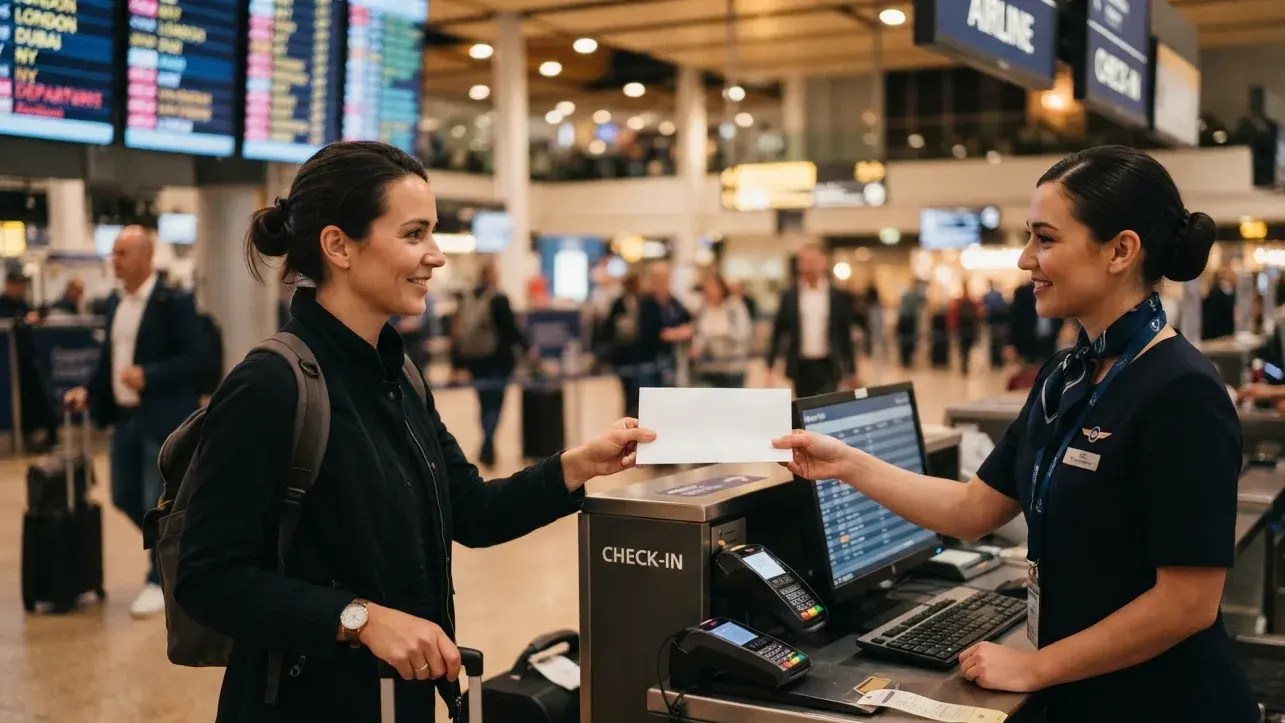
Short answer: A pre-submission checklist keeps a dummy booking from undermining a UK, Schengen or Gulf visa file: match the name to the passport, line every date up with the hotel, insurance and form, and submit inside the 48-72 hour window. Each reservation carries a real PNR and costs a flat $15 per person.
Your visa checklist asks for flight proof, but buying a fare before the decision puts real money at risk. A dummy booking solves that: a temporary flight reservation with a real PNR in your name, valid for 48-72 hours. The hard part is not ordering it; it is making sure it agrees with every other page in the file when the officer reads it.
This guide is built as a working checklist. It explains what the reservation contains, how it compares with a paid ticket, how to time it against a visa-centre appointment, what UK, Schengen and Gulf files ask for, and the checks and fixes to run before you hand anything over.
Key facts
- Dummy ticket: a flat $15 per person, with a real PNR (booking reference) you can check.
- Valid for 48-72 hours, so order it close to your appointment or travel date.
- Dummy ticket dates can be changed free of charge on the booking day only.
- Can be issued even while you are at the embassy or visa centre.
- For visa files and onward-travel proof at immigration; it is not a paid ticket for flying.
- Accepted by embassies worldwide as travel-plan evidence.
File almost ready? Book the reservation last, once every other date is fixed: a real PNR, valid 48-72 hours, for a flat $15 per person.
Get your $15 dummy bookingIn This Guide
- What Do You Get With a DummyFlights Dummy Booking?
- How Does a Dummy Flight Booking Compare With a Paid Ticket?
- How Do You Make a Dummy Booking in 3 Steps?
- When Should You Use It for a Visa File or Onward Proof at Immigration?
- What Do UK, Schengen and Gulf Visa Files Ask For?
- How Do You Check a Dummy Booking Before You Submit It?
- Which Dummy Booking Mistakes Should You Fix First?
- How Should a Hotel Booking Match the Flight?
- What Is a Dummy Booking Not?
- Which Proof Fits Your Visa File?
- Frequently Asked Questions
Official-source check: UK points come from GOV.UK visa processing times guidance, which says you should not book travel until you have a decision and must not travel before approval. Schengen points come from the European Commission's visa guidance and individual consulate checklists; Qatar points from Visit Qatar's visa information. Gulf screening points are press reports (Gulf News, Mondaq), so check the official portal for your category before you apply.
Reviewed for: pre-submission name and date checks, 48-72 hour PNR timing against appointments, UK, Schengen and Gulf checklist wording, and honest reservation-versus-ticket descriptions.
What Do You Get With a DummyFlights Dummy Booking?

Start with the product in plain terms. A dummy ticket is a temporary flight reservation, and the booking DummyFlights.com issues is built for one job: showing a visa office where you plan to fly and on which dates. You pay a flat $15 per person, and the result arrives as a PDF.
The Package in Plain Terms
Every booking carries a real PNR in the traveller's name. PNR stands for passenger name record, the airline-side record that holds a reservation. Dummy tickets typically include a real locator or PNR, and that record separates a usable reservation from a picture of one.
The PNR stays valid for 48-72 hours. That window is long enough to finish a visa form, upload your files, and reach an appointment if you plan the order of tasks sensibly. It is not long enough to book on Monday and submit the following week.
If your plans shift on the day you book, the date can be changed for free that same day. The allowance is narrow, so use it for what it suits: correcting a wrong date or a mistaken return before you submit anything.
A PDF is easy to attach to an online application, print for a paper file, or store next to your other papers. Pricing is per person: each traveller in the file needs their own $15 reservation in their own name.
What Appears on the PDF
A visa reviewer reads the document for a handful of details. Traveler details come first, and the name should match the passport exactly. Next come the flight details: the flight number, the departure and arrival cities, and the date of each leg.
The booking reference is the PNR, and it sits with the other booking details so anyone checking the file can find it quickly. Route details and travel dates should read like a believable journey, because a flight itinerary that looks odd invites questions that a clean one does not.
People use many names for the same thing. Some say dummy flight ticket, some say dummy air ticket, and some just say flight document. The labels differ, but the contents match: a reservation, not an issued fare. This guide uses dummy booking because that is what most applicants type when they search.
The booking format is deliberately plain. It reads as a flight reservation for visa use, with no decoration that makes it look like something it is not. That restraint helps, because a page that claims too much invites the checks you least want.
Why Applicants Start With a Reservation
Cost is the obvious reason. Dummy tickets save money by avoiding full-price tickets, and the gap between a full fare and a flat $15 is the whole point of the exercise.
Risk matters more than price. Dummy tickets help avoid financial loss before visa approval, because nothing expensive has been committed if the application is delayed or refused. Buying a costly confirmed ticket carries a financial risk if the visa is delayed or denied.
Speed is the third reason. Dummy tickets can be obtained quickly, often within hours, which suits an applicant whose appointment came at short notice or whose checklist is missing one page.
Flexibility is the last. Dummy tickets help maintain flexibility before visa approval: dates can still move, the route can still change, and no airline holds your money while the consulate decides.
What Makes a Booking Verifiable
A verifiable dummy ticket includes a booking reference for checks. If that reference cannot be looked up, the document is only a layout, and a reviewer has little reason to treat it as proof of anything. A verifiable reservation gives the file something solid to point to.
Most embassies require a booking reference for verification, so use a provider that issues verifiable PNRs. DummyFlights bookings carry a real PNR for this reason. Verifiable means the reference can be checked. It does not mean any particular office will check it, and it never promises how an office will react.
Checking the PNR matters because it confirms the reservation is real rather than drawn. Avoid fake or unverifiable documents entirely, since one unusable page can jeopardize an otherwise careful application.
Planning Around the 48-72 Hour Window
Work backwards from the day you will hand the file in. If the visa centre appointment is on Friday morning, book on Thursday so the PNR is still live when the paperwork changes hands. Booking the week before wastes the window.
Prepare everything else first: the application form, the cover letter, the accommodation, and the bank statements. Make the reservation last, then attach it straight away. That order keeps the dates fresh, and it keeps the free same-day date change useful if you spot a clash.
Consulates may check the validity of reservations days after they are submitted, so aim to submit as early inside the window as you can. Online applicants should upload the same day the PDF arrives, and paper applicants should print it the moment it is checked.
What a Flight Proof Document Does for the File
As flight proof, a temporary reservation tells the reader where you will enter and where you will leave. It lets an officer line your dates up with the invitation letter, the accommodation, and the leave letter from your employer. It cannot do more than that, and it should not try.
The second job is quieter. A tidy reservation shows that you planned the trip with care, and that impression carries over to the papers around it. A messy one does the reverse, so spend a minute on the details before you attach anything.
Questions to Settle Before You Pay
Five questions are worth answering before any money moves. Does the checklist for your visa category ask for flight proof? What are your arrival and exit dates, based on the invitation and the leave letter? Does the name on the form match the passport? When is the visa submission date? And how many travellers are on the file?
A short travel itinerary drawn up on paper answers most of these. List each leg, the city, and the date, then compare the list with the other documents. If anything on the list is uncertain, resolve it first, because the reservation should record a decision and not a guess.
Applicants who skip this step often make the booking and then discover that the invitation starts a day later. The booking is cheap to redo, but the 48-72 hour clock restarts, and the appointment does not wait.
Who Uses a Dummy Booking Most
Applicants with a fixed appointment and an open travel date use it most. A tourist waiting on leave approval, a family visitor waiting on an invitation, and a business traveller waiting on a meeting date all need dates on paper before they have dates in practice. The reservation records a working plan without freezing it.
The pattern holds across applicant groups. Residents of the UK, Qatar, the US, India, and Pakistan who apply to other countries meet it in the same way: an office asks for proof of travel plans, and the real flight cannot sensibly be bought yet.
How Does a Dummy Flight Booking Compare With a Paid Ticket?
Three kinds of evidence get mixed up in visa conversations. A reservation records a planned journey. An issued ticket records a journey the airline has been paid to carry out. Travel-day records exists only on the travel day. A dummy booking is the first kind, and it should never be described as the second or third.
What Separates the Two
A dummy ticket is a temporary flight reservation for visa applications, held under a real PNR. A paid ticket is a flight ticket the airline has issued after full payment, and it comes with fare rules, change conditions set by the airline, and a price that stays spent if your plans collapse.
The fare is the biggest difference in practice. A fully paid ticket on a long route can cost many times the flat $15, and the money leaves your account before anyone has decided on your visa. A temporary reservation costs a small fraction of that and commits nothing else.
Flexibility differs as well. Once a paid ticket is issued, changes run through the airline's own change process under its fare conditions. A dummy booking follows a simpler rule: a free date change on the same day of booking, after which the reservation is a short-lived record.
Side-by-Side Comparison
The table sets the three common options against the points that decide most visa files.
| Point | Dummy booking | Fully paid ticket | Flexible fare ticket |
|---|---|---|---|
| What it is | Temporary flight reservation with a real PNR | Issued flight ticket after full payment | Issued ticket on a fare with conditions |
| Cost today | $15 per person | Full fare | Usually more than a dummy ticket |
| Money at risk if the visa is delayed or denied | Nothing beyond the $15 | The fare, or most of it | Depends on the fare conditions |
| Changing dates | Free on the day of booking | Airline fare rules | Airline fare rules |
| Valid for | 48-72 hours | Until the flight | Until the flight |
| Fits when | The checklist asks for proof of travel plans | The embassy asks for a paid ticket | You want paid proof and can afford the extra fare |
| Type of evidence | Reservation | Issued ticket | Issued ticket |
How Embassies Treat Each Option
Many consulates ask for proof of travel plans rather than a paid ticket, and DummyFlights reservations are accepted by embassies worldwide where the checklist asks for a reservation. A verifiable flight reservation shows intended travel, and its real PNR lets anyone who chooses to check look the record up while it is active.
Applicants prefer a reservation for a reason that embassies tend to recognise. Some offices state plainly that applicants should not buy tickets until the visa is approved; GOV.UK, for example, says you should not book travel until you have a decision. Embassies prefer dummy tickets to avoid financial risk for applicants, and many prefer verifiable dummy tickets over fully paid tickets for the same reason.
Not every office agrees. Some countries require a temporary flight reservation instead of a purchased ticket, which makes the reservation the correct choice rather than a shortcut. Strict embassies may require fully paid tickets under their own guidelines, and if yours does, you buy one.
Every country has different requirements for accepting flight reservations. The written checklist for your own case decides the matter, not a forum thread and not a friend's experience at a different office.
Why a Ticket Does Not Buy a Better Outcome
Buying a ticket early does not mean a visa will be issued. A reviewer reads your purpose, your funds, your ties, and your dates. An expensive flight adds none of those, and nothing about a paid ticket speeds up the visa decision.
Where a ticket does change something is your risk. Money spent before the decision is money exposed to a delay, a refusal, or a change in the appointment date. A reservation removes that exposure at the stage when you know least.
Consular officers use the flight itinerary to verify intended entry and exit dates, and a reservation serves that purpose as well as an issued fare does. The officer is reading dates and a route, not the payment history behind them.
Where a Paid Ticket Does Make Sense
Buying makes sense in a few situations: the embassy states in writing that it wants a paid ticket, a fixed event date forces you to travel on a particular flight, or you would have bought the flight anyway. In each case, the written guidance for your application decides, not habit.
If you do buy, read the fare conditions before paying. Flexible fares come with conditions, and they may not return the full fare if plans fall through. Flexible fares usually cost more than a dummy ticket, so the higher fare is the price of paid proof, not a substitute for a reservation.
A flexible fare reduces the damage if a visa fails, but it does not remove it. A return ticket bought early also fixes your dates before you know the visa dates, which is the reverse of the flexibility many applicants need.
Where you buy is a separate choice. Airline websites sell fares directly, and a travel agency or travel agent can quote and book for you. Either route is fine when an embassy asks for a ticket. Neither changes the fact that full payment is due up front.
Our Advice
Use a reservation unless the written checklist asks for more. If the embassy asks for a paid ticket, buy one. If it is silent, or says a reservation is acceptable, a strong flight reservation covers the requirement and leaves your money free for the visa fee, insurance, and the other costs that cannot be avoided.
A strong flight reservation has three traits: the PNR can be checked, the dates are correct, and every detail agrees with the rest of the file. Those traits matter far more than the price paid for the document.
How the Costs Compare in Practice
Compare the options across three layers rather than one. The first layer is the price of the document: a flat $15 per person for a dummy booking against a full fare for an issued ticket.
The second is what a change costs if your plans move. For an issued ticket, the fare conditions set it. For a reservation, it is a free date change on the day of booking.
The third layer is the cost of being wrong. A reservation that turns out unnecessary costs $15 and a few minutes. An issued ticket bought for a visa that is delayed or denied can cost the whole fare or a large part of it, depending on the fare conditions.
Applicants compare the headline prices and forget this layer, which is where most of the money is lost.
Time is a fourth, quieter cost. Money tied up in a fare is money unavailable for the visa fee, the insurance, or the accommodation. For applicants on a fixed budget, keeping cash free until the decision is a practical benefit on top of the lower price.
For a longer side-by-side on when each document is the right choice, read dummy tickets compared with real tickets.
How Do You Make a Dummy Booking in 3 Steps?

The process is short, but the order matters more than the steps themselves. Most problems with a dummy booking come from rushing the first step or doing the last one too early.
Step 1: Fix Your Route and Dates
Start from the visa form and the rest of your plan, not from the booking page. Your destination country, your entry country, and your dates come first. Write down the departure date, the return date, and the cities, then check them against the invitation, the leave letter, and the accommodation.
A round trip is the default for most visitor files, because it shows both the entry and the exit. Choose a multi-city route only when the trip really visits two or more places, and you can explain why. Over-optimized routes can confuse visa reviewers and weaken applications, so keep the plan simple.
Keep the return flight inside the period you are asking for. A flight home that leaves long after your stay should end undermines the form you just filled in. The exit date on the booking should match the exit date everywhere else in the file.
If you are unsure which dates to use, ask which document is hardest to change. The invitation and the leave letter usually are. Build the reservation around them, since the reservation is the one document that a same-day date change can still correct.
Step 2: Enter the Traveller Details Exactly
Type each name as it appears on the passport, in the same order and with the same spelling. Matching flight numbers and personal details matters a great deal for visa applications, and the name is where most small slips happen.
Pricing is per person. Each traveller pays $15 and gets a real PNR in their own name, so a family file holds one reservation per person. Enter every person separately, and do not shorten a middle name or swap the order of given names and family names.
Do not guess dates you intend to change later. A reservation made for a trip you are not planning is a weaker document than one that reflects your real intentions, and it is harder to defend if the file is read closely.
Step 3: Pay $15, Download the PDF, and Submit in Time
Pay the flat $15 per person, then download the PDF and read it line by line: name, route, flight dates. If a date is wrong, use the free date change, which applies on the same day of booking. After that day, plan to make a new booking rather than expect an edit.
Then submit while the PNR is valid. A window of 48-72 hours means the PDF should go into the application the same day or the next. Submit the dummy ticket within its validity window, and treat the end of that window as a hard edge, since an expired dummy ticket can lead to rejection.
Save a copy of the PDF and the date and time you booked. If a question comes up later, you will want to show when the reservation was made and what it said. Keep the original file untouched and never edit it yourself.
A Worked Timetable
The example is fictional. Emma Walker is applying from Delhi, and her visa centre appointment is on a Friday at 10:00. Her file needs a round trip from Delhi to Rome and back, matched to a hotel stay and an employer's leave letter.
| Day | What Emma does | Why that order |
|---|---|---|
| Monday | Completes the application form and writes the cover letter | Dates are fixed by the invitation and the leave letter |
| Tuesday | Collects the accommodation papers and bank statements | Everything else is ready before the reservation is made |
| Thursday, 09:00 | Books the dummy booking and reads the PDF line by line | The PNR is live for the appointment with a day to spare |
| Thursday, afternoon | Prints the PDF, lays every date side by side, and fixes a typo using the free same-day date change | A mistake is still correctable on the day of booking |
| Friday, 10:00 | Hands over the file | The reservation is inside its 48-72 hour window |
Notice what Emma avoided. She did not book on Monday, so the PNR is still live at the appointment. She did not leave the date check until the morning of the appointment, so a mistake was still correctable under the same-day rule.
What to Do When Something Looks Wrong
A wrong date is the simplest problem: use the free date change on the day of booking. A misspelled name is more serious, because the name ties the reservation to you. Book again with the correct spelling instead of submitting a document you have doubts about.
If the appointment moves to a later date, check the window before you do anything else. A reservation made too early may lapse before the file is read, and a new booking is cleaner than hoping the old one survives.
If a checklist changes after you book, read the new wording before you submit. Offices update requirements without much notice, and a reservation that suited yesterday's wording may not suit today's.
Booking for Families and Groups
Pricing is per person, so the total grows with the party, and so does the checking. Each traveller needs a correct name, correct dates, and a matching PDF. Make the bookings in one sitting so the dates are the same for everyone, then read each PDF separately.
Children travelling with parents are often included in the same file, and their reservations should show the same route and dates as the adults. A child with a different return date raises a question that the family file cannot easily answer.
Where travellers apply separately, such as colleagues on one trip, keep each file self-consistent. One person's reservation should not depend on another person's file being read alongside it.
When Your Dates Are Not Fixed Yet
Plenty of applicants must file before an employer, school, or host confirms anything. In that case, choose the dates you would actually fly if the plan were approved today, and keep the stay inside the leave you have been offered. A reservation built on a realistic scenario is easier to defend than one built on hope.
Avoid padding the stay with extra days in case you want them later. Extra days weaken the link between the trip and its stated purpose, and they stretch the funds the file has to show. If the plan changes after the visa arrives, you make your real arrangements then.
If your leave is still pending, say so in the cover letter and give the dates you have requested. The reservation then matches a request the reader can see.
When Should You Use It for a Visa File or Onward Proof at Immigration?
Two moments call for flight proof, and they are not the same moment. One is the visa application, where a reviewer reads your papers at leisure. The other is the immigration desk, where an officer asks a quick question and expects a quick answer. A dummy booking is built for the first and only sometimes relevant to the second.
At the Visa Application Stage
A dummy ticket is used as proof of travel plans for visas, and many consulates ask for evidence of travel plans before they decide. The reservation gives the reviewer your entry and exit dates in one glance, and consular officers use the flight itinerary to verify intended entry and exit dates.
Put it with the other travel papers, next to the accommodation and the cover letter. The visa checklist for your visa category lists what the office wants, and the reservation is usually one line on that list. Order matters less than consistency, so spend your time on agreement between documents.
First-time applicants often underestimate how much a short flight document does. It answers three questions at once: when you arrive, when you leave, and whether you have thought about the trip. That is a lot of work for a single page of travel details.
As Onward Proof at Immigration
Some countries ask arriving travellers to show how they will leave. An immigration officer may ask about onward travel, and a reservation is one way to answer when the rules for that route allow it. It is evidence of an exit plan, not a permission to enter.
Treat this use with care. Entry rules differ by route, and some call for a confirmed return ticket in the exact words of the rule. Read the wording first. If a paid ticket is demanded, a reservation does not meet it.
A dummy booking is not a document for flying. That limit matters more than any other here, and the discussion of what a dummy booking is not covers it in full later in this guide.
When You Do Not Need One
Some applications do not call for flight proof at all. If your checklist does not ask for it, leave it out. Adding papers nobody requested can raise questions a leaner file would not, and a reservation that contradicts another document is worse than none.
Other applications ask for a description of the trip in a cover letter instead of a separate document. A reservation can back up that letter, but the letter does the main work, and the dates in both must agree.
People applying under a category where they already live in the destination country often have no use for flight proof. Check the category before you buy anything, and read the checklist for your own case rather than a general list.
Matching the Rest of the Paperwork
A reservation is one of the other documents in the file, and it has to agree with the rest. Dummy tickets should match the travel dates in other documents, and they must match other application documents for coherence. If the invitation says the visit starts on the 14th, a flight that lands on the 12th raises a question.
Run a simple test during visa preparation: line up every date on one sheet. Flight arrival, accommodation check-in, invitation start, leave dates, and exit date should tell one story. Where the story splits, fix the document that is easiest to change, which is usually the reservation.
Names deserve the same test. The spelling on the form, the passport, and the reservation should be identical. A visa officer reading a stack of files notices a mismatch faster than a missing page.
Timing Across the Application Process
Temporary flight reservations may expire before the visa application is processed. That is expected, which is why the reservation is judged on the day you submit and not on the day of the visa processing decision. Processing can take far longer than 72 hours, so do not expect the PNR to survive the wait. The DummyFlights guide on how long visa flight proof stays valid explains what that means for the file.
Offices sometimes look again after submission. Submit as early in the validity window as you can, and treat the reservation as a snapshot of your plan that was live when you filed. That framing is honest, and it matches how the document is meant to be used.
If your visa processing is long and your travel plans change before the decision, the reservation does not need to be updated. It was proof of a plan at one moment, and the plan you follow later is yours to set once the visa is in your passport.
Choosing Dates That Make Sense
Pick dates that follow the purpose of the trip. A conference visit has dates set by the conference. A family visit follows the host's availability. A tourist trip has the most freedom, and that freedom is where applicants overreach, stretching a stay beyond what the funds or leave can support.
Keep the stay realistic against your leave and your funds. A reviewer compares the length of the trip to the bank statements and the leave letter, and a reservation for a long stay with thin funds invites doubt. Shorter and credible beats longer and strained.
Allow a margin for the appointment itself. Offices run late, and a booking made for the exact hour leaves no room for it. A day of slack inside the 48-72 hour window costs nothing and removes a worry.
What Some Authorities Say About Buying Early
Several authorities, including UK Visas and Immigration and Singapore's Immigration and Checkpoints Authority, state outright that applicants are not required to buy a flight ticket before applying, and some missions recommend against buying one before approval. A few add that buying early does not improve the chance of a visa. That wording is common enough that you should expect to see something like it on the page for your own office.
It also explains why reservations exist. Where an authority tells you not to buy a ticket yet still wants proof of your plans, a reservation fills the gap. Offices that word their guidance this way tend to understand the reasoning behind a reservation.
Where Flight Proof Sits in the Visa Application Process
The visa application process runs through five stages: preparation, submission, processing, decision, and travel. Flight proof belongs to the first two. You assemble it during preparation, and you hand it over at submission.
By the processing stage, the reservation has usually done its job and may have lapsed, which is expected. At the decision stage, the visa is either granted or not, and only after a grant do you buy a real flight. That sequence keeps spending behind approval and puts the cheap document where the risk is highest.
Short-Notice Appointments
Appointment slots sometimes open at short notice, and the file has to be ready in days. A reservation takes far less time to arrange than a fare purchase, which is why it suits a tight schedule.
Even then, make the reservation after the other papers are done. A rushed reservation is the one most likely to disagree with the rest of the file, and a free same-day date change cannot rescue a date you never checked.
What Do UK, Schengen and Gulf Visa Files Ask For?
Requirements vary by office and by visa type, so a dummy booking that suits one file can be unnecessary for another. This part covers three common destinations, then looks at how your country of residence changes the logistics. Use it to frame questions for the official checklist, not to replace one.
What a UK Visit File Asks For
UK guidance, updated in September 2026, says you should not book travel to the UK until you have received a decision, and applicants are not expected to buy a ticket just to apply. That leaves a gap. Your application still describes where you will go and when, and a reservation can support those plans without spending money you may not recover.
Visit visa applications are read for purpose and ties: why you are going, who pays, and why you will leave. A reservation helps with the first and the last, because it fixes the dates and shows an exit. It does not replace a cover letter, bank statements, or accommodation details, which carry more weight.
The UK treats travel before approval as a mistake in its own right. You must not travel before the application is approved, and no assurance about the visa decision can be given in advance. Both points argue for a low-cost reservation at the application stage.
If you apply from outside the UK, check the current processing times for your country before you choose dates. Processing times differ by location, and a trip planned too tightly around them is the most common source of date trouble in UK files.
What a Schengen File Asks For
Many Schengen consulates list a round-trip flight reservation on their checklist, require that the name match the passport, and advise against buying the ticket before the visa is issued. Some state plainly that buying early does not improve the chance of a visa, and some say they take no responsibility for any ticket bought in advance.
A Schengen visa application is read for entry and exit across the whole area. The booking should show arrival in the Schengen state you apply through and departure from the area, and a visa itinerary that wanders across several states needs a clear main destination behind it.
Rules differ by consulate, and the difference is real. Some offices ask for a reservation, some for a booking confirmation, and a few for a paid ticket. A dummy ticket for visa use fits where the checklist asks for a reservation, so read the page for the exact office handling your case.
Applicants often ask whether embassies accept dummy tickets across the Schengen area. The honest answer is that many do when the reservation is verifiable and agrees with the file, and that some do not. Your own consulate's checklist settles it.
Name and date agreement carries extra weight in Schengen files, because a consulate may compare the reservation with the hotel stay, the insurance dates, and the travel plan in the cover letter. Make those four sources identical before you submit; the most common slips are collected in itinerary mistakes that delay Schengen visas.
What Qatar and the Gulf Ask For
Gulf entry rules often involve more than one travel document. For Qatar, a confirmed return ticket and accommodation can both be part of the requirements, and for some nationalities a hotel reservation made through an official channel is part of the visa-on-arrival route. For the UAE, press reports from Gulf News and Mondaq describe visit applications being asked for flight details and accommodation confirmation, and tighter document screening.
That raises a distinction worth stating plainly. A dummy booking is a reservation made to support an application. Some Gulf routes use the words confirmed return ticket, and offices read that phrase differently. Read the current wording on the official portal for your category, and use a reservation only where a reservation is what that wording allows.
A hotel reservation is often asked for alongside the flight, and the accommodation details should line up with the flight dates. The Gulf rules also change without much notice, so recheck the wording shortly before you apply, not weeks earlier.
Applicants based in the Gulf who travel onward to the UK or Schengen face the same checklist as everyone else for that destination. Where you live affects where you file and which centre handles you, but it does not change what the destination asks for.
Where You Apply From Changes the Logistics
Residents of the UK, the US, India, and Pakistan face the same flight-proof question but different logistics. Residence decides where you file and which centre receives you. Nationality decides which visa you need. The destination decides the evidence. Keep those three apart when you read a checklist.
Applicants in Delhi and Mumbai often file through a visa centre, where the paper file is handed over at an appointment. The main task is timing the PNR against that appointment, as in the earlier timetable. Applicants in the UK or the US who file online upload earlier, so the validity window matters at the point of upload.
For US visas, official guidance generally tells applicants not to make final travel plans or buy tickets until the visa is issued, and a flight reservation is rarely the centre of that file. If you are applying through a US interview, check the instructions for your visa category before you add anything.
The Same Reservation, Different Questions
One reservation can serve a UK file, a Schengen file, and a Gulf file only if the dates and route suit all three, which is rare. Each destination has its own entry point, its own exit point, and its own reading of the evidence. Make one booking per application.
Keep the questions separate too. For the UK, the question is whether the dates and the exit plan are believable. For Schengen, it is whether the entry and exit are clear and the consulate's wording is met. For the Gulf, it is whether the official wording allows a reservation at all.
When you do not know which wording applies, ask the visa centre or the consulate. A short question sent before booking costs nothing, and an answer in writing is something you can keep with the file.
Reading a Checklist for Flight Wording
Checklists describe flight proof in different words, and the words carry meaning. Terms such as reservation, booking, or itinerary usually point to a document that shows planned travel. Terms such as confirmed ticket, paid ticket, or proof of purchase point to a ticket the airline has issued.
When the wording is ambiguous, ask. A visa centre can often say what an office means by a confirmed booking, and a written reply is better than an assumption. Do not guess in a file where the cost of a wrong guess is a refused application and a lost fee.
Look also for qualifiers around dates. Phrases such as within the validity of the visa, for the period of stay, or matching the application tell you how closely the reservation must track the form. Treat each qualifier as an instruction, and match it exactly.
How Do You Check a Dummy Booking Before You Submit It?
A reservation fails quietly. Nobody tells you it was weak; the file is simply read with less confidence. A five-minute check before submission removes most of the avoidable problems, and it costs less than any other step in the process.
Read the PDF Against the Passport
Open the PDF beside the passport page and compare the name character by character. Then compare the dates and cities with the application form. The reservation, the form, and the passport are the three documents most likely to be compared by a reader, so they come first.
Check that the PNR is shown on the document, because the booking reference is what gives the reservation its weight. A verifiable flight reservation shows a reference that can be looked up, and a page without one has lost the quality that makes it useful.
Look at the route as a stranger would. Does it make sense for the trip you describe? A reservation that detours through an unrelated city, or leaves from somewhere you do not live, raises a question you then have to answer.
Line Up Every Date on One Sheet
Take a blank sheet and write the arrival date, the exit date, the accommodation dates, the invitation dates, the leave period, and the insurance dates in one column each.
Dummy tickets should include accurate travel dates and routes, and the dummy ticket should match your travel itinerary leg for leg. A verifiable flight itinerary can demonstrate your intended travel plans, but only when it agrees with everything around it.
Date mismatches are the most common problem with dummy tickets. The usual culprits are a hotel that checks out a day before the flight leaves, an invitation that starts a day after the flight lands, and a leave letter that ends before the return date.
Matching flight numbers and personal details matters a great deal, and so does matching travel details elsewhere in the file. If the cover letter names a flight, the booking should show the same one. Write the cover letter after the booking is final, so nothing in it contradicts the reservation.
A Fictional Worksheet
The example below is invented. Daniel Brooks is applying from Mumbai for a Schengen visit to Rome. The PNR is shown on his PDF and is deliberately not reproduced here. The last row shows a mismatch and its fix.
| Item | Dummy booking says | Other document says | Agree? |
|---|---|---|---|
| Name | DANIEL BROOKS | Passport page and visa form: DANIEL BROOKS | Yes |
| Departure city | Mumbai | Cover letter: leaving from Mumbai | Yes |
| Arrival city | Rome | Invitation and hotel: Rome | Yes |
| Arrival date | 15 March 2027 | Hotel check-in: 15 March 2027 | Yes |
| Return date | 29 March 2027 | Leave letter: leave until 30 March 2027 | Yes |
| Exit date | 29 March 2027 | Visa form: intended departure 29 March 2027 | Yes |
| Hotel check-out | 28 March 2027 on the hotel confirmation | Flight home: 29 March 2027 | No |
The last row needs a fix. Daniel can extend the hotel dates by one night, or he can move the flight to the 28th if the same-day date change is still available. He picks the hotel because the leave letter and the form both say the 29th, and changing one document is easier than changing three.
Notice how the repair works. He did not touch the passport, the leave letter, or the form. He changed the one document that was cheapest to change and left the rest alone. That is the habit to copy.
Check the Window Before You Attach
Validity is the detail applicants most often misjudge. A DummyFlights booking runs for 48-72 hours, so plan your submission within that period.
Submit the dummy ticket within its validity window and keep a note of the day and time you booked. Using an expired dummy ticket can lead to rejection, and an expired reservation looks careless even when the rest of the file is sound.
Reusing an old reservation is a related trap. Reusing old reservations can create stale dates and mismatched details, and the old record may no longer exist in airline systems by the time anyone looks. Make a fresh booking for each application, even for a repeat trip to the same place.
Check the Accommodation Against the Flight
Book accommodations that match your arrival date and destination city for consistency. A hotel in a different city from the arrival airport needs an explanation, and a stay that starts before the flight lands needs one too.
Flexible or pay-at-the-hotel options for accommodation can prevent costs if plans change, and they fit the same logic as a reservation for the flight: commit only what you can afford to lose until the visa is granted. Check the check-in and check-out dates against the flights one more time.
Print and Read It Once More
Print the PDF if the application is on paper, and read the printed page, not the screen. People catch spelling slips on paper that they miss on a monitor. For online filings, open the upload preview and read that.
Finish by asking one question: would a stranger reading only this file understand the trip? If yes, submit. If you hesitate, find the document that causes the hesitation and fix it before you pay the fee or book the appointment.
What a Reviewer Does With It
A visa officer rarely spends long on a single page. The reservation is scanned for names, dates, and cities, then compared with the form. Where everything agrees, the page recedes into the file, which is what you want from it. Where something clashes, the page draws the eye.
That is the real purpose of the check. You are not trying to impress the reader with the reservation. You are trying to make it unremarkable, so that the weight of the decision falls on your purpose, your funds, and your ties.
A Final Pre-Submission Checklist
Run through this list once, immediately before the visa submission.
- The name on the PDF matches the passport letter for letter.
- The booking reference is printed on the document.
- Arrival, exit, hotel, invitation, and leave dates tell one story.
- The route is a simple round trip, or the extra legs are explained.
- The PNR is inside its 48-72 hour window.
- The PDF has not been edited, resized, or re-typed.
- A copy is saved with the date and time of booking.
- The checklist for your office still says what it said when you started.
If any line fails, fix it before you submit. Do not hope for a lenient reader.
Which Dummy Booking Mistakes Should You Fix First?
Most rejected reservations fail for ordinary reasons. Few involve anything exotic. The same handful of slips account for most of the trouble, and every one of them can be fixed before submission if you know where to look.
Using a Free PDF With a Fake PNR
A free PDF is tempting, and it is the riskiest shortcut in this area. Free PDFs with fake PNRs can lead to visa refusals, because a reference that cannot be looked up gives the reader nothing to confirm. The PDF may look polished, but looks do not make a booking real.
The fix is simple. Use a provider that issues verifiable PNRs, and check that the booking reference is printed on the document. A fake ticket might save a few dollars, and it risks the visa fee, the appointment, and a clean record with that office.
Fake documents also create a risk that outlasts the application. It is far better never to give an office a reason to doubt anything you submit, because trust once lost is slow to rebuild.
Editing or Inventing Documents
Never edit a reservation yourself. Fake or edited tickets risk a refusal and can damage future applications, and a changed date or name is easy to spot once anyone looks closely. If a detail is wrong, book again or use the same-day date change instead of altering the PDF.
The same applies to anything built from scratch. A reservation you made up, a booking reference you guessed, or a page copied from another traveller's file is not a flight reservation. It is a fake document, and treating it as one protects you.
If you are ever unsure whether a document is safe to submit, ask a simple question: could a reader check it against a real record? If the answer is no, do not submit it.
Letting the Reservation Go Stale
A reservation made too early expires before it is read. Temporary flight reservations may expire before the visa application is processed, so what counts is the day of submission. Book close to your appointment or upload date, and attach the PDF straight away.
Stale details are a second problem. An old reservation for last year's trip, resubmitted with a new application, carries the wrong dates and sometimes the wrong route. Make a new booking for every application and delete the old one from the file.
If your appointment is moved to another day, treat the reservation as spent. Book again close to the new date. The $15 you spend a second time is small compared with the risk of an expired document in the file.
Date Mismatches
Date mismatches are the most common problem with dummy tickets. They arise when the reservation was made before the other documents were final, or when one document was changed afterwards, and the rest were not.
The cure is process, not care. Finish the invitation, the leave letter, and the accommodation first. Then make the reservation. Then run the date sheet from the earlier discussion. A reservation made last has no chance to disagree with a document that did not yet exist.
If a mismatch survives to the submission day, fix the cheapest document. Often that is the reservation, and the free same-day date change exists for exactly this case when you are still inside the day of booking.
Over-Optimized Routes
A route that is clever is a route that is questioned. Over-optimized routes can confuse visa reviewers and weaken applications. Multi-leg journeys with several stopovers, or flights that depart from a city you do not live in, make a reader wonder why.
Choose the simplest route that fits the trip. A round trip between your home city and the destination, with dates that match your purpose, says everything the reader needs. Complexity that serves the trip is fine, and complexity that serves nothing is a liability.
If your trip does involve several cities, keep the legs in the order you will visit them and make sure the accommodation follows the same order. A reader should be able to trace the whole journey with a finger.
One-Way Reservations
A one-way reservation shows how you arrive and says nothing about how you leave. Most visitor files want the exit as well as the entry, because the exit is evidence of an intention to return. A round trip supplies both.
Where a route genuinely needs a one-way document, such as onward travel to a third country, make sure the file explains why. A reader should never have to guess at the exit plan.
Wrong or Shortened Names
A name that differs from the passport by a letter weakens the whole reservation. Enter the name exactly as printed, check the PDF, and book again if there is a slip. The cost of a second booking is trivial next to a reservation that does not match the person it names.
Do the same for every traveller in a family file. Check each PDF separately, because a mistake in one does not stand out when the others are right.
Submitting Without Reading It
The last mistake is the least technical. Applicants download the PDF, attach it, and never read it. Spend two minutes on the page. Read the name, the cities, the dates, and the booking reference, and compare each against the application form.
Reading the page is also the step that catches an accidental booking for the wrong month. It is not unusual for a date picker to default to a different day than the one intended, and the free same-day date change is there to absorb exactly that slip.
When the Office Asks Questions
Sometimes an office writes back with a query about the reservation. Answer plainly and promptly. Say that it was a temporary reservation made to support the application, give the dates as they appear, and offer whatever the office asks for next.
Do not argue about whether the reservation was a ticket. It was a reservation, and the office knows the difference. A short, accurate reply preserves your credibility, and credibility is worth more than any single document in the file.
If the office asks for a paid ticket after you have submitted a reservation, follow the instruction and buy one. At that point the stage has changed, and the earlier reservation has done what it was made to do.
Keeping a Record of What You Submitted
Keep a folder with the final application, the PDF as submitted, and a note of the day and time of booking. If an office later asks a question, you can answer from the record instead of from memory.
Do the same after a refusal or a reapplication. Compare the old file with the new one and note which documents changed. A clean record protects you against inconsistencies between applications, which are easy to introduce when details are retyped from memory.
How Should a Hotel Booking Match the Flight?
A hotel booking is the usual companion to a flight reservation, and its accommodation details should match your arrival date and destination city, with hotel dates that line up with the flight dates. Some applicants use a dummy hotel booking as a placeholder until the visa is granted; DummyFlights offers one for a flat $15 per person, valid 48-72 hours. Others choose a flexible or pay-at-the-hotel reservation to keep costs down if plans move.
Check four things across the pair: the first hotel night is the arrival date, the last night ends on the departure date, the city matches the arrival airport, and the guest name matches the passport. For what consulates expect from the accommodation side, BookForVisa has a hotel reservation for visa guide.
What Is a Dummy Booking Not?
A reservation is useful because it is honest about what it is. Most disappointments with these documents come from expecting more than they offer, so the limits are worth stating clearly and without softening.
It Is Not a document for flying
A dummy booking is not a document for flying. It does not entitle anyone to a seat. The PDF exists to support a visa file, or to show an exit plan as onward-travel proof at immigration where the rules for that route allow it. Plan your real journey separately, once the visa is in hand.
It Does Not Guarantee a Visa
No reservation guarantees a visa. The outcome depends on your purpose, funds, ties, travel history, and the rules of the office. A strong reservation removes one possible objection and leaves the others where they were. Anyone who promises a visa because of a booking is promising something no document can deliver.
Visa decisions rest with the issuing authority. A perfect file can still be refused, and a modest one can be approved. Treat the reservation as one line on a checklist, and the checklist as one part of the case.
It Is Not an Issued Ticket
Reservation, issued ticket, and Travel-day records are three different things. A dummy booking is a reservation. It is not a fully paid ticket, and it does not stand in for one where an embassy says it wants a paid ticket. Describing it as anything else misleads the reader and puts the application at risk.
It Does Not Replace the Rest of the File
A reservation cannot take the place of a cover letter, bank statements, accommodation details, insurance, or an invitation. It sits beside them. If those papers are weak, a good reservation does not rescue the file, and if they are strong, a modest reservation is enough.
It Does Not Change an Office's Rules
Requirements vary by country, and a reservation does not bend them. If a checklist asks for a paid ticket, the checklist wins. If it says a reservation is fine, you are fine. Read the wording, follow it, and do not argue with it at the counter.
Its Validity Is Short by Design
The PNR is valid for 48-72 hours, and the document is meant to be used inside that period. Treat it as a snapshot of your plan on one day, not as a standing record you can reuse next month or pass to another traveller.
What to Say If Someone Asks
Describe it plainly: a temporary flight reservation made to support a visa application. Do not call it a ticket you intend to fly on, and do not suggest that it proves a seat is waiting. A short, accurate description protects you far better than a flattering one.
If an officer asks about your real travel plans, answer with the truth. You intend to travel on the dates in your application if the visa is granted, and you will make your actual arrangements afterwards. That answer is consistent with everything a reservation is.
It Is Not Something to Share or Reuse
A reservation names one traveller, and it belongs to that traveller's file. Do not pass the PDF to a friend, do not reuse it for a second application, and do not publish it online. Passing a booking around defeats the point of a name-matched document and invites the mismatches that cause trouble.
Reservation details also include personal information. Store the PDF with the same care as the rest of your visa papers, and delete copies you no longer need.
Which Proof Fits Your Visa File?
For UK, Schengen and Gulf applications, a reservation is usually the sensible proof of travel plans until the visa is granted, provided the checklist asks for flight proof and your dates match every other paper. Verify the wording for your own office, and use a paid ticket only where it is demanded.
Finish the rest of the file first, book the reservation last, and submit within the 48-72 hour window.
Dates final and checklist read? Order your dummy ticket last: a real PNR in your name, valid 48-72 hours, for a flat $15 per person.
Get your $15 dummy bookingFrequently Asked Questions
What is a dummy booking for a visa?
A dummy booking is a temporary flight reservation used as proof of travel plans in a visa file. It carries a real PNR in your name and shows your route and dates. DummyFlights issues it as a PDF for a flat $15 per person, and it is not a paid ticket for flying.
How long is a dummy booking valid?
The PNR stays valid for 48-72 hours. Time your submission within that window and keep your appointment or upload date close to the booking date. If a date is wrong, a free date change is available on the booking day only; after that, a new date means a new $15 reservation.
Do embassies accept a dummy booking?
DummyFlights reservations are accepted by embassies worldwide, but requirements vary by country and a strict office may ask for a fully paid ticket. Read the checklist for your own case first. A reservation suits files that ask for proof of travel plans, and it does not guarantee a visa.
What should I check before I submit a dummy booking?
Check the name letter by letter against the passport, then line up the flight dates with the hotel nights, insurance cover, cover letter and application form. Confirm the route enters and leaves where your plan says, and that the reservation is still inside its 48-72 hour window on the day the file is checked.
Should I buy a ticket before a UK visa decision?
GOV.UK says you should not book travel to the UK until you have received a decision, and you must not travel before the application is approved. A reservation lets the application describe your dates and exit plan without spending money on a fare before the outcome is known.
What do I receive for $15?
A PDF containing a real PNR in the traveller's name, with your route and dates. It can be issued even while you are at the embassy or visa centre. It is for visa applications and onward-travel proof at immigration, and it is not a paid ticket for flying.
Friendly reminder: DummyFlights provides dummy tickets and dummy hotel bookings to support visa applications and onward-travel proof at immigration. Requirements vary by destination, consulate, visa category and traveller situation. A dummy ticket supports your file; it is not a paid ticket for travel and does not guarantee visa approval or entry.