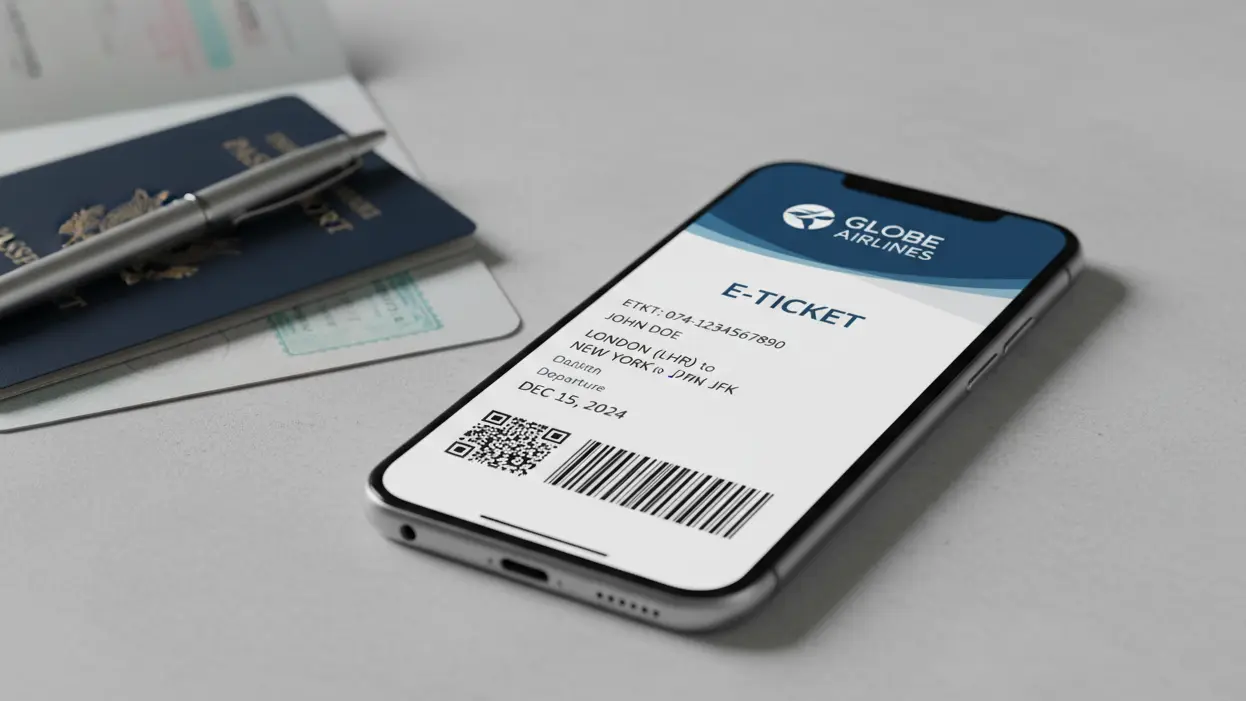

A flight ticket generator can look tempting when a deadline is close. You need a document fast, the embassy asks for travel proof, and a generator promises an instant airline-style PDF. The danger is that the design is not the real test. The real test is whether the document survives name checks, date checks, route logic, PNR questions, airline counter pressure and follow-up requests.
This guide explains why generator-made tickets fail, how risk escalates from “weak proof” to credibility damage, and what to use instead when you need a dummy ticket for visa use or onward-travel proof without buying final airfare too early.
Key facts before using any flight ticket generator:
- A generated PDF can look polished while still failing verification.
- Fake-looking fare logic, reused templates and missing booking trails create credibility risk.
- Airline staff may check travel proof faster and more strictly than an embassy portal.
- A dummy ticket should match the passport, route, dates and supporting documents.
- If a document claims too much, such as paid ticketing, it must be supportable.
Need travel proof without gambling on a fake-looking generator? Create a clean dummy ticket with DummyFlights after your route, dates and passport details are stable.
Create Your Dummy TicketIn This Guide
What Ticket Generators Produce and Why It Is Fragile
Most flight ticket generators produce a visual document. That is the problem. Travel proof is not only visual. A visa file, airline counter or transit desk may care about whether the document matches the traveler’s identity, route, timing and onward plan. A fake-looking document can collapse as soon as someone asks where the booking came from.
The hidden gap: looks legitimate vs can be verified
A clean layout does not prove a booking exists. A nice airline-style PDF does not prove the route is active. A realistic logo does not prove the passenger name, date and route can be traced. The gap between “looks legit” and “can be verified” is where generator documents become dangerous.
If a document says or implies that it is ticketed, confirmed or final, the traveler must be able to support that statement. If the real plan is “I will buy after approval,” the proof should communicate temporary travel planning, not pretend to be a final paid ticket.
This is where many cheap generator pages win the click but lose the file. They sell the feeling of certainty: a logo, a barcode, a ticket number, a neat PDF and a line that sounds official. But a travel-proof document is judged beside the whole story. If the traveler’s hotel starts one day after arrival, the leave letter says different dates, the cover letter names another airport, or the onward ticket points to a route that does not fit the stay, the polished PDF becomes the first weak signal.
A safer dummy flight ticket does the opposite. It does not try to overwhelm the reviewer with fake certainty. It supports the real travel plan with clean fields, believable timing and a format the traveler can explain calmly. That is a higher-conversion position because it answers the user’s actual fear: “Will this document create problems later?”
Three verification paths
| Check type | What gets reviewed | Where generators fail |
|---|---|---|
| Consistency review | Dates, hotels, leave letter, purpose and route. | The PDF contradicts the surrounding documents. |
| Booking-trail review | Reference, email trail, route source or supporting explanation. | The document has no credible origin. |
| Airline counter check | Name, destination, onward proof, transit and eligibility. | The record cannot be opened or explained quickly. |
Generator-specific tells
A weak generator ticket does not need a fraud expert to raise doubts. Reused templates, strange fare logic, impossible connections, over-perfect formatting, missing booking references, inconsistent baggage/cabin details and vague ticketing language are enough to make the document look manufactured.
- Connections that are too tight or geographically strange.
- Premium-looking fare details that do not fit the traveler’s budget story.
- Template layouts that look identical across unrelated routes.
- Ticketed wording with no supportable ticket trail.
- Flight numbers or airport codes that do not support the itinerary.
Another common tell is emotional overdesign. Many generator PDFs try too hard: too many stamps, too many labels, too many “confirmed” words, and details that look copied from a real ticket without understanding what each field means. A human reviewer may not know every airline layout, but they can still notice when a document feels assembled rather than issued.
There is also a timing problem. A generator may create a route instantly, but instant proof can be too early if the traveler has not finalized the stay. When the visa appointment, hotel plan or onward route changes, the traveler either submits a mismatched document or generates a second version. Both outcomes weaken the file.
Why “I will book later” does not justify a fake ticket
It is normal to avoid buying non-refundable airfare too early. That does not make a fake generated ticket safer. The clean approach is to use temporary travel proof that matches the truth: intended travel, realistic dates, verifiable or explainable route logic, and no claim that the traveler has purchased final airfare when they have not.
This distinction matters because many embassies and official checklists understand that applicants should not always buy final airfare before a decision. The smart move is not to fabricate a final ticket; it is to provide travel proof that fits the application stage. A dummy ticket, onward ticket or dummy booking can be effective when it is positioned as planning support and kept consistent with the rest of the file.
Quick self-test before upload:
- Can you explain where the document came from?
- Does the passenger name match the passport?
- Do the dates match the travel file?
- Can the route be explained in one sentence?
- Does the document avoid unsupported paid-ticket claims?
- If asked for an update, can you revise without changing the whole story?

How Blacklist and Ban Risk Actually Builds
Serious risk usually builds as a chain reaction. A generated flight ticket looks questionable. A reviewer doubts it. The applicant submits a second inconsistent version. The explanation changes. The concern shifts from weak planning to possible misrepresentation. That is the danger zone.
From doubt to credibility damage
The first reaction may be quiet. The document is treated as low-value evidence. Then the rest of the file is read with less trust. Dates, funds, purpose and travel history may receive more attention because the travel proof made the file feel unstable.
At an interview or counter, escalation can happen faster. If the traveler defends a fake generated ticket as if it is a paid ticket, the conversation becomes harder. The better approach is to avoid unsupported claims from the start and use proof that matches what the traveler can honestly explain.
The danger is rarely one single spelling mistake. It is the pattern that grows around the mistake. A generated ticket shows one route. The hotel shows another stay. The cover letter says “flexible dates.” The traveler says they will decide later. Now the problem is no longer one document. The problem is whether the applicant has a real plan.
That is why the best travel proof is quiet and boring. The name is correct. The route makes sense. The date window fits. The onward or return plan is visible. The document does not need an elaborate explanation because the file explains itself.
What “blacklist” feels like in practice
Travelers often imagine a public blacklist. In practice, the consequence may feel like lower benefit of the doubt: more requests, sharper questions, more scrutiny on dates, and less tolerance for small contradictions in later applications. Whether or not a formal label exists, credibility damage can make future files harder.
Repeat-pattern detection
Generated documents get caught because they repeat patterns. High-volume routes, identical templates, too-perfect date blocks and recycled wording can make documents look mass-produced. Even if one PDF looks different to the traveler, it may belong to a recognizable generator family.
The traveler may think, “I only used this once.” A reviewer or airline desk may see the same style repeatedly across many travelers. Similar spacing, identical label order, odd confirmation language, recycled ticket-number patterns and mismatched design cues can turn a single PDF into part of a broader pattern. That is why copied generator logic is more dangerous than many applicants realize.
Ban-risk triggers people underestimate
- Submitting a second version that changes the route without explaining why.
- Using “confirmed” or “ticketed” wording that cannot be supported.
- Changing dates to match one document while leaving another document unchanged.
- Insisting a generated document is a final ticket when asked direct questions.
- Uploading multiple versions that contradict each other.
The cost is not only money. It is credibility. Once a file looks unreliable, every other document has to work harder.
There is also a practical airport risk. If airline staff ask for onward proof, the traveler has only seconds to show something understandable. A confusing or unsupported generator PDF can force the traveler into a long explanation at the worst possible moment. A clean onward ticket or dummy ticket should answer the question quickly: who is traveling, where are they going next, and when does the travel proof show departure or onward movement?

A Verification-First Alternative Workflow
The safer workflow is simple: choose proof that matches your actual stage of planning. If the final ticket is not purchased yet, do not pretend it is. If dates may change, use proof that can be updated cleanly. If the airline may check onward travel, make sure the document can be presented quickly.
Choose the right proof in sixty seconds
| Situation | Safer proof direction | Why |
|---|---|---|
| Dates stable, airfare not final | Clean dummy ticket | Supports intended travel without locking full airfare. |
| Dates unstable | Delay proof or use flexible support | A premature ticket creates rework risk. |
| Authority asks for paid proof | Refundable option if financially safe | Paid proof may be stronger if truly required. |
| Onward proof likely at airport | Readable onward ticket proof | Airline staff need a quick answer. |
| Transit route is complex | Simpler route proof | Fewer border and transfer questions. |
The “do not corner yourself later” version
Lock your date window before you lock the route. Tie the travel dates to the appointment, event, leave approval, hotel plan or onward proof. Then choose a dummy ticket that supports those facts. Do not generate a route first and force the paperwork to fit afterward.
Build one consistency folder: final PDF, email trail if available, supporting dates and the version you will show at check-in. If a reviewer asks for updated travel proof, revise the same story instead of generating a brand-new route that looks unrelated.
For example, if the trip is ten days, the dummy ticket should not casually show a twenty-two-day stay unless the hotel, funds and cover letter explain it. If the traveler enters through one city but spends most nights elsewhere, the route should still make sense. If the traveler will continue to another country after the main stay, the onward ticket should show that movement clearly enough for a check-in agent to understand without reading the entire visa file.
Quality-control checklist
- Name matches the passport.
- Route supports the stated purpose.
- Dates match stay proof and leave timing.
- Onward or return logic is visible.
- Transit points do not create hidden requirements.
- Booking reference is readable if shown.
- Document language does not overclaim payment or ticketing.
- Only one final version is uploaded or carried.
Quality control is not cosmetic. It is a credibility filter. If one field is wrong, fix the field before submission. If the route is weak, improve the route instead of hiding behind a nicer design. If the dates are uncertain, do not force a fixed itinerary too early. The strongest dummy ticket is not the one with the most dramatic wording; it is the one that fits the traveler’s real file with the least friction.
If asked for a paid ticket mid-process
Do not argue with the request. Respond with the cleanest proof that fits the intent. If the request truly requires paid proof, consider a refundable option only after checking refund terms. If the wording is generic and the purpose is intended travel proof, a clean dummy ticket may still be the practical answer when it is clearly temporary and consistent.
The wrong move is panic. Some applicants respond to a request by buying a non-refundable ticket they cannot afford, editing the old PDF, or uploading a new generated ticket with a completely different route. That can create more questions. A better response is controlled: identify exactly what is being asked, update only what needs updating, and keep the travel story aligned.

Where Flight Ticket Generators Backfire Hardest
Visa approved, but check-in denies boarding
A visa approval or document acceptance does not mean an airline will ignore entry or onward-travel rules. Airline staff may still check whether the traveler can board the whole journey. A generator PDF can fail here because it cannot be retrieved, cannot be explained, or does not satisfy the onward proof question.
This is especially important for one-way travelers, digital nomads, backpackers and flexible travelers. Their visa or entry permission may allow movement, but the airline counter still needs a practical answer before boarding. A clean onward ticket gives that answer faster than a fake-looking ticket generator file.
Transit and onward-proof pressure
Transit hubs create last-minute pressure because the traveler may need proof before boarding the first leg. If the generated ticket includes self-transfer, airport changes or overnight layovers, the traveler can face questions that were never part of the original visa plan. Keep transit simple when using travel proof.
Generated routes often ignore real transit friction. A route may look fine on paper but create a visa, baggage, airport-change or minimum-connection problem. If the proof is challenged at check-in, the traveler may not have time to rebuild the route. That is why route realism matters as much as document design.
Family or group applications
One risky document can contaminate a group file. If a generated ticket has a wrong child name, mismatched return date or inconsistent passenger order, the whole group may face more scrutiny. Group documents need stronger identity control, not faster templates.
For families, consistency is harder because every passenger adds another chance for mismatch. Names, birthdates, route dates and document versions must stay aligned. A generator that produces separate files quickly can still create a messy group story if one passenger has a different date or spelling format.
Reapplying after refusal
If a previous file had questionable travel proof, the next file should be cleaner, not louder. Do not overshare defensive explanations. Submit one coherent route, matched dates, clean identity details and proof that does not require a complicated story.
The goal in a reapplication is to rebuild confidence. That means removing contradictions, not adding aggressive claims. A clean dummy ticket can support the new file when it matches the reason for travel, stay duration and supporting documents. If the previous refusal involved credibility concerns, every new detail should feel calmer and more consistent.
Real-world generator failure patterns:
- The PDF looks like a ticket but cannot be traced.
- The fare class or cabin does not fit the traveler’s budget story.
- The route has impossible or suspicious connections.
- The “updated” document changes the entire travel story.
- The traveler carries several contradictory versions.
Keep Your File Strong When Flight Proof Gets Tested
The aggressive move is not using the loudest-looking PDF. The aggressive move is using proof that survives comparison. A dummy ticket should support the file with clean identity, realistic dates, credible route logic and a document format that does not pretend to be something it is not.
Flight ticket generators fail because they optimize the wrong thing. They optimize the screenshot. Strong travel proof optimizes the file. It helps the traveler avoid buying full airfare too early while still showing a believable plan. It supports the embassy document check, the airline counter conversation and the traveler’s own explanation.
If the document ever gets questioned, the best answer is not a louder PDF. The best answer is a cleaner story: correct name, believable route, matching dates, visible onward logic and no unsupported claim that turns a temporary document into a fake final ticket. That is the standard a serious dummy ticket provider should meet.
Final generator-risk checklist:
- Do not use a fake-looking flight ticket generator PDF.
- Do not claim a ticket is paid if it is not.
- Do not manually edit factual ticket fields.
- Do not upload multiple route versions.
- Do use a clean dummy ticket when temporary proof fits the case.
- Do keep the same route story across every document.
- Do carry one final airport-ready version.
Need travel proof that does not behave like a fake generator file? Create a clean dummy ticket with DummyFlights before a risky PDF becomes the weak point in your file.
Create Your Dummy TicketFrequently Asked Questions
Are flight ticket generators safe for visa proof?
Flight ticket generators are risky when they create fake-looking PDFs without a reliable booking trail. A clean dummy ticket is stronger when it matches the passport, dates, route and supporting documents.
Why do flight ticket generator PDFs fail?
They fail because the document may look polished but cannot support basic checks such as name match, route realism, date consistency, onward proof or booking-reference questions.
Is a dummy ticket the same as a fake ticket generator?
No. A dummy ticket should be temporary travel proof for planning or documentation support. A fake ticket generator usually creates an unsupported PDF that pretends to be stronger than it is.
Can an airline check a generated ticket?
Airline staff may check passenger details, destination rules, transit requirements and onward proof. If the document cannot be opened, explained or supported, it can create boarding problems.
What should I use instead of a flight ticket generator?
Use a clean dummy ticket, airline hold, refundable ticket or delayed proof depending on your deadline, checklist, route risk and financial situation. The proof should match the file and avoid false paid-ticket claims.
Can I say I will buy the ticket after approval?
Yes, when that is true and the proof is framed as intended travel support. Do not submit a fake final ticket if you have not purchased final airfare.
What is the safest dummy ticket format?
The safest format is readable, current, passport-matched, date-matched, route-realistic and clear about onward or return travel. It should not contain edited facts or unsupported ticketing claims.
Does a dummy ticket promise visa approval or entry?
No. A dummy ticket can support the travel-proof part of a file, but approval, boarding and entry depend on current rules, document quality and the decision maker or airline process.
Friendly reminder: DummyFlights provides temporary travel-proof documents for planning and application support. Requirements vary by destination, airline, route and applicant situation. A dummy ticket can support a file, but it does not promise approval, boarding or entry.