

If you overstay without clean exit proof, the future problem is not only the overstay itself — it is the uncertainty around when you actually left. A dummy ticket or onward ticket cannot erase a past overstay, but it can help your next travel file show a cleaner future exit plan when paired with honest disclosure, departure evidence, hotel dates, insurance and a consistent travel timeline.
The real trouble often starts after you leave. You may have overstayed by a few days, paid a fine, boarded your flight, and assumed the issue ended at the departure gate. Then a future visa form asks for exact travel dates, an officer cannot match your exit cleanly, or an airline questions your travel history before boarding.
That is where a past mistake turns into a record problem. The overstay is one issue. Missing exit proof is another. Together, they can make a short mistake look longer, less documented, or less credible than it really was.
This guide focuses on what matters next: how missing exit proof can affect future applications, which records can rebuild the timeline, how to explain the overstay without sounding defensive, and when a future onward ticket or dummy ticket helps show that your next trip is better planned.
Key facts before rebuilding an overstay file:
- Past exit proof and future onward proof are different documents.
- A dummy ticket cannot fix or erase a previous overstay.
- Clean departure evidence can make the old timeline easier to trust.
- Future onward ticket proof can help answer “will this happen again?”
- Old travel dates, hotel records, tickets, boarding passes and entry stamps matter.
- Honest explanation is safer than hiding a breach and hoping nobody checks.
Planning your next trip after a messy travel record? Create a clean dummy ticket, dummy booking or onward ticket that supports a clearer future exit plan.
Create Your Dummy TicketIn This Guide
When an Overstay Becomes a Record Problem

The overstay is the starting issue. The bigger problem often appears later, when your exit is hard to prove and your travel history stops looking clean. You may know the exact day you left, but the next officer may not.
Why missing exit proof makes the overstay look worse
A short overstay can become a larger credibility issue when the departure trail is weak. If there is no clear exit stamp, no saved boarding pass, incomplete flight emails and no reliable record, the file can look unresolved rather than closed. Officers rarely reward a file that forces them to guess.
The question shifts from “how many days did you overstay?” to “can we trust the date you say you left?” A five-day overstay with clean departure proof is one kind of problem. A five-day overstay with no clear exit evidence can look more serious because the timeline is uncertain.
This is where applicants often make the wrong assumption. They think the issue is still only the number of extra days. In practice, the issue becomes whether the full travel history can be reconstructed. If the old exit is vague but the new application gives very precise future dates, the file can feel selective: exact where convenient, unclear where uncomfortable.
Three audiences read your travel history
Airlines, border authorities and visa officers may all read the same travel history differently. Airlines care about boarding risk. Border authorities care about lawful stay and recorded departure. Visa officers care about credibility, disclosure and whether your next trip looks better managed.
That is why missing exit proof creates more than one problem. A small document gap can raise different concerns at different checkpoints.
An airline may simply want to know whether your next trip has a clear onward ticket. A border officer may care whether the old stay was closed properly. A visa officer may ask whether the old breach was accidental, explained and unlikely to repeat. One weak exit record can therefore affect several parts of the travel chain.
Authorities may read uncertainty against you
When departure cannot be matched quickly, officials may question whether you left when you say you did. They may wonder whether the dates were rounded, whether the breach was larger, or whether part of the story is missing. That does not mean refusal is automatic. It means the burden shifts back to you faster.
Digital exits and weak paper trails
Modern travel can create a strange proof gap. E-gates move people quickly. Some exits are recorded digitally. Some airports stamp less. That is convenient until you need to prove departure months later. If you no longer have a boarding pass, checked-bag receipt, airline email or destination entry stamp, the record becomes harder to rebuild.
Digital systems can know more than your passport shows, but you may not easily hold that proof in your own hands. That is why travelers should save personal evidence: the boarding pass screenshot, airline receipt, baggage tag, hotel checkout, ride to the airport, and entry proof in the next country. Those small records become important when a future form asks for exact travel history.
Why the next visa can be affected
A future application may ask about previous overstays, refusals, removals or immigration breaches. If you disclose the issue but cannot prove the exit clearly, the explanation may feel incomplete. If you hide the issue and it appears in records, the credibility damage can be worse than the original overstay.
The next visa officer is not only judging the past. They are judging whether the next trip looks controlled. This is where future travel proof matters. A clean dummy ticket, dummy hotel and onward ticket can help show that the next file has a clearer beginning, stay period and exit plan.
Regularizing versus disappearing from the file
There is a difference between overstaying and then resolving the position through departure, official process, payment, extension, legal advice or documented regularization, versus overstaying and leaving behind a blank record. The first may still be a problem, but it is easier to explain. The second creates uncertainty that future reviewers may read harshly.
Citation-ready baseline: missing exit proof can make an overstay harder to explain because the reviewer may not be able to confirm when the unlawful stay ended. Future onward ticket proof helps the next trip plan; it does not prove the old departure by itself.
What Usually Happens Next at Departure, Reapplication and Re-Entry
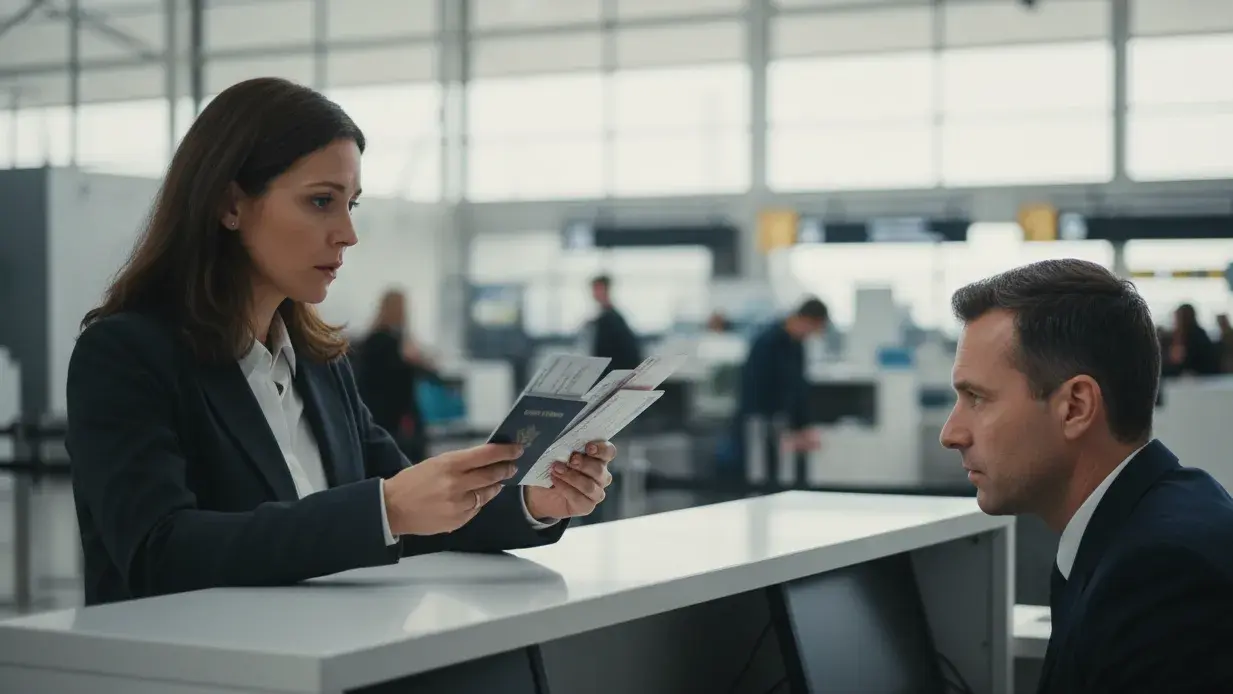
If you are still inside the country
If you are still inside the country after permission expired, treat the issue seriously. Check the official rule for that country, consider qualified legal help where needed, and avoid creating a fake future document to make the situation look clean. A dummy ticket can support a real plan to leave, but it cannot legalize the overstay.
If you already left but cannot prove it
If you already left, rebuild the evidence trail. Search airline emails, e-ticket receipts, boarding passes, baggage receipts, card payments, hotel checkout records, entry stamps in the next country, ride receipts to the airport, and immigration records where available. The goal is to make the exit date credible again.
Start from the strongest documents and work downward. Official departure or arrival records are strongest. Airline records and boarding passes are usually strong. Payment receipts, hotel checkout records and transport receipts are supporting evidence. Screenshots and personal notes help organize the timeline but are rarely enough alone.
Future officers may focus on the explanation
Sometimes the next decision becomes less about the original violation and more about how you explain it. Did you disclose it? Did you leave voluntarily? Did you keep proof? Did you understand the rule? Does the new itinerary show a cleaner exit plan? Those questions shape the credibility of the next file.
This is why the explanation should not sound like an argument. The officer does not need a dramatic apology. They need a clear timeline, reason, evidence and future-control plan. The more organized the file, the less space there is for guesswork.
Airlines may also create friction
Airlines may look harder at passengers whose travel pattern suggests weak exit compliance. That does not mean the airline knows every old overstay. It means your next route, visa, onward ticket and stay logic need to be stronger so the trip looks boardable.
If an airline asks about onward proof, answer the current-trip question. Do not start explaining the entire old overstay unless the agent specifically asks. Show the current onward ticket, return plan, visa, hotel proof or travel dates that make today’s trip easier to board.
Different countries treat the same overstay differently
A short overstay, voluntary departure, paid fine, medical reason or administrative delay may be treated differently depending on the country and visa category. There is no universal outcome. This is why the article stays precise: documentation improves the file, but it does not promise a result.
How to Rebuild Exit Proof When Your File Is Messy
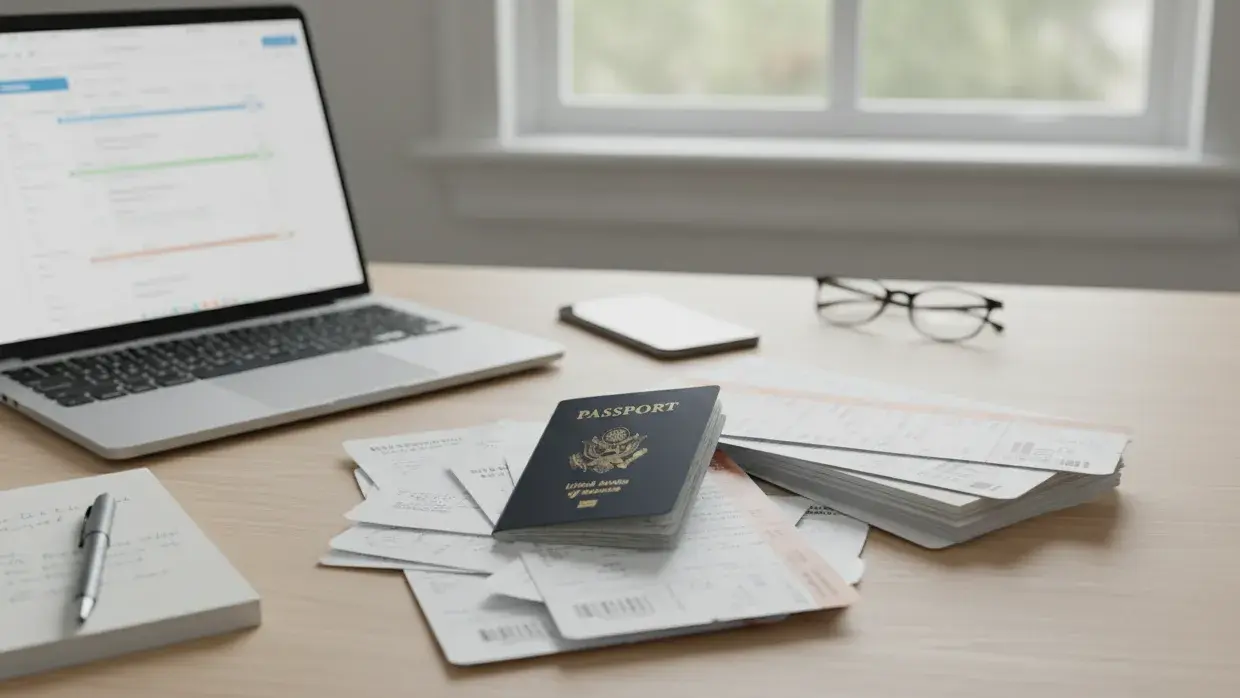
Start with the timeline before collecting documents. Write the date your permission expired, the date you actually left, the airport or border used, the flight or transport details, and the date you entered the next country. Then attach evidence to each point.
Useful flight-linked records
- Old e-ticket or flight receipt.
- Boarding pass or mobile wallet pass.
- Airline confirmation email.
- Baggage receipt or airport payment receipt.
- Credit-card charge for the flight.
- Entry stamp or arrival record in the next country.
- Hotel checkout and transport receipts around the departure date.
Do not dismiss “small” documents. A ride receipt to the airport plus baggage receipt plus next-country entry stamp can support a missing boarding pass. A card charge plus airline email plus hotel checkout can support a travel date. The goal is to create a chain that points to the same departure window.
Missing stamps and lost boarding passes
No single missing document destroys the file automatically. The goal is to build a chain. If there is no exit stamp, maybe there is an airline record. If the boarding pass is gone, maybe there is a payment receipt and next-country entry stamp. Several weaker documents can sometimes create one believable timeline.
Where possible, arrange the evidence chronologically. Put the authorized-stay expiry first, then the overstay period, then departure evidence, then next-country arrival evidence. A reviewer should be able to follow the story without hunting through random attachments.
What to request from airlines or booking sources
Ask for old itinerary receipts, booking confirmations, e-ticket receipts, flown confirmation where available, or any record that shows the passenger, route and date. Airlines and agencies vary in what they can provide, but it is worth trying before submitting a weak explanation.
If the ticket was purchased through an OTA or travel agent, request both the seller invoice and the airline record where possible. If the airline cannot provide a full flown record, even a confirmation showing passenger, route and date may help support the timeline.
Past exit proof versus future exit proof
Past exit proof shows when you left. Future exit proof shows how you plan to leave next time. Do not mix them up. A new onward ticket can strengthen your next itinerary, but it does not prove the old departure. Use each document for the right job.
This distinction is important for credibility. If the officer asks about the old overstay, answer with old evidence. If the officer asks whether the next trip is controlled, answer with the new itinerary, dummy ticket, hotel proof and onward ticket. Mixing the two can make the file feel confused.
How to Explain the Overstay Without Making the Next File Worse
The worst mistake is answering narrowly and hoping nobody notices. If the form asks about overstays, answer honestly and consistently with the evidence. A weak disclosure can look worse than a difficult truth.
Write documented, not defensive
A strong explanation is short, factual and supported. State the authorized stay date, the actual departure date, the reason for the overstay, what evidence proves departure, and what has changed in the next travel plan. Avoid emotional over-explaining unless the reason is directly relevant and documented.
Use plain language. “I was authorized to stay until 10 May. I departed on 15 May. The overstay was five days. I have attached my airline record and entry stamp into the next country. For this application, my travel proof shows arrival on 3 October and onward departure on 17 October.” That style is calmer than a long defensive paragraph.
Documents that should sit beside the explanation
- Old passport pages and stamps where available.
- Departure or arrival travel records.
- Airline or transport evidence.
- Fine payment receipt, if applicable.
- Medical, emergency or administrative proof, if relevant.
- New itinerary, dummy ticket, dummy hotel or onward ticket for the future trip.
Intent matters, but evidence carries the file
A believable reason helps, but evidence is what makes the timeline usable. “I forgot the date” is weak. “I left on this date, here is the airline record, here is the next-country entry stamp, and here is how my next trip is structured to avoid repeat issues” is stronger.
If the reason was medical, family emergency, cancelled flight, administrative confusion or delayed document return, attach proof where possible. If there is no proof, keep the explanation modest. Do not oversell a reason that the evidence cannot support.
Answer the hidden concern
The hidden concern is usually: “Will this happen again?” Your next file should answer that before the officer has to ask. That means clear stay dates, hotel alignment, insurance alignment, return or onward ticket proof, and a travel plan that looks easier to trust.
This is where a future dummy ticket or onward ticket becomes useful. It gives the next file a visible exit structure. It does not remove the old breach, but it helps show that the new trip has better planning and less ambiguity.
If you are refused after honest disclosure
Do not rewrite history in the next application. Read the refusal reason carefully, improve the evidence, fix the weak timeline and consider qualified advice if the legal consequences are serious. A new dummy ticket cannot repair a credibility problem by itself.
Need a cleaner future exit plan? Prepare a dummy ticket, dummy booking, dummy hotel or onward ticket that matches your next application timeline.
Prepare Your Dummy TicketTurn an Unclear Exit Into a More Credible Future Travel Record
Before your next application, confirm:
- You know the exact overstay and departure dates.
- You have collected the strongest available old exit evidence.
- Your explanation matches the documents.
- Your new dummy ticket or paid ticket matches the next travel dates.
- Your onward ticket answers the future exit question when needed.
- Your dummy hotel and insurance dates support the same timeline.
A past overstay is not made better by pretending it did not happen. It is made clearer by proving the timeline, explaining it cleanly, and showing that the next trip has stronger exit planning. That is where a future dummy ticket or onward ticket can help: not as a cure for the past, but as proof that the next file is better controlled.
Frequently Asked Questions
What happens if I overstay without exit proof?
The issue can become harder to explain later because officers may not be able to confirm when you actually left. Missing exit proof can make a short overstay look unresolved or less credible.
Can a dummy ticket fix a previous overstay?
No. A dummy ticket cannot erase or fix a previous overstay. It can only support a cleaner future travel plan when paired with honest disclosure and proper evidence.
What documents can prove I exited after overstaying?
Useful documents include boarding passes, airline receipts, e-ticket records, baggage receipts, next-country entry stamps, transport receipts, hotel checkout records and official departure records where available.
Is an onward ticket useful after an overstay?
An onward ticket can be useful for a future application or boarding check because it shows planned exit or next movement. It does not prove the old departure by itself.
Should I disclose an old overstay?
If a form asks about overstays or immigration breaches, answer honestly and consistently with the evidence. Hiding the issue can create a bigger credibility problem.
Can missing exit stamps cause problems?
Yes, if there is no other evidence of departure. Many exits are now digital or lightly documented, so travelers should keep airline, transport and next-country entry records.
Can airlines question me because of a past overstay?
Airlines mainly check whether you are boardable for the current trip. A messy travel history can create friction if the new route, visa or onward proof looks weak.
What should my overstay explanation include?
Include the authorized stay date, actual departure date, reason for the overstay, evidence of departure, and what makes the next travel plan better controlled.
Does paying an overstay fine end the issue?
Not always. Paying a fine may resolve one part of the departure process, but future applications may still ask about the overstay and require a clear timeline.
What is the safest future travel-proof setup?
Use a consistent file: clean dummy ticket or paid ticket, onward ticket where needed, matching hotel dates, matching insurance dates and an explanation that matches the travel evidence.
Friendly reminder: DummyFlights provides temporary travel-proof documents for planning and application support. Requirements vary by destination, airline, route and applicant situation. A dummy ticket can support a file, but it does not promise approval, boarding or entry.