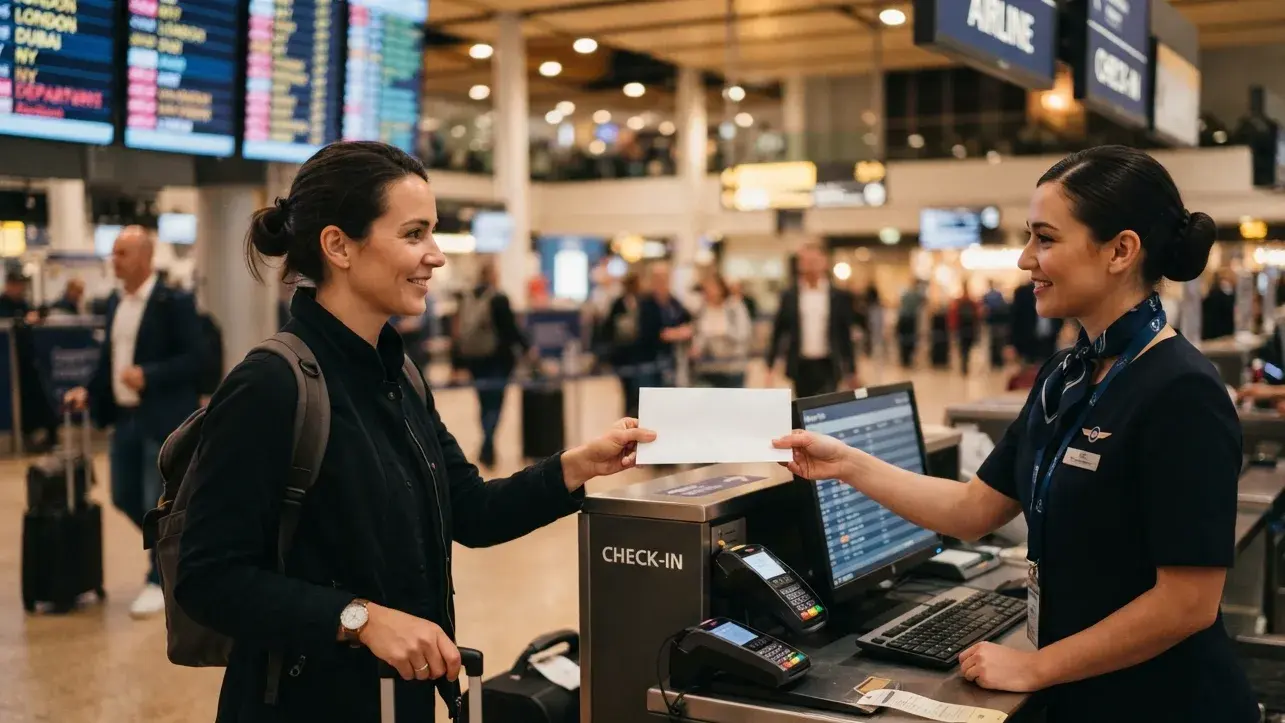
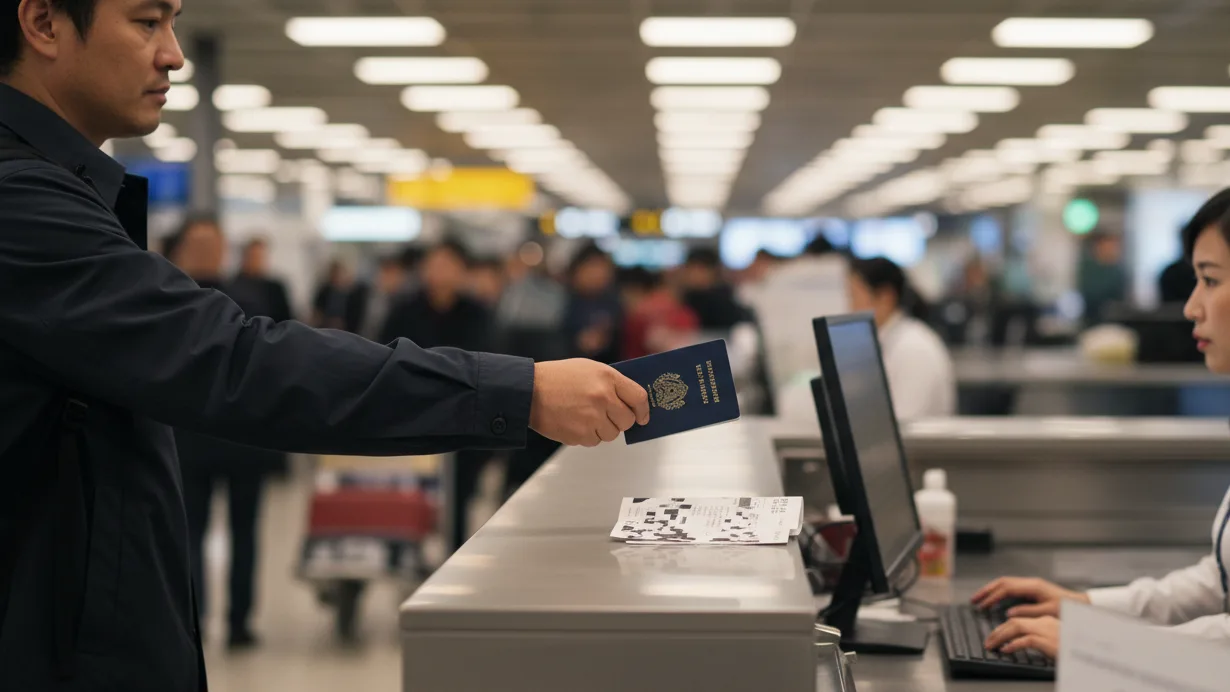
The airline agent types your PNR, pauses, and turns the screen slightly away. Then comes the question that decides your next few minutes: “Can you confirm this booking is valid right now?” That moment feels dramatic, but a live PNR check is usually practical. Staff are not admiring your PDF. They are testing whether the reservation exists, whether it belongs to you, and whether it supports the route you are trying to fly.
This guide explains who checks your PNR, what they can actually confirm, what can go wrong in seconds, and how to make your onward or return proof easier to verify. The goal is not to over-explain. The goal is to arrive with one clean, current set of documents that works under airport pressure.
Key facts before a live PNR check:
- A PNR is a booking reference, but the live record may be searched differently by airline, partner carrier, operating carrier or travel desk.
- Airline staff are usually the first PNR checkpoint because they must decide whether you can board.
- Immigration officers may focus less on the technical PNR and more on whether your route, exit date and answers prove lawful travel intent.
- A PDF alone does not clear a strict check if the live record, name, segment status or onward timing looks wrong.
- Separate bookings, partner airlines, name-order differences and expired reservations are common reasons a valid-looking PNR creates delay.
- The safest setup is one current itinerary PDF, one readable booking reference, one consistent onward plan and no old conflicting versions.
Need onward proof that can survive a real airport lookup? Create a clean onward ticket with DummyFlights before check-in or immigration asks for your PNR.
Create Your Onward TicketIn This Guide
Official-source check: airport PNR and passenger-data checks vary by route and authority. U.S. CBP describes Advance Passenger Information System data used for passenger processing, and EU law defines PNR data as airline reservation and itinerary information used by authorities for security purposes. Singapore ICA also lists return or onward tickets among entry requirements where applicable. The practical takeaway is careful: airlines commonly verify live booking records for boarding, while immigration authorities may use passenger data, travel records and documents to assess admissibility. Sources: U.S. CBP APIS guidance, EU PNR Directive and Singapore ICA entry requirements.
Reviewed for: PNR terminology, airline and immigration checkpoint separation, onward-ticket verification risk, partner-carrier lookup issues, booking-status wording, dummy ticket claim safety, official-source alignment and contextual link rotation.
Who Checks Your PNR At The Airport
A PNR check can happen before you see a border officer. It usually starts with the airline because the airline has to decide whether you are allowed to travel on that route today. If you are refused on arrival, denied boarding onward or returned, the carrier can face operational and financial consequences. That is why airline staff often verify your booking more aggressively than travelers expect.
Check-in staff are usually the first PNR checkpoint
At check-in, the airline is not trying to judge your travel style. The staff member is trying to avoid transporting someone who may be refused at arrival, fined, delayed at transit or sent back. A PNR becomes important when your route has onward rules, your visa is short-stay, your ticket type looks incomplete, or your passport/destination combination requires proof that the journey can legally continue.
What check-in staff commonly confirm in seconds:
- Identity match: passport name and booking name are close enough to retrieve.
- Segment logic: the onward or return segment supports your entry permission.
- Timing fit: the exit date sits inside the visa or stay window.
- Carrier consistency: the booking exists where the operating airline can see it.
- Document readiness: the itinerary is readable without slow scrolling or guessing.
Small details trigger bigger checks. A missing middle name, swapped surname order, extra title, different spacing, partner-airline reference or old PDF can make a record harder to retrieve. The delay is often the issue. Once a counter agent has to keep searching, the check can move from routine to “let’s verify this properly.”
Gate agents care about clean boarding
Gate checks happen for a different reason. The gate team is protecting departure timing. If your documents create doubt, they may recheck the same PNR that cleared at check-in. This can happen when a system refreshes, a destination rule is applied late, transit staff request confirmation, or boarding is being audited for a stricter route.
At the gate, you rarely get a long conversation. You get short questions and quick decisions. Keep the same PNR evidence ready even after receiving a boarding pass. A last-minute “show it again” request is still part of airport reality, not proof that anything is wrong.
Departure immigration and arrival immigration are different interactions
In many airports, airline staff are the main travel-document checkpoint before departure. Where departure immigration exists, the focus is often on your right to exit, travel-document validity and sometimes the legitimacy of the journey. The fine details of your onward segment may matter more to the airline than to the departure officer.
Arrival immigration is different. This is where the PNR or booking details can become part of a credibility check. The officer may look for a clean match between:
- The purpose you state at the counter.
- The length of stay you claim.
- The accommodation or host details you provide.
- The onward or return timing that proves you will leave.
This is common for short-stay visitor visas, visa-free entry, visa-on-arrival programs, eTAs and destinations that routinely ask, “When are you leaving?” A PNR check at arrival is often less about the booking code itself and more about whether the live travel proof supports your entry story.
Transit and airside checks can surprise you
Transit rules can pull your booking into the spotlight even if you never plan to enter the transit country. You might remain airside, but the airline still has to move you legally to the next point. This is especially sensitive when your journey is split across separate tickets.
Transit checks often happen when:
- Your onward segment is on a separate booking reference.
- Your connection is tight and staff want to confirm you can board onward.
- You must clear immigration to collect bags or change terminals.
- A transit authorization applies to your nationality or route.
- The final destination asks for proof of onward travel.
If your trip is split across two PNRs, make it easy for staff to see the full chain. Keep both confirmations accessible. Make sure names match across records. If the route looks continuous, the conversation stays shorter.
What PNR checking looks like from their side
A PNR check is usually fast and quiet. Staff may type the reference, cross-check the passenger name, scan the segment list and compare the PDF with the live record. If they ask for your PDF, it is often a shortcut to copy flight numbers, dates or name spelling before checking the live system.
Common signs they need more certainty:
- They retype your name instead of only the PNR.
- They ask which airline owns or operates the booking.
- They ask for an e-ticket number or status proof.
- They step away to call a supervisor.
- They hold your passport while comparing details.
Understanding the checkpoint helps you respond better. If the airline is checking carrier visibility, show the operating-carrier reference. If immigration is checking exit intent, show the onward plan and make your spoken timeline match it.
What Happens When Your PNR Is Verified Live

A live PNR check is a real-time yes-or-no moment. The person checking is not reading your whole travel story. They are validating what their system can confirm right now. A clean lookup feels smooth because the record answers the obvious questions before the staff member has to ask them.
What a clean PNR usually looks like
A clean PNR is easy to retrieve. The name matches. The route makes sense. The segment status does not look removed, expired or pending. The PDF, email and live record point to the same itinerary.
What usually makes a PNR clean in a live environment:
- Exact or near-exact passenger identity matching the passport.
- Clear itinerary chain from departure to destination and onward exit if relevant.
- Stable segment status with no obvious timeout or cancellation issue.
- Consistent details across PDF, email, airline app and live record.
- Readable booking reference without confusing similar-looking letters or numbers.
Retrievability matters more than many travelers expect. If the agent must try multiple spellings, swap name order or ask which carrier owns the booking, the check slows down. That delay often triggers deeper verification even when the underlying plan is legitimate.
Booked vs ticketed: the airport risk
At the airport, the difference between booked and ticketed is practical. Some counters treat a verifiable booking as acceptable proof of onward intent. Others want the record to look fully ticketed for the flight being used as evidence. The stricter the route, the less patience the desk may have for nuance.
What changes when the check becomes strict:
- A booked record may be visible but still questioned for travel readiness.
- A ticketed record usually signals stronger commitment and reduces debate.
- A temporary reservation must be current, retrievable and aligned with the stay window.
- A PDF that looks polished but cannot be checked can fail the practical test.
The useful question is not “What feels sufficient to me?” It is “What will satisfy the person in front of me under time pressure?” If your route is known for tight entry compliance, plan for the strictest likely checkpoint.
Common failure outcomes
When a live check fails, outcomes usually follow a ladder. The earlier you catch the issue, the easier the fix.
- Quick clarification, then cleared: they ask one or two questions and the record appears.
- Extra verification: they keep your documents briefly, call a supervisor or contact support.
- Conditional boarding: they ask you to update proof before issuing a boarding pass.
- Denied boarding: they decide you do not meet carrier requirements for that route today.
- Arrival complications: the issue appears at immigration and leads to tighter questioning.
These outcomes are not about winning an argument. They are about whether you can produce acceptable proof within the time window the airport workflow allows.
Red flags that trigger deeper verification
Most deeper checks start with small inconsistencies. Staff may not know your full situation, so they rely on details that are visible quickly.
Name-format red flags:
- Missing middle name when the passport consistently uses it.
- Different surname order from passport or visa record.
- Extra titles added into the passenger-name field.
- Spacing differences that make retrieval slow.
Route and timing red flags:
- Onward flight leaves from a different city without a clear bridge.
- Exit date conflicts with the stay length you claim.
- One-way travel into a destination that routinely asks for onward proof.
- Reservation created minutes before check-in with no time to stabilize.
- Multiple modified PDFs with conflicting dates.
Carrier and partner confusion also matters. A booking made under one airline, operated by another, and shown with only one reference code can force staff to search the wrong system. If your onward is separate, say so early and show both references.
If they say “we can’t find your PNR”
“We can’t find it” can mean several things. It does not always mean the booking is fake or useless. The problem is that you do not control which meaning the staff member assumes first.
Common reasons a valid-looking PNR does not appear immediately:
- Wrong system, right booking: they need the operating-carrier reference.
- Name mismatch during retrieval: the record exists, but the name was searched differently.
- Expired or changed record: your saved itinerary is not the current record.
- Segment-level issue: the PNR exists, but the relevant flight is no longer active.
- Partner-airline visibility: one carrier sees the booking differently from another.
Fast steps that usually move the check forward:
- Ask which airline system they are checking.
- Offer the operating-carrier reference if you have it.
- Show the exact passenger-name spelling from the PDF.
- Provide flight number and date so they can search by segment.
- Open the airline app or email only if it loads quickly.
Do not scroll endlessly while staff wait. Put the right reference in front of them quickly. If the issue is not absence but access, a clean offline proof kit can save the conversation.
How To Make Sure Your PNR Survives A Real Airport Check

The best time to fix a reservation issue is before you reach the counter. A few targeted checks can turn a stressful lookup into a routine scan-and-go moment.
72 to 24 hours before departure
Start with what the airline system will match, not what the PDF happens to display. Confirm the practical items while you still have time to correct them:
- Passenger name matches the valid passport name format.
- Passport number is correct wherever it appears in the booking profile.
- Travel dates match the trip and visa or entry window.
- Onward or return segment fits the destination’s stay-length requirement.
- The booking reference belongs to the carrier staff are likely to check.
- The current PDF matches the current live booking, not an older version.
If you recently renewed a passport, treat it as a high-priority risk. A new document can break automated matching if old details remain attached to a saved passenger profile. If your passport details changed close to departure, confirm that the updated document is the only one tied to your booking identity.
Build a proof kit that works with no Wi-Fi
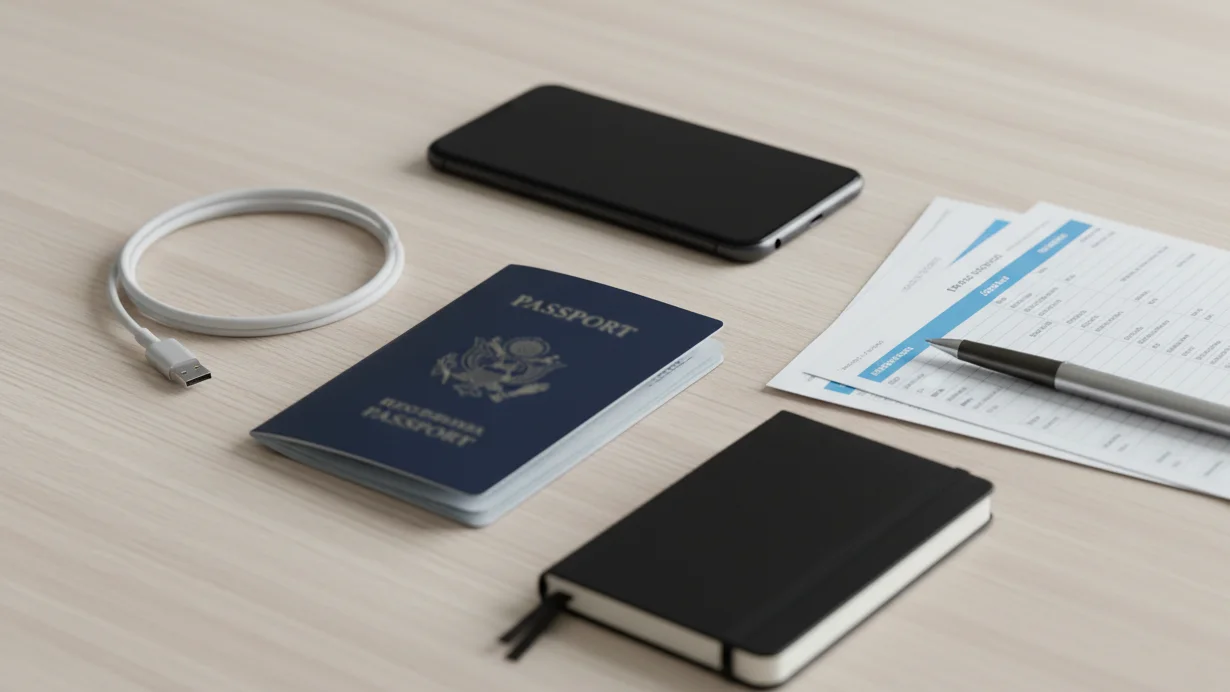
Your proof kit should survive weak airport signal, a drained battery and a rushed request at the counter. Keep one folder that includes:
- A PDF itinerary saved locally with the booking reference visible.
- An email confirmation saved for offline access.
- Screenshots from the airline app if available.
- A scan of the passport photo page for identity matching.
- A simple note with accommodation or destination contact details.
Avoid relying on anything that requires a login at the airport. If a security prompt blocks your account, the delay becomes the story. Open every file once before leaving home. If it loads instantly, you are ready. If it hangs, replace it with a local copy.
Make your onward plan defensible
A live check is often about intent. Your itinerary should support what you will say if questioned by airline staff or immigration officers. A defensible onward plan has a few simple traits:
- The exit flight date fits the stay you are requesting or allowed.
- The route makes sense without a long explanation.
- The onward departure airport is reachable from your stated trip route.
- The document matches the same dates shown in your visa file or travel plan.
For a broader visa-file route structure, BookForVisa’s visa flight itinerary requirements guide is the cleaner place to handle consulate-facing itinerary logic. This DummyFlights article stays focused on airport-facing PNR and onward-ticket verification.
If you use a temporary reservation
Pretty PDFs do not clear you. Verifiable records do. Before travel day, test what a checker will test:
- Can the PNR be retrieved quickly by the relevant carrier?
- Do passenger details match without manual guessing?
- Can you adjust dates if appointment or approval timing shifts?
- Do you have one clean version, not a chain of conflicting updates?
The main reason temporary reservations fail at airports is avoidable: the record exists, but it cannot be confirmed reliably during a live lookup. A strong dummy ticket for visa should support the trip timeline, stay window and passenger identity, not just look polished on a screen.
Travel-day 10-minute routine
Before you join the check-in line, run one final routine:
- Open the PDF and screenshots to confirm they load fast.
- Check battery and backup charging plan.
- Re-check flight number, departure time and date.
- Keep the proof kit one swipe away.
- Remove old versions from the same folder.
- Prepare the short answer: stay length, onward date and route.
Plan for arrival too. Some destinations may ask again after landing, especially if officers are moving quickly through immigration formalities. The same proof should work twice: at departure and at arrival.
If Immigration Or Airline Staff Challenge Your PNR
Even when your booking is solid, a live check can still turn into questions. What matters is how quickly you reduce doubt and present a clean path forward. A challenge at the counter or desk is rarely personal. It is a risk check.
Reduce uncertainty, not “win” the argument
Your best advantage is clarity under pressure. Keep these principles in mind:
- Answer the question asked.
- Lead with verifiable facts: PNR, passenger name, flight number, onward date.
- Offer the next proof before they ask if it directly helps.
- Stay cooperative and calm.
- Do not present multiple versions unless requested.
A useful script is: “Here is the booking reference, and here is the confirmation showing the onward flight on the stated date. If you need the operating airline reference, I can show the details exactly as listed.” That keeps the discussion inside the checker’s workflow.
Three rescue paths depending on the problem
Problem A: “We can’t find your PNR.” This is usually a retrieval issue, not a judgment. Ask which airline system they are checking, show the exact passenger-name spelling, provide flight number and date, and share the operating-carrier reference if relevant.
Problem B: “This status does not look confirmed enough.” Here, the checker is asking whether the proof is acceptable for boarding or entry. Ask what they need to accept the trip today: a ticketed record, a verifiable reservation, a different onward date or proof under the operating carrier.
Problem C: “Your dates or route do not make sense.” This is about logic, not lookup. Fix the logic by showing one coherent travel timeline: arrival date, stay length, onward date and reachable departure city. If your onward flight leaves from a different city, show how you will get there.
If you must fix it on the spot
When time is tight, the goal becomes acceptable proof that satisfies the checker now. Focus on actions that produce an immediate, verifiable record:
- Replace or update onward proof to meet the route requirement.
- Align dates to the stay length you are claiming.
- Use a payment method that will not trigger airport fraud blocks.
- Save the new PDF offline immediately.
- Confirm the new record matches your passport name.
Watch for traps: a new separate booking that does not load quickly, a change email that is not reflected in the live record, or a passenger-name mismatch created during a rushed purchase. Speed matters, but acceptability matters more.
Special Situations That Confuse PNR Checks
Some trips naturally trigger questions. You can pre-empt most of them by showing the full chain early and keeping your explanation short.
One-way entry on short-stay permission
Carry onward proof that is easy to verify and clearly dated inside the allowed stay. If your destination commonly asks for proof of onward travel, do not wait for the second request. Have it ready before the counter conversation becomes tense.
Separate tickets across carriers
Keep both confirmations ready. If your onward flight is on a different PNR, present it immediately so staff see the full route. Do not force the agent to guess that another booking exists.
Multi-city plans with a different exit point
A different exit point can be normal, but the route bridge must make sense. If you enter Milan and exit Paris, the itinerary should explain how you move through the trip. If the bridge is missing, the PNR may look unrelated to the entry plan.
Tight connections or second flights after transit
If your second flight leaves soon after arrival, make it easy to retrieve offline. Missed time windows create extra questions, especially during busy boarding periods. If bags must be collected and rechecked, build enough time into the plan.
Language or name complexity
If your passport name uses multiple parts, avoid variations across bookings. Even small differences can slow retrieval. Keep a scan of the passport photo page and show the booking name exactly as written.
Old files after changes
Travelers often get caught by their own old PDFs. The agent checks, you hand over the wrong version, and the conversation restarts. Save the latest confirmation, delete outdated screenshots and keep the correct reference code in a simple note for quick copy and paste.
Walk Into The Airport Ready For A Real PNR Check
A visa file and a travel day are two different tests. At the airport, your reservation has to survive a live lookup, fast name matching and a quick decision by the airline desk or immigration officer. When your PNR is easy to retrieve and your onward plan is consistent, the check becomes routine instead of stressful.
The strongest setup is simple: one current PDF, one readable PNR, one clear onward date and one travel story that matches your documents. If you are using a temporary reservation, make sure it is current, verifiable and aligned with your stay window. If you are using a separate onward booking, keep both references ready. If you changed dates, remove the old proof before leaving home.
You will feel more in control when you verify the booking before departure, keep one clean set of files offline and stay calm if someone asks questions. If you are flying soon, do the PNR check once today so you are not troubleshooting it in a check-in line tomorrow.
Flying soon and need onward proof that looks clean during a real PNR check? Create your onward ticket with DummyFlights before the airport clock starts.
Create Your Onward TicketFAQ
What happens if immigration checks your PNR?
They may compare your booking reference, passenger name, route, dates and onward or return plan with the travel purpose you state. The goal is usually to confirm whether your trip looks consistent and lawful for the entry permission you are using.
Can immigration see my airline booking?
It depends on the country and system. Authorities may receive passenger data and can ask to see your itinerary, but not every officer is directly searching the same airline reservation system. Airlines usually perform the live booking lookup more often at check-in or boarding.
Why would airline staff check my PNR?
Airline staff check PNR details to confirm identity, route, segment status and travel-document compliance. They want to avoid boarding a passenger who may be refused entry, denied onward travel or returned at the airline’s cost.
What if staff cannot find my PNR?
Ask which airline system they are checking, provide the operating-carrier reference if available, show exact passenger-name spelling and share flight number and date. A missing result can be a retrieval issue, not always a failed booking.
Does a PNR need to be ticketed?
Some checks accept a verifiable reservation, while others require a ticketed record depending on route, airline and destination rules. If the route is strict, prepare proof that satisfies the strictest likely checkpoint.
Can a dummy ticket pass a PNR check?
A dummy ticket is stronger when it uses a current, verifiable reservation, correct passenger details and dates that match the stay window. A fake-looking PDF, edited screenshot or expired record can create problems during a live lookup.
What should I keep offline for a PNR check?
Keep the itinerary PDF, email confirmation, airline-app screenshot if available, passport scan and accommodation or contact details in one folder. Remove old versions so you do not show conflicting proof under pressure.
How do I avoid PNR problems at the airport?
Verify the booking before travel, match the passport name, keep the onward date inside the allowed stay, save proof offline, carry operating-carrier references when partners are involved and keep your spoken answer aligned with the document.
This guide is general travel-document information, not legal advice. Airline checks, immigration procedures, PNR visibility and onward-ticket requirements vary by country, carrier, route, passport and traveler history. Always follow the latest instructions from the airline, embassy, consulate and border authority handling your trip.