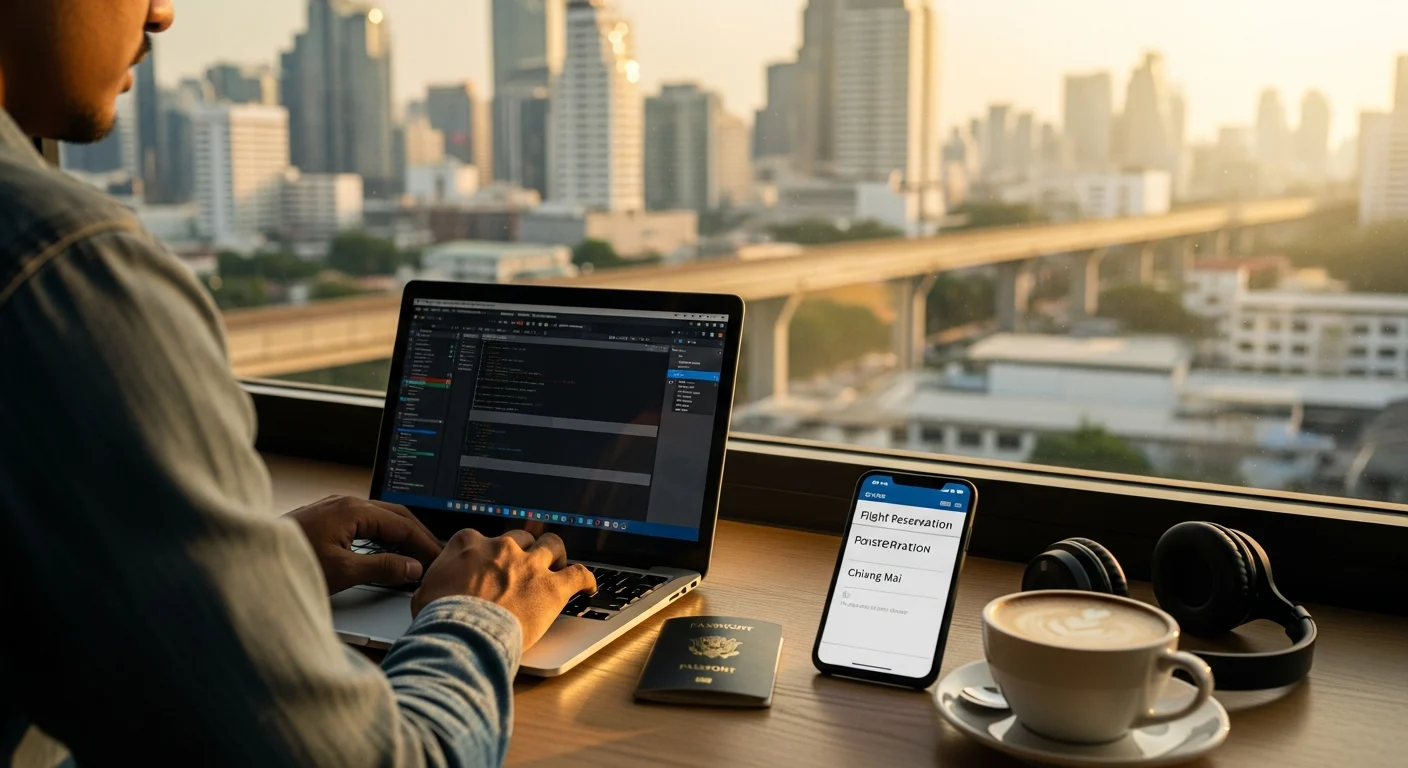
A dummy ticket can help Thailand Digital Nomad Visa and DTV travelers when the issue is travel-proof alignment, not eligibility. The DTV decision is mainly about passport, current location, financial evidence, remote-work or activity proof, and supporting documents requested by the Thai mission; a dummy ticket or onward ticket is useful when you need clean dates for airline checks, arrival questions, extensions, re-entry planning, hotel alignment or a realistic travel folder without buying final airfare too early.
Thailand is built for remote-work energy: fast Wi-Fi, flexible neighborhoods, coworking cafés, regional flight routes and a lifestyle that attracts freelancers, founders, creators and salaried remote workers from India. But freedom still needs paperwork. Your digital nomad plan must look organized at every checkpoint: e-Visa upload, airline check-in, arrival, extension and re-entry.
The smart strategy is not to buy an expensive final ticket before your dates are stable. The smart strategy is to keep your travel proof believable. A dummy ticket, dummy flight ticket, dummy booking or onward ticket can help show a clean exit plan while your Thailand digital nomad visa, Destination Thailand Visa route, hotel dates, insurance and remote-work documents stay aligned.
For DummyFlights, the angle is simple and practical: use the dummy ticket as a travel-proof tool, not as a shortcut around the DTV rules. Your core DTV evidence must stand on its own. Your onward proof should make the route, dates and stay logic easier to understand.
This guide is written for the real India-to-Thailand remote-worker path: someone who may be applying online, comparing DTV with shorter entry options, keeping client work running, watching flight prices, and trying not to create a messy airport conversation. You do not need a dramatic travel folder. You need a tight one. The right dummy ticket helps because it gives your file a clear movement plan without forcing you to buy final airfare before the stay plan is stable.
Key facts before using a dummy ticket for Thailand DTV:
- The Destination Thailand Visa is commonly described by Thai missions as covering workcation, remote workers, freelancers and related categories.
- Official DTV pages commonly mention passport, photo, current-location proof, financial evidence and purpose-specific proof.
- Several Thai mission pages refer to 500,000 THB financial evidence or equivalent.
- DTV is generally described as a five-year multiple-entry visa with 180 days per entry, with extension rules handled in Thailand.
- A dummy ticket is strongest for travel-proof consistency: onward date, hotel dates, insurance, route and PNR details.
- Do not present a dummy ticket as a substitute for funds, remote-work evidence or official DTV documents.
Need Thailand travel proof without locking final airfare yet? Create a clean dummy ticket, dummy flight ticket or onward ticket with route, date and passenger details aligned to your Thailand digital nomad plan.
Create Your Dummy TicketIn This Guide
Thailand DTV and Entry-Path Logic for Remote Workers
Before creating any dummy ticket for Thailand, choose the correct entry path. Indian remote workers often think only about the flight, but the flight is the last layer. The first layer is your status: short tourist-style visit, Destination Thailand Visa, LTR-style long-term route, soft-power activity, or a re-entry pattern after you already have permission.
If the route is wrong, travel proof cannot repair it. If the route is right, travel proof makes the plan cleaner. This is why a dummy ticket works best when it mirrors the exact story you are already allowed to tell: where you enter, how long you expect to stay, where you sleep first, and when you leave or re-enter.
Tourist-style testing before a long stay
Many remote workers test Thailand first. They spend a few weeks in Bangkok, Chiang Mai, Phuket or Koh Samui before committing to a longer rhythm. For that kind of trip, a dummy ticket or onward ticket is usually about showing that you understand the stay is temporary. It should sit inside the expected admission window and match your first accommodation block.
This first testing trip is where many applicants overcomplicate the file. They try to prove they are serious by buying a rigid round-trip ticket, booking too many hotels, or uploading a travel plan that looks more like a sales brochure than a real itinerary. A cleaner method is to show the essentials: first stay, funds, insurance, and a believable exit or onward movement. A dummy ticket lets you keep that exit proof clean while still leaving room to adjust the paid flight later.
- Use a simple route that Indian travelers actually take.
- Set the onward date inside the stay window you expect.
- Match hotel and insurance dates to the same plan.
- Do not carry an expired dummy booking from an old draft plan.
Destination Thailand Visa route
The DTV route is more structured. Thai mission pages describe it for workcation, digital nomads, remote workers, freelancers, Thai soft-power activities and dependants of DTV holders. The key evidence is not a paid ticket. The key evidence is identity, location, financial capacity and the purpose-specific proof requested by the mission handling your file.
For the workcation track, official pages commonly mention employment contract, employment certificate or a professional portfolio showing remote-worker, freelancer or digital-nomad status. That is the heart of the file. A dummy ticket supports the travel plan around that file: arrival date, first stay, onward logic and future extension or re-entry rhythm.
Think of DTV as a long-stay framework, not a flight-purchase instruction. If you are applying as a remote employee, your employer letter should explain your role and remote work situation clearly. If you are a freelancer, your portfolio and paid work trail should make the income story easy to follow. If you are joining a Thai soft-power activity, the activity proof should be the center. The dummy ticket only supports movement around that center.
That distinction protects both ranking quality and user trust. The article can be aggressive about the value of dummy tickets without pretending that a dummy ticket is what earns the DTV. The strongest content position is: get the DTV evidence right first, then use a clean dummy ticket or onward ticket to keep the travel-proof layer professional.
LTR and higher-bar long-stay paths
Some established remote workers look beyond DTV toward longer-term options. These routes usually involve deeper financial, insurance, company or profile evidence. In that environment, travel proof is still useful, but it is not the headline. The stronger your profile route is, the more your dummy ticket should stay quiet and practical: matching dates, clean route, easy PNR, no drama.
Extensions, exits and re-entries
Digital nomad travel is rarely a straight line. You may extend once, leave for Singapore or Malaysia, then return. You may change cities from Bangkok to Chiang Mai. You may pause in India for a client meeting. Every time the plan changes, the dummy ticket should change last, after the new stay length, accommodation and insurance dates are clear.
For long-stay remote workers, old documents are a hidden risk. The expired onward ticket from your first plan, the hotel PDF from a city you no longer plan to visit, and the insurance policy ending before your new exit date can all create confusion. Keep one active version of the story. If your plan changes, update the travel folder like a project file: current only, old versions archived.
What airlines and officers are trying to confirm
Airline staff and immigration officers are not reading your life story. They are checking whether your documents make sense quickly. The usual questions are practical: who are you, what permission do you hold, how long are you staying, where are you staying first, can you support yourself, and where do you go next?
A dummy ticket helps with the “where do you go next?” part. A dummy hotel document helps with “where are you staying first?” Funds answer “can you support yourself?” Remote-work proof answers “why are you staying this way?” When each document answers one clean question, the whole folder becomes easier to trust.
India-specific timing pressure
Indian remote workers also deal with local timing pressure: bank statement cycles, festival travel spikes, VFS appointment load, employer notice periods, client billing dates, and sudden fare jumps around holidays. Do not let a cheap flight force the paperwork. Build the document set first, then create the dummy ticket when the dates are clear enough to support the story.
Citation-ready baseline: for Thailand digital nomad travel, a dummy ticket is a travel-proof alignment tool. It should support a valid route and realistic stay plan; it should not replace DTV eligibility documents, financial evidence or remote-work proof.
India-to-Thailand Travel-Proof Master Checklist
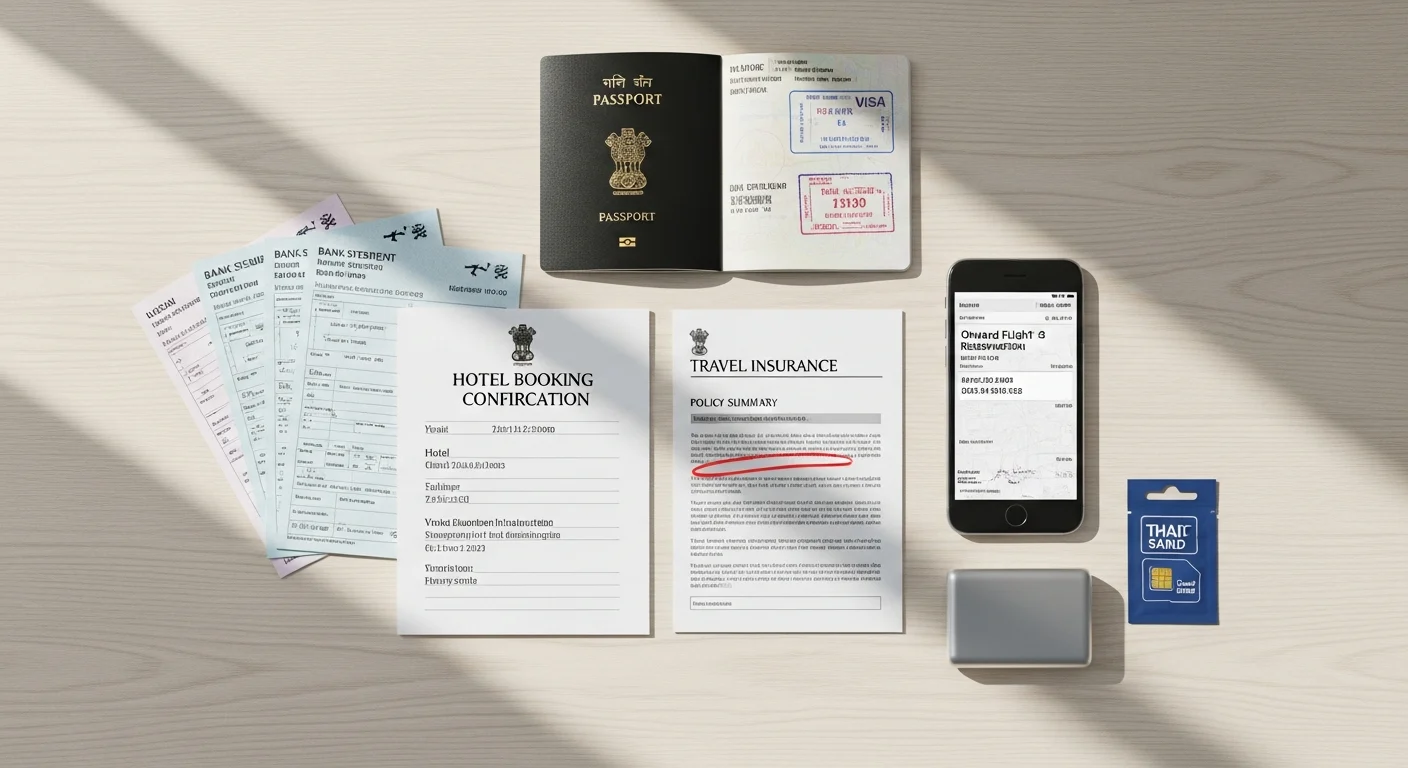
A strong Thailand file is not built from one document. It is built from matching documents. The dummy ticket date should match the hotel, the hotel should match the city story, the insurance should cover the same window, and the funds should make the stay believable.
Onward ticket or return proof
Your onward proof should look normal for the route. From Bangkok, exits to Kuala Lumpur, Singapore, Ho Chi Minh City or Hanoi are easy to understand. From Phuket, regional exits can make sense. From Chiang Mai, a connection through Bangkok or another regional hub reads cleaner than a random distant exit with no explanation.
- Use a realistic route from the Thai city you expect to use.
- Place the onward date inside the permitted or intended stay period.
- Make the passenger name match the passport exactly.
- Keep one current dummy ticket PDF, not several conflicting versions.
- Refresh the dummy booking if the processing or travel plan moves.
Bank balance and income trail
Official DTV pages commonly refer to financial evidence of at least 500,000 THB or equivalent. The stronger presentation is not just a number; it is a pattern. A steady bank history, clean client or employer proof, and sensible spending rhythm look better than last-minute unexplained deposits.
Indian applicants often have multiple accounts: one for international payments, one for UPI and local expenses, and sometimes a business account. Do not make the reviewer guess. Prepare a clean set of statements and, where useful, a short summary that explains account purpose, recent balances and foreign-sourced income.
If you are a freelancer, connect the dots between invoices and bank deposits. If a large payment arrived recently, keep the invoice or client confirmation ready. If you run a company, carry basic registration or business proof. If you are salaried, an employer certificate and recent payslips are easier to understand than a huge document dump. The goal is a stable financial story that matches the length of stay you are asking Thailand to believe.
Do not use the dummy ticket to hide weak financial proof. If your bank evidence is thin, fix the bank evidence. If your income story is unclear, simplify the work proof. The dummy ticket should make travel timing cleaner, not distract from missing funds.
Accommodation evidence
Some Thai mission pages ask for evidence of reservation for a place of stay during the initial visit. Even when the exact requirement varies by post, accommodation proof is still part of a believable travel folder. A first-week or first-fortnight hotel, apartment or co-living booking is usually cleaner than claiming you will decide after landing.
- Bangkok plan: choose an area that matches your work and transport needs.
- Chiang Mai plan: choose a neighborhood that fits remote-work life, not just a tourist photo.
- Island plan: make sure the arrival airport, hotel area and onward route make sense together.
- Dummy hotel proof should match the dummy ticket dates if accommodation proof is needed.
For remote workers, accommodation also signals the kind of trip you are making. A one-night hotel in Phuket followed by a claimed two-month Chiang Mai work block looks unfinished unless there is a clear transfer plan. A seven-to-fourteen-day first stay near a coworking area is easier to understand. If you plan to move cities later, let the first booking prove arrival stability and let the onward ticket prove exit discipline.
Insurance and health planning
Insurance is not just a checkbox. It helps explain that your Thailand stay is planned, funded and responsible. If your dummy ticket exit date is day 60, your insurance should not end on day 30. If you plan to extend, consider how the policy dates and future dummy booking will be updated.
Keep the insurance summary page simple. Name, policy number, start date, end date and coverage area matter more than a full booklet at the counter. If your stay changes, update insurance before you update the dummy ticket so the travel proof does not point beyond the coverage window.
Remote-work proof
For the DTV workcation route, remote-work proof is central. Keep it concise and verifiable. A salaried remote worker may use an employment certificate. A freelancer may use a professional portfolio and paid invoices. A founder may use company registration, client contracts or business proof. The point is not to flood the file; the point is to make the work story easy to believe.
A good remote-work proof packet answers three questions quickly: what do you do, who pays you, and why does that work not require Thai local employment? Avoid confidential project details unless they are necessary. A simple portfolio page, client invoice summary, employer letter or company profile usually does more than a messy pile of screenshots.
Purpose-of-visit wording
Keep your wording disciplined. If you are applying as a digital nomad or remote worker, describe remote work for overseas clients or employer work outside Thailand. If you are going for a soft-power activity, describe the course or activity. Do not mix categories in a way that makes the file look improvised. The dummy ticket should match the category’s travel timing, not create a different story.
File hygiene for Indian travelers
Airports punish messy phones. Save documents offline. Use simple filenames. Keep current PDFs in one folder. Delete or archive expired dummy tickets so you do not accidentally show old dates. A clean folder can make you look calm even when the counter is busy.
Use labels that can be read under pressure: Passport.pdf, DTV_Approval.pdf, Onward_Ticket_BKK_KUL.pdf, Hotel_Bangkok_First_Stay.pdf, Insurance_Thailand.pdf, Bank_Statement.pdf and Remote_Work_Proof.pdf. If you need to show a document, you should find it in three seconds. That practical detail matters more than most travelers realize.
Build one current Thailand travel folder:
- Passport biodata page.
- DTV approval or e-Visa document when issued.
- Current dummy ticket or onward ticket.
- Accommodation proof for the first stay.
- Insurance summary covering the same window.
- Bank or financial evidence summary.
- Remote-work, freelance or portfolio proof where relevant.
DTV Documents and Dummy-Ticket Timing
The DTV file should be boring in the best way: clear scans, matching names, current statements, direct work proof and no contradictions. The dummy ticket should support this boring clarity. It should not introduce a new date, city or route that makes the rest of the file harder to understand.
What DTV tries to solve
DTV gives Thailand a structured way to receive long-stay visitors such as digital nomads, freelancers, foreign talent and people joining approved activities. That does not mean every remote worker automatically fits. It means the applicant must present the right category, the right documents and a consistent stay plan.
For content quality, this is the point where we stay honest and still conversion-focused. The Destination Thailand Visa can be attractive because it creates a longer runway than a short tourist-style stay. But longer runway also means the document story must be cleaner. A dummy ticket is useful because long-stay people change plans often; it gives them a temporary proof layer while they avoid buying final airfare too early.
Core DTV evidence
Across official Thai mission pages, the recurring DTV evidence pattern is clear: passport, recent photo, current-location proof, financial evidence, and purpose-specific proof. For workcation, that usually means employment contract, employment certificate or portfolio. For soft-power activities, it may mean acceptance or appointment proof. For dependants, it means relationship proof to the DTV holder.
Some missions also mention accommodation evidence for the initial visit. Some post-specific pages add extra local requirements, translation rules, residence-permit rules or processing notes. This is why the official-source check matters. Use the Thai e-Visa portal or the Thai mission responsible for your current location, then build the dummy ticket around that exact checklist rather than copying a friend’s document stack.
| Document area | What it proves | Dummy-ticket role |
|---|---|---|
| Passport and current location | Identity and where you apply from. | Passenger details must match exactly. |
| Financial evidence | You can support the stay. | Travel dates should fit the funds shown. |
| Remote-work proof | Your digital nomad or freelance status. | Route should support, not distract from, the work story. |
| Accommodation proof | Where you will stay first. | City and dates should match the dummy booking. |
| Onward proof | Exit or onward travel logic. | Use a current dummy ticket or onward ticket when needed. |
Do not overpromise remote work permission
Be careful with the way you describe work. Some official embassy pages frame DTV as a special tourist-type visa and warn against working for Thai companies or performing freelance work for Thai clients. The clean explanation is that you work remotely for overseas clients, employers or your own non-Thai business, and your documents support that position.
This is where “aggressive but clean” matters. You can be confident about using DummyFlights for travel proof. You should not be reckless about work status. A page that tells users to blur local-work lines might convert today but creates trust and policy risk later. The stronger long-term play is to be the clearest source for dummy-ticket usage while keeping official permission boundaries intact.
When to create the dummy ticket
Create or refresh the dummy ticket after your planned stay length, first accommodation, insurance and entry route are clear. If you create it too early, it may expire before you need it. If you create it without checking the rest of the documents, it may conflict with the file. The best dummy ticket is the last piece that locks the story together.
For e-Visa preparation, this means you should not create three different exit proofs while still deciding whether the first stay is Bangkok or Chiang Mai. Decide the first city. Decide the initial stay window. Check the embassy checklist. Confirm the insurance. Then create the onward ticket or dummy flight ticket so the document reflects the current plan.
When plans shift
If your DTV processing takes longer, your client schedule changes, or your first city changes from Bangkok to Chiang Mai, update the travel proof in the right order. First adjust the plan. Then update accommodation and insurance. Then create the new dummy ticket. Finally, remove older PDFs from your phone folder.
Choosing the Right Dummy Ticket for Thailand Digital Nomad Travel
The strongest Thailand dummy ticket is not flashy. It is realistic. It uses a route that makes sense, an exit date that fits the stay, and details that match the applicant’s passport. For digital nomads, the most common mistake is trying to look too clever. Keep it simple enough for a tired airline counter to understand quickly.
One-way freedom or round-trip certainty
If you have a defined return date to India, a round-trip pattern is simple. If you are continuing to another country, an onward ticket can be cleaner than pretending you know your final India return date. For remote workers, onward proof often reflects real life better: Thailand first, then Malaysia, Singapore, Vietnam or back to India once the work block ends.
One-way travel is normal for many digital nomads, but one-way travel without an exit story can look unfinished. That is why an onward ticket is often the clean compromise. It keeps your Thailand entry flexible while still showing that you understand the stay has a next step. For DTV holders, the stay allowance may be longer, but the same logic applies: your first chapter should still have coherent travel proof.
Routes that match real nomad circuits
- Bangkok to Kuala Lumpur for a regional exit.
- Bangkok to Singapore for a business or transit-friendly next step.
- Phuket to Kuala Lumpur when the first stay is island-based.
- Chiang Mai to Bangkok plus a regional exit when direct routes are limited.
- Bangkok to Delhi, Mumbai, Bengaluru, Chennai, Hyderabad or Kolkata when returning to India is the real plan.
Dates that feel believable
A Thailand digital nomad trip should not look random. If you plan 45 days, your dummy ticket, hotel proof and insurance should all point toward that 45-day chapter. If you are using DTV and planning a longer stay, the travel proof should still reflect the entry, first stay and next movement in a way that makes sense for that permission.
Shorter stays may use a simple regional exit. Longer stays may use a later onward movement, extension strategy or re-entry plan. The key is not whether the dummy ticket is early or late. The key is whether the date can be defended in one sentence. If you cannot explain why that exit date exists, choose a cleaner date.
PNR and verification
A PNR can help airline staff move faster when they ask for onward proof, but it is useful only when the document is current and consistent. A stale PNR, wrong name or unrealistic route creates more risk than no document. If your plan changes, refresh the dummy flight ticket before travel day.
The PNR should support confidence, not theatre. Do not rely on a screenshot with unclear details. Do not use a document where the name order is wrong. Do not show a route that exits from a city you never plan to visit. The more ordinary the document looks, the better it works.
Dummy hotel and accommodation alignment
If you use dummy hotel proof or a temporary accommodation document, match it to the same calendar. Do not show a Bangkok onward ticket with a Phuket-only stay unless the route explains why. Do not show insurance ending before the accommodation. Alignment is the whole game.
For example, if your first week is in Bangkok and your onward ticket exits from Bangkok, the story is easy. If your first month is in Chiang Mai and your onward proof exits from Phuket, the story needs a connecting plan. If your hotel ends on day seven but your onward date is day sixty, keep a note or second accommodation plan ready. The dummy hotel and dummy ticket should not fight each other.
Want a clean Thailand onward-proof setup? Prepare a dummy ticket, onward ticket, dummy booking or dummy hotel document with dates that match your Thailand digital nomad travel folder.
Prepare Your Dummy TicketIndia to Thailand Travel-Day Plan
Travel day is where your paperwork gets tested quickly. The goal is not to show every document. The goal is to have the exact document ready when asked. Confidence comes from preparation, not speeches.
Before leaving home
Save your passport scan, visa or e-Visa document, current dummy ticket, hotel proof, insurance, funds summary and remote-work proof offline. Keep them in one folder. Email the same folder to yourself. If airport Wi-Fi fails, your phone should still work as your document desk.
Also check the small details: passport validity, name order, route spelling, airport code, insurance dates and file clarity. If you are flying from India through a third country, check whether the transit point adds any extra requirement. A good dummy ticket cannot fix a missed transit rule.
At Indian airline check-in
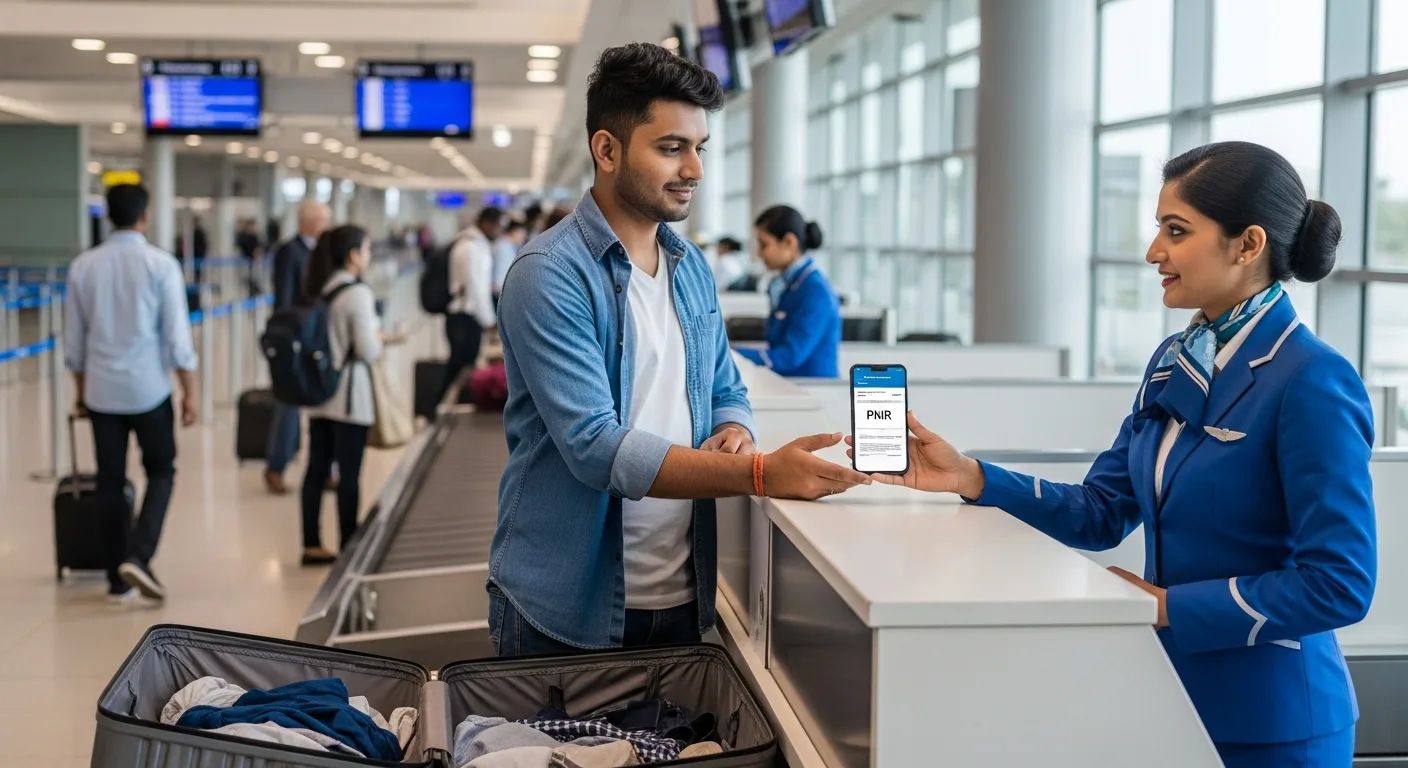
Airline staff may ask about visa, stay length, return or onward travel, and accommodation. Answer directly. If they ask for exit proof, show the current dummy ticket or onward ticket. Do not explain five future possibilities. Show the plan that matches today’s travel.
The best check-in conversation is short. “I am travelling to Thailand under this permission. I will stay at this address first. Here is my onward proof.” That is enough. If the staff need to verify the PNR, give them time. Do not open old files or show conflicting drafts.
At transit
If your route passes through a Gulf or regional hub, keep the same documents ready. Transit staff usually care about the next flight and whether your documents support the journey. A simple onward ticket can reduce questions when the route is easy to follow.
On arrival in Thailand
Thai immigration may ask purpose, length of stay, accommodation, funds and exit plan. Keep answers short. You are entering under the permission you hold, you have money to support yourself, you have accommodation, and you have onward or exit planning. If asked about remote work, keep it within the permitted story and avoid suggesting Thai employment.
Remote workers sometimes overshare at the booth because they are nervous. Do not do that. Answer the question asked. If asked where you stay, show the stay. If asked when you leave, show the onward ticket. If asked what you do, keep the work explanation consistent with the DTV or entry route you used.
If the PNR does not pull up
Stay calm. Show the PDF, check spelling, confirm the date and route, and use the support channel if needed. If the document is expired, mismatched or unclear, that is a preparation problem. This is why fresh dummy-ticket timing matters.
If you discover the issue before travel, do not wait. Refresh the dummy booking, save the new PDF, and delete the old one from the visible folder. If you discover it at the counter, avoid arguing. Provide the clearest version you have and keep the rest of the file organized.
First 24 hours after landing
After entry, check your stamp or digital status details, confirm accommodation, update your travel folder, and note any future extension or exit date. If you plan to stay longer, set a reminder well before the deadline. Good digital nomad travel is boring because it is planned.
Long-Stay and Re-Entry Playbook
Digital nomad travel is not one airport moment. It is a sequence. The goal is to keep your paperwork updated across entry, extension, re-entry and exit so the story never becomes stale.
Map your months like a project plan
Build a simple timeline: arrival, first stay, work block, extension decision, exit or re-entry, next country, and return to India if planned. Put accommodation, insurance, dummy ticket and funds checks into that timeline. When one date changes, update the related documents.
Use the same planning discipline you use for client work. Put major dates in one note. Keep screenshots of official pages you relied on. Track when insurance expires. Track when the dummy ticket needs refreshing. Track when a hotel booking changes from temporary to longer-term. This reduces the chance of a late, expensive scramble.
Extension rhythm
Official DTV pages describe possible extension through Thai Immigration. Extension rules and local procedures can change, so confirm before relying on any long-stay assumption. If you extend, refresh onward proof, accommodation and insurance to reflect the new end date.
Border-hop and re-entry strategy
If you leave Thailand and return, do not reuse an old dummy ticket from the first entry unless it still matches the new plan. A fresh re-entry should have fresh dates, updated accommodation and a current exit route. Repeated messy documents invite more questions than one clean set.
Common regional exits can make sense when they match the work calendar: Singapore for meetings, Kuala Lumpur for a short break, Vietnam for a coworking change, or India for family and banking tasks. The route should not look like a trick. It should look like a normal travel rhythm with enough funds and proof to support it.
Money trail over many months
Remote workers from India often receive client payments irregularly. Keep proof simple: bank statements, invoices, employer letters or portfolio evidence that supports the same story. If there is a large payment spike, carry a short explanation or invoice rather than letting the number look unexplained.
If you use several payment channels, prepare a summary. Wise, PayPal, Payoneer, Indian bank deposits, GST invoices and employer payslips can all be legitimate, but they should not look chaotic. A one-page explanation can make the money story easier without turning the file into accounting homework.
Accommodation stability over time
Long stays can begin with flexible accommodation, but they should not look homeless. Keep at least the first stay documented. If you extend in one city, keep proof of the next stay. If you move from Bangkok to Chiang Mai or Phuket, keep travel and accommodation dates aligned. Your dummy ticket should reflect the chapter you are actually in.
Patterns to avoid
- Using Thailand DTV language while carrying documents that look like local Thai employment.
- Showing an onward ticket that exits after your permission window.
- Letting hotel, insurance and dummy ticket dates disagree.
- Keeping expired reservations in your airport folder.
- Creating a route that no normal traveler would use without a reason.
- Uploading unclear screenshots when the mission requests clear PDF or JPEG files.
Final mindset
Travel light, prove plenty. You do not need a massive folder at every counter. You need the right documents, current dates and a story that survives quick checks. A dummy ticket is powerful when it keeps that story clean.
The strongest country-specific approach is not to write everything about Thailand. It is to make Thailand-specific dummy-ticket usage impossible to misunderstand. That means country context, official-source grounding, practical checkpoints, and a clear travel-proof solution that helps the reader act without creating document conflicts.
Frequently Asked Questions
Do I need a dummy ticket for Thailand Digital Nomad Visa?
A dummy ticket is not the core DTV eligibility document. It can help with travel-proof alignment, airline checks, arrival questions, extension planning or onward travel when your dates are not ready for final airfare.
What is the Destination Thailand Visa?
Thai mission pages describe the DTV as a visa for categories such as workcation, digital nomads, remote workers, freelancers, Thai soft-power activities and eligible dependants, subject to the documents requested by the relevant Thai mission.
How long can DTV holders stay in Thailand?
Several Royal Thai Embassy pages describe DTV as a five-year multiple-entry visa with 180 days per entry, with extension handled through Thai Immigration. Always confirm the latest rule for your issuing mission and situation.
Can I work remotely in Thailand on DTV?
DTV is designed for workcation-style categories such as remote workers and freelancers, but you should avoid presenting Thai local employment or Thai-client work unless your status clearly allows it. Keep the work story foreign-sourced and document-backed.
What financial proof is commonly mentioned for DTV?
Official DTV pages commonly mention financial evidence of at least 500,000 THB or equivalent, such as bank statements, payslips or sponsorship evidence. The exact document format can vary by mission.
Should my dummy ticket be one-way, return or onward?
Use the pattern that matches the real plan. A return ticket works if you know the return to India. An onward ticket works if you will continue to another country. The route should be realistic and date-aligned.
Does a dummy ticket need a PNR?
A PNR can help when airline staff ask for verifiable onward proof, but it must be current and consistent. The name, route and date should match your passport and travel plan.
Can I use dummy hotel proof with a Thailand DTV file?
Use accommodation proof only when it fits the requirement and your real stay plan. If you use dummy hotel proof, the city and dates should match the dummy ticket, insurance and arrival plan.
When should I refresh my Thailand dummy ticket?
Refresh it when your processing timeline, entry date, hotel dates, insurance, extension plan or onward route changes. Carry only the latest version.
Does a dummy ticket promise Thailand visa approval or entry?
No. A dummy ticket supports travel planning and onward-proof consistency. The result depends on official requirements, airline checks, immigration discretion and your full document set.
Friendly reminder: DummyFlights provides temporary travel-proof documents for planning and application support. Requirements vary by destination, airline, route and applicant situation. A dummy ticket can support a file, but it does not promise approval, boarding or entry.