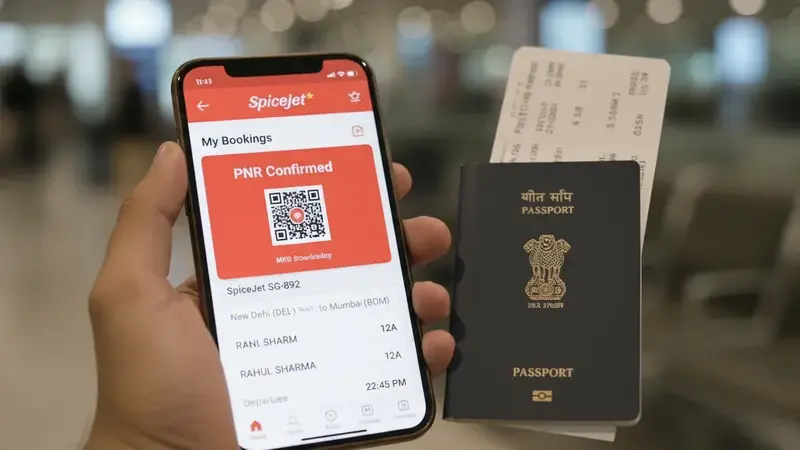

Short answer: Saudi Arabia Umrah visa documents should show one consistent journey: passport, flight proof, Makkah and Madinah accommodation, health evidence, dates and a permitted exit plan must agree. A dummy ticket for visa can support an application where the current Saudi channel accepts temporary proof, but it cannot replace an Umrah visa, health requirement or guarantee approval, boarding or entry.
Key facts
- Saudi Umrah requirements can vary by nationality, season, application channel and current official instructions.
- Flight sectors, hotel nights, city transfers, passport details and exit plans should agree.
- Use temporary travel proof only when the relevant Saudi channel or carrier permits it.
- A reservation supports planning or an application; it is not an Umrah visa or entry guarantee.
Need Saudi Arabia Umrah visa travel proof that matches your documents? Use the exact passport name, realistic route and dates your application supports, and keep the reservation checkable without editing the document.
Create your dummy ticketIn This Guide
- Build The Umrah “Date Logic” First, Before You Touch Any Reservation
- Make Hotel Proof Look Verifiable Without Over-Designing It
- Dummy Flights For Umrah: Route Design That Doesn’t Trigger Extra Questions
- Saudi Arabia Umrah Visa Requirements: Assemble A File Where Every Page “Agrees”
- The Mistake Checklist: What Gets Flagged In Umrah Files Specifically
- Saudi Arabia Visa: Uncommon Cases To Look Out For
- Perform Umrah on Saudi eVisa: Your Queries, Answered
- Your Umrah File Should Read Like A Real Trip
Official source check
Review the Ministry of Hajj and Umrah’s official visit guide for visa and permit procedures. Follow the current instructions for your nationality, visa route and travel season, including any approved-provider or package requirements. Do not assume that a tourist eVisa and an Umrah package use the same application process.
Reviewed for: Saudi Arabia Umrah visa requirements, Umrah route-date consistency, hotel proof, exit planning and travel-proof clarity.
Your Umrah visa file can look perfect until one detail forces a second look: your hotel nights end on the wrong date, your outbound flight leaves from a city you never “sleep” in, or your arrival time makes your first check-in impossible. In 2026, small mismatches are the fastest way to turn a simple submission into back-and-forth. For broader flight-reservation planning, see the flight reservation for visa guide, then apply the Saudi checklist that fits your case.
We’re going to build a clean, believable itinerary package where flights, hotel proof, and dates lock together, and the exit plan reads like the natural end of the trip. You’ll learn how to choose entry and exit cities, set buffers that look real, and run a quick mismatch audit before you submit. Follow it, and your documents stop raising questions, even if you plan to change dates later. If your Umrah dates might shift, keep your exit plan consistent with a dummy ticket booking.
Build The Umrah “Date Logic” First, Before You Touch Any Reservation

Umrah visa submissions usually go sideways when flights, hotels, and your exit plan disagree on dates.
Here, we lock the timeline first, so every document supports a single, believable trip.
Start With A Simple Trip Skeleton That Can’t Contradict Itself
Start with a skeleton you can explain in one sentence. Keep it stable even if you later shift dates.
Write down three non-negotiables: total nights, entry city, and exit city. Everything else can flex.
Choose a structure that naturally fits the Umrah movement:
-
Single-Base Stay: arrive and depart from the same city, one hotel base.
-
Two-City Classic: arrive Jeddah, stay Makkah, then Madinah, depart Madinah.
-
Reverse Two-City: arrive Madinah, stay Madinah, then Makkah, depart Jeddah.
Keep the skeleton simple on purpose. “More legs” is not more convincing if it creates tight transfers, overlapping hotel nights, or a departure that does not match your last city.
Also, decide whether you want a same-city round trip or an open-jaw route. Open-jaw can look very natural for Umrah, but only if your hotel nights clearly move with you.
Use this self-check: if you need to say “we’ll figure that part out,” the skeleton is not ready for reservations.
The Three Date Anchors That Must Match Everywhere
Next, set three anchors that will appear across your PDFs.
Anchor A is your arrival date and local arrival time in Saudi Arabia.
Anchor B is your first hotel check-in date, which must fit the arrival time plus transfer time.
Anchor C is your departure date and local departure time, which must fit your final hotel check-out and the airport city.
Treat these anchors as the source of truth. Do not let a hotel confirmation “pull” your check-in earlier. Do not let a flight itinerary “pull” your departure earlier because the schedule looks nicer. If one anchor moves, you update the whole chain.
A practical rule: fix the dates, then fit the times.
-
Choose your arrival date first.
-
Choose your departure date second.
-
Only then pick flight times that make those dates feel normal.
Watch the traps that create accidental contradictions:
-
Arrival lands just after midnight, but the hotel check-in is dated the previous day.
-
Outbound departs early morning, but the last hotel range implies you are still staying that night.
-
A stopover itinerary shows different local dates across segments, and you copy the wrong one into your hotel range.
Always standardize on Saudi time when you check anchors. If a segment displays times in a transit country, convert before you set hotel dates. Midnight crossings are a mistake. A flight that lands at 00:30 means your first hotel check-in cannot be dated the previous day.
Run this quick audit before you generate anything else:
-
First hotel check-in is the same as, or later than, the arrival date.
-
Last hotel check-out is the same as, or earlier than, the departure date.
-
No date shows you checked into two different cities at once.
The Umrah City Sequence That Looks Normal
Reviewers recognize Umrah logic. Your city order should look like something a real pilgrim would do with real transfers.
The most familiar flow is Jeddah to Makkah to Madinah, then exit from Madinah or back via Jeddah. It reads practical because Jeddah is a common entry point, and Makkah is typically the first core stop.
If you arrive in Madinah first, keep it clean: Madinah nights first, then move to Makkah, then depart from Jeddah. It can still look solid, but it demands clearer timing because your airport city and last hotel city may differ.
What causes doubt is not the city choice. It is the movement pattern. Avoid these unless your timeline clearly supports them:
-
Makkah one night, Madinah one night, back to Makkah, then exit.
-
Same-day switches between Makkah and Madinah with no buffer.
-
An exit flight from a city that never appears on your hotel bill.
Build a simple “sleep map” before reservations. For each night, write only one city where you will sleep.
Example:
-
Nights 1 to 6: Makkah
-
Night 7: transfer day, sleep, MinAdinahh
-
Nights 8 to 10: Madinah
When the sleep map is stable, your hotel proof becomes a direct match, and your flights stop looking random.
Make Your Buffers Look Human, Not Perfect
Perfect timing looks manufactured. Real trips lose time at immigration, baggage, transport, and check-in lines.
Your goal is to avoid impossible transitions that force questions.
Use buffers that reflect real friction:
-
Arrival at first hotel: allow time for entry formalities and ground transfer.
-
Makkah to Madinah move: treat it as a travel day with packing, check-out, the journey, and check-in.
-
Final day to the airport: leave room for traffic and airport processes, especially for early departures.
Align buffers with how hotels work. Confirmations often show a date range, not a guaranteed arrival hour. If your flights land extremely late or leave extremely early, the dates might still “fit,” but the story will feel strained.
Avoid stacking high-friction events on one calendar day. A file that reads like a realistic plan gets fewer questions.
Pick Your Itinerary Complexity Level
Before you generate documents, choose how complex your plan needs to be, based on how likely you are to change dates.
Low complexity: one entry city, one exit city, one hotel base. Strong when you want minimal moving parts.
Medium complexity: two cities, one clear transfer day, two hotels. Often, the best Umrah balance.
Higher complexity: open-jaw plus stopovers, multiple hotel changes, or multiple internal moves. Still workable, but mismatches hide more easily.
Choose the lowest complexity that matches your intent. If dates might change, keep the route structure stable and only move the anchor dates. If cities might change, lock the sleep map first and let flights follow it.
Once your dates, city flow, and buffers are locked, choosing hotel proof becomes a straightforward night-by-night match to your sleep map.
Make Hotel Proof Look Verifiable Without Over-Designing It

Hotel confirmations can help your Umrah file feel grounded, but only if they match the trip you built on paper. Here, we focus on making your proof of stay clean, consistent, and easy to validate without adding details that create new risks.
What A “Verification-Safe” Hotel Proof Packet Looks Like
Aim for a hotel packet that a reviewer can scan in under a minute and still understand your plan.
A strong packet usually has:
-
One confirmation per property, each as a single PDF
-
Guest name shown clearly, matching your passport spelling and order
-
City and property name visible, so the location supports your Umrah route
-
Check-in and check-out dates are prominent, with nights shown if available
-
A simple occupancy setup, like one room for one traveler or one room for a couple
Avoid documents that look like a compilation. Too many pages, repeated terms on pages, or scattered attachments make it harder to verify and easier to spot inconsistencies.
Keep the formatting consistent across properties. If one confirmation shows your name in full and another truncates it, you do not need to “fix” it with extra documents. You need to choose confirmations that already look stable.
Also, keep your hotel selection plausible for your route:
-
If your first nights are in Makkah, the first property should be in Makkah.
-
If your final nights are in Madinah, the last property should be in Madinah.
-
If you exit from Jeddah, the final hotel still needs to support how you get to that airport.
Your goal is not to prove luxury or specificity. Your goal is to prove a coherent stay plan that matches your dates and movement.
Align Hotel Nights With Movement, Night Count Is The Silent Auditor
Hotel nights are the quiet math behind your file. Reviewers do not need a spreadsheet to spot a mismatch.
We want your nights to answer these questions without confusion:
-
Where do you sleep the night you arrive?
-
Where do you sleep the night before you depart?
-
On your transfer day between Makkah and Madinah, which city owns the night?
Do a night-count reality check using Saudi local dates:
-
Count the number of nights between your arrival date and departure date.
-
Make sure your hotel confirmations cover the same number of nights.
-
Make sure each night is assigned to one city only.
Common night-count problems that trigger follow-up:
-
Extra nights in a hotel after your outbound flight date
-
Missing nights where you have no accommodation, but your trip is still “ongoing.”
-
Overlapping nights where two hotels claim the same date range
A practical way to keep it tight is to treat each date as a “sleep slot.” Each slot gets one hotel, in one city. If a slot has two hotels or no hotel, it needs a fix.
Also, watch the final night. It is the easiest place to accidentally create a contradiction. If your departure is on a given date, your last hotel check-out must not extend beyond it in a way that implies you are still staying after you have left.
Split-Stay Strategy That Reads Real: Makkah + Madinah Without Gaps
Most Umrah trips naturally split between Makkah and Madinah. That can look very normal, but it also creates the most date errors.
Keep split stays clean by planning around one transfer day.
A straightforward pattern looks like this:
-
Property 1 (Makkah): check in on arrival day or the day after, then check out on transfer day
-
Property 2 (Madinah): check in on transfer day, then check out on your final day
Now make the transfer day believable. Hotels do not operate on the same rhythm as flights.
Use these practical rules:
-
If you check out of Makkah on a date, your Madinah check-in on that same date is fine, but your timing must not look impossible.
-
Avoid a transfer day that also includes a late-night arrival into Saudi Arabia or an early morning outbound flight. It compresses too much into one date.
-
Keep the transfer day free of extra “mini-stops” in your paperwork. Two cities are plenty.
If your itinerary enters through Jeddah and you plan to sleep in Makkah that night, your Makkah check-in date should not be earlier than your arrival date. That sounds obvious, but it is one of the most common silent contradictions in Umrah files.
If you exit from Madinah, make sure your Madinah hotel covers the final nights. If you exit from Jeddah instead, you can still keep your final nights in Madinah, but then your outbound day needs a realistic window for the journey back to Jeddah airport.
Common Proof-Of-Stay Flags (That Aren’t Obvious Until It’s Too Late)
Some hotel confirmations look polished but create problems because they add details that your file cannot support.
Look for these flags before you save anything:
-
Check in earlier than your arrival date.
-
Often caused by choosing a check-in date that “feels right” instead of matching your actual arrival date.
-
-
Check-out later than your departure date.
-
This can happen when you extend a hotel range for flexibility, but forget your outbound date.
-
-
Hotel city conflicts with your route.
-
Example: your first hotel is in Madinah, but your flights imply entry through Jeddah with no time allocated to travel north.
-
-
Overlapping stays.
-
Two hotels with date ranges that overlap by even one night can look like a mistake or fabrication.
-
-
Too much detail that can contradict you.
-
Specific room types, meal plans, special requests, or add-ons can raise questions if your dates shift later and you forget to update everything.
-
-
Name formatting inconsistencies that look like different people.
-
If one confirmation lists only a first name and another lists a full name, that can still be fine. But if the spelling changes or the order flips in a way that looks like a different person, fix it by using a cleaner confirmation, not by stacking extra paperwork.
-
Also, pay attention to language and currency display. A mix is not automatically bad, but it can look messy if one document is in a completely different format from the rest. A cohesive packet feels more trustworthy.
What If You Haven’t Chosen Exact Hotels Yet?
You do not need to build a fantasy itinerary. You need a credible one.
Here, we focus on keeping your proof of stay plausible with minimal commitments and minimal moving parts.
Use these principles:
-
Choose properties that match your city plan first, not your budget preferences.
-
Keep the number of properties low. Two is often enough for Umrah: one in Makkah, one in Madinah.
-
Avoid “micro-stays” that create unnecessary complexity, like one-night hops between multiple hotels in the same city.
-
Keep occupancy simple. If you are traveling as a couple or family, make the room count and guest naming consistent across both properties.
If you expect your dates might change, do not solve that by creating a hotel range that is longer than your trip. That creates a different mismatch. Instead, keep the hotel dates aligned to your current anchors and be prepared to update both confirmations together if your timeline shifts.
Before you move on, do one last hotel-only audit:
-
Do your hotel dates cover every night of your planned stay in Saudi Arabia?
-
Does the first hotel match where your route says you will be after arrival?
-
Does the last hotel match where your route says you will be right before departure?
-
Is there exactly one city assigned to each night?
Once your hotel proof reads like a clean, realistic Umrah stay plan, you are ready to build the flight itinerary so the entry, exit, and timing support those same nights.
Dummy Flights For Umrah: Route Design That Doesn’t Trigger Extra Questions

Once your hotel nights make sense, your flight itinerary has one job. It must make the entry, movement, and exit feel like the natural shape of an Umrah trip. Here, we focus on flight choices that support your Saudi timeline instead of competing with it.
Pick Entry/Exit Cities That Support The Hotel Story
Your flight cities quietly tell the reviewer where you plan to be. If your hotels tell a different story, you create instant friction.
Start by pairing your first and last hotels with your airports:
-
First Hotel In Makkah
-
A Jeddah arrival is the cleanest match.
-
The flight should land early enough that a same-day check-in looks plausible.
-
If the flight lands very late, consider setting the hotel check-in to the next day to avoid an “impossible first night.”
-
-
First Hotel In Madinah
-
A Madinah arrival is the cleanest match.
-
If you arrive in Jeddah but claim a first-night Madinah hotel, your itinerary needs a believable same-day journey north. That is harder to defend on paper.
-
-
Last Hotel In Madinah
-
A Madinah departure is the cleanest match.
-
If you depart from Jeddah, you need a realistic window for the drive back plus airport time. Do not depart too early.
-
-
Last Hotel In Makkah
-
A Jeddah departure typically matches best.
-
A Madinah departure can still work, but your hotel plan needs to show why you are in Madinah at the end.
-
The cleanest Umrah file often uses one of these patterns:
-
Arrive Jeddah, Sleep Makkah First, Sleep Madinah Last, Depart Madinah
-
Arrive Madinah, Sleep Madinah First, Sleep Makkah Last, Depart Jeddah
-
Arrive And Depart Jeddah, With A Two-City Hotel Split In Between
Avoid city choices that look like you picked airports first and stitched the trip later. If your first hotel is in Makkah, a Madinah landing can look odd unless your timeline clearly explains why.
One-Way Vs Round-Trip Vs Open-Jaw: Which Looks Most Natural Here?
Umrah travel has a “normal shape.” We want your flight structure to match that shape.
Round-trip is the simplest narrative when:
-
You want one entry and one exit city.
-
Your hotel plan stays anchored to that city, or your transfer day still makes sense.
-
You want fewer moving parts if dates change later.
Round-trip can look off if your hotels end in a different city with no travel logic. Example: round-trip to Jeddah, but your last hotel is in Madinah, and your outbound time is too early to get back.
Open-Jaw often feels very Umrah-real when:
-
You plan to start near Makkah and finish in Madinah, or the reverse.
-
Your hotel nights clearly switch cities once, with a clean transfer day.
-
Your exit plan naturally belongs to your final city.
Open-jaw can attract extra attention when the hotel story is vague. If the cities are not clearly supported by nights, it can look like a patched-together routing.
Two One-Ways can work, but it needs discipline:
-
Keep the entry and exit cities consistent with your first and last hotel.
-
Do not mix providers in a way that changes name formats or date displays.
-
Do not let one of the one-ways look “too thin” compared to the other.
A quick decision rule:
-
If you have two hotels and one transfer day, open-jaw is often the most coherent.
-
If you have one hotel base, a round-trip often reads simplest.
-
If you need flexibility and may change one leg only, two one-way tickets can be practical, but keep the formatting consistent.
Timing Rules That Make Your Flight Itinerary Read as if a Real Person Booked It
Flight timing is where a file can look artificial even if the dates match.
We want timing that respects friction:
-
Immigration and baggage time.
-
Ground travel time.
-
Hotel check-in patterns.
-
Airport arrival time before departure.
Use these timing rules when picking flights:
-
Arrival Time Should Not Force A Fictional First Night
-
If you land late evening, a same-day check-in can still be fine.
-
If you land close to midnight, be cautious. A hotel check-in dated that same day can look like you checked in before you arrived.
-
-
Departure Time Should Not Break Your Final Hotel
-
If your flight departs early in the morning, your final hotel range must not imply you are staying beyond that morning.
-
A common safe approach is having the last hotel check-out on the same date as your flight departure.
-
-
Avoid Tight Multi-Segment Chains
-
Long chains with short connections can look like a pricing hack, not an Umrah plan.
-
Keep the routing readable. One stop is usually enough if you cannot fly directly.
-
-
Do Not Create Same-Day Overload
-
Avoid a day that includes hotel check-out, intercity travel, and an international departure with minimal buffer.
-
If your outbound is from Jeddah but your last nights are in Madinah, give yourself time. A too-early Jeddah departure creates an obvious stress point.
-
Here’s a practical “sanity check” you can run:
-
Could you realistically land, clear entry, travel, and reach your first hotel without breaking the calendar date you claim?
-
Could you realistically leave your last hotel and reach the departure airport with a normal buffer?
If the answer is “only if everything goes perfectly,” adjust the flight times or the hotel dates.
“Exit Plan” Isn’t just the outbound flight; it’s The Coherent End Of Your Trip.
A strong Umrah file ends cleanly. The exit plan should look like the final step of a real itinerary, not a document added because someone asked for proof.
Build the last 48 hours on paper before you finalize the outbound flight:
-
Where do you sleep on the final night?
-
Which city do you wake up in?
-
Which airport do you depart from?
-
How do you plausibly get there within the time window?
Match your outbound to your final city whenever you can. That is the simplest signal of consistency.
If you depart from a different city from your last hotel, your documents need to quietly support the movement:
-
Your last hotel should not suggest you are still staying at the time you need to be on the road.
-
Your flight time should not be so early that the transfer looks impossible.
-
Your hotel sequence should not imply you are ending the trip in a city far from the airport with no time to move.
A common weak pattern is a Madinah last hotel paired with an early Jeddah departure. It forces a reviewer to ask, “How are you getting there?” Even if they never ask out loud, it can raise the scrutiny level.
The PDF/PNR Detail Level That Helps Rather Than Hurts
Your flight itinerary should be verifiable, but not over-complicated.
Aim for:
-
A clear passenger name that matches your hotel confirmations.
-
Visible flight dates and city pairs for each leg.
-
Readable segment order, so it is obvious how you enter and exit Saudi Arabia.
Avoid adding extra pages that introduce contradiction risk:
-
Fine print that shows different time zones without clarity.
-
Alternate date displays that can be misread.
-
Multiple versions of the same itinerary with slightly different details.
Also watch for hidden inconsistencies:
-
Name order changes across documents.
-
One document includes a middle name, another drops it.
-
One itinerary shows local departure dates that differ from what you used to set hotel ranges.
If your routing includes a stopover, re-check dates using the local time at the point of arrival in Saudi Arabia and the local time at final departure from Saudi Arabia. That is what matters for your stay and your hotel nights.
An applicant departing from Delhi with a Gulf stopover should be extra careful with overnight segments. A flight that leaves late at night and lands after midnight can shift the Saudi arrival date, and that one-day shift is enough to break hotel check-in and the whole night count.
Once your flight itinerary supports your hotel story and your exit plan reads naturally, you are ready to assemble the full file in a way where every page agrees with every other page.
Saudi Arabia Umrah Visa Requirements: Assemble A File Where Every Page “Agrees”
At this point, you have a timeline that makes sense and reservations that support it. Now we turn that into a submission-ready file where nothing contradicts anything else when someone checks it quickly.
The Build Order That Prevents 80% Of Rejections
Here, we focus on building in the right sequence so you do not create “document drift,” where one PDF stays on an older date or city after you update the others.
Use this build order and do not skip steps:
-
Lock Your Core Dates In Saudi Local Time
-
Arrival date
-
Departure date
-
Total nights inside Saudi Arabia
-
One transfer day if you split Makkah and Madinah
-
Write Your One-Line Trip Story
-
Keep it short and specific. Example:
-
“We arrive in Jeddah, stay in Makkah, transfer to Madinah mid-trip, and depart from Madinah.”
If you cannot say it cleanly, your file will not read cleanly.
-
Finalize Hotels Before Flights
-
Hotels define where you sleep. That controls which airport choices look natural.
-
Pick your properties and set check-in and check-out dates to match your sleep plan.
-
Finalize Flights To Match Hotels
-
Now select entry and exit flights that support:
-
Your first hotel city
-
Your last hotel city
-
Your final day travel window
-
Create A Single “Current Version” Folder
-
Only one version should exist when you are ready to submit.
-
Do not keep multiple PDFs with slightly different dates in the same folder.
A practical naming system prevents mix-ups:
-
Hotel_Makkah_YYYY-MM-DD_to_YYYY-MM-DD.pdf
-
Hotel_Madinah_YYYY-MM-DD_to_YYYY-MM-DD.pdf
-
Flights_EntryExit_YYYY-MM-DD_to_YYYY-MM-DD.pdf
If you later change dates, you replace the older files instead of stacking new ones on top.
The Mismatch Audit: A 10-Minute Quality Check Before Submission
Treat this like your final security check. You are not looking for “nice formatting.” You are looking for contradictions that a reviewer can spot in seconds.
We suggest you audit in this order because it catches the highest-impact issues first.
1) Identity Consistency
-
The passenger or guest name is spelled the same across flight and hotel confirmations
-
Name order stays consistent, especially if a middle name appears on one document
-
If a title appears (Mr, Ms), it does not flip across documents
2) Date Integrity
-
Flight arrival date in Saudi Arabia matches the first hotel check-in date or sits logically before it
-
Final hotel check-out date does not conflict with outbound departure date
-
Transfer day does not create overlapping hotel nights
3) City Logic
-
The entry airport city supports the first hotel city
-
Exit airport city supports the last hotel city
-
The hotel cities align with your stated Umrah flow, not a random tourism loop.
4) Time Logic
-
Arrival time is not so late that same-day hotel check-in looks unrealistic
-
Outbound departure time is not so early that leaving from a different city looks impossible
-
If you have a stopover, dates are interpreted correctly in Saudi local time
5) Document Clarity
-
Each PDF shows the key fields clearly on the first page or near the top
-
No duplicate confirmations for the same segment with different dates
-
No screenshots that crop out dates or passenger names
Use a simple rule: if you need to explain a mismatch verbally, fix it in the documents first.
A Simple Consistency Table You Can Build For Yourself
A consistency table is the fastest way to spot silent contradictions before someone else does. It also keeps you calm when you change dates.
Create a table with five columns:
-
Date (Saudi Local)
-
City You Sleep In
-
Hotel Proof
-
Movement Notes
-
Flight Segment (If Any)
Now fill it day by day.
Example format (write it in a notes app or spreadsheet):
-
Jan 10: Sleep Makkah | Hotel 1 | Arrive Jeddah afternoon, transfer | Entry flight lands JED
-
Jan 11: Sleep Makkah | Hotel 1 | Stay | None
-
Jan 12: Sleep Madinah | Hotel 2 | Check-out Makkah, travel, check-in | None
-
Jan 13: Sleep Madinah | Hotel 2 | Stay | None
-
Jan 14: Sleep Madinah | Hotel 2 | Check-out, depart | Outbound flight departs MED
This catches problems instantly:
-
A date where you sleep in Makka,h but your hotel proof shows Madinah
-
A departure date where you still “sleep” in Saudi Arabia after leaving
-
A transfer day that has no city assigned, which usually means a missing night
If your file uses an open-jaw route, this table is especially useful because it forces the exit airport and final city to match.
When You Need Changes: How To Update Without Creating A Paper Trail Mess
Date changes are common with Umrah planning. The risk is not changing dates. The risk is changing one document and forgetting the others.
Here, we focus on a clean update method that keeps your file coherent.
Step 1: Decide What Changed
Only one of these should change at a time:
-
Arrival date
-
Departure date
-
Both dates together, same trip length
-
Trip length
If your entry city or exit city changes, too, treat that as a rebuild. Do not patch it.
Step 2: Update In The Right Order
Use this order to prevent accidental contradictions:
-
Update the consistency table first
-
Update hotels next
-
Update flights last
Hotels should follow the sleep plan. Flights should follow the hotel endpoints.
Step 3: Keep The Transfer Day Stable If Possible
If you split Makkah and Madinah, keeping the transfer day structure stable reduces errors.
You can shift the whole trip forward or backward without changing which day is the move.
Step 4: Replace Old PDFs, Do Not Stack
Delete or archive the previous version outside your submission folder.
A submission folder should contain one active version only.
Step 5: Re-run the Audit With Fresh Eyes
Do not skim. Actually compare:
-
First hotel check-in date vs flight arrival date
-
Last hotel check-out date vs outbound flight date
-
Entry airport city vs first hotel city
-
Exit airport city vs last hotel city
A common failure pattern is updating the outbound flight date but keeping the last hotel range unchanged. It makes the end of the trip look inconsistent.
Step 6: Watch For Format Drift
If you regenerate one document using a different source, the name format or date display can change.
If that happens, choose the cleaner match rather than adding extra pages to explain it.
One last practical tip: if you are likely to adjust dates more than once, keep your trip structure simple. Two hotels and one clean transfer day are easier to keep consistent than three hotels and multiple movements.
Once your folder contains one clean version and your consistency table matches every PDF, you are ready to pressure-test the file the way a reviewer would and catch the specific flags that trigger scrutiny.
The Mistake Checklist: What Gets Flagged In Umrah Files Specifically
Some Umrah visa files get delayed for reasons that are easy to miss when you build reservations quickly. Here, we focus on the patterns that trigger follow-up because they make your trip look logistically impossible or internally inconsistent.
The “Looks Fine” Mistakes That Actually Get You Stuck
These are the mistakes that pass a quick self-check but fail when someone cross-reads flights and hotels together.
-
Your trip length is unclear.
-
Your arrival and departure dates exist, but your hotel nights do not cover the full stay.
-
Your hotels cover more nights than your flight dates allow.
-
-
Your first night does not match your arrival reality.
-
You land late, but your first hotel check-in date implies you were already in the city earlier.
-
You land in one city, but your first hotel is far away with no realistic transfer window.
-
-
Your last day does not match your exit plan.
-
Your outbound flight leaves from a city where you have no final-night hotel.
-
Your last hotel check-out time conflicts with your departure time.
-
-
Your transfer day creates a collision.
-
Two hotels overlap by one night because you tried to “keep options open.”
-
There is a gap night with no stay, even though your flights say you are still in Saudi Arabia.
-
-
Your cities do not form a coherent Umrah route.
-
Your hotel sequence suggests unnecessary back-and-forth between Makkah and Madinah.
-
Your flight routing implies you are leaving from a city you never actually reach on paper.
-
A quick-fix mindset helps. If a mistake affects the first night or last night, treat it as high risk. Those are the points reviewers check first.
The Verification Triggers Hidden Inside PDFs
Many files fail not because the itinerary is wrong, but because the PDFs contain details that do not match across documents.
Here, we focus on subtle PDF issues that create doubt.
Name Presentation Triggers
-
One PDF shows your name as “First Last,” another shows “Last/First.”
-
One PDF includes a middle name, the other drops it, and the spelling changes.
-
One PDF shows a shortened name that looks like a different person.
Date Display Triggers
-
One document uses day-month-year, another uses month-day-year, and the dates are easy to misread.
-
A flight segment shows a local date that differs from the Saudi local date, and you anchored hotels to the wrong one.
-
The hotel confirmation shows nights that do not match the check-in and check-out range due to formatting errors.
Format Cohesion Triggers
-
You mix confirmations that look radically different in language, layout, and field labels.
-
One confirmation looks like a full booking receipt, another looks like a partial screenshot.
Metadata And Version Triggers
-
You have two versions of the same flight itinerary in your file with different dates.
-
Your hotel confirmation shows one set of dates, but the attachment name suggests another set.
You do not need perfect uniformity. You need clean readability and consistency on the key fields. Names, dates, cities, and booking references should not conflict.
Unrealistic Movement Patterns Reviewers Notice Instantly
Umrah travel has a predictable movement. Reviewers notice when your plan ignores real-world travel time and friction.
Here are the movement patterns that often attract extra scrutiny:
-
Same-day city switches with no breathing room.
-
You check out of Makkah, check into Madinah, and also have an international flight segment on the same date.
-
You claim a late arrival and a same-day long-distance move.
-
-
Airport and hotel city mismatch without a believable transfer window
-
You land in Jeddah, and your hotel proof implies you are sleeping in Madinah the same night, but your timing looks tight.
-
You depart from Jeddah early morning, but your final-night hotel is in Madinah with check-out the same day.
-
-
Too many micro-stays
-
Multiple hotels in the same city with one-night stays can look like you are manufacturing paperwork rather than planning a trip.
-
A one-night Madinah stay between longer Makkah stays reads like a loop, not an Umrah flow.
-
-
Stopovers that break the calendar
-
A layover causes the itinerary to display dates that appear to contradict your hotel plan.
-
You rely on the departure date from your home country rather than the arrival date in Saudi Arabia when setting your first hotel check-in.
-
A practical test is to imagine a reviewer asking one question: “Where are you sleeping each night?” If your documents do not answer that cleanly, tighten the plan.
The “Exit Plan” Red Flags
The exit plan is a pressure point because it reveals whether your trip has an ending that makes sense.
Here, we focus on what makes the exit look patched in.
-
Outbound flight missing or unclear
-
Your file shows an entry but no exit.
-
Your outbound exists, but it is on a separate page that is not obviously connected to your itinerary.
-
-
Outbound from the wrong city
-
Your final nights are in Madinah, but your outbound is from Jeddah with a departure time that makes the drive unrealistic.
-
Your last hotel is in Makkah, but your outbound is from Madinah with no hotel proof supporting that final move.
-
-
Timing that forces an impossible last day
-
Your flight departs at a time that requires leaving your hotel before the day your confirmation implies you are still staying.
-
You scheduled a transfer and an international departure too tightly on the same date.
-
-
A last-minute “extra leg” that creates more questions
-
Adding a random domestic hop to justify an airport city change can backfire if it introduces new date or time conflicts.
-
A complicated stopover routing at the end looks like cost optimization, not a pilgrim itinerary.
-
If you need to exit from a different city from your last hotel, keep it simple. Give yourself a believable time window. Make the final day easy to understand.
Quick Fix Matrix: If You Spot A Problem, What Do You Change?
When you spot a mismatch, the fastest fixes are the ones that reduce complexity instead of adding new documents.
Use this matrix to choose what to change first.
Problem: Hotel Nights Do Not Match The Trip Span
-
Fix first: adjust hotel date ranges to cover every night inside Saudi Arabia.
-
Avoid: adding a third hotel “just to fill a gap” unless the city logic supports it.
Problem: First Hotel City Does Not Match Arrival City
-
Fix first: align the first hotel city to your actual arrival airport flow
-
Alternative: change the arrival airport city if your hotel plan is the one you want to keep
-
Avoid: claiming a same-day long transfer with tight timing
Problem: Last Hotel City Does Not Match Exit Airport
-
Fix first: move the outbound airport to match your final hotel city, if possible
-
If not possible: adjust the last hotel check-out date and outbound time to create a believable transfer window
-
Avoid: early morning departures from a distant airport city with no buffer
Problem: Two Hotels Overlap, Or A Night Is Missing
-
Fix first: correct the check-in and check-out boundaries so each night belongs to one hotel only.
-
Avoid: overlapping stays to “keep options,” because it reads like a mistake.e
Problem: Names Look Different Across PDFs
-
Fix first: regenerate or replace the document that uses the odd format
-
Avoid: adding extra pages to explain the discrepancy
Problem: Dates Look Wrong Because of the Stopover Display
-
Fix first: re-anchor the plan using Saudi local arrival and departure dates
-
Avoid: mixing local dates from different segments in your hotel ranges
If you want a fast self-test after fixes, open all PDFs and scan only four fields on each: name, city, check-in or flight date, and check-out or flight date. If any one field conflicts, resolve it before you submit.
Once your file avoids these specific flags, we can handle the situations that break standard planning, like late approvals, group travel, and sudden date shifts, without turning your documents into a patchwork.
Saudi Arabia Visa: Uncommon Cases To Look Out For
Even a well-built Umrah file can get complicated when your approval timing changes or your travel plan is not the classic one-entry, one-exit pattern. Here, we focus on handling these situations without creating new contradictions across flights, hotels, and your exit plan.
Late Approval Or Sudden Date Shifts: Keeping The File Stable Under Pressure
Late approvals push people into rushed edits. That is when mismatches sneak in.
When dates shift, keep one principle: move the entire trip window together unless you have a strong reason not to.
Use these steps when you need to shift quickly:
-
Freeze Your Trip Shape
-
Keep the same entry city and exit city.
-
Keep the same number of hotel properties.
-
Keep the same transfer day pattern if you split Makkah and Madinah.
-
Shift Dates In One Direction
-
Move the arrival and departure together by the same number of days.
-
Keep the night count stable.
-
Adjust hotel ranges first, then flights.
-
Protect The First Night And Last Night
-
These are the easiest to break.
-
If you move your arrival later, ensure your first hotel check-in does not stay on the old date.
-
If you move your departure earlier, ensure your last hotel check-out does not extend beyond it.
-
Re-check Saudi Local Dates
-
Stopovers can display dates in a way that looks like it matches, but does not.
-
Always anchor to the Saudi local arrival date and the Saudi local departure date.
If you have to shorten the trip, shorten it from the middle, not the edges. Cutting nights from Makkah or Madinah mid-stay is cleaner than rewriting the first night or last night logic.
A common pressure mistake is updating flights but keeping hotel confirmations unchanged. It can create a file where you “check out” after you have already left Saudi Arabia.
How To Shift Arrival And Departure Dates Without Breaking Night Counts
Night counts are what reviewers silently check. If the night math breaks, the file breaks.
Here, we focus on a safe method that keeps hotel nights aligned with flight dates.
Step 1: Count Nights The Same Way Hotels Do
Hotels count nights between check-in and check-out dates.
If you arrive on Jan 10 and depart on Jan 20, you are not “staying 11 nights” unless your hotel dates actually reflect 11 hotel nights. Do the math using check-in and check-out, not calendar days.
Step 2: Keep The Sleep Map Intact
If your plan is:
-
Makkah nights first
-
One transfer day
-
Madinah nights last
Do not change the city order when you change dates. Shift the whole sequence forward or backward.
Step 3: Watch For The Midnight Trap
If your inbound lands just after midnight, your arrival date is the next day in Saudi time.
Make sure the first hotel check-in date matches that.
Step 4: Keep Your Transfer Day Real
If you shorten the trip, avoid collapsing the transfer day into an impossible sprint.
A file that shows you check out, transfer cities, and depart internationally the same day with tight timing often gets questioned.
If you need a quick test after shifting dates:
-
Your first hotel check-in date should never be earlier than your Saudi arrival date.
-
Your last hotel check-out date should never be later than your Saudi departure date.
Group Travel: When Everyone Shares Hotels, But Flights Differ
Group Umrah plans can be legitimate, but they create one extra risk. Your documents can accidentally suggest you are not traveling together, or that the hotel booking does not truly cover the people listed.
Here, we focus on keeping the group story coherent without forcing everyone onto identical flights.
When Hotels Are Shared
-
Ensure the hotel confirmations show the right number of guests and the right primary guest name format.
-
If only one person is listed as the lead guest, keep the other travelers’ names consistent across flight itineraries so it does not look like unrelated documents.
When Flights Differ
This happens often because people depart from different home cities or use different connections.
-
Make sure the group still arrives within a plausible window for the shared hotel check-in date.
-
If one person arrives a day later, either adjust their hotel coverage or show a plan that accounts for that gap without overlapping contradictions.
When One Person Leaves Early
This is common in family groups.
-
The early-departing traveler’s last hotel night must still align with their outbound flight.
-
The remaining group’s hotel confirmation should still make sense for the rest of the stay.
Avoid creating two hotel confirmations with different date ranges for the same property for the same group. That looks like version confusion. If people genuinely have different lengths of stay, keep the hotel proof clean and clearly scoped per traveler.
Split Cities With A One-Night Gap: When It’s Legit And When It Looks Fake
A one-night gap can be real. It can also look like a missing piece.
Here, we focus on when a gap is defensible and how to keep it from looking like an error.
A gap can look legitimate when:
-
It is clearly a transfer or rest day that still has a defined city and a defined stay.
-
The gap is supported by a booking that matches the city you would realistically be in.
A gap looks suspicious when:
-
Your flights suggest you are in Saudi Arabia, but no accommodation covers that night.
-
The gap sits between Makkah and Madinah without any explanation in the travel logic.
-
The gap coincides with your first night or last night, which are the most scrutinized.
If you truly need a non-standard night, assign it cleanly:
-
Pick the city where you will actually be at the end of the day.
-
Make the booking dates match that city’s role in your itinerary.
-
Avoid using the gap as a “flex day” with no location. Flexibility is fine, but the documents still need a place for you to sleep.
Open-Jaw With Different Entry/Exit Cities: Higher Scrutiny, Still Doable
Open-jaw can look very Umrah-appropriate. It can also fail quickly if your hotel plan does not support the route.
Here, we focus on what must be true on paper for open-jaw to feel natural.
Must-Have Conditions
-
Your first hotel city matches the entry airport flow.
-
Your last hotel city matches the exit airport flow.
-
The transfer between Makkah and Madinah is represented by a clear hotel split, not vague dates.
What Makes Open-Jaw Look Artificial
-
You arrive in one city but sleep the first night in the other with tight timing.
-
You exit from a city you never appear to reach in your hotel nights.
-
Your outbound flight time makes it impossible to leave your final hotel and reach the airport.
If you want open-jaw with minimal risk, keep the internal plan simple:
-
Two hotels only
-
One transfer day
-
No extra city hopping
An applicant departing from Mumbai on short notice should be especially careful if the routing includes overnight travel. An open-jaw plan can still be strong, but only if the first and last hotel dates are anchored to the Saudi local arrival and departure dates, not the departure date from home.
When Your Route Includes A Stopover Country
Stopovers are common. They are also where date confusion is most likely.
Here, we focus on preventing time-zone and date display issues from breaking your hotel logic.
Know Which Dates Matter For Your Stay
-
Hotel dates must match when you are physically in Saudi Arabia.
-
Entry date is your Saudi arrival date, not the date you leave your home country.
-
Exit date is your Saudi departure date, not the date you land back home.
Watch For These Stopover Traps
-
The itinerary shows different dates for each leg, and you copied the wrong one into the hotel dates.
-
A long layover crosses midnight and changes the date of your Saudi arrival.
-
Your outbound shows a departure date in Saudi Arabia that looks earlier or later due to time zone formatting.
Use A Two-Line Check
-
Line 1: “I arrive in Saudi on ___ (local Saudi date).”
-
Line 2: “I depart Saudi on ___ (local Saudi date).”
Now ensure every hotel check-in and check-out sits inside those two lines.
If you keep these uncommon situations clean, your file stays calm even when your planning is not calm, and the remaining step is answering the specific hard questions people get stuck on when they try to make final decisions.
Perform Umrah on Saudi eVisa: Your Queries, Answered
Last-minute Umrah planning gets messy when your flights, hotels, and dates have to satisfy Saudi Arabia visa checks without creating contradictions. Rules can also differ depending on whether you are applying under a Saudia visa, a Saudi tourist visa, or another tourist visa route for Saudi Arabia, and that changes how your file is read. Here are some of the most common queries:
“Do My Hotels Need To Cover Every Single Night?”
If your plan shows you will enter Saudi Arabia on a certain date and leave later, your stay proof should account for where you sleep each night inside that window. Gaps are not always forbidden, but they often create a weak point during review.
Aim for continuous coverage with confirmed hotel bookings that match your city sequence. Think in nights, not days.
Use this quick check:
-
Count nights between arrival and departure in Saudi local dates.
-
Match that count to hotel check-in and check-out ranges.
-
Assign one sleeping city per night so your secure accommodation story is clear.
A gap can be workable if it still looks like a real plan on paper, such as a transfer day that is clearly placed. The risky gaps are the first and last nights, because reviewers cross-check those against flight times.
If you are using umrah packages, make sure the property nights still align with your own dates. Do not rely on a package summary that does not show the exact hotel range.
Luxury hotels are not required. Consistency is.
“Can My Outbound Flight Be From A Different City Than My Last Hotel?”
Yes, but your last 24 hours must look logistically possible. If you sleep in one city and depart from another, the file should not force a reviewer to guess how you got there.
Keep these points aligned:
-
Your last hotel check-out date should not conflict with your departure date.
-
Your outbound timing should allow a realistic transfer window.
-
Your flight tickets should show an exit city that makes sense with your final hotel location.
Problems usually appear when the outbound flight is very early, or when the last hotel still implies you are staying at the time you need to be traveling.
If your documents are ever checked against what happens at the border, you want the story to remain simple. When you leave, the entry stamp and exit trail should match a trip that had a clear endpoint, not a rushed switch.
“Is It Better To Show One Hotel Or Two (Makkah + Madinah)?”
Both can work, but the better choice is the one that matches how a real Umrah trip is typically paced.
One hotel can be clean when:
-
Your stay is short.
-
Your flight entry and exit naturally support that city.
-
You want fewer moving parts if dates change.
Two hotels can look very natural when:
-
You plan nights near masjid al haram and then nights in Madinah.
-
You have one clear transfer day.
-
Your entry and exit cities support the first and last hotel.
The biggest risk with two hotels is not having two properties. It is getting the boundary wrong. One overlapping night or one missing night makes the itinerary feel manufactured.
If you are traveling with a family member, keep the room and guest naming consistent across both properties so the file reads like one coherent booking plan.
“How Close Should My Hotel Check-In Be To My Landing Time?”
You do not need perfect timing, but your dates must not imply something impossible.
Use the intended date of arrival in Saudi local time as your anchor, then make the first hotel check-in date fit that reality.
Avoid these timing traps:
-
Landing close to midnight, but using the previous day as the hotel check-in.
-
Landing in one city while the first hotel is far away,y with no believable transfer window.
-
Scheduling a long intercity move on the same calendar date as a late arrival.
If you are tracking your validity period, treat the first and last days carefully. A file that shows you arrive after the date you claim to start your stay can look inconsistent. A file that suggests you remain in-country after the date your visa expires can also create stress during review.
Processing time can shift your plans. Keep buffers realistic so you do not have to rebuild everything if your approval comes late.
“What If I Need To Change Dates After I’ve Prepared Everything?”
Date changes are manageable if you update the file in a controlled order and keep all key identifiers consistent.
Start by shifting the stay window, then rebuild the documents around it:
-
Update Saudi local arrival and departure dates.
-
Update hotel ranges to keep night counts correct.
-
Update flights so entry and exit still match your hotel story.
If you apply through the Umrah visa online, keep your Umrah visa application form details consistent with your PDFs, including passport details and the passport number. A valid passport with sufficient passport validity matters more than clever routing.
Keep a clean checklist of supporting documents, so you do not mix versions:
-
passport copies
-
recent passport-sized photograph
-
vaccination certificate
-
medical insurance
-
travel insurance
-
sufficient funds
Some applicants also carry a marriage certificate or birth certificate, depending on their situation, and female pilgrims may have additional considerations based on policy and timing.
If your plan depends on a valid residency permit in another country, keep that proof aligned too. If you are traveling because of a family member residing in Saudi Arabia, an invitation letter may be part of your broader file, especially when working with authorized agents or a travel agency.
For escalations or checks, rules can tie back to foreign affairs guidance, Saudi Ministry systems, and the practical expectations of Saudi authorities and the Saudi government. Keep your visa application clean so you do not end up with conflicting versions of an application form.
Also, keep an eye on visa fees, visa charges, and umrah visa fees so you do not delay submission due to payment timing. Finally, remember that not all options behave the same. A Saudi Arabia evisa or Saudi evisa path can have different constraints than a visa sticker process, and a tourist evisa may allow multiple entries in some cases, while umrah visa holders typically plan a single, coherent umrah journey to undertake umrah and complete umrah.
It is also not the same as a hajj visa during the hajj period, which is meant to perform hajj and follows different controls for different countries. With these decisions locked, we can close the guide by reinforcing the one clean itinerary story your documents already show.
Your Umrah File Should Read Like A Real Trip
For Saudi Arabia, the strongest Umrah submission is the one where your dates, flights, and hotel proof tell one clear story that meets entry requirements without forcing extra questions. When your plan supports how you will enter Saudi Arabia, stay in Makkah and Madinah, and exit cleanly, your required documents and necessary documents stop fighting each other.
Now you can finalize your Saudi visa file with confidence, whether you are applying under a Saudi Arabia tourist visa route or another Saudi visa path to perform umrah as part of your umrah pilgrimage. If you want one last step, open every PDF and confirm the dates and cities match before you submit and visit Saudi.
Ready to prepare Umrah travel proof you can explain? Create a truthful, document-ready reservation and keep every field aligned with your Saudi route, hotel nights and exit plan.
Create your dummy ticketFrequently Asked Questions
What documents are needed for a Saudi Arabia Umrah visa?
Use the current Saudi channel or authorised provider checklist for your nationality. Keep the passport, photo, health evidence, accommodation, travel route and exit proof consistent with that checklist.
Can a dummy ticket support an Umrah visa application?
Only where the relevant Saudi application channel permits temporary travel proof. Use a truthful, checkable reservation; it cannot replace a visa, permit, health requirement or confirmed-ticket rule.
Should an Umrah itinerary show Makkah and Madinah hotel dates?
If both cities are part of the trip, show the nights and transfer order clearly. Hotel confirmations and flight dates should cover the same stay without unexplained gaps.
What should an Umrah exit plan show?
Show a permitted return or onward route from the city you actually reach last. Check passport validity and entry rules for the next destination before relying on the plan.
When should I prepare Saudi Umrah flight proof?
Work backward from the application or appointment and intended travel window. Prepare it close enough to remain checkable while leaving time to verify names, dates, sectors and hotel nights.
Does a matching itinerary guarantee an Umrah visa or entry?
No. A coherent file is supporting evidence only. Saudi authorities, airlines and border officials apply current rules and retain discretion.
Friendly reminder: DummyFlights provides temporary travel-proof documents for planning and application support. Requirements vary by destination, airline, route and applicant situation. A dummy ticket can support a file, but it does not guarantee approval, boarding or entry.