
Short answer: A PNR status code is the two-letter code next to each flight segment in a booking. HK means the airline holds the seat confirmed, KK means it is confirming, HL means you are waitlisted, UC and UN mean the airline could not confirm or the flight does not operate, TK means a confirmed segment had its times changed, and XX means a segment was cancelled. The codes come from airline and travel-agency reservation systems, and they describe a segment, not whether a ticket is issued. To check a booking such as a verifiable flight reservation, look it up on the airline’s own site.
Travellers usually meet PNR status codes in a forwarded itinerary or a travel agent’s screen: a line such as "EK 501 Y 12OCT BOMDXB HK1". The two letters before the passenger count are the segment status. Knowing what they mean tells you whether a seat is confirmed, still pending or gone.
This page includes a quick decoder, a reference table of the common codes, an explanation of how status differs from ticketing, and the steps for checking a booking on the airline site. The code meanings follow the Travelport Galileo air status code list; other systems use the same core codes, with minor variations.
Key facts
- The status code applies to each flight segment, not to the whole booking.
- HK (holds confirmed) is the normal status for a confirmed seat.
- HL (have listed) means waitlisted; KL means a waitlisted segment is being confirmed.
- TK means a confirmed segment had its timings changed; check the new times.
- Status does not show payment: a confirmed segment can exist without an issued ticket.
- Travelport’s Galileo air status code table lists passive codes (AK, GK, BK), confirmed and sold codes (HK, KK, KL, SS, RR, OK), waitlist and request codes (HL, HN, NN, LL, PN), schedule-change codes (TK, TL, TN, WK) and unable or cancel codes (UC, UN, US, UU, XX, XL, HX).
- Travelport notes that after the fourth quarter of 2006, HS, HA and HW can still be received but PN, HK and HL respectively are used for outbound messages.
- Amadeus documents that advice codes KK, KL and TK convert to HK when accepted, US, UU and TL to HL, and HX to NO, and that inactive advice codes (NO, UN, HX and UC) move to PNR history when processed with ERK.
- American Airlines, Iberia and ANA each state that a ticket number has 13 digits and that the first three digits identify the issuing airline (001, 075 and 205 respectively).
In This Guide
- What Does Each PNR Status Code Mean?
- Which Codes Do Travellers See Most Often?
- Does a Confirmed Status Mean a Ticket Is Issued?
- How Do You Check the Live Status on the Airline Site?
- What Do Schedule-Change Codes Mean for You?
- What Does an Example Itinerary Line Tell You?
- How Are the Status Codes Grouped?
- Which Codes Matter for a Visa Reservation?
- What Do Three Status Readings Look Like?
- How Should You Read a Code You Do Not Recognise?
- What Is the Quick Checklist?
- How Do Amadeus, Travelport and Sabre Compare?
- What Do Advice Codes Turn Into?
- What Does a Real Schedule-Change Display Look Like?
- How Do You Tell a Ticket Number From a Booking Reference?
- What Do Four More Worked Examples Show?
- Which Less Common Codes Appear in Travelport’s Universal API?
- Do Special Service Requests Use the Same Codes?
- How Should You Use Status Codes When a Visa Officer Checks?
- Which Sources Does This Page Use?
- Read the Code, Then Check the Airline
Official-source check: Code meanings follow Travelport’s Galileo Air Status Codes reference. Other global distribution systems, such as Amadeus and Sabre, use the same core codes, but labels can differ slightly. For your own booking, the airline’s manage-booking page is the authority.
Reviewed for: segment status codes HK, KK, KL, HL, HN, NN, SS, TK, TL, UC, UN, UU, NO, HX, XX, GK and WK; status versus ticketing; and airline-site verification.
Status codes are internal shorthand, so the airline’s customer-facing website often translates them into words such as "Confirmed" or "Waitlisted". If you see a raw code, the decoder and table below give the usual meaning.
What Does Each PNR Status Code Mean?

Status code decoder: Type the two-letter code shown next to a flight segment (for example HK) to see what it usually means.
Enter the two letters exactly as shown. If your code is not listed, ask the airline or agent; some codes are system-specific.
Which Codes Do Travellers See Most Often?
|
Code |
Meaning |
What to do |
|---|---|---|
|
HK |
Holds confirmed |
Nothing; seat confirmed |
|
KK |
Confirming |
Wait; it usually becomes HK |
|
HL |
Have listed (waitlist) |
Wait or choose another flight |
|
KL |
Confirming from waiting list |
Wait; it usually becomes HK |
|
HN / NN |
Requested / need |
Request pending; follow up |
|
TK |
Confirmed, timings changed |
Check new times and connections |
|
UC |
Unable, segment closed |
Rebook another flight |
|
UN |
Unable, service not provided |
Flight not operating as booked; rebook |
|
NO |
No action taken |
Request not processed; follow up |
|
HX |
Cancelled, inventory adjusted |
Segment cancelled; rebook if needed |
|
XX |
Cancel confirmed or requested |
Segment cancelled |
|
GK |
Passive confirmed |
Record-keeping entry; confirm with the airline |
Codes are listed in Travelport’s Galileo reference. Amadeus and Sabre use the same core meanings for HK, HL, KK, TK, UC, UN, NO and XX.
Does a Confirmed Status Mean a Ticket Is Issued?
No. Status describes the seat on the segment. Ticketing is a separate step that produces a 13-digit ticket number. A booking can show HK and have no ticket, for example while it is within the airline’s ticketing time limit. Our guide to e-ticket number versus PNR explains the difference.
For visa files: A verifiable reservation shows confirmed segments under a real PNR without an issued ticket. A DummyFlights reservation costs $15 per person, keeps its PNR valid for 48-72 hours and includes free date changes within the same day of booking.
How Do You Check the Live Status on the Airline Site?
-
Find the airline code at the start of the flight number, such as EK or QR.
-
Open that airline’s official site or app and choose "Manage booking".
-
Enter the booking reference and the passenger surname.
-
Read each segment’s status in words, and check the ticket number if one is shown.
-
If the site shows something different from the itinerary you were given, trust the airline site.
For screenshots and a step-by-step example, see our PNR verification walkthrough.
What Do Schedule-Change Codes Mean for You?
TK, TL and TN mean the airline changed the timing of a confirmed, waitlisted or requested segment. WK marks an earlier confirmed segment that was replaced. When you see these, check the new times against your connections, hotel check-in and any visa dates. A small change can break a tight connection.
If a flight was cancelled before your visa decision, our guide on checking the PNR after a cancellation explains what to do.
What Does an Example Itinerary Line Tell You?
Take "QR 557 Y 10NOV DOHBKK HK1 0215 1235". QR is the airline, 557 the flight, Y the booking class, 10NOV the date, DOH to BKK the route, HK1 one seat confirmed, then departure and arrival times. If it read "HL1", the passenger would be waitlisted. If it read "TK1", the times changed and should be rechecked.
How Are the Status Codes Grouped?
Travelport’s table of Galileo air status codes is long, but the codes fall into a few families. Knowing the family tells you most of what you need, even for a code you have never seen.
|
Family |
Codes in Travelport’s table |
What it tells you |
|---|---|---|
|
Confirmed or sold |
HK holds confirmed; KK confirming; KL confirming from waiting list; SS sold within this transaction; RR reconfirmed; OK secured sold (option confirmed); LK guaranteed sold; NK super guarantee sold; GS group sold; FS sold on freesale basis; DS sold via backbone; LS link sold |
The airline holds a seat for you |
|
Passive |
AK passive confirmed; GK passive confirmed; AL and GL passive waitlist; AN and GN passive request; BK, BL and BN booked, waitlisted or requested outside Galileo |
The segment was recorded, often from another system; the airline’s own record decides |
|
Waitlist and request |
HL have listed (waiting list); HN have requested; NN need; LL list; PN pending need; IN if not holding, need; NA need on alternate segment |
No confirmed seat yet |
|
Schedule change |
TK confirmed, timings changed; TL waitlisted, timing changed; TN requested, timing changed; WK was confirmed |
Check the new times and accept or change |
|
Unable |
UC unable, segment closed; UN unable, service not provided; US unable to sell, have waitlisted; UU unable, have waitlisted |
The airline did not confirm |
|
Cancel |
XX cancel confirmed or requested; XL cancel waitlist; HX cancelled, inventory adjusted; DX interactively cancelled; IX if holding, cancel; OX cancel if following request available; XK cancel, inhibit notification |
The segment is no longer held |
Older records may still show HS, HA or HW. Travelport notes that after the fourth quarter of 2006 these can still be received, but HK, PN and HL respectively are used for outbound messages.
Which Codes Matter for a Visa Reservation?
For a visa file or an onward-travel check, the question is simple: does the airline show a held seat for this passenger on these dates? Read the code families with that question in mind.
|
What you see |
Read it as |
Action |
|---|---|---|
|
HK, KK or SS |
Seat held |
Check the dates and name match your file |
|
TK |
Held, but times changed |
Accept the new times; update your itinerary |
|
HL, HN or PN |
Waitlisted or requested |
Not a held seat; do not rely on it |
|
UC, UN, US or UU |
Not confirmed |
Rebook |
|
XX, HX or XL |
Gone |
Rebook before you submit or travel |
|
GK or AK |
Passive record |
Look the booking up on the airline’s own site |
A held seat is still not an issued ticket. A DummyFlights reservation costs $15 per person, carries a PNR valid for 48-72 hours and includes free date changes within the same day of booking, so time it for the day you submit. For what an exit record is for, see our onward ticket guide.
What Do Three Status Readings Look Like?
A booking that shows HK on every segment
Both flights are held. The traveller confirms the names and dates on the airline’s manage-booking page, then submits the visa file the same day.
A booking that changed from HK to TK
The outbound flight moved by two hours. The seat is still held, but the times on the visa form no longer match, so the traveller updates the itinerary page in the file.
A return segment showing HL
The return is only waitlisted. The traveller does not present it as a confirmed exit and books a different held flight instead.
How Should You Read a Code You Do Not Recognise?
-
Look at the first letter: H codes are usually “have” (held, listed, requested) codes; X codes are cancel codes; U codes are unable codes; T codes flag timing changes.
-
Find it in Travelport’s table, or your agency’s equivalent for its system.
-
Look the booking up on the airline’s own site with the reference and surname.
-
Trust the airline’s site over any PDF or screenshot.
Note: Codes differ slightly between reservation systems. Travelport’s table is for Galileo and Apollo; other systems may show different codes for the same state.
What Is the Quick Checklist?
|
Check |
Pass |
|---|---|
|
Every segment shows a confirmed-family code |
HK, KK, SS or similar |
|
No timing-change codes left unaccepted |
No TK, TL or TN outstanding |
|
No waitlist, unable or cancel codes |
None of HL, UC, XX and similar |
|
Airline site shows the same flights |
Yes |
|
Ticket number present if you need to fly |
Yes, if issued |
How Do Amadeus, Travelport and Sabre Compare?
The two-letter codes are shared across the industry, but each reservation system documents them in its own way and adds codes of its own. The table compares what the official documentation of each system says for the codes travellers meet most.
|
Code |
Amadeus (Service Hub) |
Travelport Galileo (GWS table) |
Travelport Universal API |
|---|---|---|---|
|
HK |
Holding confirmed |
Holds confirmed |
Holds confirmed |
|
HL |
Waitlisted / holding waitlist |
Have listed (on waiting list) |
Holds waitlist |
|
SS |
Sold |
Sold within this transaction |
Sell segment |
|
KK |
Advice: confirming |
Confirming |
Carrier confirmed |
|
TK |
Advice: confirming, advise passenger of new times |
Confirmed segment, timings changed |
Schedule change; advise passenger of new scheduled times |
|
UC |
Advice: unable, flight closed, have not waitlisted |
Unable, segment closed |
Unable to confirm or waitlist |
|
UN |
Advice: unable, flight does not operate |
Unable, service not provided |
Unable, no flight |
|
HX |
Advice: holding cancelled |
Cancelled, inventory adjusted |
Cancel confirm hold |
|
GK |
Confirmed ghost segment |
Passive confirmed |
Guaranteed/merged; passive group confirmed in 1V |
|
PK |
Passive segment confirmed |
Not listed |
Discounted passenger |
Two points stand out. First, the same letters can mean slightly different things: PK is a confirmed passive segment in Amadeus but a discounted-passenger code in Travelport’s Universal API. Second, passive codes differ by system: Amadeus uses GK and PK, while Galileo lists AK, GK and BK. Sabre’s quick reference shows a change of segment status entered as, for example, .1HK; its code list sits in Sabre’s own Format Finder.
Note: When a code looks unfamiliar, identify which system produced the itinerary first. The issuing agency can tell you, and the airline’s own manage-booking page shows the live state regardless of system.
What Do Advice Codes Turn Into?
Amadeus separates advice codes, which an airline sends to report a change or a reply, from the status codes the segment settles into once the agent accepts them. Its Service Hub table maps each advice code to its resulting status.
|
Advice code (Amadeus) |
Meaning |
Becomes |
|---|---|---|
|
KK |
Confirming |
HK, holding confirmed |
|
KL |
Confirming from waitlist |
HK |
|
TK |
Confirming new flight times |
HK |
|
US |
Unable to accept sell, have waitlisted |
HL, holding waitlist |
|
UU |
Unable, have waitlisted |
HL |
|
TL |
Waitlisted, new flight times |
HL |
|
TN |
Holding need, advise passenger of new times |
HN |
|
HX |
Holding cancelled |
NO, no action taken |
|
RR |
Holding reconfirmed |
RR |
Amadeus says the ERK entry accepts all advice codes in a record at once, and that inactive advice codes (NO, UN, HX and UC) move automatically to the record’s history. A segment you saw as UC yesterday may simply have disappeared from today’s display for that reason.
What Does a Real Schedule-Change Display Look Like?
Amadeus’s own help page uses this sample record to show a schedule change. Segment 2 has the TK code; the others are HK.
1.JONES/JANE MRS
2  6X6251 C 15MAY 6 MADJFK TK1  1330 1510
3  7X 971 F 18MAY 2 JFKLAX HK1  0730 1040
4  7X 006 F 21MAY 5 LAXJFK HK1  0840 1705
5  6X6250 C 21MAY 5 JFKMAD HK1  1830 0625+1
|
Part of line 2 |
Reading |
|---|---|
|
6X6251 |
Airline code and flight number (a sample code in Amadeus’s example) |
|
C |
Booking class |
|
15MAY 6 |
Date and day-of-week number |
|
MADJFK |
Madrid to New York JFK |
|
TK1 |
Advice code TK for 1 passenger: confirmed with new times |
|
1330 1510 |
New departure and arrival times |
Amadeus shows that entering 2/HK accepts the change and line 2 then reads HK1. For a traveller, the lesson is simple: TK means the seat is still yours, but the times have moved, and any visa form or itinerary using the old times should be updated.
How Do You Tell a Ticket Number From a Booking Reference?
A status code tells you about the seat. Whether you have paid for it shows in the ticket number. Airlines describe it on their own sites: American Airlines says the ticket number is a unique 13-digit number whose first three digits are the airline code, always 001 for American. Iberia says the e-ticket number is a 13-digit code whose first three numbers identify the issuing airline, 075 for Iberia. ANA says tickets it issues have a 13-digit number starting with 205.
|
Identifier |
Looks like |
What it proves |
Source |
|---|---|---|---|
|
Booking reference (record locator, PNR) |
A short code of letters and numbers |
A booking exists |
AA calls it the confirmation code or record locator |
|
Ticket number |
13 digits; first 3 identify the issuing airline |
The fare was paid and a ticket issued |
AA, Iberia and ANA |
|
Segment status |
2 letters plus number of seats, e.g. HK1 |
The state of the seat |
Amadeus, Travelport |
A visa reservation normally has a booking reference and HK segments but no ticket number. That is what it is. A DummyFlights reservation costs $15 per person, carries a PNR valid for 48-72 hours and includes free date changes within the same day of booking. Read our guide to checking whether a ticket is real for the full verification steps.
What Do Four More Worked Examples Show?
HK1 on every line, no ticket number
A confirmed reservation. It shows held seats on the dates in the file. It is not a ticket and cannot be used to board.
HK2 on one line, HK1 on another
The first flight is held for two passengers, the second for only one. One traveller is missing from the second flight, a mismatch a visa officer or airline would spot.
UN1 on the return
In Amadeus’s and Travelport’s terms, the flight does not operate or no flight exists. The return needs rebooking before the itinerary is used.
GK1 lines in an itinerary from an agency
Passive segments: recorded in that system rather than sold through it. Look the booking up on the airline’s own site to see whether the airline holds the seat.
Which Less Common Codes Appear in Travelport’s Universal API?
Travelport’s Universal API list is longer than the classic Galileo table and includes codes tied to check-in, ancillaries and schedule changes. These can appear on agency itineraries generated from Travelport systems.
|
Code |
Travelport Universal API description |
What it means for a traveller |
|---|---|---|
|
CK |
Advance check-in, boarding pass issued |
You are checked in on that segment |
|
EK |
EMD confirmed |
An extra service (such as a bag or seat) is confirmed |
|
HD |
Holding confirmed; EMD required |
Seat held, but a paid extra still needs a document |
|
HI |
Holding confirmed, EMD issued |
Seat held and the extra paid; Travelport notes an EMD can only be issued if the ticket is issued |
|
SC |
Schedule change |
Check the new times |
|
WK |
Schedule change of a confirmed segment |
The old confirmed segment before the change |
|
WL |
Schedule change of a waitlisted segment |
Waitlist affected by a change |
|
WN |
Schedule change of a needed segment |
Request affected by a change |
|
NS |
No show |
The passenger did not fly that segment |
|
SB |
Boarded standby |
Flew on standby |
|
MK |
Non-messaging passive segment |
Recorded only; the airline was not messaged |
NS deserves attention. If a segment shows NS, the airline recorded you as not flying it. Ask the airline what that means for the rest of your itinerary before you travel on later segments.
Do Special Service Requests Use the Same Codes?
Yes. Requests such as a special meal or wheelchair assistance are sent to the airline as special service requests (SSRs) and come back with status codes too. Amadeus lists the SSR status codes an airline may return as KK, KL, TK, TL, TN, US, UU, UN, UC, HX or NO, and warns agents to acknowledge them before ending the transaction.
|
SSR line in Amadeus’s example |
Reading |
|---|---|
|
SSR VGML 6X UC1/S2 |
Vegetarian meal request on segment 2: unable, not confirmed |
|
SSR VGML 7X HK1/S3 |
Vegetarian meal on segment 3: confirmed |
|
SSR VGML 7X HK1/S4 |
Vegetarian meal on segment 4: confirmed |
An SSR status says nothing about whether your seat is confirmed. A UC on a meal request does not affect the flight. Read the segment lines for the seat and the SSR lines for the services.
How Should You Use Status Codes When a Visa Officer Checks?
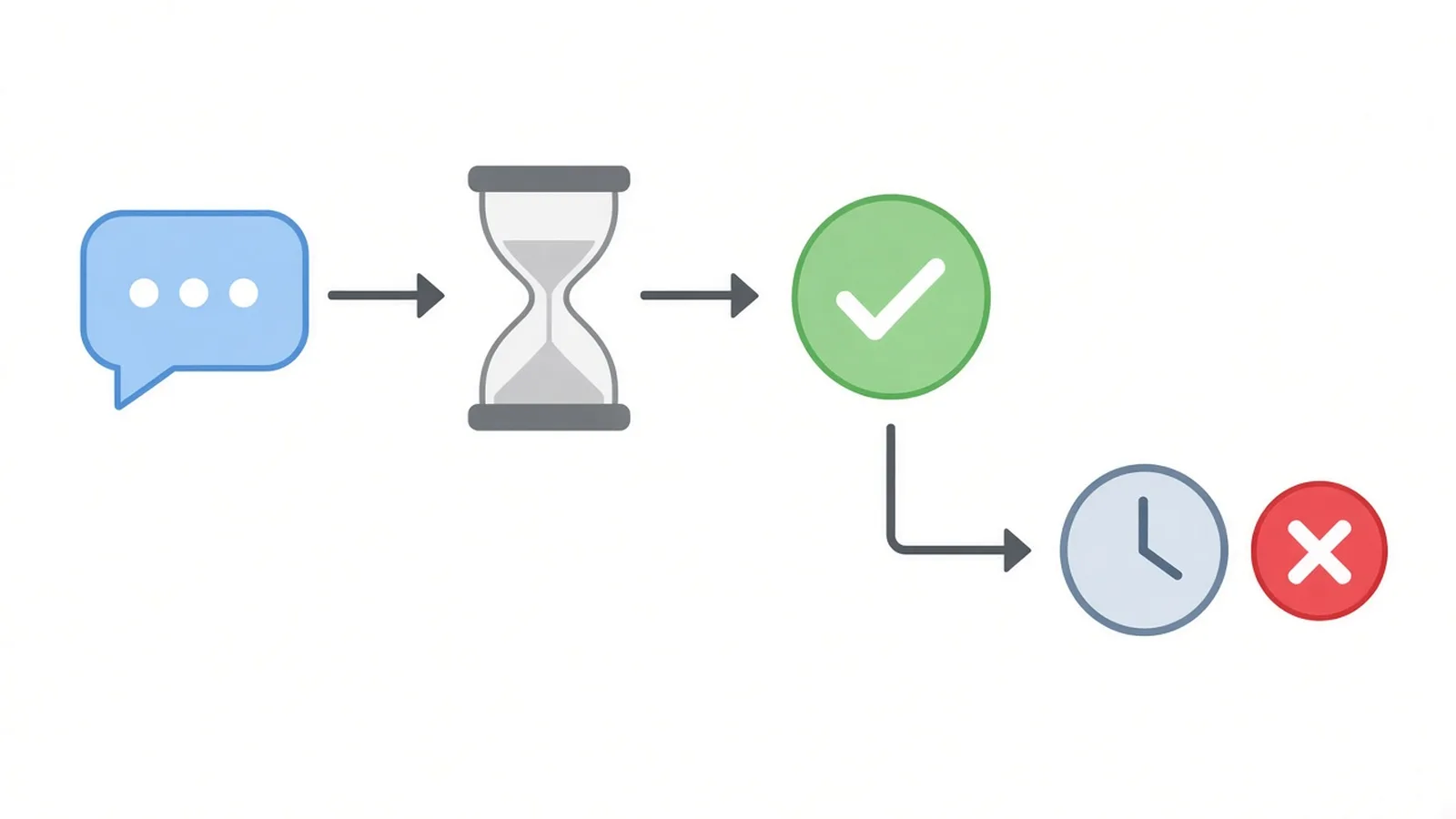
-
Before submitting, open the booking on the airline’s site and check the segments are confirmed.
-
Make sure the passenger names match the passport and the number of seats matches the number of travellers.
-
If a TK or SC appears, update the dates or times on your forms before you submit.
-
Remember the airline site may show only the booking, not codes; a confirmed flight on the site is what matters.
-
Do not present a waitlisted, unable or cancelled segment as your exit flight.
Consular officers and airlines check the live booking, not your PDF. A clean record with confirmed segments and matching dates is the goal, whatever system produced it.
Which Sources Does This Page Use?
-
Galileo Air Status Codes, Travelport.
-
Your airline’s manage-booking page for live status.
-
Amadeus Service Hub: How to understand Status, Action and Advice Codes
-
Amadeus Service Hub: How to change the segment status code (Cryptic)
Read the Code, Then Check the Airline
PNR status codes tell you the state of each flight segment: confirmed, pending, waitlisted, changed or cancelled. They do not tell you whether a ticket is issued. Use the decoder for a quick reading, then confirm on the airline’s own site.
Need a reservation you can check? Look it up on the airline’s own site to see each segment’s status.
Review verifiable reservation optionsFrequently Asked Questions
What does HK mean in a PNR?
HK means holds confirmed: the airline has confirmed the seat on that segment.
What does HL mean in a PNR?
HL means have listed: the passenger is on the waiting list for that segment.
What does TK mean?
TK means a confirmed segment had its timings changed. Check the new times and any connections.
What do UC and UN mean?
UC means unable to confirm because the segment is closed. UN means the service is not provided, such as a flight not operating as booked.
Does HK mean my ticket is issued?
No. HK confirms the seat. Ticketing is separate and produces a 13-digit ticket number.
Where can I check my PNR status?
On the operating airline’s official website or app, using the booking reference and your surname.
What does UC mean on a flight booking?
In Travelport’s table, UC means unable, segment closed: the airline did not confirm the seat.
What does GK mean in a PNR?
Travelport lists GK as passive confirmed, a segment recorded rather than sold through that system; check the airline’s own record.
What does XX mean?
Travelport lists XX as cancel confirmed or requested segment.
What does TK mean on a flight booking?
Amadeus describes TK as confirming, advise passenger of new times; Travelport describes it as a schedule change. Your seat is held but the times changed.
What does HX mean in a PNR?
Amadeus lists HX as holding cancelled; Travelport’s Galileo table lists it as cancelled, inventory adjusted.
What does UN mean on a booking?
Amadeus lists UN as unable, flight does not operate; Travelport’s Universal API lists it as unable, no flight.
What is the difference between a PNR and a ticket number?
The PNR or record locator identifies the booking. The ticket number, 13 digits according to airlines such as American Airlines, Iberia and ANA, shows a ticket was issued.
Why did a UC segment disappear from my booking?
Amadeus says inactive advice codes, including UC, move to the record’s history when the agent processes them.
Do all reservation systems use the same codes?
The core codes are shared, but each system documents its own variants; for example PK means a confirmed passive segment in Amadeus but discounted passenger in Travelport’s Universal API.
What does NS mean in a PNR?
Travelport’s Universal API lists NS as no show: the passenger did not fly that segment.
What does EK or HI mean?
In Travelport’s Universal API, EK is EMD confirmed and HI is holding confirmed with an EMD issued, both relating to paid extras.
Friendly reminder: Reservation-system codes can vary between systems and airlines. A status code describes a booking segment; it does not guarantee boarding, a visa or entry. Confirm any status with the airline that holds the booking.