
Short answer: For a Philippines sticker-visa application from India, the New Delhi Embassy lists an itinerary flight ticket or flight reservation among its basic requirements. Use a genuine dummy ticket only if you are actually applying for that visa and the record matches your real trip. Check the 14-day or qualifying 30-day visa-free tourism routes first. At Philippine entry, the mission separately requires a return or onward journey plane ticket—not merely an application-stage hold.
A Philippines sticker-visa applicant in India needs to separate two checks. First, does the traveler actually need a consular 9(a) visa rather than qualifying for a current visa-free tourism route? Second, if a sticker application is needed, does the flight evidence meet the Philippine mission’s current checklist? A proposed reservation for the file and a ticket presented at entry serve different purposes.
This guide stays in the consular sticker-visa lane: how to choose a truthful return or onward itinerary, coordinate dates with the India-file documents, and verify a temporary dummy ticket before submission. It does not treat a reservation as a boarding ticket or assume a visa-free traveler needs a sticker-visa file.
Key facts for an India-file 9(a) application
- The 2025 Philippine Bureau of Immigration circular provides a 14-day visa-free route for eligible Indian tourists and a separate qualifying 30-day AJACSSUK route.
- The New Delhi Embassy lists an itinerary flight ticket or flight reservation in its basic visa-application requirements.
- The same mission says return or onward journey plane tickets must be presented at entry for temporary visitors.
- A temporary reservation is not automatically a paid ticket or boarding entitlement.
- Check the Philippine post with jurisdiction over your place of residence or work for current filing details.
Filing a sticker visa? After checking the post’s current flight-proof wording, compare a genuine temporary reservation with a paid refundable fare and choose the one that fits your actual submission stage.
Review current reservationsIn This Guide
Official-source check: The Philippine Bureau of Immigration’s Indian-national visa-free circular sets out the 14-day and qualifying 30-day conditions, including a return or onward ticket. The Philippine Embassy in New Delhi’s current visa requirements list itinerary flight ticket or flight reservation for applicants and separately require a return/onward journey plane ticket at entry. Recheck both pages and your own consular post before acting.
Reviewed for: Current Indian-national visa-free tourism pathways versus consular 9(a) filings, application-stage reservation versus entry-stage ticket, mission jurisdiction and issuer-supported verification. Examples are illustrations, not reported approval outcomes.
For the distinct traveler who uses a visa-free pathway, see our general onward-ticket timing playbook. For visa-file planning rather than booking status, see the BookForVisa flight-reservation guide.
First Decide Whether an Indian Tourist Needs a Sticker Visa

Before ordering flight proof, check the traveler’s actual entry route. Philippine rules currently provide a 14-day visa-free tourism privilege for eligible Indian nationals and a separate 30-day privilege under specified AJACSSUK visa or residence conditions. If neither covers the intended trip, review the applicable consular visa process.
The First Question Is Not "Dummy Ticket Or Not?" But "Which Philippines Entry Route Are You Actually Using?"
The Philippine Bureau of Immigration’s 2025 circular sets out a 14-day visa-free tourism pathway for eligible Indian passport holders and a distinct 30-day pathway for eligible holders of specified visas or residence permits. Both require conditions such as passport validity and a return or onward ticket. A longer stay or different purpose may require a different visa.
That changes everything.
Do not copy a sticker-visa submission checklist into a visa-free trip. The entry document and ticket requirements still matter, but the consular filing workflow does not apply when no sticker application is being made.
So start here:
- Is the trip tourism of 14 days or less under the current Indian-national visa-free conditions?
- Does a qualifying AJACSSUK visa or residence permit create a different permitted stay?
- If not, which Philippine consular post and visa category apply?
- Is a return or onward ticket required for actual entry?
The first check avoids a category error. Confirm current nationality, purpose, permitted length of stay and any qualifying third-country visa or residence status before preparing a consular itinerary.
Why Onward Proof Becomes A Bigger Issue Once You Are Clearly In The Sticker-Visa Lane
For a 9(a) sticker application, the Philippine Embassy in New Delhi lists an itinerary flight ticket or flight reservation among the basic requirements. At entry, it separately says temporary visitors must present a return or onward journey plane ticket to an immigration officer.
The application itinerary should show the genuine intended arrival and departure pattern. The entry-stage ticket requirement is separate: do not assume a temporary hold accepted in a consular file will be sufficient for boarding or Philippine immigration.
This is where many applicants get tripped up. They assume any flight document with dates on it will do the job. It does not work that way. Your onward proof needs to make sense with the rest of your application.
A reviewer will naturally read it against questions like these:
When are you entering the Philippines?
How long are you staying?
When are you leaving?
Does that exit plan fit the purpose of the trip?
If those answers line up cleanly, your itinerary supports the file. If they do not, the reservation starts creating friction instead of removing it.
When A Fully Paid Ticket Is Actually The Cleaner Move
A paid fare can be appropriate when the actual travel dates and document conditions are fixed, especially once a visa is issued. Read the fare’s change and refund terms. Payment does not make an inconsistent route or ineligible traveler admissible.
Sometimes, a fully paid ticket is simply cleaner. That usually happens when your travel dates are already fixed and unlikely to move. For example:
You are traveling for a wedding, conference, or family event with locked dates
Your employer has approved the exact leave dates
You are taking a short trip with very little uncertainty
You already know your return city and travel window
An issued return ticket may reduce uncertainty about ticketing for actual travel, but it does not signal greater visa merit. The consulate evaluates the whole file against its rules.
This is not about looking more serious. It is about reducing moving parts. If your trip is already decided, a paid booking can be the simpler choice.
When A Dummy Onward Reservation Is The Rational Choice
A temporary reservation can be a sensible application-stage option where the current checklist accepts a flight reservation and the traveler is not ready to purchase a final fare. Confirm its status, expiry and correction path.
That is common with Philippines trips from India, especially when the trip sits inside a wider Asia plan or depends on visa timing. A reservation is often the better tool when:
Your visa approval date is uncertain
You do not want to lock a long-haul fare too early
Your onward country is decided, but the exact travel date is not
Your leave window is approved in principle, not finalized in detail
You are still coordinating internal flights or a multi-city route
In those cases, the goal is not to avoid commitment. The goal is to keep your application coherent while preserving flexibility.
A reservation should reflect a real likely trip, not a fabricated commitment. If onward plans are uncertain, do not invent a third-country flight. Settle the intended route or explain the legitimate plan under the consulate’s requirements.
From this point, we need to judge your onward proof using three filters.
First, are you in the correct visa lane for this Philippines trip from India?
Second, does your return or onward flight actually fit the story your file is telling?
Third, will the record be current and accurate when the consular file is submitted? Do not assume it must remain active during the entire decision period unless the receiving office asks for updated evidence.
Application Reservation vs Entry Ticket: Build Both Correctly
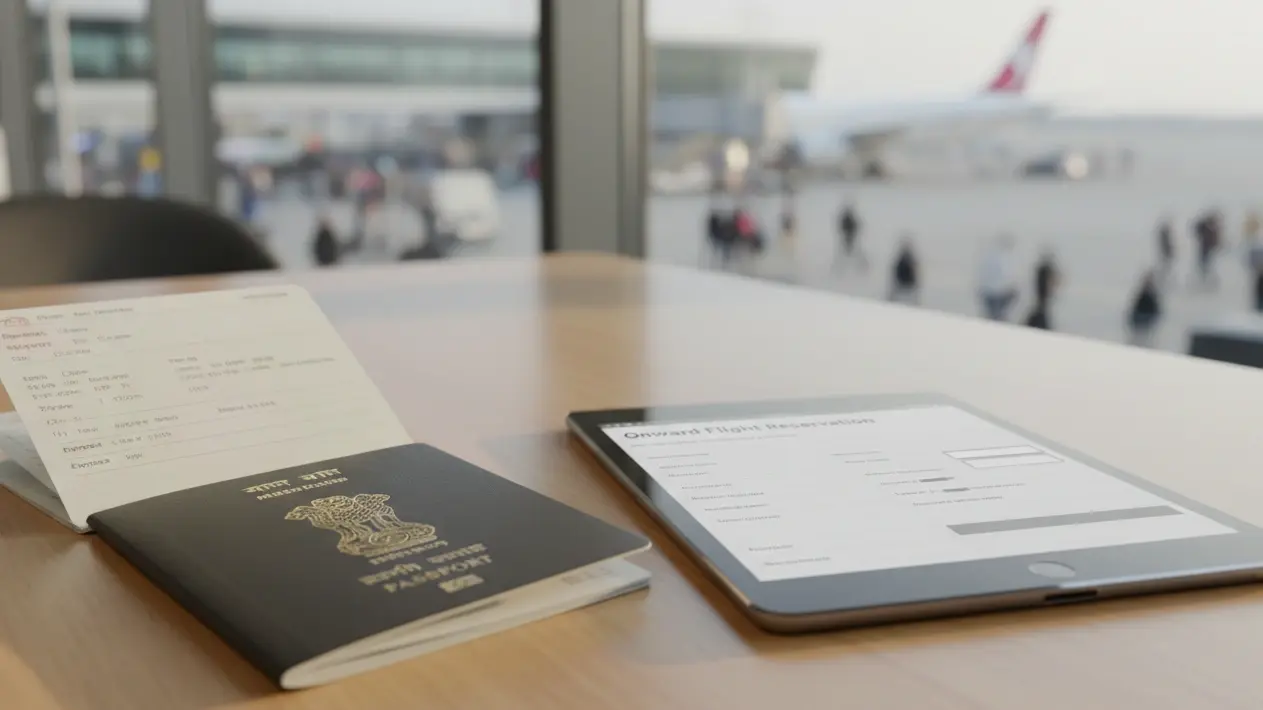
The New Delhi mission’s checklist accepts an itinerary flight ticket or flight reservation at application stage. That is different from its stated requirement to present a return or onward journey plane ticket to Philippine immigration on arrival.
“Confirmed Flight Details” Is The Real Phrase To Build Around
The goal is not a vaguely “confirmed-looking” PDF. Identify whether the issuer supplied a real reservation, hold or paid ticket; keep its status and dates accurate. Do not describe an unticketed hold as a purchased seat.
A credible onward ticket should answer basic questions without forcing anyone to guess:
- Passenger identity matching the passport and application
- True origin, destination, travel dates and flight segments
- A clearly described record status and verification method
- An exit plan aligned with the actual Philippine stay
The amount paid is not the quality test. A genuine record that satisfies the consular checklist and matches the real plan is more useful than a polished document with an unsupported route.
If the flight document feels incomplete, oddly formatted, or disconnected from the rest of your file, it stops helping. For a Philippines sticker visa from India, your onward leg is not there to fill space. It is there to support your planned exit from the country.
Return Flight Or Onward Flight? Which One Creates Fewer Questions For Your Case?
For a tourist returning to India, a simple return itinerary often mirrors the real plan. An onward journey to another country can also be valid if that is where the traveler will go and the person meets that country’s entry conditions.
If you are traveling from India to the Philippines for tourism and then coming back to India, a return flight usually creates the fewest questions. It gives your file a direct entry and exit pattern. Nothing feels overbuilt.
An onward flight can still work very well. It often makes sense when the Philippines is one stop in a larger trip. But your onward route needs to fit the rest of what you are saying.
Ask yourself which version sounds easier to explain in one line.
Return booking: “You are visiting the Philippines, then returning to India.”
Onward booking: “You are visiting the Philippines, then continuing to another country before returning later.”
Choose the itinerary that describes the actual trip. The mission may ask for explanation or additional evidence in an unusual multi-country case; no route pattern guarantees approval.
If your onward destination appears out of nowhere and nothing else in your file points to that next country, the booking can start feeling like a technical add-on instead of a genuine travel plan.
The Date Logic That Quietly Makes Or Breaks The Reservation
Dates are where good flight proof often gets weak.
For a Philippines sticker visa file from India, your onward ticket should sit comfortably inside the trip window shown across your documents. Even a small mismatch can make the itinerary feel less believable.
Check the date logic against these points:
Your intended entry date into the Philippines
Your stated trip length
Your leave period if you are employed
Your cover letter timeline
Any sponsor explanation tied to your travel dates
Illustrative mismatch: the itinerary exits on the 18th but an employer letter grants leave only to the 15th. Either correct the leave record or the proposed trip. Do not silently keep both and rely on a more official-looking PDF.
The strongest onward reservation is not the one with the fanciest route. It is the one whose dates look like they were chosen on purpose.
Why One-Way Entry Plus A Vague Exit Plan Can Invite Extra Scrutiny
A one-way arrival is not by itself a visa violation, but a temporary visitor should plan how to meet the stated return-or-onward ticket condition at entry. A consular application should not omit the planned exit if the mission requests flight proof.
If the file only shows India-to-Philippines travel while the itinerary says a short tourist stay, add the genuine exit plan and supporting record the checklist requires. Do not manufacture a future departure.
This is especially true when your travel purpose is simple tourism. A clean tourist plan usually benefits from a clear exit path. If your onward arrangement is weak, missing, or poorly aligned, your file can look less settled than it should.
Be careful with patterns like these:
One-way entry with no visible departure plan
An onward flight dated far later than the trip length you describe
An exit route that does not connect naturally to your overall plan
A departure city or airport that appears with no explanation anywhere else
You do not need a dramatic itinerary. You need one that closes the loop.
Multi-City Plans Can Work But Only If The Itinerary Tells One Clean Story
Some India-based travelers are not returning straight home after the Philippines. That is normal. The issue is not complexity. The issue is whether your route still feels unified.
A multi-city onward ticket works best when the rest of your file already supports it. If you are continuing to another destination, your booking should fit a story that is easy to follow.
That often means your onward leg lines up with one of these patterns:
A regional trip that moves logically from one country to the next
A business itinerary with the next stop already implied by your purpose
A family or personal travel plan where the next destination makes sense
A multi-country route is not inherently weaker than a return to India. The issue is whether the next destination is the traveler’s real plan and the traveler is eligible to enter it.
Small Mismatch Errors That Look Bigger Than They Are
Minor inconsistencies can do outsized damage in a flight-based visa file because they make the document set look less controlled.
Before you use an onward ticket, check details that are easy to miss:
Name order and spelling
Passport-style spelling versus casual spelling
Wrong airport or city code
Departure date that does not match your written itinerary
A routing that creates unrealistic transit timing
None of these errors is dramatic by itself. But together, they can make a Philippines sticker visa file from India look pieced together instead of planned properly.
India Consular Filing: Jurisdiction, Timing and Final Record
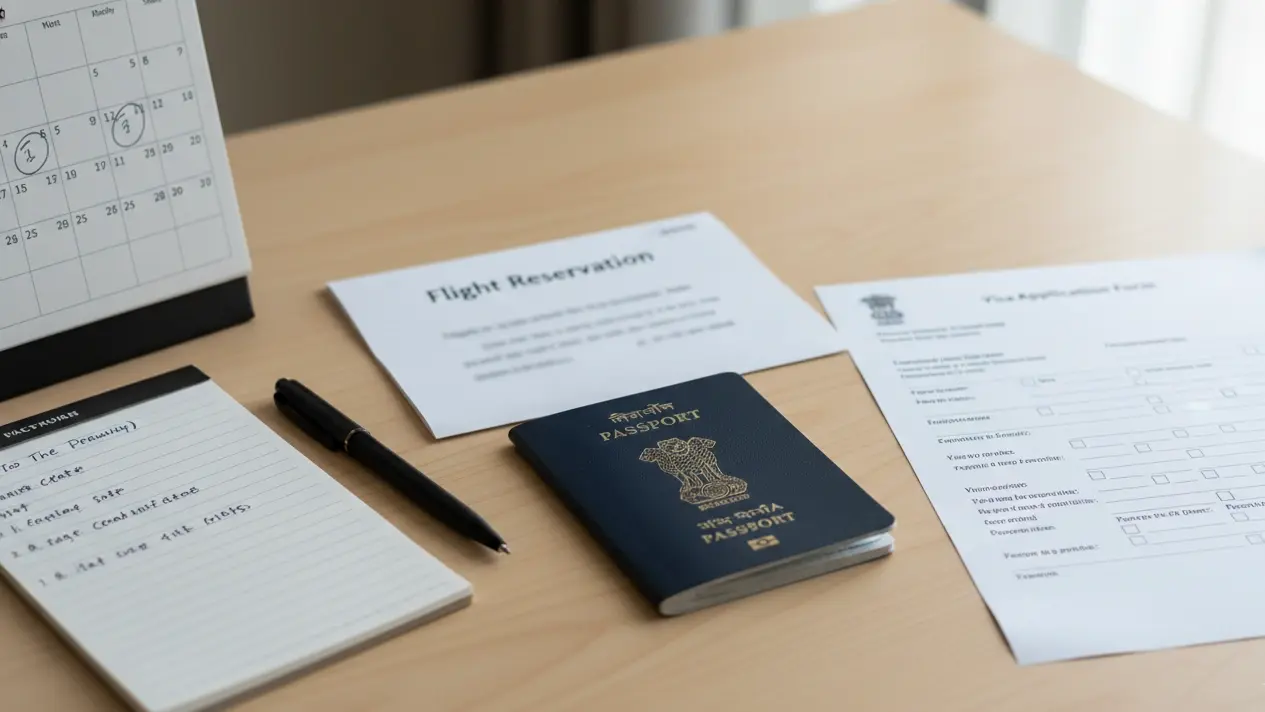
The New Delhi mission publishes application requirements and filing guidance. Applicants should check the Philippine post with jurisdiction over their residence or work location and confirm the current submission method before ordering time-sensitive flight evidence.
Your Onward Ticket Strategy Changes Depending On Where You Are Allowed To Apply
The filing location and channel can affect when a record is submitted and checked. Ask the relevant Philippine mission about current jurisdiction, appointment or agency procedures. Do not assume a reservation must stay live for the entire visa review.
That matters because the Philippine embassy side of the process is not just about attaching a flight ticket and moving on. Your timing should reflect where your case is handled and how your documents travel through the visa application process.
For indian travelers, that means checking practical details before you lock anything in:
- Post with jurisdiction over residence or work
- Current submission channel and appointment rules
- Date when a complete file must be received
- The flight-evidence wording on that post’s current checklist
A genuine issuer record with clear status is stronger evidence than an untraceable screenshot. Public airline lookup may not display every agency reservation; ask the issuer which verification channel works.
Processing Time Is Not A Side Note; It Determines How Long Your Dummy Flight Reservation Needs To Remain Usable
The New Delhi mission says applicants should submit well before departure and that processing can depend on a complete file and requests for additional documents. Use the current post’s guidance, not an old blog estimate, when setting travel dates.
A reservation must be accurate and current when it is required. No general rule says that it must remain active for the entire consular review. If the post later asks for fresh evidence, provide an updated genuine record.
A booking reference, flights and airport details can help identify the proposed route. A PNR alone does not prove payment, ticket issuance or that a record is visible on every airline’s public lookup.
You should think in layers:
- Date of complete application submission
- Issuer-stated reservation expiry
- Official processing guidance and possible requests for more documents
- Intended entry and exit dates
If an issuer’s hold expires before the scheduled submission, correct or replace it. If it expires during review, respond to any request for updated evidence under the mission’s instructions.
A refundable ticket can work when your travel dates are firm, and you want more control. A non-refundable ticket or non-refundable flight creates more pressure if your dates shift during processing. A full ticket is not always the most practical answer when the file timeline is still moving.
Why Generating The Ticket Too Early Can Be Just As Bad As Generating It Too Late
Some applicants prepare the dummy air ticket too early because they want everything ready. Others wait until the last minute and rush the details. Both choices can weaken the file.
If you create the document too early, your flight itinerary may no longer match the rest of the package by the time you submit. Your leave dates may change. Your onward travel route may shift. Your application form may get updated while the itinerary stays frozen.
If you create it too late, the errors tend to be small but damaging:
- Wrong origin or destination city
- Incorrect arrival airport or date
- Missing issuer-supported booking reference
- Exit date inconsistent with the application
An application-stage reservation is useful only when it fits the actual checklist and journey. No provider can promise that using a dummy ticket prevents refusal or saves a fixed amount of money.
The safest timing is usually when your file dates are stable enough to support credible proof, but still flexible enough that you can adjust dates if needed.
How The Onward Ticket Should Line Up With The Rest Of The India-File Package
Your onward ticket should not sit in isolation. It has to fit the rest of your India file like one continuous story.
That means your dummy flight or verified reservation should line up with:
The dates written in the application form
The purpose of the trip in your cover letter
The leave window in your employer's papers
The plans described by family visitors
The route logic shown by your return proof
For example, if your cover letter says a short holiday, but your round-trip structure suggests a much longer gap, the documents stop supporting each other. If your file points to simple tourism, but your onward travel suddenly creates transit visa issues, you have added friction without any benefit.
A familiar airline brand does not cure a wrong date, transit problem or unissued ticket. Check the exact flights and booking status through the supported channel.
Walk-In, In-Person, Or Agency-Submitted Files
Control the final version of each file item, whether submitting directly or through a permitted intermediary. Follow the receiving mission’s current procedure; do not rely on a generic “walk-in” assumption.
Before handover, confirm that the actual document sent is the current one and that the booking status, route and date are accurate. An agency reservation may have an issuer-supported lookup rather than a public airline page.
Before submission, check details that often get missed:
- The exact record and status can be verified through the issuer-supported channel
- Passenger spelling and route match the application
- The document sent is the final current version
- The actual ticket needed at entry is planned separately
This check reduces preventable corrections; it does not guarantee a faster visa decision or lower total cost.
What If Your Travel Date Moves After Submission?
Date changes do happen. The key is to keep the file coherent when plans move.
If your trip shifts, look at the whole chain before you react. Do not update only one page. Check whether the revised flight booking still matches your leave dates, route, and onward or return proof logic. If needed, adjust plans across the whole file so the timeline still reads cleanly.
Compare any reservation change fee with the real fare’s cancellation terms. A low booking fee is only valuable when the product meets the mission’s evidence requirement and the traveler’s actual plan.
Fast delivery is not evidence of validity. Ask the issuer what record exists, when it expires, how to confirm it, and how errors are corrected.
Use a Dummy Ticket Without Misstating Its Status
A dummy ticket can help your file stay flexible, but only when you handle it with the same care as the rest of your travel documents. For this Philippines sticker visa route, the goal is not to add paper. The goal is to remove doubt.
Treat The Reservation Like Evidence, Not Decoration
Your onward reservation should do one job very well. It should support the travel story you are already presenting.
That means you should look at it the way a reviewer would. Does it match your entry date, your planned stay, and your exit plan? Does it still make sense if your file is read without your verbal explanation?
A dummy flight ticket works best when it feels like part of the trip, not an attachment added at the end.
Use that standard before submission:
- Passport name and current application agree
- Route and dates match the genuine trip
- Exit evidence fits the receiving post’s checklist
- Reservation status and expiry are known
The first question is whether the consulate accepts the form of flight evidence at all. Only then evaluate how well the reservation aligns with this specific application.
The Best Dummy Tickets For This Use Case Are The Ones That Reduce Contradiction
A useful reservation does not try to impress. It tries to stay consistent.
For this kind of sticker visa file, the best option is usually the one that creates the fewest loose ends. That may be a simple return leg. It may be a clean onward travel booking to a logical next stop. What matters is that the document does not introduce a new question that your file never answers.
That is why a verifiable format matters so much. If your booking can be checked, read clearly, and matched against your dates, it gives the file more internal strength.
You should be careful not to import habits from other travel situations. A route choice that might work in a Schengen visa file, or a document style you used in a Schengen visa application, may not fit the way this travel plan is being reviewed. The same applies to non-flight items. A dummy hotel booking or unrelated hotel bookings do not solve a weak exit plan when the pressure point is onward proof.
The right reservation should feel calm, simple, and easy to defend.
DummyFlights can be an option for a genuine temporary reservation after you check the official requirement. Review its current price, delivery, verification and change terms on the live booking page; do not rely on an unsourced $15 price or unlimited-change promise.
Red-Flag Scenarios: Where To Stop And Fix The Itinerary
Some reservations should not be submitted as they are. Not because the idea is wrong, but because the details are working against you.
Watch for patterns like these:
Your onward destination appears nowhere else in the file
The exit date stretches beyond the trip length you describe
The return path looks much stronger than the outward explanation
The reservation uses a city pair you are unlikely to travel to
The itinerary was created before your dates were finalized and never updated
Another common problem is document spillover. You adjust your cover letter, but not the flight plan. You shorten the trip, but keep the original exit leg. You change the entry city, but leave the old onward sector in place.
That kind of mismatch is avoidable. Before you submit, compare the reservation against every date-sensitive document in the file. If one detail moved, check the rest.
How To Handle The “What If I’m Asked About It Later?” Anxiety
If asked later, explain the actual trip and present the current booking or issued ticket. Do not claim a temporary reservation is still active after its stated expiry.
The cleanest answer is preparation, not over-explaining.
You should be able to say, in simple words, why the route makes sense. That explanation should match the file you submitted. If you plan to return home after the Philippines, your reservation should reflect that clearly. If you plan to continue to another destination, that next step should sound natural when spoken out loud.
A good test is this: can you explain your route in one sentence without adding extra context?
A one-sentence route explanation is a helpful self-check, not a measure of visa eligibility. A legitimate multi-city trip may need more detail.
If not, fix the itinerary before you rely on it. The weakest files are often not false. They are just untidy. Reviewers notice when the travel story feels assembled from separate pieces.
Close The Body With A Practical Pre-Submission Checklist
Right before you submit, run one final check against the whole file.
Use a quick list:
- The visa-free or sticker-visa route was checked under current rules
- Passenger identity and genuine arrival/exit dates align
- The return or onward leg meets the relevant requirement
- The record is current and verifiable through its issuer
- No unticketed reservation is described as a paid boarding ticket
Getting Your Philippines Sticker Visa Flight Proof Right From India
For a Philippines 9(a) sticker-visa application from India, the published New Delhi checklist permits an itinerary flight ticket or flight reservation as basic application evidence. The same mission separately requires a return or onward journey plane ticket at Philippine immigration. Keep those stages distinct while matching identity, route and dates to the genuine trip.
Before submission, recheck the consular post serving your location, the current visa-free eligibility rules and the proposed reservation’s actual status. Before travel, confirm the issued visa where required, onward or return ticket, passport validity and carrier requirements.
Ready to finalize the flight proof? Confirm the exact visa route and filing office, compare the proposed booking with all file dates, and obtain the ticket required for actual travel before departure.
Check reservation optionsFrequently Asked Questions
Do Indian tourists always need a Philippines sticker visa?
No. The Philippine Bureau of Immigration publishes a 14-day visa-free tourism route for eligible Indian nationals and a separate qualifying 30-day route for holders of specified visas or residence permits. Check the current conditions, purpose and intended stay.
Can I submit a flight reservation with a Philippine sticker-visa application in India?
The Philippine Embassy in New Delhi lists an itinerary flight ticket or flight reservation among its basic requirements. Follow the current instructions of the Philippine post with jurisdiction over your case.
Will an unticketed dummy reservation satisfy Philippine immigration on arrival?
Do not assume so. The New Delhi mission says temporary visitors must present a return or onward journey plane ticket at entry. Confirm ticketing and airline requirements before travel.
Should I show a return to India or an onward flight elsewhere?
Show the trip you genuinely intend. A return is simple when you will go home; an onward journey can be appropriate if you are eligible for the next destination and the dates match your file.
How long should the application-stage reservation stay active?
Obtain the actual expiry from the issuer. It should be current when the consular office requires it; provide a fresh legitimate record later if the office asks. No universal review-long hold rule applies.
Friendly reminder: Visa-free privileges, consular requirements, carrier checks and immigration decisions can change. A temporary reservation does not guarantee a visa, boarding or entry. Use the current official rules for the actual traveler and trip.