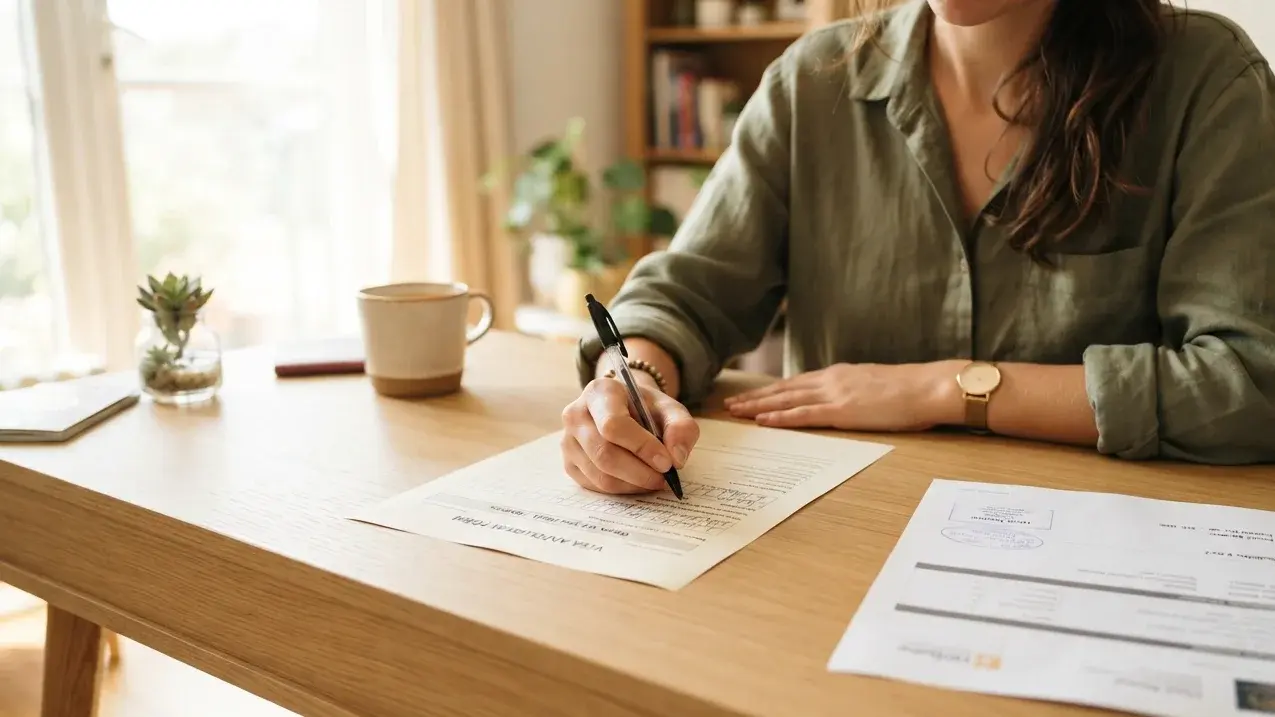

Your appointment is in two weeks, and the checklist says proof of accommodation. You can submit a host’s invitation letter, a hotel booking, or both. The wrong choice can trigger a verification call, a request for more documents, or a quiet downgrade to “unclear travel plan.” In 2026, officers scan for consistency, not sentiment.
We’ll help you pick the proof that creates the fewest new questions for your exact trip. You’ll see when an invitation letter strengthens your story, when a hotel booking is cleaner, and when mixing them is the safest move. If your Schengen accommodation dates are fixed, align them with a verifiable dummy ticket booking for the same travel window.
Key takeaways:
-
EU Visa Code Article 14 allows consulates to ask for documents relating to accommodation, or proof of sufficient means to cover accommodation.
-
Annex II treats both an invitation from a host and a document from an accommodation establishment as possible proof for tourism or private visits.
-
A hotel booking is usually cleaner for simple tourism; an invitation letter can be stronger when the host relationship is real and documented.
-
Mixed proof works well when the trip is split between hotels, family, friends or multiple cities, as long as every night is accounted for.
-
The real risk is mismatch: stay dates, flight dates, funds, city sequence, host address and applicant name should not fight each other.
Need your flight dates to match your proof of stay?
Create one clean dummy ticket that aligns with your hotel booking, invitation letter and visa travel window.
Create Your Dummy TicketOfficial-source check: EU Visa Code Article 14 says Schengen applicants may be asked for documents relating to accommodation, or proof of sufficient means to cover accommodation, plus information enabling assessment of intention to leave before visa expiry. Article 14 also says Member States may require proof of sponsorship or private accommodation through a national form that identifies the host, applicant, accommodation address, length and purpose of stay. Annex II lists, for tourism or private reasons, an invitation from the host if staying with one, a document from the accommodation establishment, or another appropriate document indicating the accommodation envisaged. The European Commission’s Schengen application page similarly lists supporting documents relating to purpose of stay, financial means, accommodation and intention to return. Your Europe says non-EU travellers may need supporting documents at the border such as an invitation letter, proof of lodging, return or round-trip ticket. Sources: EU Visa Code, European Commission Schengen application guidance and Your Europe non-EU travel documents.
Reviewed for: Schengen accommodation-proof wording, invitation-letter versus hotel-booking logic, private accommodation and sponsorship claim safety, host-date alignment, flight-date consistency, funds and purpose matching, verification-call handling and safe dummy-ticket use.
In This Guide
What Visa Officers Tend To Verify In 2026: “Proof Of Stay” As A Consistency Test
Proof of accommodation is rarely judged on the document alone. It gets judged on whether it fits the rest of your file without creating extra questions. In 2026, that “fit” is what decides whether your application stays smooth or turns into a verification exercise.
“Where Will You Sleep-and Does It Match Everything Else?”
When an officer looks at your accommodation proof, they are running a quick internal cross-check. They want one clear answer: your nights are accounted for, and your story stays stable across documents.
They compare your proof of stay against details that seem unrelated, but are not:
-
Trip length vs location: A 21-day trip with one vague address can look unfinished.
-
Purpose vs accommodation type: “tourism” plus full-time hosting can be fine, but it often raises follow-ups unless the relationship is clear.
-
Funds vs plan: if you claim expensive hotels but show a tight budget, the mismatch becomes the issue, not the booking itself.
-
City sequence vs reality: an itinerary that zigzags in ways people do not normally travel can look manufactured.
Treat proof of stay like a hinge. If it aligns, the rest of the file swings smoothly. If it wobbles, officers start pulling on other parts of your application.
A simple rule helps: your accommodation must explain your route, not force you to explain it.
Invitation Letters: What Usually Gets Checked (Even When You Think It Won’t)
Invitation letters work best when they are specific and boring. Not emotional. Not dramatic. Just verifiable.
Officers commonly sanity-check these points:
-
Host identity: name and contact details that look real and reachable.
-
Full address: complete enough to match a map and a normal residence format.
-
Exact stay window: clear dates that match your entry and exit plan.
-
Relationship clarity: not a life story, just a clean connection that makes sense.
-
Host status: where relevant, something that supports the host’s ability to host you legally.
The biggest risk is not “the letter looks fake.” It is the letter that creates unanswered questions.
Watch for these triggers:
-
The letter says “you can stay anytime,” but your itinerary has fixed dates.
-
The host address is in one city, but your plan includes multiple cities with no explanation.
-
The relationship sounds vague, yet the stay is long.
-
The host will be unreachable during working hours or travels frequently, but you are relying on them for the entire stay.
If you are using an invitation, do one quick prep step before you submit. Make sure your host can answer three questions consistently if contacted:
-
Who are you to them?
-
What dates are you staying?
-
What is the address you are staying at?
That is not coaching. That is alignment.
Hotel Bookings: What Makes Them Look Solid Vs Questionable
Hotel bookings win when they are clean, name-matched, and route-appropriate. They lose when they look like placeholders that do not connect to your trip logic.
A solid hotel booking packet usually has:
-
Your name is spelled exactly as in your passport
-
Check-in and check-out dates that match your itinerary and application form
-
Property address and contact details that look complete
-
One clear booking reference that can be verified if needed
The fastest way to create doubt is to submit hotel proof that fights your own story. Common examples:
-
A hotel in a different city from your stated activities.
-
Too many one-night stays create an “assembled” pattern.
-
Hotels that do not match your entry point. For example, arriving in one city but booking the first night elsewhere without a transit explanation.
If you are doing a multi-city trip, group hotels in a way that looks like a real traveler planned it. Keep it simple:
-
Fewer properties
-
Longer blocks in each city
-
A route that a normal person would take
When Mixed Proof Beats A Single Document
Sometimes you do not need to choose one. You need to choose the least risky combination.
Hybrid proof often works best when:
-
You are staying with a host, but also doing side trips.
-
Your arrival time is late, or your departure is early, and a buffer night removes confusion.
-
Your trip is long, and full-time hosting would raise capacity questions.
A practical pattern is:
-
First 1 to 2 nights in a hotel near arrival, especially if you land late
-
Main block with the host in the core city
-
Hotel nights for other cities if you travel away from the host address
This approach keeps the core story simple while accounting for movement.
Landing in Delhi for a family wedding, then doing Agra and Jaipur afterward is a classic split itinerary. An invitation letter can anchor the wedding stay, while short hotel blocks for the side trip cities prevent the “why are you sleeping at a Delhi address while touring Rajasthan?” question.
We’ll turn these verification patterns into a decision tree so you can choose invitation, hotel, or hybrid based on your exact trip profile.
A Decision Tree That Actually Ends In A Clear Choice (Invitation, Hotel, Or Both)

You do not need the “strongest” proof. You need the proof that creates the fewest questions for your exact trip. This decision tree helps you choose fast, then lock the choice so the rest of your application stays consistent.
Start With Your Trip Type, Not Your Preference
Start by naming the trip in one sentence. Officers do this in their heads anyway.
Pick the branch that matches your purpose:
-
Visiting a person as the main purpose (family, friend, partner): start with an invitation letter as the anchor.
-
Tourism as the main purpose (sightseeing, short city breaks): start with hotel bookings as the anchor.
-
Mixed purpose (visiting someone plus a clear tourism block): plan a hybrid from the start.
Now apply one more filter: where will you spend most nights?
-
If most nights are at one address, an invitation can carry the load.
-
If nights are spread across cities, hotels usually read cleaner.
-
If you have one base city plus short side trips, a hybrid is often the least risky.
A quick example: a two-week trip with four cities is naturally hotel-led. A two-week trip with one host city plus a two-night side trip is naturally hybrid.
Your Risk Profile Changes The “Best” Proof
In 2026, officers put more weight on whether your plan looks “low friction.” Your profile changes what looks low friction.
Use these risk switches:
Switch 1: Travel History
-
If your passport is light on travel, avoid proof that requires extra interpretation.
-
Hotels are often easier to scan because they show dates and addresses in one glance.
-
Invitation letters can still work, but only when the relationship and dates are very clear.
-
Switch 2: Trip Length
-
7 to 14 days: either option can work if consistent.
-
15 to 30 days: invitation-only stays can trigger capacity questions unless the host situation is straightforward.
-
Over 30 days: a hybrid often reduces pressure. A few hotel nights make the plan look more realistic and less dependent on one person.
Switch 3: Relationship Complexity
-
If the host is a close relative or long-known contact with a clear reason for your visit, an invitation can be strong.
-
If the host is “a friend of a friend,” or the relationship is new, hotel-led proof is often simpler, even if you will visit them.
Switch 4: Multi-Applicant Files
-
Couples and families need name-matched proof.
-
If one hotel booking shows only one adult's name, it can create confusion.
-
If an invitation letter lists only one traveler, but you apply as a group, it can look incomplete.
-
If any switch points to “more questions,” choose the proof that reduces verification steps.
Who Pays, And Does That Payment Story Make Sense?
The payment story is where many accommodation choices break. Not because you cannot pay, but because the story is unclear.
Use this payment decision path:
-
You pay for your own trip
Choose proof that matches your funds narrative.-
Hotels that reflect your budget reduce questions.
-
If you plan to stay with a host, make it a clear personal choice, not a budget rescue.
-
-
A host covers accommodation
Use an invitation letter, but keep it aligned with supporting evidence.-
The invitation should say you will stay at their address for specific dates.
-
If you are also showing financial support from the host, it must match the stay length and trip logic.
-
-
You pay some nights, host covers some nights
Hybrid can be your safest lane, but only if the split looks natural.-
The host stays in the main city.
-
Hotels for side trips, conferences, or travel routing.
-
Here are payment mismatches that invite follow-ups:
-
You claim to budget travel but book premium hotels for every night.
-
You claim full hosting but also submit hotels with overlapping dates.
-
You claim a business-focused visit, but show only a host address with no explanation of where business activities happen.
If you spot any mismatch, adjust the proof, not your story. Officers notice story edits.
Choose The Document That Minimizes New Questions
This is the final filter. Ask: Which option makes an officer pause?
An invitation letter tends to create new questions when:
-
The relationship is unclear.
-
The stay is long and fully hosted.
-
Your itinerary moves across cities, but the address stays fixed.
Hotel proof tends to create new questions when:
-
The route is implausible.
-
The bookings look like placeholders with missing names or odd date gaps.
-
The first night does not connect to your arrival plan.
When both choices create questions, a hybrid usually lowers the temperature. But keep it tidy. A hybrid plan should look like a traveler’s plan, not a patchwork.
“Pick & Lock” Workflow (So You Stop Second-Guessing)
Use this workflow to decide once, then build everything around it.
Step 1: Lock Your Non-Negotiables
-
Entry city
-
Exit city
-
Total nights
-
Any fixed events (wedding, conference, family commitment)
Step 2: Draft A Night Map
Write a simple list of nights by city. No narrative. Just structure.
Example format:
-
City A: 5 nights
-
City B: 2 nights
-
City C: 6 nights
Step 3: Assign Proof Type By Block
-
One main block at a personal address: invitation for that block.
-
Movement across cities: hotels for those blocks.
-
Buffer nights around arrival or departure: choose the option that reduces transit confusion.
Step 4: Run A “Question Count” Check
For each option, count how many new questions it introduces:
-
Will someone need to be contacted?
-
Will an officer wonder why you are in a different city?
-
Will they question who pays?
Pick the option with the lowest question count.
Step 5: Freeze The Choice Across Your File
Once you pick, align these items to match it exactly:
-
Dates on forms
-
Cover letter itinerary
-
Accommodation proof dates and addresses
-
Funding story
We turn this choice into a clean, verifiable proof-of-stay packet that holds up even when an officer checks details quickly.
If your accommodation proof also needs to align with flight dates, compare the broader visa flight itinerary requirements before finalizing the hotel or invitation version. For the flight-proof side, the dummy ticket for visa guide explains how to keep temporary travel proof consistent without relying on edited or fake-looking documents.
Build A Proof-Of-Stay Packet That Survives Verification (Without Overloading The File)

Once you pick an invitation, hotel, or both, your job is simple. Build a proof-of-stay packet that an officer can verify quickly during a Schengen visa application review, without hunting for missing details.
Invitation Letter Packet: The Minimal Set That Looks “Complete,” Not Suspicious
For a visa invitation letter, aim for clear facts that read like an official invitation letter, not a personal note. The inviting party should state who you are, where you will stay, and the defined timeline of the visit in the host country.
Include key details that typically get checked first:
-
Your full name as in your passport
-
The host’s full address in the destination country
-
Exact dates for arrival and departure dates at the host address
-
A simple relationship line, such as a family member or long-term friend
-
The host’s contact number and email
-
A dated signature
If the application type expects identity support, add the smallest set that can be verified without noise. For many consulate checks, that means:
-
Host's passport copy, showing passport numbers and full name
-
A local id number, if that is the normal format in that host country
-
Proof of legal status, such as a residence permit, if the host is not a citizen
Only add housing proof when it solves a real doubt. If the host address is an apartment and the stay is long, a lease agreement or rental agreement can help the file look grounded. If the host recently moved, a current lease agreement beats an old utility bill that conflicts with the address.
If the host is inviting you for a work visit, keep it clean and separate. A short company letter that matches the formal invitation dates can be included as an official document, but it should not replace the accommodation facts in the invitation itself.
Hotel Booking Packet: Make It Verifiable, Name-Matched, And Date-Clean
For a hotel booking confirmation, you want a single glance to answer three questions: who, where, and when. That matters most when an embassy reviewer scans quickly across multiple supporting documents.
Make the booking verifiable and consistent:
-
Guest name matches your passport spelling, including middle names if shown elsewhere
-
Property address is visible, not hidden behind a generic header
-
Check-in and check-out match your travel dates, city by city
-
The booking reference is present and readable
-
The booking shows all travelers if you apply as a group
If your Schengen visa file includes movement inside the Schengen area, keep hotel proof aligned with how people actually travel. Two or three city blocks read better than six different hotels for a ten-night trip. If you will enter France, continue to Belgium, then exit from the Netherlands, your booking sequence should reflect that route instead of bouncing across other countries without a reason.
One practical rule: avoid gaps. A single uncovered night forces an officer to ask what you are doing that night, even if the rest of the reservation set is perfect. If you have an overnight train, show the night as travel in your itinerary and make the surrounding hotel dates match the train schedule.
The Consistency Audit: One Pass That Catches 90% Of Problems
Before you upload anything, run one audit that treats proof of stay as part of your visa application story. This is where most visa approval delays happen, because mismatches trigger follow-up requests.
Check these four alignments:
-
Accommodation dates match the visa application form dates and your cover letter
-
Names match across passport, bookings, and any sponsor paperwork
-
Funding story matches the stay type, using bank statements to show financial capability for daily expenses
-
Your return plan matches your home country commitments, especially if the trip is long
Common mistakes we see in proof-of-accommodation packets:
-
The host address says one city, but your itinerary lists a different city for the same nights
-
Hotel names are fine, but the guest name is missing or shortened differently than in your passport
-
The stay window conflicts with your approved leave dates from your employer
-
You list multiple cities, but submit only one hotel, and provide no explanation for the other nights
-
Sponsor claims they will financially support you, but the dates and scope are unclear
Use this comprehensive guide mindset: every document should make it easier for an officer to provide proof of where you will sleep, not harder.
What To Do When Your Plans Aren’t Final Yet (But You Still Need Proof)
When your route is still flexible, pick anchors that are stable under verification. For a tourist plan, that usually means locking the first and last accommodation blocks, then keeping the middle simple and realistic.
Practical approaches that stay within most visa requirements:
-
Book a first-city hotel that matches your entry point, then a last-city hotel that matches your exit point
-
If you are hosted, use the invitation for the main base city, then add a short hotel block only for a side trip that is truly planned
-
If you might change cities, avoid showing five possible routes. Show one clean route with room to adjust later
If you are applying for a Schengen visa with a multi-entry intent, do not try to “solve” future trips with extra bookings now. Officers evaluate the current trip. Extra accommodation proof for hypothetical visits can look like padding and distract from the applicable trip you are actually requesting.
If your destination also expects a flight itinerary that matches your accommodation dates, a dummy flight ticket, legal for embassy use, can help keep your timeline consistent. DummyFlights.com provides instantly verifiable reservations with a PNR with PDF, free date changes within the same day of booking, transparent pricing of $15 (~₹1,300), trusted worldwide for visa use, and accepts credit cards.
We’ll cover the exceptions and verification risks that can turn a clean file into extra scrutiny, even when your documents look perfect at first glance.
Cases That Trigger Extra Scrutiny

Even when your proof of accommodation looks clean, certain patterns can push your file into deeper checks. Here, we focus on the cases that most often trigger questions during an embassy review, especially for a Schengen visa application, where documents are scanned fast and verified selectively.
“Hosted For The Entire Trip” Red Flags (And How To De-Risk Them)
A fully hosted stay is not a problem by itself. The risk comes from what it implies when an officer reads your timeline.
Extra scrutiny often happens when:
-
The stay is long, and the official invitation letter gives no reason for the full duration
-
The inviting party is not a close connection, but the letter suggests you will live together for weeks
-
Your file shows a strong tourist plan, but the accommodation is only a private address with no supporting travel logic
De-risk it without adding clutter.
Use one of these fixes:
-
Add a short, practical line that explains the stay's purpose. Example: “Staying at the host address while attending a family event and sightseeing locally.”
-
If you will travel outside the host city, add hotel proof for those nights so the host address is not carrying nights you will not spend there.
-
If you will make a day trip, do not add a new stay location. Keep the accommodation stable and adjust only what changes overnight.
Also, check the host’s availability. If the consulate calls and the host is unreachable for days, it can slow the file. Ask the host to be reachable during the processing window, especially around the dates your application is being reviewed.
Multi-City Trips: The Fastest Way To Create Contradictions
Multi-city plans break when your accommodation proof does not match your route logic.
What triggers questions:
-
A hotel booking confirmation in City B, while your itinerary says you are in City A, for those same nights
-
A route that requires long travel days, but your bookings assume instant movement
-
A plan that starts in one entry city but shows the first hotel somewhere else, with no transit explanation
Fix it with a “route sanity pass” before you submit the following documents:
-
List each night in order, one line per date
-
Write the city for that night
-
Attach the proof that covers that exact date range
If you are moving inside the Schengen area, keep it plausible. Officers see thousands of similar routes. A tight triangle reads normal. A zigzag across distant countries reads forced unless you have a specific reason tied to your trip purpose.
If you need a round-trip flight plan for the same file, align your arrival and departure cities with your accommodation anchors. A clean entry and exit that match your first and last booking reduces friction and cuts down on clarification requests.
Rental Apartments, Sublets, And “Friend Of A Friend” Hosting
These stays can work well, but they often raise one question: “Who is responsible for this address, and can it be verified?”
If you are using a rental apartment for proof of stay:
-
Make sure the address is complete and consistent across all documents
-
Ensure your name appears clearly as the guest or tenant for the dates shown
-
Avoid showing arrangements that look informal or undefined
If you are staying with a friend of a friend, the problem is not the stay. It is the weak relationship link.
You can reduce doubt by keeping the story simple:
-
Name the person you actually know and your connection
-
Keep the host description factual and brief
-
Keep the hosting window reasonable and tied to a clear plan
If your file also includes a travel agency itinerary, make sure it matches your accommodation route. A third-party itinerary that lists different cities from your proof of stay is a common trigger for extra review.
If The Consulate Calls Or Emails To Verify: What Breaks Applications
Verification checks often fail for avoidable reasons.
The most common breakdowns:
-
The inviting party answers with different travel dates than the ones your invitation letter shows
-
The host gives a different address than what appears on your submission
-
The hotel cannot locate the reservation using the details shown
-
The contact email in the booking is not yours, and the property cannot confirm the guest's name
Before you submit, do a one-minute verification readiness check:
-
Confirm the host’s phone number and email are accurate and active
-
Confirm the address format is identical everywhere you use it
-
Confirm your name appears on the booking confirmation exactly as it appears on your passport
-
Confirm your dates do not overlap between hotel and host stays unless you have a clear reason
If the embassy requests updated proof during processing, respond with corrected documents only. Do not send a larger bundle “just in case.” Officers often want a single fix, not a new pile of paperwork.
Visa Applicant Mistake Checklist (Quick Scan Before Submission)
Use this checklist right before upload:
-
The invitation letter shows exact dates, not flexible language
-
The host address matches every place it appears in your visa application
-
Hotel nights cover every overnight, with no gaps or overlaps
-
One city does not appear in your itinerary without accommodation proof
-
Your proof of stay does not conflict with your entry and exit plan
-
Your booking includes the correct traveler names for group applications
-
You did not attach the following unrelated documents that distract from the accommodation story
Myth-Busting: The 6 Most Expensive Misconceptions
-
“A visa invitation letter replaces hotel bookings for a multi-city route.” It does not when you sleep in other cities.
-
“An official invitation letter automatically prevents verification.” Verification can still happen if dates or addresses look unclear.
-
“If the booking confirmation exists, it will verify itself.” Name and date mismatches can still cause problems.
-
“More pages mean more credibility.” Extra pages often create extra contradictions.
-
“Short trips never get checked.” Short trips are often scanned faster, which makes small inconsistencies easier to spot.
-
“One change is harmless.” A last-minute change can ripple into your flight plan, accommodation, and timeline.
From here, the Conclusion will pull the decision into one clear rule you can use for any destination country without adding extra uncertainty to your next application.
Make Your Proof Of Stay Easy To Verify For A Schengen Visa Application
For a Schengen visa application, the best proof of accommodation is the one that keeps your story consistent when the embassy skims and verifies. Use an invitation when hosting is the real backbone of the trip. Use a hotel booking confirmation when your route is tourism-led or multi-city. Use both when it removes gaps, reduces assumptions, and keeps your travel dates and addresses aligned.
Now lock the option you chose, run one last consistency check across your supporting documents, and submit a file that answers questions before the consulate has to ask them.
Make the stay proof and flight proof tell the same story.
Use one verifiable dummy ticket that matches your hotel booking, invitation dates and full visa travel window.
Get Your Dummy TicketFAQ
Is an invitation letter better than a hotel booking for visa proof?
Not always. An invitation letter is stronger when the host relationship is real, documented and date-matched. A hotel booking is cleaner for straightforward tourism when every night is covered.
Can I submit both an invitation letter and hotel booking?
Yes, mixed proof can work well if the trip is genuinely split between a host and hotels. The dates, cities and addresses should explain every night without overlap or gaps.
What does Schengen law say about proof of accommodation?
EU Visa Code Article 14 says applicants may be asked for documents relating to accommodation or proof of sufficient means to cover accommodation. Annex II lists host invitations and accommodation documents as possible supporting proof.
What should an invitation letter include?
It should normally show the host identity, contact details, address, applicant details, length and purpose of stay, and any sponsorship or accommodation commitment required by the destination country.
What should a hotel booking show for visa proof?
A useful hotel booking shows the applicant or traveller name, hotel name, address, contact details, dates and reservation reference where available.
What if my flight dates and hotel dates do not match?
Fix the mismatch before submission. Flight dates, hotel nights, invitation dates and insurance dates should support one coherent travel window.
Can a dummy ticket support accommodation proof?
Yes, a dummy ticket can support the travel-date layer when it matches the same stay window as the hotel booking or invitation letter. It should not be fake or edited.
Is a free-cancellation hotel booking acceptable?
It can be acceptable if the booking is real, verifiable and date-matched. Avoid placeholders that look fake or disappear before review.
What happens if a consulate verifies the host or hotel?
If the host, hotel or dates cannot be confirmed, the application may face delays, extra document requests or credibility concerns. Keep contact details accurate and reachable.
Can a dummy ticket guarantee visa approval?
No. A dummy ticket can support travel-proof consistency, but approval depends on the full file, official requirements, document credibility and consular review.
Friendly reminder: DummyFlights provides temporary travel-proof documents for planning and application support. Requirements vary by destination, airline, route and applicant situation. A dummy ticket can support a file, but it does not guarantee approval, boarding or entry.