
Short answer: A baby may appear on a genuine temporary dummy flight reservation without an issued e-ticket number if the visa checklist asks for an itinerary or reservation. That does not mean the infant can fly unticketed: for actual travel, the airline may require an infant ticket even for a lap child. Confirm the infant’s name and adult link, the booking’s status and expiry, and the exact requirement on your visa checklist.
Key facts
- PNR/booking reference and e-ticket number identify different stages of a journey.
- A lap infant may still require an issued ticket for travel; airline rules vary.
- Check the infant’s passport name, date of birth, adult companion and every segment.
- Follow the visa authority’s current checklist; a reservation is not a guarantee of acceptance.
In This Guide
Reviewed for: the narrow situation where an infant appears on a visa reservation but the document has no issued ticket number. This differs from the broader child and infant dummy-ticket guide, which covers passenger categories, surnames and family planning.
Official-source check: British Airways explains that it sells both lap-infant and separate-seat infant tickets and that an infant must have a ticket for its journey. Air Canada likewise states that a ticket is required for a lap infant on its flights. These carrier rules concern actual travel, not whether a visa office accepts a proposed reservation.
PNR, infant entry or issued ticket: read the right field
| What you see | What it can show | What to check next |
|---|---|---|
| Booking reference / PNR | A record of planned segments while active | Ask the issuer for the matching airline locator and status. |
| Infant linked to adult | The baby is included with a named accompanying traveler | Match passport spelling, birth date and every flight leg. |
| No infant e-ticket number | The reservation may not yet have been ticketed | Read the visa checklist; before actual travel, obtain the airline-required ticket. |
Need a reservation for a family visa file? Confirm the current checklist first, then request a genuine itinerary that visibly links the infant to the accompanying adult. Check flight-reservation options
Your appointment is booked, your documents are ready, and then the checklist asks for a ticket number for your baby. A temporary reservation may not yet carry an issued e-ticket number, but that is different from the ticket an infant may need for actual travel.
An unexplained gap can invite a document question, though it does not by itself predict a visa decision. Check the document request against the actual booking fields before you submit, and explain a missing number truthfully if asked.
You need to know what a consulate really checks, when a PNR is enough, and when a fully issued e-ticket is non-negotiable. We cover all three, plus pricing and the mismatches families can correct before submission. Start by choosing the reservation your embassy expects, then secure a dummy ticket listing your infant correctly.
Why a Consulate May Ask for a Ticket Number for Your Baby
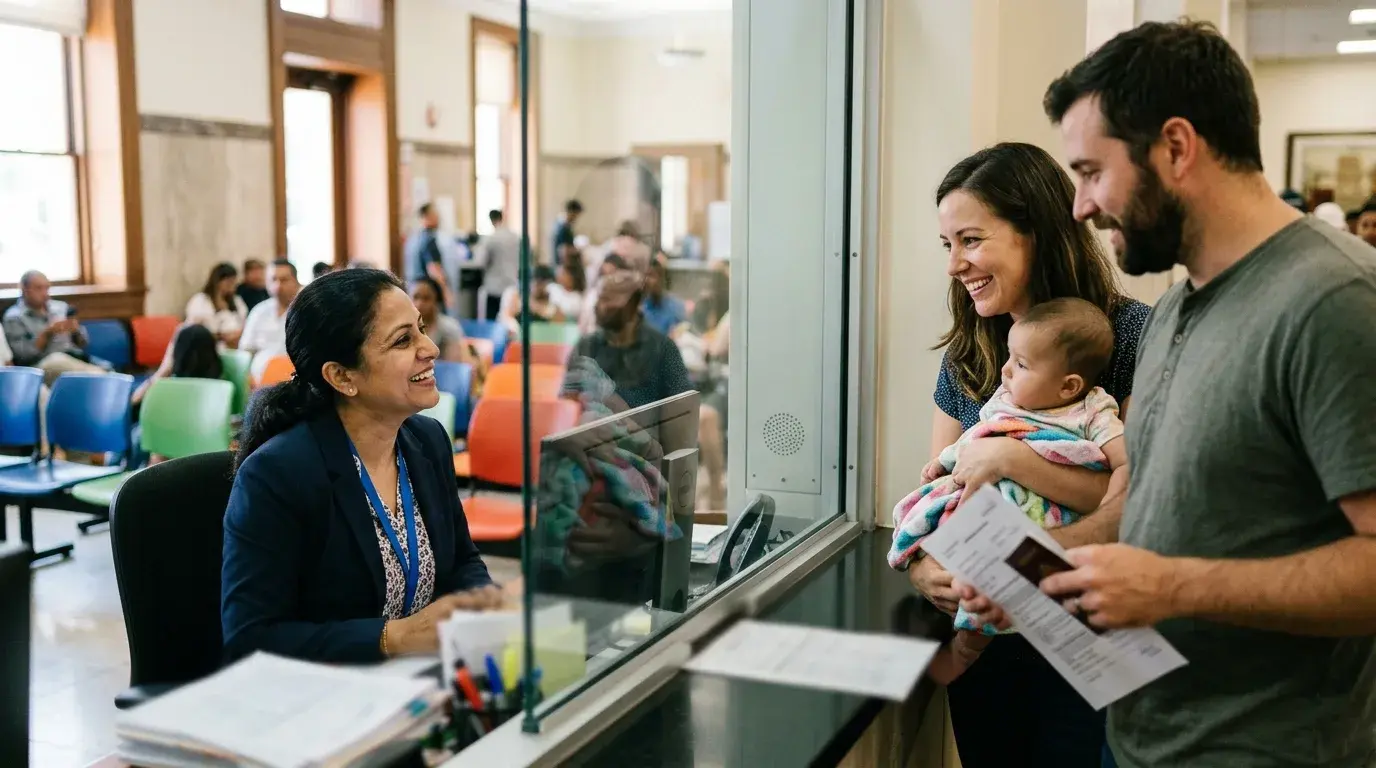
Visa checklists often treat every traveler the same, including the smallest one. When your baby appears on the itinerary without a ticket number, the officer reviewing your file may pause.
What a Dummy Ticket for an Infant Actually Holds
A dummy ticket for an infant is a temporary flight reservation created for a child under two years old.
It is not a purchased seat. It is a record that shows your planned route, dates, and traveler names.
A dummy ticket links an infant's name and date of birth to an adult's reservation.
A lap infant is generally linked to an accompanying adult for the journey. How that relationship appears and whether a separate ticket is issued depends on the carrier and itinerary.
A genuine temporary reservation should identify the actual booking record and its issuer; the visible locator and lookup channel can vary.
A reviewer may compare the itinerary with other documents or ask the issuer to verify it. A booking reference helps identify a record while it remains active, but it is not proof of an issued ticket.
You can also use that code yourself. Before you submit anything, confirm that the reservation shows both the adult and the child.
Ask the issuer which airline, record locator and status apply to each leg. Keep the issuer’s contact route in case a reviewer asks for clarification.
Where a Ticket Number Is Required and Where a PNR Is Enough
This is the point that worries most parents. The good news is that the answer is usually reassuring.
A reservation without an e-ticket number may satisfy a visa checklist that requests a proposed itinerary or flight reservation; the current instructions of the relevant visa authority control.
A genuine temporary flight reservation can exist without an e-ticket number if it has a valid PNR.
That can be a normal state for an unticketed hold. An e-ticket number appears when the airline or its authorized issuer tickets the booking; payment and ticketing processes vary.
Until then, the record still has a booking reference, flight numbers, and a booking status. It simply has no e-ticket number yet.
Now the exception. If your specific visa authority requires an issued ticket or ticket number, a mere hold is not an equivalent document.
If your embassy writes that requirement down, a hold will not satisfy it. In that case, plan for a full airline ticket.
Some visa instructions ask for a reservation rather than a purchased ticket. Do not generalize that rule across every Schengen post or UK visa category; read the current checklist for your application.
Those two facts work together. A PNR can support a reservation-based request; an issued ticket should be supplied where the checklist specifically requires it.
There are a few more reasons the infant line gets attention from reviewers:
-
The officer wants to see that your whole family plans to travel together.
-
The officer checks that the adult on the booking is the child's parent or guardian.
-
The route and dates must fit the length of stay on your form.
Each reason ties back to your travel intentions. A reservation that names every family member shows a clear, complete plan.
Some forms use the phrase onward ticket. That usually means proof that you will leave the destination, so the infant must appear on the departing leg too.
Ask for a verifiable flight reservation, not just an image. A picture proves little, but a genuine record can be checked through the issuer’s available channel while active.
Reading Your Embassy's Instructions Before You Book
The wording on your checklist tells you which document to prepare. Read it slowly and match it to one of these patterns:
-
"Flight reservation," "flight itinerary" or "proof of onward travel": a PNR-based reservation is the normal answer.
-
"Confirmed flight ticket" or "paid ticket": read the full instruction twice. It may point to an issued ticket.
-
"Ticket number" or "e-ticket": prepare for a ticket that has been fully issued.
Many embassies publish this checklist online. Visa centres often repeat it on a printed sheet or a booking form.
Compare both versions. If the embassy and visa-centre instructions differ, ask the responsible authority which applies to your application rather than guessing.
Print both the embassy page and the visa centre sheet with the date. If wording changes after you apply, you can show which instruction you followed.
Wording also shifts by destination. A Canada visa, a Japan visa, a UK visa and a Schengen visa each use their own phrasing for the same idea.
Do not assume the label "itinerary" means the same thing everywhere. Some forms use it for a simple travel plan, while others expect a booking with a reference.
Some applicants pair the flight proof with a dummy hotel booking. Your infant's flight record is still judged on its own merits.
When in doubt, send a short written question to the visa centre. Keep the reply with your file.
Keep a short log of every answer you receive. Note the date, the name of the person who replied, and the exact wording. If an officer later asks why you chose a reservation over a numbered ticket, that log shows you followed instructions.
Also check how your embassy handles children's records. Some ask for a separate line per traveler, while others accept one family itinerary. Either way, every name on your visa form should appear on the booking.
Once you know what the checklist demands, it helps to see how an infant fits into an airline booking at all.
How Infants Are Handled Inside Airline Booking Systems
Airlines treat a lap infant differently from every other passenger. Understanding that difference explains why your baby shows up without a ticket number.
Why Your Baby Must Sit Inside an Adult's Booking
For actual travel, tell the airline about every infant, including a lap infant, and follow its booking and ticketing rules.
Airline systems usually link a lap infant to an accompanying adult; display fields and required identity details vary by carrier.
This is why a family reservation can show two names and still carry one booking reference. The locator identifies the shared booking record, not a personal entitlement to board.
The passenger name field matters here. If the spelling differs from your travel document, a visa officer may question the file.
Most airlines also limit how many infants one adult can carry. If you travel with twins, ask how the airline handles that before you build your itinerary.
Keep the full passenger name record in one place. You will need it again for the visa form, and again for any airline check-in if you later buy the real tickets.
Check the travel details on each leg. Return flights need the infant attached too, because the airline tracks every segment separately.
Fees differ by airline. Some charge a small infant fare, while others charge only taxes. Ask before you finalize your plan.
When you later buy flight tickets, your child's record should repeat exactly what you filed with the visa. The same spelling and birth date prevent trouble at the airport desk.
What Changes When Your Child Needs a Seat
Everything above applies to a child who rides on a lap. A seat changes the picture.
For actual travel an infant needs the airline-required booking or ticket, including when traveling on an adult’s lap; a separate seat requires a suitable fare and approved restraint under the carrier’s rules.
That requirement is about real travel, not about the visa file. It explains why parents sometimes confuse the two documents.
A temporary visa-purpose reservation is not a boarding pass or a substitute for an airline-required issued ticket. Do not try to board with an expired or unticketed hold.
Treat the reservation as visa paperwork only. Never present it at an airport desk as a boarding document.
If you do plan to fly, buy a real ticket after the decision. Keep the visa reservation separate from that purchase so the records never overlap.
Families often ask about the cost of waiting. Dummy tickets help avoid purchasing non-refundable tickets before visa approval.
That matters when you consider the financial risk. A non-refundable ticket bought too early can be lost if the visa is refused or delayed.
A confirmed airline ticket can still make sense later. Buy it after the decision arrives, once your dates are final.
Travel insurance is another reason to keep your plan consistent. Insurers may ask for dates and routes, and they should match your visa file.
Keep every version of your itinerary in one folder. If you change dates, note the reason and the time. A clean trail helps if a reviewer compares two documents from the same application.
Checking Your PNR on the Airline's Own Channels
Never rely on a PDF alone. Check the booking where the airline keeps it.
Some reservations can be checked on an airline website; others require an issuer or agency locator, and public lookup may not expose every passenger field.
A genuine reservation should correspond to a real booking record, not an invented code or edited PDF.
A booking reference is one useful verification field, but the issuer and its actual status matter more than the appearance of a code on a PDF.
Together, those facts give you a simple routine:
-
Open the airline website and find the manage booking page.
-
Enter your PNR code and the adult's surname.
-
Confirm the booking status shows as held or confirmed.
-
Match flight numbers, airport codes, and departure time to your document.
-
Confirm the infant's name appears with the adult.
If the airline page cannot retrieve the record, do not assume fraud or validity. Ask the issuer whether there is a separate airline locator, sync delay, or expired hold before submission.
A new hold may have a synchronization delay; the issuer can tell you where and when it should be retrievable.
If the record still does not appear, fix it before your appointment, not at the counter.
A clear, consistent record may reduce avoidable questions, but cannot promise faster visa processing.
Ask a friend or relative to check the record as well. A second pair of eyes catches a swapped letter or a wrong date before the officer does.
Save a screenshot of the verified record with the date and time. If the hold changes later, you can show what the airline displayed when you applied.
With the checking routine in hand, the next question is how to actually create a reservation that passes it.
Getting a Verifiable Infant Reservation Ready for Your Application

A good reservation takes careful checking to create, but small errors can undo it. This discussion covers the sequence, the dates, and the details that most often go wrong.
Four Steps From Search to Your Inbox
Some airlines or authorized issuers offer temporary holds; availability, cost and locator visibility vary by route and carrier.
Some families book a hold directly. Others use a provider that handles the hold and the document for them.
Whichever route you choose, a dummy flight ticket online follows a short path:
-
Fill out the booking form to find your flight.
-
Choose the flight that suits your needs.
-
Review your booking details and make the payment.
-
Your ticket will be available for instant download.
After ordering, confirm the actual delivery time and the issuer’s verification channel; do not assume an immediate airline-visible locator.
Speed matters when your appointment is close. Delivery times vary by issuer and route, so plan ahead of the appointment.
Validity matters just as much. Hold duration is determined by the issuer and airline; there is no universal 48-hour minimum.
Know the hold’s actual expiry and your visa authority’s documentation rule; no temporary reservation can guarantee validity throughout an unpredictable review period. A short hold can lapse before an officer opens it.
Before ordering from DummyFlights, check the current product terms for price, delivery time, verification method, expiry and change eligibility.
A strong PDF shows these items clearly:
-
Passenger names for the adult and the infant
-
The PNR code and the airline
-
Flight numbers, airport codes, and departure time
-
Dates that match your visa form
Visa authorities may accept genuine reservation evidence where their checklist calls for it. Even so, always follow the wording on your own checklist.
Providers differ. Some deliver real reservations that exist in airline systems, while others send only a mockup. Choose the first kind and test the PNR before you rely on it.
Save the confirmation email too. It shows when the booking was made and which name was entered, which helps if the record needs a correction.
Matching Dates to Your Appointment and Your Travel Window
Your dates should tell one clear story. Start from the visa appointment date and work outward.
Place the departure after the expected decision time. Then add a return ticket, so the plan shows you will come home.
Use the same route on the form and on the reservation. Use the same flights as well, so every document agrees.
An arrival-date mismatch can invite a question Check the arrival dates on your form against the reservation before you print.
Think about your travel window too. A plan that starts immediately after an appointment may be unrealistic if the visa decision is still pending.
A better plan leaves time for processing. It also leaves room to adjust.
Keep your travel plans flexible. A reservation that allows changes lets you shift if the appointment moves.
For example, imagine Emma Carter booking Mumbai to Frankfurt with her baby, Noah. If her appointment slips by a week, she needs new travel dates without starting over.
Choose a cheap dummy ticket only if it still supports changes. A low price is useful when it does not remove flexibility.
Time zones can trip you up. A flight that leaves late at night may land on the next calendar day. Write the arrival date exactly as the airline shows it.
Layovers deserve a quick look as well. A long connection with an infant looks unrealistic on paper, so pick a route with a sensible gap.
Finally, avoid peak travel dates unless you truly plan to fly then. A plan that matches your real purpose reads as more credible than a random busy day.
Name and Birth Date Details That Cause Mismatches
Most rejections start with tiny errors. Check these before you submit:
-
The adult's name matches the travel document exactly.
-
The infant's name matches the child's own document.
-
The infant's birth date is correct and shows the child is under two on the travel date.
-
The airline name and flight numbers match the itinerary on the form.
A dummy air ticket that lists the wrong birth date can fail a manual check. It can also confuse an airline agent who reviews the record.
If the child turns two before the flight date, stop and review. The booking type may need to change.
Keep a printed copy and a digital copy of the PNR. If a visa officer asks a question, you can answer without searching.
Check the name order too. Some documents list the surname first, while airline records list it last. Make sure the booking and the document tell the same story.
Do not guess a middle name. If the document has none, leave it out of the booking.
Read the infant's details aloud against the document, one field at a time. This slow check feels tedious, but it catches most errors.
You may also be asked for other travel proof. Keep your hotel plan, insurance, and income documents in the same folder, so your file reads as one consistent story.
Now that the booking is ready, you should also know what it costs and what can go wrong.
Costs, Risks and Backup Plans for Infant Itineraries
Price, risk, and fallback options belong together. A cheap reservation only helps if it does not create a bigger problem later.
What Families Usually Pay
Compare current provider prices and what each option includes. A temporary reservation can cost less than a purchased fare, but prices and conditions vary. Those ranges differ because features differ. Some options include date changes, while others do not.
Compare what each fee includes before you pay. A slightly higher price can be worth it if changes are free.
Look for clear terms on validity, changes, and support. Short, plain terms are a good sign, while vague promises deserve a second look.
Ask whether the PDF carries a PNR you can verify. A document without a record behind it has little value.
Consider Daniel Brooks, who needs a booking for his wife and baby. He compares three options and finds the lowest fee excludes date changes. Because his appointment may move, he pays slightly more and keeps the freedom to adjust.
Set aside a small reserve in your budget. If an embassy asks for a different document later, you will not need to scramble.
Legal and Immigration Risks to Avoid
Keep your paperwork honest. A real record is the safest record.
Submitting a fabricated document can trigger refusal or other consequences under the applicable rules; do not edit or invent issuer records.
A genuine reservation is different from an invented record, but it still must be described honestly and meet the authority’s specific document requirements.
Expiry creates a different problem. An expired reservation can weaken a document check or require updated proof; consequences depend on the authority and stage of travel.
So watch your hold dates. If your visa file stays open longer than expected, extend or replace the reservation.
No service can guarantee visa approval. Visa officers and immigration officers make each decision on the full file.
Do not trust anyone who offers to guarantee approval for a fee. Treat that claim as a warning sign.
An immigration check at the airport can also review your plan. Make sure your documents agree with each other.
Use the same details everywhere. The visa form, the reservation, and any hotel or insurance paper should show the same names and dates.
If something changes, update every document, not just one. A single outdated page can undo the rest of a careful file.
Keep your explanations honest and short. If an officer asks, say plainly that you hold a reservation for the visa stage and will buy tickets after the decision.
When a Full Airline Ticket Is the Better Move
Sometimes a reservation is not enough. A written instruction for a fully issued ticket is the clearest example.
In that case, buy a full airline ticket and keep it flexible if the airline allows. Read the fare rules for the infant fare too.
Another trigger is a late appointment. If your travel is only days away, a real ticket may protect you from last-minute changes.
Keep a backup in mind even if a hold works. If an officer asks for more proof, you can respond quickly.
Check refund rules before you buy. A fare that allows changes costs more, but it lowers the pain if the decision comes late.
Ask the airline how an infant's fare is handled on an issued ticket. The rules can differ from the adult fare, and the answer affects your budget.
Plan your next step before your appointment, not after it. A calm checklist keeps small problems small.
Start the paperwork early, ideally a week before your appointment. Early preparation leaves room for corrections without stress.
Walk Into Your Visa Appointment With a Booking That Checks Out
For a visa file that asks only for a proposed reservation, an infant may appear on the accompanying adult’s active booking before a separate e-ticket number is issued. For actual travel, the airline may require an infant ticket even without a seat. Follow the specific visa checklist and carrier rule.
Read your embassy's wording, match your dates, and verify the record on the airline's own page. If your checklist demands a numbered e-ticket, switch to a full ticket and move forward with confidence.
Frequently Asked Questions
Can a lap infant have a ticket number?
Yes. A lap infant can require an issued ticket even without a separate seat. British Airways and Air Canada publish carrier-specific infant ticket rules.
Does a PNR prove the infant has a ticket?
No. A booking reference identifies a reservation; ticket issuance is a separate question.
Is a visa reservation without an infant ticket number always acceptable?
No. Acceptance depends on the visa authority’s current checklist and the content and status of the reservation.
Where should the baby appear on the reservation?
The infant should be linked to the correct accompanying adult, with accurate identity details and all intended flight segments.
What if the airline website does not show the baby?
Ask the issuer for the airline locator and a document that explicitly shows the infant; public lookup pages may omit some fields.
What if the child turns two during the journey?
Check each operating airline’s age, fare and seat rules for the travel dates; do not assume the same infant treatment applies to every leg.
Reminder: A visa-purpose reservation is not a boarding pass and cannot guarantee visa approval, boarding or entry. Verify current authority and airline instructions for your specific itinerary.