
Immigration databases affect airline boarding because airlines must check whether a passenger appears eligible to travel before departure, not just whether the passenger has a nice-looking itinerary. API, PNR, Timatic-style rule checks, visa data, transit rules and onward-ticket expectations can all influence what happens at the counter, so a dummy ticket, dummy flight ticket or onward ticket should match the passport, visa, route, hotel and stay logic before you reach the airport.
You arrive at check-in with a valid passport, a visa, and a flight reservation that looked fine on paper. Then the airline agent pauses, rechecks your route, and starts asking questions unrelated to your printed itinerary. That moment usually comes down to immigration databases, carrier liability rules, and system prompts that tell the airline whether your trip looks boardable or risky.
The real problem is not simply “do I have a booking?” The real problem is whether the airline can safely transport you without being exposed to fines, return-carriage costs, document problems or denied-entry handling on arrival. Your travel proof has to support that decision, not complicate it.
A dummy ticket, dummy booking or onward ticket can help when the document is clean, current and aligned. It cannot override visa rules, watchlist checks, transit rules, passport issues or destination entry requirements. The winning move is to make your reservation easy to understand inside the same environment airlines use to decide whether you can board.
Key facts before using travel proof at check-in:
- Airlines are checking transport risk, not only whether a PDF exists.
- API data usually comes from passport and travel-document details.
- PNR data can include booking details such as name, itinerary and ticket indicators.
- Timatic-style tools help airlines check passport, visa and health requirements.
- Onward ticket expectations can be stricter at airline check-in than travelers expect.
- A dummy ticket should match route, visa, hotel, insurance and onward movement before departure.
Need travel proof that survives basic airline questions? Create a clean dummy ticket, dummy booking or onward ticket with route, date and passenger details aligned before check-in.
Create Your Dummy TicketIn This Guide
Why a Valid-Looking Reservation Can Still Trigger Boarding Problems
A flight reservation can look perfectly acceptable in a visa file and still create trouble on departure day. The gap appears when airline staff stop reading the itinerary as a document and start reading it as a transport risk.
The airline is checking whether it can safely transport you
At check-in, the airline is not asking only, “Do you have a booking?” It is asking, “Can we carry this passenger to this destination without a document problem?” That changes the conversation. The counter agent may need to consider passport validity, visa conditions, transit rules, onward proof, stay length and return-carriage risk.
This is why a passenger with genuine travel intent can still be delayed at the desk. The airline is protecting itself first. Your reservation should help that decision by making the route and stay logic easy to understand.
From the traveler’s side, this can feel unfair because the ticket looks normal. From the airline’s side, the risk is operational. If a passenger arrives and is refused entry, the airline may have to manage return transport, immigration handling, fines or disruption. That is why staff sometimes ask questions that feel bigger than the ticket itself.
What immigration databases and rule engines change
Boarding decisions are not made from memory alone. Airline staff use systems that combine destination rules, transit requirements, document checks and carrier compliance instructions. A system may prompt the agent to verify a visa, check onward travel, review transit rules, or confirm that the passenger’s passport data matches the route.
When an agent pauses, types again, or calls a supervisor, it does not always mean your reservation is fake. It often means the trip moved from a quick visual check into rule-based review. Your dummy ticket or onward ticket must make sense inside that review.
This is also why two travelers on similar routes can have different experiences. Nationality, passport issue country, visa type, residence status, transit airport, airline policy and destination rule changes can all change the prompt the agent sees. A document that passed easily for one traveler may still be questioned for another.
Why PDFs can look strong but fail live scrutiny
A PDF is a snapshot. Check-in is live. A booking may look polished on the page, but staff may question it if the timing is too tight, the route is strange, the onward movement is missing, or the stay pattern does not fit the visa. Visual design does not fix weak travel logic.
A good dummy ticket should therefore be built around live-use logic. If asked, the traveler should be able to explain why the date, route and onward plan exist. If the only answer is “because the PDF says so,” the document is too weak for a serious boarding check.
- Travel date sits awkwardly against visa validity.
- Return or onward date does not match the stated stay.
- Route includes unnecessary detours or risky transit points.
- Hotel dates do not match the flight dates.
- The dummy ticket looks current but cannot be explained verbally.
Route logic can raise questions before anyone studies the visa
Airlines often see the route first. If the passenger is flying through a country with stricter transit rules, or entering a destination known for onward-ticket checks, the route itself can trigger a closer look. A clean dummy flight ticket should avoid route patterns that create avoidable doubt.
For example, a simple visitor trip with a strange chain of connections can look less credible than a slightly more expensive but obvious route. A long stay with no onward ticket can also raise questions if the destination expects exit proof. The route should look like a real traveler’s plan, not a fare-hunting experiment.
Real passengers can still look like documentation risks
A traveler can be honest and still look risky if the file is messy. Wrong name format, unclear onward plan, mismatched dates, expired reservation, or a route that does not fit the visa can all make a normal traveler look unprepared. The goal is not to “beat” the system. The goal is to remove unnecessary friction.
Which Passenger Data Checks Influence Airline Decisions Before the Gate
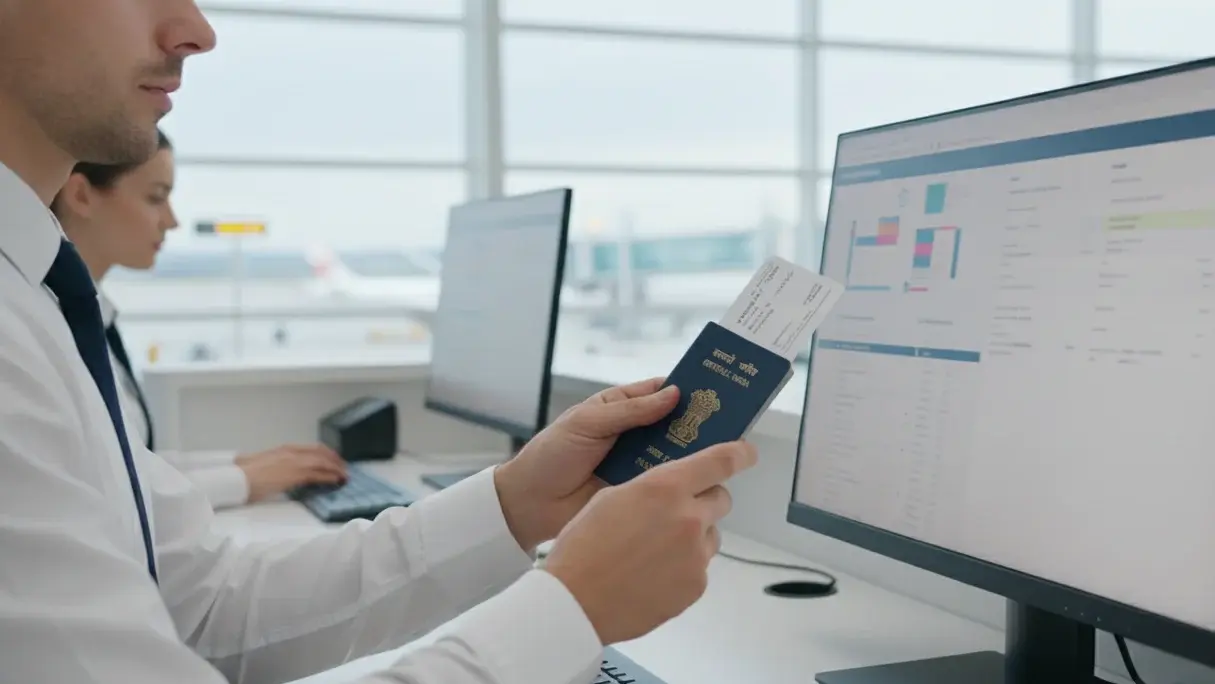
Airlines may compare your passport, visa, route, PNR, onward travel and destination rules before allowing you to board. Some checks are automatic. Some are manual. Some are triggered only when the route or document pattern looks unusual.
Passport, visa and destination-rule matching
Passport nationality, passport validity, visa type, visa expiry date, permitted stay and destination entry rules can all affect the boarding decision. A dummy ticket cannot repair a visa that does not match the route. It can only support the travel plan when the underlying documents are already suitable.
The agent may also compare the departure date, arrival date and allowed stay window. If the visa starts after the flight lands, expires before the planned return, or does not cover the transit pattern, the reservation becomes secondary. The first priority is legal travel eligibility.
API, PNR and reservation visibility
API data usually comes from the passport and travel document. PNR data can include booking details such as name, itinerary and ticket indicator. If your dummy ticket uses one name format while your passport or booking record uses another, the file becomes weaker. If your onward ticket says one route but the PNR suggests another, the story becomes harder to trust.
Transit-country rules
Transit rules are a quiet trap. A traveler may focus only on the destination visa and forget that the connecting airport has its own rules. If your route passes through a country where your nationality needs a transit visa or additional documentation, the airline may question boarding before you ever reach the final destination.
This is where a dummy booking can accidentally create risk if the route is chosen only because it looks cheap or convenient. The safest route is not always the cheapest route. It is the route that your passport, visa, transit status and onward plan can support.
Onward-travel enforcement
Onward ticket checks are often stricter than travelers expect because airlines may be held responsible if the passenger arrives without acceptable proof of exit. A clean onward ticket can answer the simplest airline risk question: “Where does this passenger go next?”
An onward ticket is especially useful when the passenger is not returning to the original departure country. It can show planned movement to a third country, a later connection, or a route that makes the stay look temporary and organized. The onward proof should never be random; it should match the actual travel story.
Watchlist, security and pattern-based review
Some checks are not about your dummy ticket at all. Watchlist, security, document authenticity or pattern-based review can intensify a normal check. If that happens, stay calm and answer the specific question. Do not try to bury the agent in extra documents unless they ask.
Citation-ready baseline: airline boarding checks combine travel-document rules, passenger data and route logic. A dummy ticket helps only when it supports a coherent travel file; it does not override immigration databases or airline compliance decisions.
How to Make a Flight Reservation Hold Up Better at Check-In

The strongest travel proof is built for real-world checking, not just for upload. A dummy ticket should make sense to a human agent and align with the rule engine behind the counter.
Build around check-in credibility
Do not build the reservation only around visa submission convenience. Build it around the airport question: “Can this passenger travel on this route today?” That means the route should be realistic, the dates should be current, and the onward movement should fit the entry rules.
If you are creating the dummy ticket only to satisfy an upload field, you may miss the airport layer. The airline may care less about the label on the document and more about whether the route is boardable. That is why the same proof should be checked from both angles: visa-file alignment and airline-counter alignment.
Make sure the reservation can be explained
If the booking reference, route, stay length or onward ticket cannot be explained in one calm sentence, the document is too weak. A good travel-proof document should be easy to summarize: “I enter on this date, stay at this address, and leave or continue on this date.”
This does not mean you need to rehearse like a speech. It means the trip should make sense to you first. If you cannot explain your own route, it will be harder for an airline agent to trust it under time pressure.
Align dates with the visa story
Travel dates should match the visa validity, hotel proof, insurance dates and stated purpose. If you are using a dummy hotel, its dates should not conflict with the dummy ticket. If you are using onward proof, the onward ticket should make the stay length believable.
Avoid patterns that invite extra questions
- One-way ticket with no onward plan where onward proof is commonly checked.
- Transit through a country with rules you did not review.
- Arrival date outside insurance or hotel coverage.
- Return date that conflicts with visa validity.
- Different passenger-name formats across documents.
- Old or expired dummy booking mixed with newer proof.
Prepare a two-minute counter explanation
You do not need a speech. You need a clean explanation. Know your destination, stay length, first address, onward movement, and why the route makes sense. If the agent asks, answer the risk question directly instead of explaining every document you prepared.
For example: “I am entering Thailand on this date, staying at this hotel, and continuing to Malaysia on this onward ticket.” That is much stronger than opening five PDFs and hoping the agent builds the story for you.
Keep backup proof ready, not loud
Carry hotel proof, insurance, visa approval, return or onward ticket, and route summary where relevant. Keep them ready, but do not turn the interaction into a document dump. Offer the next proof only when it answers the agent’s concern.
Need a cleaner boarding-ready travel proof layer? Prepare a dummy ticket, dummy hotel or onward ticket with dates and route logic aligned before the airline check.
Prepare Your Dummy TicketWhat to Do If an Airline Questions Your Reservation
If an airline agent questions your reservation, first identify the objection. Are they questioning the booking, the visa, the transit point, the onward proof, the name format, or the stay logic? The right answer depends on the actual concern.
Read the objection before defending yourself
If the agent says the booking is not visible, that is a retrieval problem. If they say the destination requires onward travel, that is an onward-proof problem. If they say the transit point needs documentation, that is a route problem. Do not answer the wrong question.
Answer the airline’s risk question
The airline wants to know whether it can carry you without a document issue. Answer that directly. Show the visa if the visa is questioned. Show the onward ticket if exit proof is questioned. Show the current dummy ticket if the travel plan is questioned. Keep the answer focused.
When to offer more proof
Offer more proof when it resolves the exact doubt. Hotel proof can support stay logic. Insurance can support date logic. Onward ticket can support exit logic. A paid ticket can support final travel if the trip is already locked. Do not offer unrelated documents just to look prepared.
If the booking is the weak point
If the dummy ticket is expired, mismatched or not explainable, fix the travel logic fast. That may mean refreshing the dummy booking, adding onward proof, choosing a cleaner route, or buying the real ticket if the trip is confirmed and the risk is worth it.
Do not argue with a weak document. Replace it. If the issue is date mismatch, correct the dates. If the issue is no onward proof, add a sensible onward ticket. If the issue is transit rules, change the route. The fastest recovery is usually practical, not emotional.
Gate rechecks can still happen
Clearing check-in does not always end the matter. Some routes involve gate checks, secondary screening or document rechecks before boarding. Keep your travel-proof packet accessible until you are on the aircraft.
Make Your Reservation Easy for Airlines to Trust
Final boarding-proof checklist:
- Passport name matches the dummy ticket and onward ticket.
- Visa or entry document matches the destination and stay purpose.
- Transit rules have been checked for the full route.
- Hotel and insurance dates match the flight dates.
- Onward proof is ready if the destination or airline expects it.
- The booking reference, route and dates are current.
- Old PDFs and conflicting dummy bookings are removed from the active file.
Immigration databases and airline systems are not there to admire your PDF. They are there to decide whether you are boardable. A strong dummy ticket or onward ticket gives the airline fewer reasons to hesitate: clean route, current dates, consistent documents and a simple travel story.
Frequently Asked Questions
How do immigration databases affect airline boarding?
They help airlines check whether a passenger appears eligible to travel before departure. Passport data, visa rules, API/PNR data, transit rules and onward-travel expectations can all affect the decision.
Can a dummy ticket help with airline boarding checks?
A dummy ticket can help only when it supports a coherent travel plan. It should match the passport, visa, route, hotel, insurance and onward ticket logic. It cannot override immigration or airline rules.
What is API data?
Advance Passenger Information usually includes identity and travel-document details such as name, date of birth, nationality and passport data. Airlines may transmit this data to authorities depending on the route.
What is PNR data?
PNR data is booking-related information collected by airlines for business purposes. It can include passenger name, itinerary and ticket indicator details.
Why do airlines check onward tickets?
Airlines may check onward tickets because some destinations expect proof that the passenger plans to leave or continue travel. This helps reduce carrier risk if a passenger is refused entry.
Does a visa always mean I can board?
No. A visa helps, but airlines may still check passport validity, transit rules, onward travel, destination requirements and system prompts before allowing boarding.
What should I do if the airline says my reservation is weak?
Ask what the specific issue is: booking visibility, route, visa, transit, onward proof or date mismatch. Then answer that issue directly with the correct document.
Is a PDF enough for airline check-in?
Not always. A PDF is only a document snapshot. Airline staff may also review live rules, passenger data, booking references and route logic before boarding.
Should I use an onward ticket with a dummy ticket?
Use an onward ticket when the destination, airline or route needs proof of exit or next movement. It should match the same dates and travel story as the dummy ticket.
What is the safest way to prepare travel proof?
Use current documents with matching passenger names, realistic routes, aligned hotel and insurance dates, clear onward proof when needed, and no false claims about approval or boarding.
Friendly reminder: DummyFlights provides temporary travel-proof documents for planning and application support. Requirements vary by destination, airline, route and applicant situation. A dummy ticket can support a file, but it does not promise approval, boarding or entry.