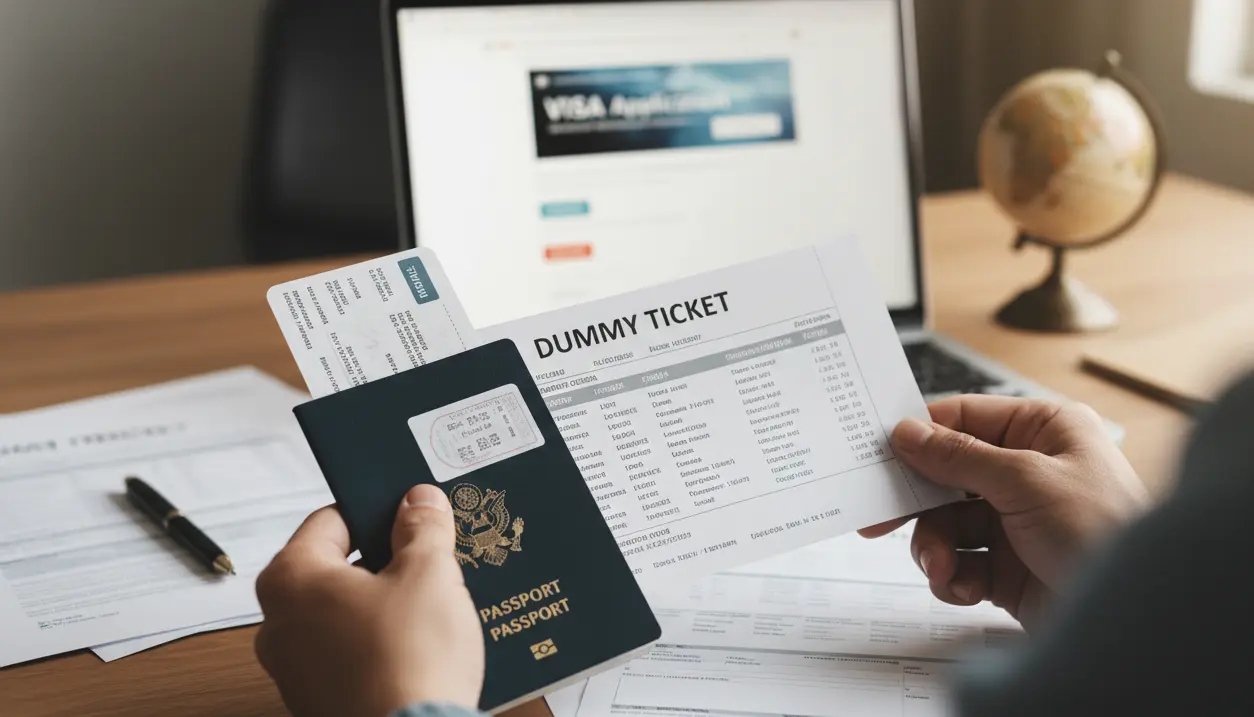
A verifiable dummy ticket can help reduce avoidable visa rejection red flags when it gives officers a clean, checkable travel plan with dates that match your hotel, insurance, funds and purpose documents. It does not promise approval, but it can stop one of the easiest mistakes: submitting a fake PDF, dead PNR or mismatched itinerary that makes the whole file look unreliable.
Visa files from India often fail on the details. Not because the applicant has no travel purpose. Not always because the bank balance is weak. Many files become risky because the travel proof looks rushed: fake ticket PDFs, reservations that cannot be checked, hotel dates that do not match the route, insurance ending too early, or cover letters that say one thing while the booking says another.
This guide shows how a dummy ticket, dummy flight ticket, dummy hotel and onward ticket can support a cleaner visa file when used properly. The goal is aggressive but simple: give the officer a document set that looks real, checks fast and tells one consistent travel story.
Key facts before using a dummy ticket to reduce refusal risk:
- A dummy ticket helps only when the details are verifiable, realistic and consistent with the rest of the file.
- A fake or unverifiable PDF can damage credibility faster than submitting no travel proof at all.
- Hotel dates, insurance, leave letters, funds and route logic must support the same trip window.
- A dummy ticket is not a visa approval shortcut; it is a travel-proof support document.
- The strongest file is not the loudest file. It is the file that checks cleanly in seconds.
Need visa-ready travel proof without buying full airfare too early? Create a dummy ticket, dummy flight ticket, dummy hotel or onward ticket with dates and passenger details aligned before submission.
Create Your Dummy TicketIn This Guide
Why Visa Officers Say No When Documents Do Not Check Out
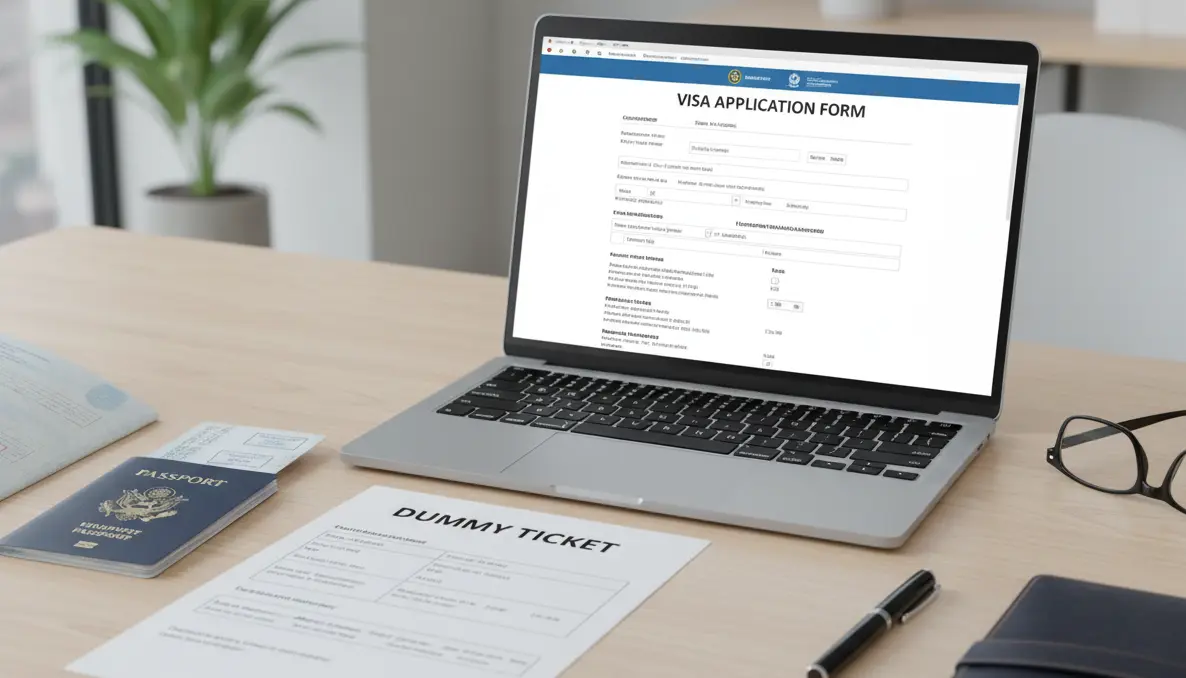
Visa officers are trained to spot risk quickly. They do not review travel proof in isolation. They compare the route, dates, hotel nights, insurance, funds, purpose and ties. If one piece looks fake or inconsistent, the rest of the file becomes harder to trust.
That is why a dummy ticket can help only when it is clean. A strong dummy ticket gives the officer a route and timeline that can be checked. A weak dummy ticket gives the officer a reason to doubt the whole story.
Inside the visa desk: how officers verify you
Officers and outsourced application staff look for three things: intent, consistency and proof that can be verified. The exact method varies by country and mission, but the practical check often looks like this:
- They compare travel dates across application forms, tickets, hotels, insurance and invitation letters.
- They look for signs of edited PDFs, strange fonts or layout inconsistencies.
- They check whether the route supports the stated purpose of travel.
- They may verify a PNR, booking reference or hotel confirmation when the document looks important to the decision.
- They review funds and ties to see whether the applicant is likely to return home.
If the travel proof fails, credibility drops. Once credibility drops, even strong finances or a genuine purpose may receive extra scrutiny.
The fake PDF trap in India
Many Indian applicants still submit “tickets” that are not real reservations. Some come from unvetted agents. Some are edited itinerary templates. Some copy airline logos but have no live record behind them. These documents can look acceptable in a WhatsApp preview and still fail the moment anyone checks the booking.
Common fake-PDF patterns include:
- a ticket number or PNR that does not resolve anywhere;
- a reservation that was cancelled before submission;
- name spelling that differs from the passport;
- multiple itinerary versions with different times and dates;
- hotels or insurance that were never updated after a flight change.
Fake-looking proof does not merely weaken the travel section. It creates doubt about the applicant’s overall honesty and preparation.
Why Indian visa applications face tighter checking
Indian application volumes are high, and embassies learn from repeated document patterns. That does not mean every Indian file is treated unfairly. It means rushed documents, recycled templates and unverifiable PDFs are easier for officers to recognize.
The fix is not to shout harder in the cover letter. The fix is to make the file verify faster. A live dummy ticket, a matched dummy hotel, clear insurance dates and honest funds proof are stronger than a dramatic explanation.
One bad file, many doubts
Think of the application as a chain. One weak link can pull attention toward the rest:
- a fake or unverifiable ticket creates doubt about the return plan;
- doubt about the return plan raises questions about intent;
- questions about intent lead to deeper review of funds, ties and travel history;
- small mismatches start looking less like mistakes and more like risk.
You may have a genuine reason to travel. You may have stable work and enough funds. But if the document set looks patched together, the officer has less reason to trust the file.
The trust equation: what officers want to see
- a verifiable dummy ticket or onward ticket showing route and dates;
- dummy hotel or accommodation covering the whole stay;
- insurance that covers the travel period where required;
- purpose documents using the same cities and dates;
- funds that make the trip believable;
- a short explanation for layovers, open-jaw routes or multi-country plans.
When each item supports the next, the file feels professional. Professional files are easier to assess and less likely to get stuck on avoidable document doubts.
Proof That Earns Trust: What Makes a Dummy Ticket Checkable
A dummy ticket is not powerful because it looks pretty. It is powerful when it gives the file a checkable travel skeleton: passenger name, route, entry date, exit date and onward logic. That skeleton helps the officer understand the intended stay without forcing you to buy a non-refundable final ticket too early.
Different applicants call the same proof by different names. Some search for dummy ticket, some say dummy flight ticket, some ask for a ticket dummy document, and some need ticket onward or onward ticket proof for a one-way route. The label matters less than the verification quality. The document should show a believable travel plan and match the rest of the file.
What makes a reservation checkable in seconds
- Passenger name matches the passport character for character.
- Route and flight numbers look realistic for the destination.
- Arrival and departure dates match forms, hotel proof and insurance.
- PNR or booking reference is present when the product supports it.
- The record is recent enough not to look stale or expired.
- The document does not pretend to be a paid e-ticket unless it is actually ticketed.
That last point matters. A visa-ready dummy ticket should be honest about what it is: temporary travel proof, not a boarding pass, not a paid final fare and not a promise of approval.
Why wording and document type should match the trip
A tourist file usually needs a simple round-trip or onward ticket logic. A student file may need dates that match orientation, course start or housing plans. A family-visitor file should line up with the host invitation. A digital-nomad-style file should show a clear exit from the current visa zone even if the wider journey continues elsewhere.
This is where a professional dummy booking helps. It lets you build temporary proof around the actual trip instead of forcing your entire application around a random cheap fare. If the file needs dummy hotel proof too, use the same calendar. If the route is one-way, make the ticket onward document easy to verify.
Why a live PNR changes the conversation
A live PNR signals that the travel plan is not just a decorative PDF. It shows that the applicant has chosen realistic dates, thought about the route and created a record that can be checked. That can shift the officer’s attention from “is this document real?” to “does this trip make sense?”
For Indian applicants, that shift is valuable. It gives the application a cleaner foundation before finances, employment, invitation letters or travel history are reviewed.
How different missions may look at travel proof
Each mission has its own checklist and risk habits, but the core logic is similar:
- Schengen countries: dates, accommodation, insurance and main-destination logic matter. A multi-country trip should explain where you stay and why.
- United Kingdom: genuine visitor intent, sufficient funds and return credibility matter. Travel proof should support the stated duration, not inflate it.
- Canada and the United States: purpose, ties, duration and ability to leave remain central. A clean exit plan can support the travel story but cannot replace strong ties or truthful answers.
- UAE and Singapore: route, hotel and transit details are often checked quickly. A mismatch between landing time and hotel dates can weaken the file.
Before you pay fees: a 7-point PNR sanity check
- Name match: passport name appears correctly in the dummy ticket.
- Entry and exit logic: arrival and departure fit the stated trip length.
- Route coherence: cities match the purpose and hotel plan.
- Layover practicality: connections are believable, not impossible.
- Date alignment: forms, letters, hotel and insurance show the same window.
- Recent generation: the record is fresh enough for submission or travel.
- Self-review: you can explain the route in one short sentence.
Want a cleaner travel-proof section? Prepare a verifiable dummy ticket with matched dates before submitting your visa file.
Prepare Your Dummy TicketWhen Your Travel Story Falls Apart: Consistency Across Every Document
Even a strong file can look weak when documents tell different stories. Officers do not just glance at a ticket. They compare the ticket with hotel dates, insurance, leave letters, bank statements, invitations and the application form. One mismatch can make the whole file feel rushed.
Why every detail has to line up
If your dummy ticket says you land in Paris on June 5 but your hotel begins on June 7, the officer has a question. Where are you staying for two nights? If your insurance starts after arrival, coverage looks incomplete. If your cover letter says a 10-day trip but the ticket spans 17 days, intent becomes less clear.
These problems are fixable before submission. They become expensive after submission.
The chain reaction of mismatched dates
- Flight arrives before insurance begins, making the protection period look incomplete.
- Hotel ends before the return date, suggesting missing nights or hidden side travel.
- Purpose letter lists fewer days than the ticket, making the stay look unexplained.
- Invitation letter dates do not match the dummy booking window.
- Old ticket PDF remains in the file after the route changed.
Small errors create big questions because officers assess risk by pattern. A clean pattern helps. A messy pattern hurts.
How dummy tickets strengthen the full travel picture
Use the dummy ticket as the timeline anchor. Once the arrival and exit are set, build the rest around it:
- Set realistic travel dates based on leave, event, family or study purpose.
- Create a verifiable dummy flight ticket for that window.
- Add dummy hotel or accommodation proof that covers every night.
- Match insurance to the same period where insurance is required.
- Update the cover letter, invitation and forms with the same cities and dates.
Now the file speaks one language. The officer does not need to guess your plan.
Do not let free hotel PDFs fool you
Free hotel PDFs and random booking templates can create the same problem as fake tickets. If the confirmation cannot be found, does not match the stay, or appears edited, it weakens the file. A dummy hotel should still look realistic and match the dummy ticket calendar.
For Schengen-style files, accommodation and insurance alignment are especially important because country competence and stay duration can depend on where you spend your nights. A pretty hotel PDF cannot fix a route that points to the wrong main destination.
- Dummy ticket: entry, exit, passenger name and route.
- Dummy hotel: every night covered with no unexplained gap.
- Insurance: full travel period where required.
- Funds: enough money for the route and stay length.
- Purpose proof: same dates, cities and reason for travel.
Smarter Visa Prep: Red Flags to Fix Before Submission
A dummy ticket helps the travel-proof section, but visa decisions also depend on the broader file. If funds are weak, purpose is unclear or background answers are incomplete, the ticket cannot carry the application alone.
Financial strength matters
Most visitor guidance asks applicants to show enough money for the stay and return journey. Officers want to see that the trip fits your real finances. A luxury itinerary with a thin bank balance creates doubt. A modest itinerary with stable income and clear savings is easier to believe.
Strong files often include:
- recent salary slips or employment letters;
- bank statements with clear transaction history;
- tax returns, invoices or business proof for self-employed applicants;
- sponsor letters and sponsor funds where someone else pays;
- property, family, study or work ties where relevant.
Double-check everything before submission
Wrong names, missing pages and mixed-up dates are boring mistakes, but they still hurt. Review your file line by line before paying the fee or uploading documents.
- Check passport number and spelling across every document.
- Compare travel dates side by side.
- Confirm the dummy ticket, hotel and insurance use the same trip window.
- Remove old PDFs and outdated screenshots.
- Make sure uploads are readable, current and correctly labeled.
Background checks and previous refusals
If you have overstayed, had a previous refusal, used unlawful documents, or answered a security question incorrectly, do not hide it when the form asks. Many systems retain past records. A truthful explanation with corrected evidence is safer than pretending the issue never happened.
If a previous refusal happened, read the reason carefully. Reapplying with the same file usually repeats the same weakness. Fix the travel proof, funds, purpose and ties before trying again.
Enough funds and intent go together
Funds and intent are connected. If the trip is expensive but the funds are unclear, the officer may wonder whether the applicant can afford the stay or intends to work. If the trip duration is too long for the applicant’s job, school or family situation, the officer may question whether the applicant will return.
A clean dummy ticket supports intent by showing a defined exit. It still needs realistic finances and ties around it.
Examples for Indian Applicants
Students
A student visiting Europe before a course starts should match the dummy ticket to the academic schedule. If the ticket shows return on June 18 but insurance ends June 15, extend the insurance or adjust the return. If an orientation letter has fixed dates, keep the route inside that window.
First-time tourists
First-time tourists should avoid an overcomplicated route. If the itinerary says Paris and Amsterdam but the ticket lands in Frankfurt, explain the connection and match hotel nights. If the plan is simple, keep the documents simple too.
Family visitors
A family visitor should match the dummy ticket with the host’s availability, invitation letter and leave dates. If the host says the visit is from August 1 to August 15, do not submit a ticket that exits on August 28 without explanation.
Digital nomads
Digital nomads often travel with flexible plans, but visitor visa files dislike vagueness. Show a clear exit from the current visa zone. Keep longer regional plans outside the current application unless they directly explain the itinerary.
Applicants with previous refusal
Do not rebuild the same weak file. If the refusal mentioned purpose, ties, funds or intention to leave, strengthen those sections directly. A verifiable dummy ticket can clean up the travel-proof piece, but the rest of the evidence must also improve.
Quick Pre-Submission Checklist
- Dummy ticket or onward ticket is recent, readable and realistic.
- Passenger name matches the passport exactly.
- Hotel covers every night between arrival and exit.
- Insurance covers the required period.
- Application form, cover letter and purpose documents use the same dates.
- Funds fit the trip length, destination and travel style.
- Invitation or leave letter does not contradict the booking.
- Old PDFs and duplicate screenshots are removed.
- Previous refusals are addressed if the form asks about them.
- The entire route can be explained in one short paragraph.
Smart Steps to Avoid Visa Rejection and Travel with Confidence
Visa approval is not luck. It is clarity, credibility and evidence. A dummy ticket helps when it gives your file a checkable travel plan and when the rest of the file supports that plan. Keep the PNR live where possible. Match hotel and insurance dates. Show funds that fit the route. Tie everything to a short, honest purpose statement.
A dummy ticket alone will not carry a weak application. But a verifiable dummy ticket inside a clean, consistent file can reduce the avoidable red flags that make officers pause. That is the real win: fewer contradictions, faster understanding and a stronger travel-proof section.
Frequently Asked Questions
Can a dummy ticket help avoid visa rejection?
Yes, a dummy ticket can help reduce avoidable rejection red flags when it is verifiable, realistic and consistent with the rest of the file. It does not promise approval, but it can support the travel-proof section.
Can a fake ticket cause visa refusal?
Yes. A fake or unverifiable ticket can damage credibility because it makes the officer question whether other parts of the file are reliable.
What makes a dummy ticket safe for a visa file?
A safer dummy ticket has matching passport details, realistic route dates, a clear entry and exit, and a PNR or booking reference when available. It should not pretend to be a paid e-ticket unless it is ticketed.
Should hotel and insurance dates match the dummy ticket?
Yes. Hotel, insurance, forms, cover letters and the dummy ticket should all support the same trip window. Date mismatches are one of the easiest red flags to avoid.
Is a dummy ticket enough for visa approval?
No. A dummy ticket supports travel proof, but officers also review purpose, funds, ties, passport history, previous refusals and overall credibility.
Do embassies verify dummy ticket PNRs?
Some missions, staff or service centers may verify booking references when travel proof matters to the file. That is why a checkable dummy ticket is stronger than an edited PDF.
Can I use a dummy hotel with a dummy ticket?
Yes, but the dummy hotel should cover the same travel window and destination logic as the dummy ticket. Free or random hotel PDFs can weaken the file if they do not verify or match dates.
Should I buy a full ticket before visa approval?
Not always. Some official guidance recommends avoiding full ticket purchase before a visa is granted. A verifiable dummy ticket can provide temporary travel proof while your final airfare remains flexible.
What is the biggest visa rejection red flag in travel proof?
The biggest travel-proof red flag is inconsistency: unverifiable ticket, hotel gaps, insurance dates that do not cover the trip, or route details that contradict the application form.
What should I fix before reapplying after refusal?
Fix the exact weakness mentioned in the refusal, then review the whole file: purpose, funds, ties, travel proof, hotel dates, insurance and previous answers. Reapplying with the same documents usually does not solve the problem.
Friendly reminder: DummyFlights provides temporary travel-proof documents for planning and application support. Requirements vary by destination, airline, route and applicant situation. A dummy ticket can support a file, but it does not promise approval, boarding or entry.