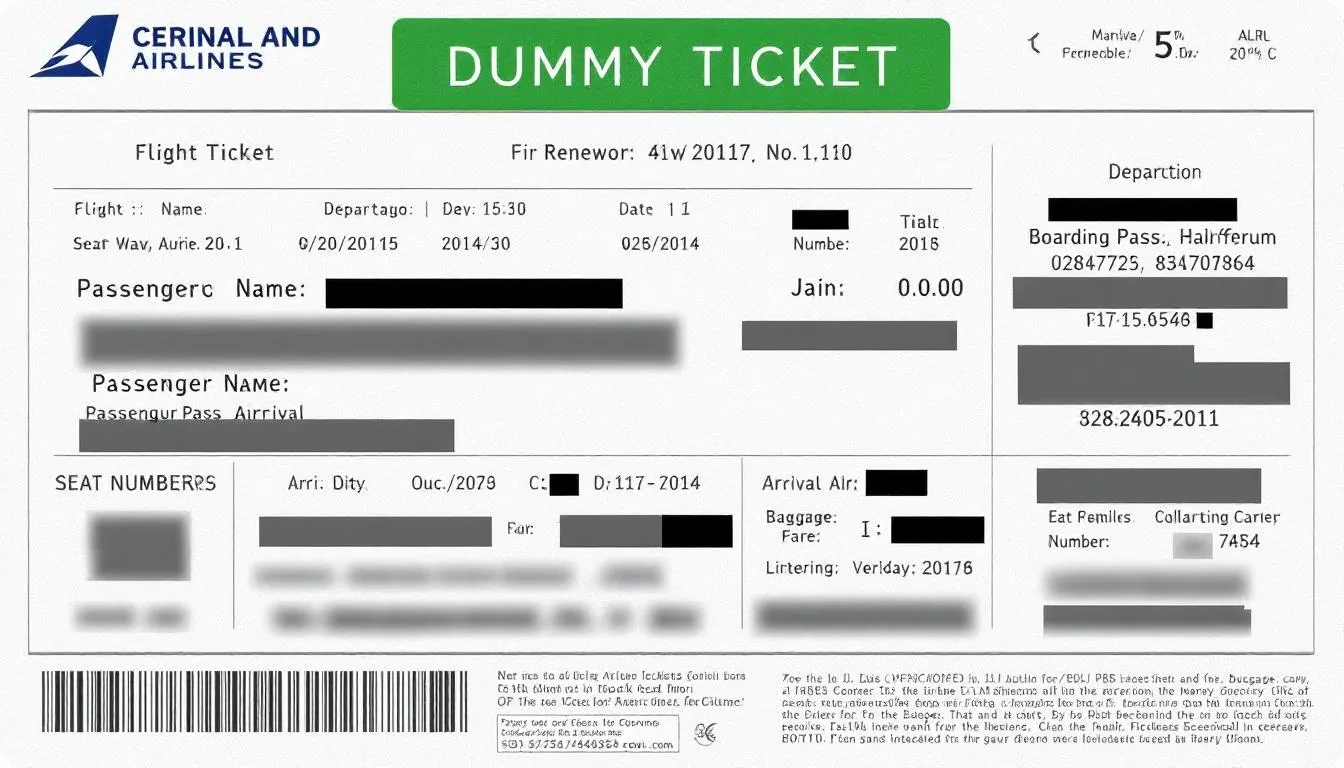
Short answer: If the agency email rather than your own is listed on a dummy ticket reservation, the booking is not automatically invalid. Ask the issuer which passenger contact details were sent to the airline, who receives schedule-change and expiry notices, and who can make corrections. Check the current itinerary through the supported carrier or issuer channel and obtain an updated PDF if material details change. A temporary reservation is not an issued ticket or a visa guarantee.
Reviewed for: travelers using an agency-issued temporary flight reservation whose booking contact differs from the passenger’s email. Checked 12 October 2026 against IATA passenger-contact guidance, Emirates agency-change guidance and current UK visitor supporting-document guidance. Airline and visa rules vary.
Key facts:
- Agency contact and passenger contact can both exist; the agent email does not “own” the trip.
- IATA guidance asks agents to provide passenger mobile and/or email contact in the PNR for operational notices.
- For some agency-issued bookings, changes must go through the original agent.
- Public airline lookup, ticketing status and authority requirements differ; ask for the actual verification and hold deadline.
Need a current dummy ticket with a clear support path? Confirm the issuer’s passenger-contact and notice process, actual validity, and change terms before you rely on a reservation.
Create a dummy ticketIn This Guide
- Why Your Email May Not Appear on an Agency Booking
- Who Can Change an Agency-Issued Reservation
- Airline Notices That Land in the Wrong Inbox
- Matching Your Dates to an Embassy Appointment Slot
- Verifying the PNR Yourself Before the Embassy Does
- Free Generators, Fake PDFs, and Who Really Holds Your Data
- Schengen, UK, and UAE Files: What Each Expects From Your Itinerary
- Questions to Put to a Provider Before You Pay
- What to Do if the Reservation Changes or Lapses Before Your Decision
- Keep the Reservation Record Where You Can See It
Your embassy appointment is on Thursday, and your itinerary is ready. Then the airline sends a schedule change. It lands in an inbox you cannot open because the reservation carries the agent's email, not yours.
That contact detail can affect where operational notices arrive, while the booking channel and carrier rules determine who may make changes. Before you submit a dummy ticket for visa review, you need to know who controls the reservation, what notices you will miss, and how that affects your dates. We show you how to check the record yourself, how to time it around your appointment, and how to protect your file. Choose a dummy ticket that keeps your contact details visible and your dates flexible.
Why Your Email May Not Appear on an Agency Booking

Most surprises in a visa file start with a small mismatch nobody checked. The email attached to your reservation is one of them. Let us look at how the record is built and who sits behind it.
What an Airline Stores in a Passenger Name Record
Every flight reservation lives as a Passenger Name Record, or PNR, inside a booking system. The record holds the passenger name, the flight segments, the ticketing status, and contact fields. Those contact fields include a phone number and an email address.
A PNR may carry passenger contact data, agency contact data, or both. The visible PDF may omit contact fields. Ask the issuer which passenger email and mobile number, if any, were supplied to the airline and how notices will reach you.
An agency address on the booking does not make the agent the owner of the traveler’s trip. Notices may reach the passenger, the agency, both, or a booking queue depending on the carrier, contact fields and issuing channel. If your own contact is absent, arrange a reliable forwarding path.
That is not a flaw. It is how a reservation works when someone books on your behalf. It does change what you should expect from a dummy flight ticket during a long visa process.
How a Travel Agent's Email Ends Up on Your Itinerary
A travel agent may create a reservation through an agency or airline system and enter its service contact. The ticketing deadline is set under the carrier and booking conditions; the agent should tell you the actual deadline and how schedule changes will be communicated.
A dummy-ticket provider may handle the reservation through an agency channel. Its contact may appear on the record, but the traveler’s own contact can sometimes be added as well. You receive a PDF, a booking reference, and often an email copy.
Linking a travel agent's email to a flight reservation can pose risks. Agency-issued reservations often need the original agent for changes, subject to airline rules. That is useful when you ask for a change. It is a gap when you do not know a change has happened.
Here is what the setup means in practice:
-
The agent may receive airline notices; ask whether you will receive them directly too.
-
The agent may request permitted changes or cancellation; extensions and edits are not guaranteed.
-
You should receive the current itinerary and a clear route for requesting support.
Some providers add your email as a second contact. Others do not. Booking control can vary depending on the agent's setup and the type of reservation. Ask before you pay, not after the file is submitted.
What Embassies See When They Look Up the Booking Reference
If a visa authority requests reservation evidence, the document should accurately show your intended route, dates and passenger identity. The authority’s verification method is not uniform or generally disclosed; an agency contact address by itself is not proof for or against the itinerary.
Do not assume every visa officer can query a GDS or sees the same screen as a traveler. An issuer can explain the supported verification channel and provide current booking evidence when the receiving checklist asks for it. Never present an invented record as genuine.
Whether an authority can see contact fields or live status depends on its process. Your practical task is to avoid submitting a stale document or claiming an unticketed hold is a paid ticket.
That is why the email owner matters more than it first looks. The owner receives the notice that could change what the desk sees.
Reading the Contact Fields on Your Own PDF
Your PDF is the fastest clue about who owns the record. Most itineraries print the passenger name, the PNR, the route, and a status line. Some also print a contact line in the footer. Read it before you do anything else.
A contact address on a PDF does not reveal every notification destination in the airline or agency system. Ask the issuer which contact fields were sent to the carrier and who receives operational notices.
Compare the PDF with the lookup on the carrier's page. The name, route, and date should match on both. The contact email usually does not show on the public page, so do not expect to see it there. Ask your provider to confirm it in a written message.
Keep that message with your other papers. If a question ever comes up, it shows what you were told and when.
You rarely get direct access to the controls of a provider-held record. You can, however, ask for a screenshot of what the provider sees. That screenshot is a quick way to confirm the contact line without waiting for a long reply.
Who Can Reach the Airline About Your Record
A carrier may be able to discuss some booking details with the named passenger, while agency-issued changes may need the original agent. Identification checks and permissions vary. Ask both issuer and carrier which channel supports status checks and corrections.
So decide in advance who will speak to the airline if a problem appears. Start with the issuing provider for an agency booking; the operating carrier can tell you whether it can help directly.
Picture Sophie, who applies from Delhi. Her record shows a different departure time than her PDF. She calls the airline and learns that the issuing agency must make this particular change. She loses half a day on the phone. The issuer was the right route for requesting a correction; the turnaround depends on the booking rules.
Write the support path in your notes: issuer for reissue or correction, carrier for the checks it supports. It keeps your effort where it works.
It also helps to save the provider's support hours. If your appointment is early, you want to know whether someone is awake to answer. That small detail often matters more than the price of the service.
Why This Setup Works Well for a Temporary Flight Reservation
Agent-held reservations are normal, and they suit visa work. A temporary reservation can be cheaper than buying a non-refundable fare before a decision, but fees, validity and suitability vary. It does not remove the financial or travel risk of an inaccurate application.
A truthful reservation can be appropriate where the specific receiving authority accepts reservation evidence. It is not a universal requirement or a visa guarantee. The UK visitor guidance, for example, lists flight bookings as generally less useful evidence except for transit.
You also gain flexibility. A provider may offer date changes, but each change depends on its terms and the underlying carrier or issuing system. That matters when your embassy appointment moves by a week.
The agent-email setup adds one rule to your routine. You must stay informed about a record you do not fully control. The next discussion shows exactly what that record can do while you are not looking.
Who Can Change an Agency-Issued Reservation
Control over the booking is quieter than most applicants expect. The agent rarely edits your record for fun. Still, you should know which edits are possible, so you can plan around them.
Name Edits, Date Shifts, and Quiet Cancellations
An issuing agent may be able to request permitted name corrections, date changes, new segments or cancellation. Carrier rules, fare conditions, and record status limit those actions. Changes should be documented and reflected in the current itinerary supplied to the traveler.
The original agent may be the correct channel for a correction or changed travel date. Neither a name fix nor a date shift is always immediate or allowed on the existing record.
The risk appears when the change is automatic. An unticketed hold may lapse at its deadline. Notification practices vary, so ask for the actual expiry and check status rather than waiting for an email.
So treat every reservation as a live document. A record can look perfect on Monday and read differently on Friday.
How Airlines Let Agents Hold a Reservation Before Payment
Some airlines and agency channels permit an unticketed reservation or fare hold until a stated ticketing deadline. Others do not. A booking reference alone does not prove that a paid seat or e-ticket has been issued.
An unticketed hold may expire if the ticketing conditions are not met. Do not assume it authorizes boarding; an issued ticket and the required travel documents are separate matters.
Hold length and ticketing deadlines vary. Ask the issuer for this booking’s deadline and what happens if it expires.
Use this checklist to understand your own hold:
-
Ask how long the airline allows the hold on your route.
-
Ask whether the provider can re-create the record after it lapses.
-
Ask whether the new record keeps the same booking reference.
Those three answers tell you how much cushion you have before your visa appointment.
The Time Limit That Quietly Shapes Your Validity Window
There is no universal 24–72-hour validity period. Ask the issuer for the precise time limit of this record, including time zone, and plan for the possibility of later document review.
Count the window from the moment the provider issues the record, not from the moment you open the PDF. If you buy on Monday morning and the interview is Thursday afternoon, you may be outside the window. Plan the purchase so the record is fresh when the officer looks.
A dummy ticket valid on Wednesday can show a lapsed status by Friday. A release notice may go to the agency, the traveler, both, or neither, depending on the channel. You may not.
This is also where delivery speed helps. Check the provider’s stated delivery time before ordering. Do not rely on a ten-minute promise unless it is confirmed for your order. Time the order close to your appointment instead of days ahead.
When Control Varies by Agent Setup and Reservation Type
Not every provider runs the same setup. Some agents keep full control and send you a PDF. Others give you a link to a booking page where you can see the reservation status. A few add your email to the record as well.
The reservation type changes the picture too. A one-way onward record behaves differently from a return itinerary. A multi-city record has more segments to monitor.
Ask these questions before you order:
-
Does my email appear on the record?
-
Can the reservation status be checked without contacting you?
-
Who receives airline notices?
If the provider cannot answer, find another one. A clear answer today saves you a stressful email chain later.
How to Tell That Someone Edited Your Record
Edits leave traces. You just have to know where to look. Open the airline's page and read the record line by line. Compare it with the last PDF you received.
Look for three signs:
-
A changed departure time or flight number
-
A new segment that you did not request
-
A different status code from the one on your PDF
If you spot a difference, do not assume the worst. A schedule change by the carrier looks the same as an edit by the agent. Your job is to find out which one it was and whether your documents still match.
Message the provider with the booking reference and a screenshot. Ask what changed and why. A good provider answers in plain language and sends a new PDF if needed.
Suppose Marcus holds a one-way onward ticket record for a short trip from Mumbai. He sees that the route now includes a different connecting city. The provider explains that the carrier removed the original flight. A new itinerary arrives within minutes. Marcus replaces the old PDF and updates his cover letter.
Why a Fresh Issue Date Matters for Your File
Some itineraries show a creation or issue date; others do not. A printed date does not establish that the reservation is still active. Check the current record and its actual status.
When a reservation is reissued, confirm that the version you submit has the current passenger, route, date and reference. The document’s age alone does not determine acceptance.
When a provider re-issues a record, ask for the new issue date on the PDF. Then check that the date appears in a place the officer can see. Some documents hide it in the footer.
Also keep in mind that a confirmed ticket and a held reservation read differently in the system. Your provider can tell you which one you have. Ask, so you can describe your documents accurately if an officer asks.
Splitting Roles Between You and the Provider
Clear roles prevent gaps. Decide who does what before your appointment, and write it down.
You are responsible for the facts: your name, your dates, and your passport details. You also check the record on the airline's page. The issuer should explain its role in creating the booking, handling permitted changes, and forwarding notices.
Clear roles reduce the risk of missed changes. You do not wait for an email that never comes. The provider does not guess what you need.
Share a short list with your provider after you order:
-
The exact appointment date and time
-
The date the officer is likely to review your file
-
The number of changes you may need
-
Your preferred way to be contacted
Then follow up once, the day before your visit. A short message such as "Please confirm my record is current" gives the provider a chance to catch problems early.
This small routine turns the agent email from a blind spot into a managed channel.
Putting the Rules for Changes in Writing
Verbal promises vanish. Written ones help. Ask the provider to confirm in writing how date changes work and how fast they happen. Keep that message with your visa paperwork.
Ask also what the provider does when the airline changes a schedule. Ask the provider how quickly it relays a schedule change and whether it can issue an updated itinerary. That small habit tells you the agent's email is being watched.
With the rules in hand, the next problem is the one that catches applicants most often: notices that arrive somewhere you never look.
Airline Notices That Land in the Wrong Inbox

Operational notifications use the passenger and agency contact data available to the carrier and issuing channel. The communication chain can fail when the traveler’s own details are absent or outdated. That mismatch creates a communication gap, and the gap is where most last-minute problems begin.
Schedule Changes You Never Hear About
Passengers linked to dummy tickets may miss communications about flight changes or cancellations. A carrier may retime a departure by two hours, swap an aircraft, or cancel a route. The notice goes to the agent's address.
A schedule change can quietly break your file. Your visa form says the flight leaves at 14:10. The record now says 16:30. The officer reads two versions of the same trip.
Any material mismatch deserves correction before submission when the checklist calls for a reservation. A route that no longer exists is the worst case, because the officer sees a cancelled segment next to your name.
The fix is simple. Ask your provider to forward every airline notice. Ask for confirmation that they have done so, and keep that confirmation.
Cancellation Emails and the Few Hours That Matter
Cancellations are rarely slow. A release notice can arrive and take effect within a few hours. If the agent is asleep in another time zone, the record may sit cancelled until morning.
Picture Daniel, who applies from Mumbai with an appointment at 9:00 on a Wednesday. His reservation is released overnight. The notice reaches the agent at 3:00. The agent replies at 8:00. Daniel has one hour to re-create the record.
That hour is survivable if you have a plan. It is a disaster if you find out at the counter.
Build a small buffer into your schedule. Order with enough time for delivery and correction, based on the issuer’s actual expiry and the authority’s submission deadline. Recheck close to submission and keep support details available.
Asking Your Provider to Forward Notices
A short message helps. Write it once and send it right after purchase:
-
Please forward any airline notice for my booking reference the moment it arrives.
-
Please confirm whether my email is stored as a secondary contact.
-
Please tell me the exact time the reservation expires.
Providers who work with many visa applicants know these questions. They answer quickly. A slow or vague reply is useful information too.
You can also ask for your own email to be added to the record. Not every agent allows it. When they do, you receive notices directly, and the gap closes.
What a Late Notice Does to a Same-Week Appointment
A late notice creates the most pressure near a document deadline. If your visit is on Friday and the notice reaches you on Thursday night, you have hours, not days.
In that window, keep your actions small and precise. Confirm the change, ask for a corrected PDF, and compare it with your other papers. Do not rewrite your whole file.
Confirm that the reservation valid until time still covers the day of your visit. A record that looked fine on Monday may have a new deadline after the change. The provider can tell you the exact time.
If the officer might review your file after the appointment, ask for a longer-lasting version. Ask whether a longer-validity option actually exists for your route and on what terms. It costs little to ask.
Keep your phone close on the appointment day. A provider may need a quick approval from you, such as confirming a spelling or a date.
Time Zones and Support Hours That Delay Your Response
Providers often work across time zones. A notice that arrives at midnight in the agent's city may sit until the next shift starts. That delay can be several hours.
Ask your provider for the support window and the response target. If the team works through the night, you can plan for early appointments. If it does not, order your reservation the day before and check it early.
Share your travel details with the provider only once, in one clear message. Include your name, appointment time, time zone, and booking reference. That message saves time later, because the support team does not need to ask again.
If your appointment is in Delhi and the support team is in another region, convert the times in your message. A line such as "Appointment at 9:00 India time, which is 03:30 UTC" removes confusion.
Small habits like these keep the agent email from slowing you down.
A Simple Inbox Routine for the Weeks Before Your Appointment
A routine beats worry. Check at practical milestones—after issue, after any change, and near submission—rather than assuming a daily check can keep an expired hold active.
-
Open your own inbox and look for the provider's forwards.
-
Open the airline's website and look up the record using your booking reference and surname.
-
Read the reservation status line and compare it with your PDF.
That takes five minutes. It protects a visa process that may have taken months to prepare. It also makes you the owner of the facts, even if the agent receives the contact email.
Dates are the next place where small slips turn into rejections, so the next discussion covers how to line them up.
Matching Your Dates to an Embassy Appointment Slot
A reservation that is perfect on paper can still fail if its dates do not fit the rest of your file. Appointment timing, validity windows, and travel dates all have to agree. Here is how to line them up.
Counting Backward From Your Appointment Date
Start with the day your embassy appointment is booked, then work backward. You cannot reliably know when a visa officer will review your documents, so do not plan solely around an assumed same-day check.
Now match that to the validity window. A temporary reservation can lapse before a reviewer examines the file; calculate timing from this booking’s stated expiry, not an assumed 24–72-hour range.
A simple rule works for most applicants:
-
Order early enough to receive and correct it, while respecting the stated expiry and submission deadline.
-
Check the reservation status that evening and again in the morning.
-
Print or save the PDF only after the second check.
That rhythm keeps the record fresh without leaving you exposed to a late-night release. It also keeps your flight itinerary consistent with the day you actually submit.
If your appointment is in the afternoon, order in the morning. If it is in the early morning, order the evening before. The point is to keep the gap short.
Why the Actual Hold Deadline Needs Careful Timing
A short hold is a product condition, not a promise about the authority’s review timetable. Ask whether the booking can be checked later and what the issuer can provide if current evidence is requested.
The trouble starts when the review takes longer than expected. Imagine Emma, who applies from Delhi for a short-stay visa. Her appointment is on Monday. The embassy keeps her file for four days before the officer opens it. The reservation she ordered on Friday has lapsed by Tuesday.
You cannot control how long a desk takes. You can control what you do next.
-
Ask your provider whether a refreshed record is possible at no extra cost.
-
Ask how fast a fresh PDF arrives.
-
Keep the provider's contact channel open until you receive the decision.
Fast delivery helps here. Fast delivery can help, but a lapsed record still requires an accurate new document and any update must follow the authority’s permitted channel.
Choosing Travel Dates That Match the Rest of Your File
Your reservation is only one piece of paper. The officer reads it next to your cover letter, your leave approval, and your hotel details. If the dates contradict each other, doubts appear.
Use planned travel dates that are believable. A trip that starts three weeks after the appointment looks natural. A trip that starts the next morning looks rushed unless you have a good reason.
Keep these points in line across every document:
-
The departure date matches the first day on your leave letter.
-
The return or onward date matches the last day of your stay.
-
The route follows the cities in your cover letter.
Officers read dozens of files a day. A clean match across documents shows travel intent without a long explanation. Good consistency also lowers the chance of follow-up questions.
If your plan is flexible, say so in your cover letter and keep the reservation dates as your best estimate. That is honest, and it is how most applicants travel.
Booking for Two or More Travelers on One Appointment Day
Families and small groups often apply together. The same date logic applies, but the stakes are higher. One lapsed record can hold up the whole group.
Order all reservations in the same session so that the dates and timing match. Ask the provider to put each traveler's passenger details on a separate PDF. Check each record on its own.
Compare the group's plan with the cover letter. If the letter says the family travels together, the records should show the same flights. A mismatch invites questions.
Whether a reservation is sufficient depends on the visa category and exact official checklist. Do not buy a paid ticket merely to make a PDF look stronger unless required, but do not substitute a hold where an issued ticket is specifically requested.
A fully paid ticket also carries a cost that you may not recover. If the embassy refuses the visa, you may pay change fees or lose the fare. A temporary reservation may reduce upfront fare exposure where the official checklist accepts one, but its own fee and validity terms matter.
For a group, that saving multiplies. For a group, compare the provider’s actual price and change terms against the risks and restrictions of buying full fares before a decision.
What Happens When Your Appointment Gets Moved
Appointments move. A holiday closes the office. A slot opens earlier. Your reservation then sits on the wrong week.
This is where the agent email becomes useful. The agent can shift the record to match, as long as you ask early. Provide the new appointment date and your booking reference in the same message.
Ask for the updated PDF before you cancel anything else. Compare the new dates with your letters. Then check the record on the airline's website again.
Some providers allow unlimited changes to dates. That feature matters when your visa process stretches across several rescheduled slots. Without it, each shift costs you a fresh purchase.
When the dates are lined up, the next job is to confirm the record itself is real. That is the part you can do on your own.
Verifying the PNR Yourself Before the Embassy Does
You do not have to wait for an officer to find a problem. A supported carrier or issuer lookup can help you check current data; it does not reveal the authority’s internal verification view. It takes minutes and gives you a clear answer.
Finding Your Record on the Airline's Website
Where supported, verify the reservation through the airline’s official manage-booking channel; otherwise ask the issuer for its verification route. Open the carrier's site and look for the manage booking area. Many carriers label it as manage trip, my booking, or retrieve booking.
You need two things: your PNR code and your surname. Both are printed on the PDF. Type them exactly as shown.
If the record opens, you will see your name, the flight segments, and the dates. Compare each line with your document. A match supports that this reference currently retrieves the displayed itinerary, but it does not establish ticketing or how long the record will remain active.
Ask the provider what reference identifies the reservation and how to check its current status. Use the reference and verification route supplied by the issuer. Public airline lookup is not available for every genuine agency or partner-airline record.
Do this check on the day you order and again on the morning of your visa appointment. If something is off, you still have time to ask for a fix.
What a Healthy Reservation Status Looks Like
A carrier or agency view may show status for each segment; the labels and available fields vary. Codes vary by airline. Do not interpret a status code without the issuer’s explanation; confirmation of a segment is distinct from e-ticket issuance.
Read three lines carefully:
-
Passenger name: It should match your passport spelling exactly.
-
Segments: The route and dates should match your PDF.
-
Status line: It should not say cancelled, expired, or unable to confirm.
If the authority requests a flight reservation, consistency with your application documents matters. Your own check should do the same, line by line. Even one swapped letter in a surname can cause a mismatch.
Do not equate a status label with an issued e-ticket; ask the issuer what has actually been booked and paid. If your record shows a ticketing deadline, note the time. That deadline is the real edge of your validity window.
Reading the Manage Booking Page Without Changing Anything
The airline's manage booking page is a read-only tool for your purposes. You are there to look, not to edit. Resist the urge to click on any change or cancel option.
Some carriers let a passenger cancel a record from that page if the contact data matches. A careless click can release your reservation. Treat every button as a risk until you are ready to act.
Take screenshots of the page for your own records. Save them with the date and time. These images help if you need to explain a status later.
If a payment prompt appears, do not complete it merely to test the booking. Confirm with the issuer what the prompt means and whether the receiving checklist asks for a reservation or an issued ticket.
If you want to see how a reservation behaves, ask your provider to walk you through the flow before your appointment. A good provider welcomes the question.
Keeping a Verification Log You Can Show an Officer
A short log turns your checks into evidence. Open a simple note and record each lookup. Write the date, the time, the booking reference, and what the page showed.
Add the booking details from the page, such as the passenger name, the route, and the status. Attach a screenshot if you can. You do not need to share the log, but you can if an officer asks how you verified the record.
A useful log can include the following milestones where relevant:
-
Order time and delivery time
-
First lookup on the day of purchase
-
Second lookup the next morning
-
Provider confirmation of the expiry time
-
Final lookup an hour before the visit
The log also protects you from confusion. If your provider says the record was fine, and the page shows an error, your notes help you find when the change happened.
Once the dummy ticket issued to you has passed the checks, store the final PDF in two places. Keep one copy on your phone and one in your email. A dead battery on appointment day is an avoidable problem.
Comparing the Lookup With the Names on Your Visa Form
The lookup is only useful if you compare it with the right papers. Open your visa form next to the airline page and read both slowly. Compare the passenger name, route, dates and any document fields the authority actually asks you to match.
Check the surname first. It must match your passport letter for letter. Then check the given names. If your passport lists a middle name, ask your provider whether it should appear on the record.
Next, check the route. The cities on the record should match the cities in your cover letter. If you wrote that you plan to fly from Delhi to Rome, the reservation should show that same leg.
Finally, check the dates against your leave letter and your stay length. A reservation that ends before your leave starts looks careless.
Do this once on the day of purchase and again on the morning of your visit. The second pass catches changes that the first one could not.
If you find a mismatch, write it down and message the provider at once. Most spelling fixes take minutes, and a corrected PDF costs you nothing in time if you catch it early.
What to Do When the Lookup Shows Nothing
Sometimes the page returns an error. Do not panic. Try these steps in order:
-
Retype the PNR code and surname without spaces.
-
Try the carrier's mobile site or a different browser.
-
Wait ten minutes, since a new record can take a short time to appear.
-
Contact your provider with a screenshot of the error.
If the record still does not appear, ask the provider for the reason. A genuine issuer should be able to explain how to confirm its current record. A failed public airline lookup alone does not prove the document is fabricated.
That difference is the heart of the matter. A real record has an actual reservation that staff can see. A fabricated document has nothing behind it. The next discussion explains why that gap matters so much.
Free Generators, Fake PDFs, and Who Really Holds Your Data
Some tools online promise a free itinerary in seconds. They look convenient. They rarely mention who holds the record or what happens to your details.
Why a PDF With No Record Behind It Fails
Some online itinerary generators produce only a template rather than an issued reservation. The file looks like a ticket, but there is no actual booking behind it. A template without a real reservation cannot be supported by a current issuer record.
Think of a fake dummy ticket as a picture of a reservation. It has a name, a route, and a code. It has no record that an officer can open.
A made-up document also carries legal weight in the wrong direction. Never present an invented or altered reservation as genuine evidence. Misrepresentation can have serious consequences under the destination authority’s rules. That is a serious outcome for a small shortcut.
The contrast with a genuine reservation is simple. A real flight reservation sits in a booking system. A valid Passenger Name Record distinguishes between real bookings and fake documents.
Here is how to tell the two apart before you submit:
-
A genuine record can be confirmed through a supported carrier or issuer channel.
-
A fabricated file cannot be reconciled with an actual record and passenger details through the issuer.
-
A genuine record includes a PNR code you can verify.
Your visa file carries your name and your reputation. Use only documents that survive a lookup.
What Free Ticket Sites Do With Your Passport Details
Free ticket generators ask for passenger details. They want your full name, date of birth, and often your passport number. Some also ask for an email and phone number.
A site requesting passport details should explain its data handling and provide an identifiable support channel; do not assume every free service misuses data. You do not know where the data goes next. You do not know who else can read it.
Your passport details are valuable. A leak can lead to spam, scams, or worse. The cost of that risk is higher than the small fee a legitimate provider charges.
Before you enter any details, check three things:
-
Does the site explain how it stores and deletes your data?
-
Does it issue a verifiable reservation?
-
Does it provide support if something goes wrong?
If the answer to any of those is no, move on. A free tool without accountability is an expensive choice in the long run.
How Embassies Spot a Fake Itinerary
A visa authority may question inconsistent or unsupported travel evidence. Its exact verification tools and timing are not public or uniform. Never rely on an altered PDF or invented reference.
Formatting and route inconsistencies can make an itinerary difficult to reconcile with the rest of an application; focus on truthful details rather than cosmetic changes.
Once a document is flagged, the whole file loses trust. Other documents get a second look. The officer may ask for further proof.
The consequences of misrepresentation depend on the authority and facts. An accurate application and correction through official channels are safer than guessing how a reviewer will react. Some countries ask about past refusals on every new form.
A legitimate reservation supports truthful travel evidence where accepted; it does not guarantee a decision or prevent further questions.
Choosing Where to Book Dummy Tickets Online Without Gambling
Searching for a dummy ticket online returns a mix of services. Some are careful. Some are careless. You need a way to sort them quickly.
No single best dummy ticket website suits every applicant, so judge by behavior, not by slogans. A good service explains how it creates records and shows you how to verify them. It also tells you whose email sits on the reservation.
When you look for a dummy flight ticket online, run this short test:
-
Does the site show a sample of the PDF with a PNR?
-
Does it explain the validity window in plain terms?
-
Does it list a support channel with real response times?
-
Does it describe how date changes work?
If you cannot find those answers in five minutes, move on. The agent-email question depends on the provider's honesty, and honest providers explain themselves.
Also check how the site handles your data. Ask a provider what personal data it needs, why it needs it, how it stores it and whom to contact for support. Never give a booking provider a bank password; provide identity documents only if genuinely required and through a secure, disclosed process.
Take a moment to read recent feedback from applicants who used the service for a similar visa. Look for details about speed, support, and acceptance. Those details beat any marketing line.
Warning Signs Hidden in the Checkout Page
The checkout page tells you a lot about a service. Slow down when you reach it and read what it asks for.
A legitimate checkout asks for the passenger name, the travel dates, and a contact email. It does not need your passport scan, your bank password, or your national ID number.
Watch for these signs:
-
A price that changes after you enter your details
-
A countdown timer that pushes you to pay in seconds
-
No receipt or order number after payment
-
No clear way to contact support
Any one of these deserves a pause. Several together mean you should leave.
Also look at the confirmation email. A good provider sends a reference, the PDF, and a short note about validity. It tells you what to do next. A message with only a link and no details is thin.
Take a screenshot of the order page and keep the receipt. If a problem appears later, you will have proof of what you paid for and what was promised.
What a Rejection Costs Compared With a Small Fee
Let us compare the numbers. Compare the actual reservation fee, applicable visa fees and cancellation terms rather than treating any quoted price as universal. It can also cost you a flight, a hotel, or a job commitment.
Take Oliver, who applies from Mumbai. He submits a free PDF to save a few hundred rupees. The authority asks him to explain the unsupported document, and he must respond through its official process; the outcome is not automatic.
A legitimate issued record would have avoided the unsupported-PDF problem, but no provider can buy a favorable visa decision. It also gives you a verifiable PNR for confirmation, which means the officer sees what you submitted.
A genuine reservation should come with an issuer-supported way to verify the current record. Delivery times vary by provider and order. Confirm the service window before relying on a last-minute purchase. Allow enough time for delivery and correction before any submission deadline.
So the choice is not free versus paid. It is verifiable versus unverifiable. Once you pick a verifiable record, you still have to read it in the context of the country you apply to, which is the next topic.
Schengen, UK, and UAE Files: What Each Expects From Your Itinerary
Every destination reads a reservation through its own habits. The agent-email question applies everywhere, but the timing and the paperwork around it change. Here is how to adapt your approach.
Schengen Files and the EU Visa Code
Schengen supporting-document lists can include flight or travel reservations or other proof of intended transport, but the exact requirement depends on the consulate, location and purpose of travel. A reservation does not need to pretend to be a paid ticket. Keep the entry, exit, insurance and accommodation dates consistent, and read the current mission checklist before submitting anything.
Consulates handle high volumes in peak season. Staff may check the record days after your appointment, so your reservation needs to survive that gap. Plan a refresh option with your provider before you apply.
Keep these details aligned in a Schengen file:
-
The entry date falls inside the permitted travel window.
-
The stay length matches your insurance and your accommodation.
-
The exit date shows clear travel intent to leave the zone.
Your accommodation proof should match too. A dummy hotel booking follows the same agent-email logic, but this guide stays on flights, so we leave hotel specifics for another time.
If the consulate emails you with a question, answer fast and attach the latest PDF. A current record with a clean status line settles most doubts.
UK Visa Files
For a UK Standard Visitor application, current GOV.UK supporting-document guidance says flight bookings are generally less useful evidence except for transit. Do not add a dummy ticket simply because a general blog says every embassy wants one. If you are applying for transit or an authority specifically asks for a travel booking, follow its current checklist and describe a temporary reservation accurately.
A UK visa file is read as a story. The reservation, the bank statements, and the cover letter must agree. If the story is clean, the reservation does its job quietly.
Decision times can stretch across weeks. That is the main challenge for a held record. A reservation ordered at the start of your visa application process may not stay current by the decision date.
So keep a calm routine:
-
Submit a record that is fresh on the day of the biometrics visit.
-
Save screenshots of the status lookup from that day.
-
Ask your provider about a refresh if the officer requests updated papers.
Some applicants are asked for updated documents mid-process. Be ready to send a new PDF without rushing. Your provider's support speed matters more here than almost anywhere else.
UAE Visa Applications
UAE entry and visa-document requirements differ by nationality, sponsor, airline and visa route. Some processes ask for return or onward evidence; others use different supporting documents. Check the specific official channel and operating carrier before obtaining a temporary reservation, and match any requested itinerary to the declared travel dates.
The faster timeline helps a held record. A reservation ordered the day before is likely to remain valid through the review. That is a good fit for short validity windows.
Even so, a few points deserve attention:
-
Keep the passenger name identical to the passport, including any middle name.
-
Match the travel dates to your stay length and your sponsor's details.
-
Confirm that the route and the airline code look realistic.
Applicants flying from Delhi to Dubai have many daily options, so a realistic schedule is easy to build. A route with few flights per week needs a more careful date choice.
The same principle holds everywhere. A retrievable, accurate record is more defensible where a reservation is requested, but acceptance depends on the complete application and receiving checklist.
Why Some Consulates Ask for Paid Proof and What to Do Then
A few consulates ask for a paid ticket in certain cases. That is rare for standard visitor categories, but it happens. Read the checklist for your exact category, and follow it.
If the checklist says a reservation is acceptable, a verifiable record is enough. If it says a confirmed ticket is required, a held reservation may not satisfy it. Do not guess. Check the wording.
When the language is unclear, ask the consulate through its official channel. You can ask the consulate whether its checklist accepts a reservation; response times and specificity vary. Save the reply with your file.
If the consulate requires paid proof, plan the purchase carefully. Buy a refundable fare if possible, and read the cancellation rules before you pay. Keep the cost in mind, since it may be much higher than a reservation.
The goal is to meet the stated rule at the lowest sensible risk. For most applicants, that means a reservation. For a few, it means a paid fare.
Remember that rules differ by visa purposes. A tourist visa may ask for less than a work or study visa. Always match your documents to the category on your form.
Keeping the Same Rules in Mind Across Embassies
Some authorities request proof of intended travel and accept reservations; others specify different evidence. Some want a round trip. Others accept a one-way record with a later exit. Always read the checklist for your category.
Never treat a flight reservation as universally required. Follow the exact visa category and destination checklist; the UK visitor guidance lists flight bookings as less useful except transit. Treat any requested itinerary as part of a consistent, truthful application.
Create a one-page tracker for your own use:
-
Destination and visa category
-
Appointment date and time
-
Reservation order time and expiry time
-
Provider contact and booking reference
That tracker keeps the agent-email gap under control. You always know when to check, whom to call, and what to send.
With the rules for each destination clear, the next question is how to choose a provider whose setup protects you.
Questions to Put to a Provider Before You Pay
The best protection against the agent-email gap is a good conversation before you pay. A provider that answers clearly tends to run a cleaner service. Ask the following and listen to how they respond.
Whose Email Sits on the Reservation?
Start here. If the provider cannot say whose email is stored, the setup is unclear. A clear provider says the contact on the record, who receives airline notices, and how they pass them on.
Ask whether your email can be added as a second contact. If it can, you receive notices directly. If it cannot, ask how fast they forward them.
Also ask what happens if you need a change outside office hours. A provider with round-the-clock support can fix a lapsed record during an early appointment. One with limited hours may not.
Write down the answers. They form the first line of your tracker.
Can You Get Date Changes Without Fresh Fees?
Dummy tickets offer flexibility to change travel plans without penalties. Confirm that this holds for your provider. Ask how many changes are allowed and how fast they happen.
Appointments often move. A provider that charges for every shift turns a small expense into a larger one. A provider that offers unlimited date changes removes that worry.
Ask also how changes affect the booking reference. A new reference is fine as long as you receive a fresh PDF and a clear status. Ask to keep the same passenger details across versions so that your documents stay consistent.
If the answer is vague, ask for the policy in writing. A confident provider has it ready.
What You Receive and How Fast
Ask what you receive. A strong package includes a PDF, a verifiable PNR code, and the exact expiry time. Some providers also send an email copy and a link to check the reservation.
Ask about delivery. Instant delivery is the goal, and a provider that promises delivery within the provider’s stated delivery time is realistic for this product. A provider that takes hours cannot support a same-day appointment.
DummyFlights.com offers verifiable reservations with a PNR and PDF, and unlimited date changes for a transparent price.
Ask whether you can book dummy tickets for several travelers in one order. Families and groups need matching records, and one order keeps the dates aligned.
Check payment steps too. A legitimate provider uses a clear checkout and sends a receipt. A page that hides the price until the last step is a warning sign.
Reading the Fine Print on Refresh and Refund Terms
Terms matter more than headlines. Before you pay, read the provider's rules on refresh, change, and refund. You are looking for clarity.
Ask what happens if your dummy flight reservation lapses before your appointment. Some providers re-issue it at no cost within a set period. Others charge a fee. Know which one you are buying.
Ask what happens if your embassy rejects the document for a reason that the provider controls, such as a missing record. A fair provider has a clear policy. A vague one leaves you guessing.
Note the following in your tracker:
-
The refresh policy and any time limit
-
The number of free date changes
-
The refund rule and how long it takes
-
The support channel for urgent requests
You may never need these terms. If you do, they save you from a stressful negotiation on the day of your visit.
Also ask whether the provider offers direct access to a status page. A page where you can see the record without sending an email is a real advantage. It cuts the agent-email gap, because you see changes as they happen.
What Proof of Legitimacy Looks Like
Look for signs that the provider works through real systems. A good provider explains its issuing channel and a supported way to confirm the record; public airline lookup is not always available.
Do not infer reliability from a major-airline logo alone. Ask who issued the booking, which carrier operates each segment and how the current record can be confirmed.
Here is what to look for:
-
A clear explanation of how the record is created
-
Support contact details that actually respond
-
Samples or guides that show how to verify a PNR
-
Reviews from applicants with similar visa types
Run a test message before you buy. Ask a question and see how long the reply takes. That small test tells you how the provider behaves under pressure.
When you choose well, most of the agent-email risk is handled. The remaining step is knowing what to do if something still changes.
What to Do if the Reservation Changes or Lapses Before Your Decision
Even with a careful setup, a record can change. A schedule shifts, a hold lapses, or an officer asks for fresh papers. A calm response keeps the damage small.
The First Hour After a Notice Arrives
When your provider forwards a notice, read it slowly. Identify what changed: the date, the time, the route, or the status. Then compare it with the record on the airline's website.
Your first message to the provider should include your booking reference, the notice, and the date of your appointment or decision. Ask for a clear fix and a time frame.
Act in this order:
-
Confirm the new status on the carrier's page.
-
Message the provider with your reference and deadline.
-
Wait for the corrected PDF.
-
Check the new record before you share it.
Do not forward a new PDF to the embassy until you have checked it yourself. A rushed document can contain a typo, and a typo can cost you more than a delay.
If you are very close to an appointment, tell the provider the exact hour. Urgency changes how support teams prioritize.
Rebooking Without Breaking the Paper Trail
A new record usually brings a new booking reference. That is fine. The challenge is to keep your paper trail clear.
Keep every version in a folder with dates in the file name. Note the reason for each change in a short line. If the officer sees two versions, you can explain the difference in one sentence.
Many applicants worry that a second reservation looks suspicious. A second reservation is not automatically disqualifying, but explain material changes accurately if the authority asks and avoid contradictory current documents.
Tell the officer the truth. You adjusted your dates because your appointment moved, or because the schedule changed. The reservation reflects your current plan.
Dummy tickets are not valid for actual travel. Keep that in mind when you update records. The goal is to show travel intent for the visa process, not to prepare for a flight.
Keeping Your Visa File Consistent
After a change, review the entire file. The reservation is not the only paper that mentions dates. Cover letters, leave approvals, and hotel details may need small updates.
Use this quick review:
-
Do the reservation dates match the cover letter?
-
Does the leave letter cover the new period?
-
Does the accommodation proof match the stay?
-
Are all names spelled the same everywhere?
If any answer is no, fix the paper that is easiest to change. In most cases, that is the reservation, since the provider can re-issue it fast.
Avoid piling on extra documents that no one asked for. A tidy file reads better than a crowded one. Include what the checklist requires and keep the rest ready in case of a request.
Writing a Short Explanation Note for the Officer
A short note can clear up confusion before it starts. If your dates changed or your reservation was re-issued, include a three-line explanation with your documents.
Keep the tone factual. State what changed, why it changed, and which document is the latest. Avoid long stories. Officers read many files and prefer short notes.
A useful note covers three points:
-
The reservation was updated on a specific date.
-
The new dates match the appointment and the cover letter.
-
The latest PDF carries the current booking reference.
Use plain language. You are not defending yourself; you are keeping the file tidy. The officer should be able to read the note in half a minute.
Refer to your plans for visa purposes in neutral terms. Say that the reservation reflects your intended route and dates, and that you will confirm final travel after a decision. That is a more accurate description than presenting an unticketed hold as a paid seat.
Attach the note to the front of your supporting papers, or send it with your reply if the officer asked for an update. A tidy note shows that you manage your file with care.
Deciding When a Fresh Reservation Beats a Patch
Sometimes a small edit is enough. Sometimes a fresh reservation is cleaner. Knowing the difference saves time.
A patch fits a small error, such as a typo in a given name or a one-day date shift. The provider edits the record, sends a new PDF, and you update your file.
A fresh reservation fits bigger changes. A new route, a new travel month, or a lapsed record is easier to handle with a new booking reference. The new record carries clean data and a fresh issue time.
Use this quick guide:
-
One field wrong: ask for a patch.
-
Several fields wrong: ask for a fresh record.
-
Record lapsed: ask for a fresh record.
-
Appointment moved by days: ask for a date change.
Whichever you choose, check the result on the airline's page before you share it. Then update your tracker with the new reference and the expiry time.
Fast delivery matters here. When a new PDF arrives within minutes, you can fix a problem on the morning of your visit and still arrive on time.
Staying Calm When the Embassy Asks Questions
Sometimes an officer emails with a question about your itinerary. Answer politely, quickly, and with evidence. Attach the latest PDF, the booking reference, and a short explanation if the dates changed.
If the officer cannot find the record, do not argue. Ask for the lookup details they used, check the record on the airline's website, and send a screenshot if it opens. Then contact your provider and ask for support.
Remember what you are showing. You are showing a credible plan to travel and return. A valid record from a verifiable source does that without drama.
Where the authority accepts reservation evidence, provide the accurate current document and respond through its official channel. No dummy ticket guarantees approval.
You now have the whole picture, from who owns the email to how to react when something moves. What remains is putting it into one habit.
Keep the Reservation Record Where You Can See It
The agent's email may own the booking, but you own the plan. Ask who receives airline notices, check the PNR on the airline's website, and time your order close to your embassy appointment. A reservation that accurately reflects the trip and can be supported through its issuer reduces avoidable contradictions in a file where it is requested.
A dummy ticket service with a verifiable PNR code and fast support turns a risky gap into a routine check. Choose a provider that keeps you informed, then walk into your appointment knowing exactly what a reviewer may assess.
Official-source check: IATA’s contact-data FAQ says agents should provide passenger mobile and/or email details in the PNR under Resolution 830d and airline procedures. Emirates’ change guidance directs travelers with agent-made bookings back to that agent for rebooking. GOV.UK visitor guidance treats flight bookings as generally less useful evidence except for transit. These sources illustrate different tasks, not a universal rule for every carrier or visa.
Related: check the email and PDF after a dummy-ticket order; recheck a booking after airline rerouting.
Agent-Email Dummy Ticket FAQ
Does the agent email make my dummy ticket invalid?
No. The contact address is separate from passenger identity and ticketing status. Confirm the current reservation and ask who receives notices.
Can my email be added to the reservation?
Ask the issuer. IATA guidance encourages passenger contact details in the PNR, but the method and available fields depend on the channel.
Who changes an agency-issued booking?
Often the original agent. Emirates, for example, directs agency customers back to the agent for rebooking. Ask your own carrier and issuer.
Will the airline email me about a schedule change?
Not necessarily. Confirm what passenger contact details the carrier has and request a forwarding commitment from the agent.
Does a booking reference prove I have a paid ticket?
No. A PNR or locator identifies a reservation; check whether an e-ticket was issued and whether the hold is still active.
What if the public airline lookup fails?
Recheck the exact locator and surname, then contact the issuer for its supported verification route. A failed public lookup alone does not prove fabrication.
Must I submit a dummy ticket for every visa?
No. Follow the exact official checklist. UK Standard Visitor guidance generally lists flight bookings as less useful except for transit.
Need a current dummy ticket with a clear support path? Confirm the issuer’s passenger-contact and notice process, actual validity, and change terms before you rely on a reservation.
Create a dummy ticketFriendly reminder: Do not invent a PNR, alter a PDF, or treat a held reservation as a boarding ticket. No reservation guarantees visa approval, boarding or entry. Use the destination authority’s current checklist and the issuer’s actual terms.