Dummy Ticket Vs Airline Hold: Which Is Better For Tight Visa Deadlines?

Dummy Ticket Vs Airline Hold: Which Is Better For Tight Visa Deadlines?
Flight Booking | 27 Feb, 26

Visa Deadline Survival Guide: Dummy Ticket or Airline Hold?

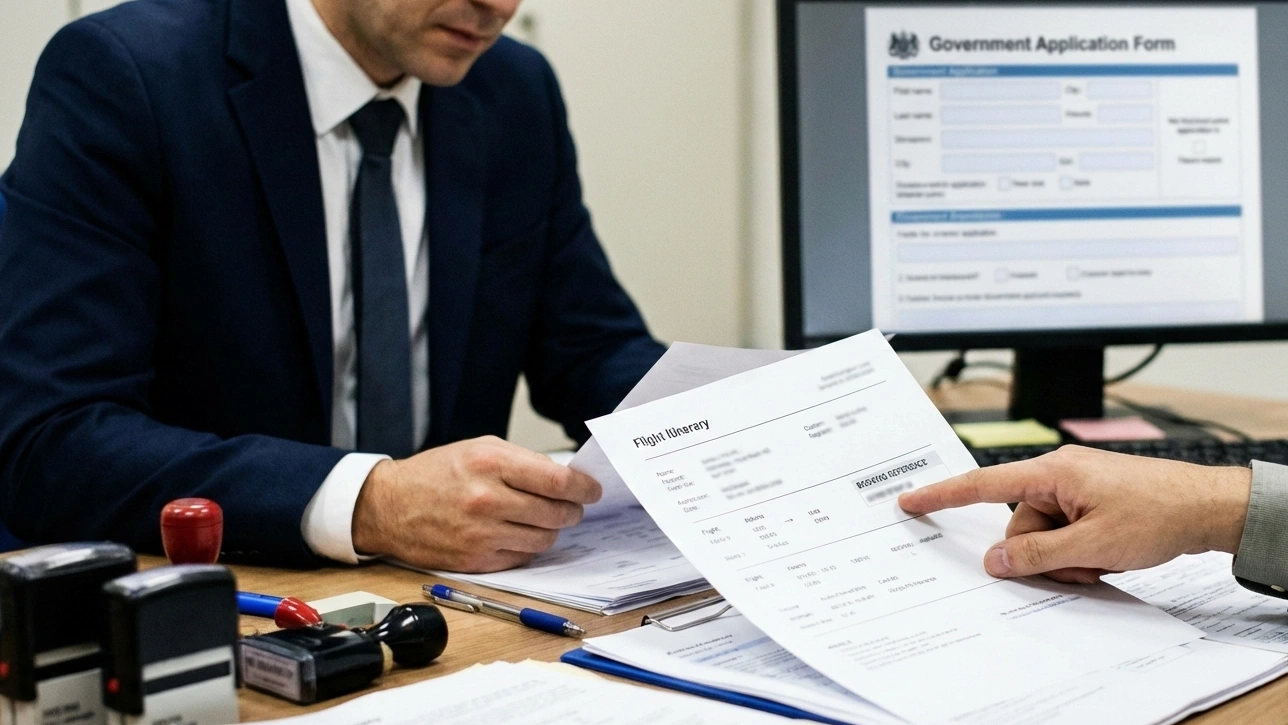
Your visa appointment is in two days. The checklist asks for a flight itinerary, and the counter staff will scan it in seconds. An airline hold can look perfect at 9 a.m., then vanish before midnight. A dummy ticket can stay steady, but only if it reads clean and verifies fast when the file is reviewed later.

We will help you choose the safer option for your exact deadline window, without gambling on policies you cannot control at all. You will learn what embassies tend to verify, where holds fail, and when a dummy reservation is the smarter hedge. For tight visa deadlines, a verifiable dummy ticket booking can stay checkable after your airline hold expires.
 

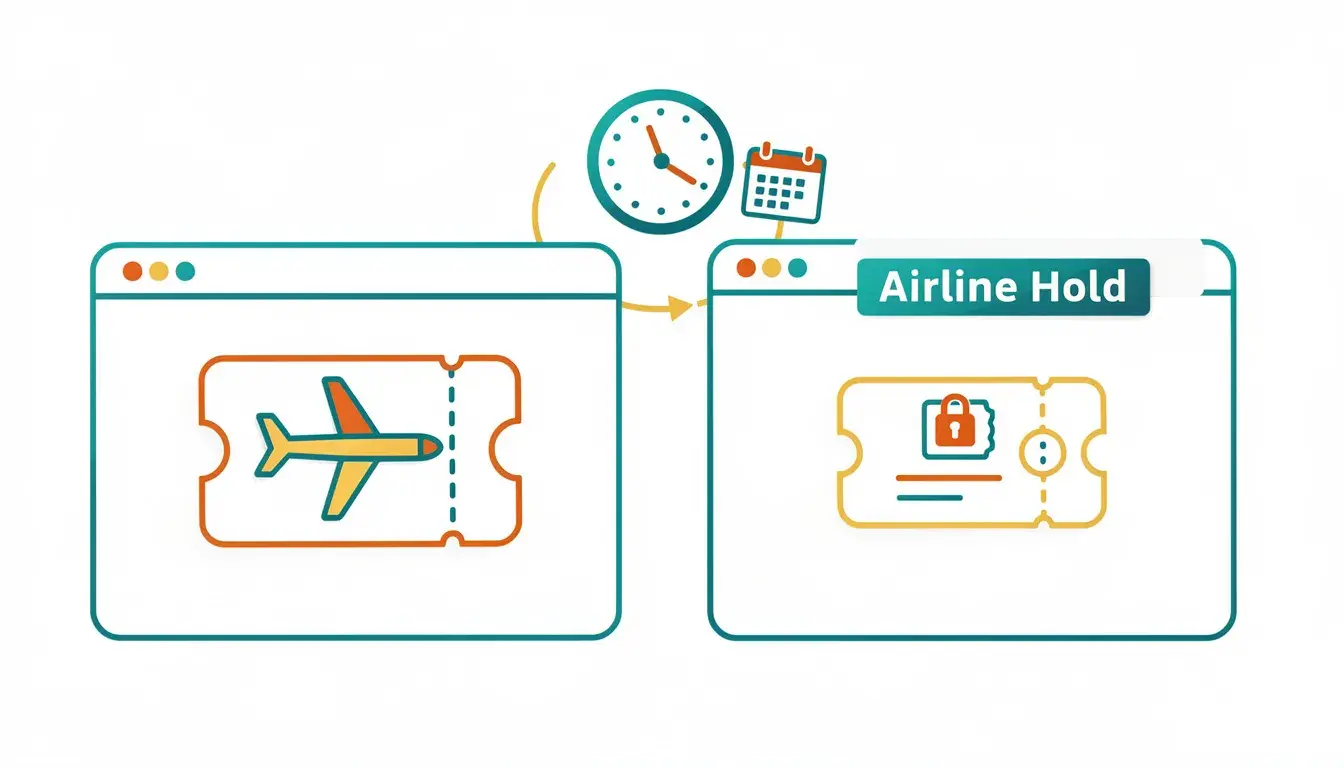
dummy ticket vs airline hold is one of the most important comparisons for travelers facing tight visa deadlines in 2026. A verifiable dummy ticket provides instant documentation without paying full fare, while an airline hold locks the fare temporarily—ideal only if processing times are fast. Understanding the difference helps you avoid rejections, delays, and unnecessary ticket costs.

Get a professional, PNR-verified dummy ticket for urgent visa applications, especially when processing times are unpredictable or lengthy. Pro Tip: Airline holds expire quickly, but dummy tickets can be refreshed or updated anytime to match embassy requests. 👉 Order your dummy ticket now and stay fully prepared for tight deadlines.

Last updated: February 2026 — Based on updated visa timing trends for Schengen, UKRI, US, Canada & Asia-Pacific.

When you're in the early stages of visa planning, generating temporary flight itineraries provides essential visa application proof without committing to costly travel arrangements. Tools that let you create a dummy ticket for visa simplify this step by offering risk-free PDF documents that look and verify just like genuine bookings. This is especially useful when your plans are still flexible, allowing you to test different options and adjust as needed while maintaining full compliance with embassy standards.

A dummy airline ticket generator with PNR ensures the output includes all critical elements such as passenger names, flight segments, and booking references, making the process straightforward and efficient. By using these services, you avoid the financial risks associated with holds that might expire or real tickets that require refunds if plans change. The result is professional documentation that supports your application confidently during the review period.

To get the most out of this strategy for your upcoming applications, check out the detailed dummy airline ticket generator for visa 2025 guide. It walks through best practices to produce high-quality itineraries that boost your chances of approval. Take this opportunity to strengthen your preparations and move forward with greater assurance.


Your Deadline Decides: When A Dummy Ticket Beats An Airline Hold (And When It Doesn’t)

Your Deadline Decides: When A Dummy Ticket Beats An Airline Hold (And When It Doesn’t)

A French Schengen appointment can be closed, but the real pressure comes when your file sits in a review queue. Under tight deadlines, the safer option is the one that stays checkable long enough to survive that gap.

Read The Clock Like A Visa Officer Will

At a submission counter for a Spanish Schengen file, staff may only confirm that you attached an itinerary. The reviewing officer can open your PDF days later. If your airline hold expires the same night, the record can be gone when they try to validate it.

For a Canadian TRV or Australia visitor application, online submission creates the same risk. Your upload timestamp is not the review timestamp. We plan for a review lag and choose proof that is still verifiable when the case is opened.

The Deadline Ladder: Fast Rules For Same-Day, 72-Hour, And One-Week Windows

Use the window that matches your schedule:

  • Same-day or next-day (example: Singapore appointment tomorrow): Avoid holds with short expiry clocks. A verifiable dummy ticket is often steadier.

  • 24 to 72 hours (example: Italy Schengen biometrics in two days): A hold works only if its expiry clearly sits beyond the next few business days.

  • 4 to 10 days (example: Japan tourist visa dropped this week): Proof should still resolve next week, not just today.

  • Two weeks or more (example: US B1/B2 interview later): Flexibility is fine, but verifiability stays non-negotiable.

This keeps you from picking a hold just because it feels safer in the moment.

“Hold” Isn’t One Thing: The Three Hold Types That Behave Totally Differently

Embassies see different kinds of “holds,” and they fail in different ways.

A short airline courtesy hold can work for a UK Standard Visitor file if the expiry sits well beyond the review lag. Many courtesy holds are measured in hours, so they vanish before the case is touched.

Timed ticketing limits are riskier on routes like Doha to London to Toronto. The booking exists, then auto-cancels when the ticketing clock hits zero. If that deadline lands before review, your proof collapses quietly.

Agency “time to pay” placeholders can also look like a booking while validating differently on public airline tools. For a Japan visa review, that mismatch can create doubts even when your dates look normal.

When Paying For A Real Ticket Briefly Is The Quiet Third Option

For a US B1/B2 or UK Visitor case with a near-term submission, some applicants choose a real booking with clear cancellation terms. The goal is to avoid an expiry failure when holds are unreliable.

If you take this route for a France Schengen itinerary, keep it clean. Choose a routing you would actually fly, avoid rapid re-issues, and keep one consistent PDF in your file.

The Cost Trap Under Pressure: Where People Lose Money Trying To “Play It Safe”

Tight timelines create expensive mistakes, especially on Australian visitor and Schengen files.

Common loss patterns:

  • A hold expires, then you buy a second booking for an Italy Schengen upload at a higher fare.

  • A “confirm to hold” step triggers ticketing, and your card gets charged while you are still preparing a Canada TRV submission.

  • Refund timing ties up credit, and you lose flexibility before a UK biometrics slot.

We reduce this risk by choosing the proof type first, then adding small guardrails like payment alerts and a final status check before upload.


What Actually Gets Verified: The Proof Strength Test For Holds Vs Dummy Tickets

What Actually Gets Verified: The Proof Strength Test For Holds Vs Dummy Tickets

A flight PDF is not judged by how pretty it looks. It is judged by how quickly a reviewer can connect it to a real booking record and move on without questions.

The 30-Second Check: What Officers Usually Try First

When your Schengen file is opened, the reviewer is not doing deep detective work. They want a fast confirmation that a booking exists and matches your stated plan.

The first move is usually a simple lookup attempt. If your proof includes a PNR or record locator, they will try the airline’s “Manage Booking” page or a similar retrieval screen.

If the code does not resolve, they look for the next easiest anchor. That is usually an e-ticket number, a clear passenger name block, and flight segments that look consistent and bookable.

For online applications like Canada TRV or Australia visitor submissions, the behavior stays the same. Reviewers do quick consistency checks because they handle volume. Your proof needs to behave like a real booking artifact under a fast scan.

PNR Alone Vs PNR + E-Ticket Number: Why One Feels Finished, And The Other Feels Fragile

A PNR can represent more than one state. It can be a reserved space that will expire. It can be a confirmed reservation waiting for ticketing. It can also be fully ticketed.

A PNR-only document can still work, especially when the record remains retrievable for the life of your review window. The risk is perception and timing. If the PNR stops resolving, the file looks unfinished even if it was real at the moment you created it.

A PNR plus e-ticket number reads as more complete because it signals that ticketing happened. In a UK Standard Visitor or US B1/B2 context, that “finished” look reduces follow-up questions about whether the itinerary will disappear.

If your proof is not ticketed, do not try to make it look ticketed. Present what you have clearly. A clear reservation state beats a confusing one.

Red Flags That Make A Hold Look “Soft” Even If It’s Real

Holds fail scrutiny when they look temporary, incomplete, or hard to verify. These are the patterns that trigger doubts in Schengen, UK, Japan, and Canada-style reviews:

  • No expiry clarity: the hold exists, but there is no visible timestamp, issue date, or time zone context.

  • Truncated passenger details: initials only, missing middle names, or name blocks that do not resemble airline formatting.

  • Segment gaps: a return is missing, a connection is impossible, or the routing looks like it was built to “fit paper” instead of travel.

  • Mismatch between carriers and references: the PDF shows one airline, but the PNR only works on a different portal without explanation.

  • Unstable fare-class artifacts: unusual codes or internal notes that distract from the itinerary itself.

For a Japan tourist visa review, a hold that looks like a screenshot collage can also weaken trust. A single clean itinerary document with consistent fields looks more like routine travel planning.

Red Flags That Make A Dummy Ticket Look “Constructed”

A dummy ticket can be perfectly acceptable proof when it looks like a normal booking output and stays verifiable. Problems start when the document feels “designed” instead of issued.

Watch for these signals that cause hesitation in Schengen and UK reviews:

  • No usable booking reference: there is nothing a reviewer can try in a retrieval screen.

  • Template-like layout: repeated blocks, generic headings, or formatting that does not resemble airline or reservation outputs.

  • Overly polished symmetry: spacing and alignment that look like a marketing PDF instead of a system-generated itinerary.

  • Inconsistent timestamps: issue date that conflicts with the booking timeline, or missing time context on a tight-deadline file.

  • Passenger name oddities: name order changes between lines, or characters that do not match your passport spelling.

Keep the goal simple. Your itinerary should look like it came from a booking system, not from a design tool.

The Proof Pack Builder: What To Include So Your Itinerary Survives Delayed Review

Here, we focus on building a submission bundle that still makes sense when your file is reviewed days later.

Include a core set that supports quick validation:

  • One itinerary PDF with all segments, dates, and airports clearly shown

  • PNR or record locator is placed where it is easy to spot

  • Passenger name block exactly matching passport order and spelling

  • Issue date and time so the document has a clear timeline anchor

  • Carrier and flight numbers for each segment, including the operating carrier when shown

Add optional support only if it strengthens verification without creating clutter:

  • A single screenshot of the booking pulled up in the airline retrieval page, showing the same passenger name and segments

  • A short one-line note in your cover letter or itinerary note field stating “Flight itinerary provided for visa processing” if your application format allows it

Avoid sending three versions of the same itinerary. One clean document reduces contradictions.

Codeshares And Mixed Carriers: Where Verification Confusion Happens

Codeshares are a common source of failed lookups. Your PDF can show a flight sold by one airline but operated by another. A reviewer may try the wrong portal first and assume the booking is not real.

Make it easy for them.

If your itinerary includes a codeshare, ensure the PDF clearly shows both pieces of information when available:

  • Marketing carrier and flight number

  • Operating carrier and flight number

  • A consistent PNR that is actually retrievable, where a reviewer would reasonably try

Mixed-carrier itineraries also need clean segment logic. A London connection on a Europe-to-US route can look normal, but it should not create weird backtracking or unrealistic layovers that distract from verification.

The convenience of online booking for dummy tickets offers unmatched convenience when preparing your visa application proof, delivering secure and compliant documents in an instant. Platforms specializing in this service provide immediate access to a dummy ticket PDF for visa 2025 that meets strict embassy requirements, complete with verifiable PNR and realistic flight details. The entire process is designed with security in mind, using encrypted transactions to protect your information while ensuring the final PDF is ready for upload or printing right away.

This approach keeps your application on track even under tight schedules, as you can generate, review, and include the itinerary without waiting for airline confirmations or worrying about automatic cancellations. Many users highlight the reliability of these instant deliveries, which have helped streamline submissions for popular destinations by providing proof that holds up during verification. The emphasis on compliance means your document aligns perfectly with what officers expect to see.

If you're looking for a hassle-free way to complete your documentation package, consider the benefits of these specialized online services for dummy ticket bookings. They make the whole experience smoother and more dependable, letting you focus on other parts of your visa journey. Explore your options now to secure the perfect proof for your next submission.


The Ways This Goes Sideways: Expiry, Auto-Ticketing, And Embassy Timing Risks

The Ways This Goes Sideways: Expiry, Auto-Ticketing, And Embassy Timing Risks

A strong itinerary can still fail if the timing mechanics break after you submit. Here, we focus on the real-world risks that show up between upload day and review day.

The “It Expired Overnight” Problem: How Holds Fail Under Tight Deadlines

A hold ticket can look perfect at a Schengen counter, then disappear before the case officer opens your visa file. That is how a clean flight reservation turns into a dead reference with no warning.

This risk spikes when your appointment is near a weekend or holiday. A consulate might accept your documents on Friday and review them after the weekend. If the hold expires in that gap, the officer cannot cross-check the booking.

Treat expiry like a checklist item, not a detail. Before you submit a Schengen visa file, confirm the hold’s end time and compare it to a realistic review window, not your appointment time.

If you cannot confidently keep the hold alive long enough, an actual flight reservation or a dummy flight ticket with stable verifiability is often the safer move under visa scrutiny.

Auto-Ticketing And Payment Surprises: The Risk People Don’t Notice Until Money Moves

Some booking flows behave like a “soft reservation” until the system captures payment. Then you suddenly own flight tickets you did not plan to buy that day.

This happens when you click through a payment screen too quickly, save a card, or assume the booking is only temporary. It also happens when a hold converts to a confirmed ticket because a ticketing deadline triggers behind the scenes.

To reduce accidental ticketing during a visa application push, set up simple guardrails:

  • Use a card with instant alerts so you notice charges fast

  • Read the final confirmation screen for words like “ticketed” or “issued.”

  • Avoid saving payment methods when you are only securing onward travel proof

  • Keep your booking emails in one folder so you do not miss ticketing notices

If a booking does ticket and you later need to unwind it, expect cancellation fees or refund delays. That can complicate travel documentation for time-sensitive cases like business visas, where you may need to show consistent travel intent without financial chaos.

Schedule Changes And Inventory Drops: The Silent Breakers

Even when your itinerary stays visible, the content can drift. Airlines retime flights, swap flight numbers, or change connection windows. A reviewer may open your PDF and see travel dates that no longer match what the system shows.

This is common on routes with tight connections or seasonal frequency shifts. A short layover that looked plausible at booking can become impossible after a schedule update, and that can raise questions about whether the plan reflects actual travel.

Inventory drops cause a different problem. Some holds collapse when seats in a specific fare bucket disappear. You still have a reference, but the retrieval screen shows “canceled” or “unable to retrieve.”

If you are using a dummy air ticket for embassy timing, re-check the booking once before submission and once again the morning of your appointment. Focus on three fields that a reviewer will notice first: route, dates, and passenger name.

Consulate Follow-Up Risk: If They Ask You To Re-Submit Itinerary Proof

A follow-up email from a German, Italian, or Japanese consulate often asks for “updated itinerary” without explaining what was wrong. If you respond in a panic, you can create contradictions that look worse than the original issue.

We keep updates controlled. Your goal is to send one document that aligns with your existing story, not a brand-new plan.

When an officer asks again, keep these rules:

  • Keep the same route logic unless a schedule change forces an adjustment

  • Do not switch from a return ticket to a one-way ticket unless your visa type supports it clearly

  • Preserve the same travel dates unless the consulate asks for a change

  • Provide one clean PDF, not multiple versions

A consistent response reduces the chance of visa rejections based on “unclear itinerary” or mismatched timelines.

Name Matching Under Stress: The Tiny Errors That Create Big Doubts

Name formatting is where strong applications get bruised. A single missing middle name or swapped order can make a reviewer hesitate, especially when they are scanning fast.

This shows up in practical ways:

  • Your passport shows two given names, but the itinerary shows one

  • Your surname is split across lines, and the system reads it differently

  • Your name uses spacing that differs from your application form

Fix this before you download your itinerary. If you are applying for a visa to South Korea or the UK, small name mismatches can trigger extra questions because the officer wants clean identity alignment across forms and attachments.

Avoid the most common mistakes by matching your name to the passport’s machine-readable line style, then keeping it consistent across every upload.

When Flexibility Becomes Suspicious: Too Many Changes Too Fast

Flexibility helps, but repeated changes can make you look like you are chasing paperwork instead of planning a trip. Officers are trained to notice patterns that do not match normal traveler behavior.

If you change dates multiple times, swap carriers, or keep shifting departure time, your itinerary can start to look engineered. That can invite deeper visa scrutiny even when each change is technically valid.

We aim for one stable plan that remains credible. Choose a routing that you can live with, keep it cost-effective, and avoid unnecessary edits after submission. If you do need to change something, change it once and keep everything else steady, so your travel intent stays clear.


A Tight-Deadline Playbook: Choose, Book, And Print The Right Proof Today

When your appointment is close, you do not need more theory. You need a routine that produces a clean, checkable itinerary fast, and keeps it stable through review.

Step 1: Choose Your Proof Based On Two Questions, Not Ten

Here, we focus on the two questions that matter most at a Schengen counter or in an online portal review.

First: will your proof still exist when the officer opens your file, not just when you upload it?

Second: Can someone validate it quickly using an airline website or a standard booking lookup screen?

If your answer is “maybe” for either question, you need a different proof type. In a UK Visitor submission, a hold that dies in 12 hours can create avoidable doubt. In a Canada TRV upload, a proof that cannot be checked pushes the reviewer toward follow-up requests.

Step 2: Build A “Verification-Friendly” Itinerary In One Pass

A strong itinerary reads like normal travel planning. It does not look like you tried to outsmart immigration.

Start with a route you could actually fly. Keep connections realistic. Keep travel dates aligned with your stated leave and return plan.

If you are presenting onward travel for a visa file, avoid odd routing tricks that make the itinerary look engineered. Choose a simple out-and-back structure unless your travel story clearly supports something else.

Focus on clean presentation. Your PDF should show all the details a reviewer expects in one place:

  • Passenger name as on the passport

  • Flight segments with airports and dates

  • Flight numbers and times

  • Booking reference and issue timestamp

  • A clear return structure that matches your exit dates

A dummy flight booking can work well when it looks like an actual reservation output and stays checkable. The same is true for a hold, as long as it remains retrievable long enough.

Step 3: Print The Proof Pack Like You Expect A Skeptical Reader

Embassy staff often handle dozens of files in a sitting. If your attachments feel scattered, you lose time and patience.

Build one tidy pack that a reviewer can scan and cross-check fast.

Keep it to one document whenever possible. Combine pages into a single PDF so you are not forcing the officer to open multiple files. Make sure the route and passenger block appear on the first page.

If you are using refundable flight tickets or a refundable ticket for a short window, keep the output consistent. A refund in progress can create confusion if the itinerary changes mid-review. A full ticket that later gets canceled can still look clean if the document is dated, consistent, and presented as itinerary proof rather than a promise to fly.

Step 4: The “Still Alive” Check Before You Submit

Do not upload and hope. Do a quick status check that mirrors what a reviewer might do.

Open the booking retrieval screen and confirm the record still resolves. If there is a reference code, confirm it matches the PDF. If there is a ticket number, confirm it is present and readable.

Then, verify three items that cause the most processing friction:

  • The passenger's name matches the application form

  • Dates match your stated plan and leave schedule

  • The itinerary still shows active segments and not “canceled.”

This matters for both a fare ticket and a reservation-style itinerary. It also protects you from uploading a document that looks fine but has already changed state.

If you need a flight itinerary fast and want it to remain verifiable during a tight deadline, DummyFlights.com offers instantly verifiable reservations with a PNR and PDF, unlimited date changes, transparent pricing of $15 (about ₹1,300), worldwide trust for visa use, and credit card payments.

Step 5: If The Embassy Asks For An Update Later

Follow-up requests often come from Schengen posts and also show up in business visas when the reviewer wants a fresher itinerary date.

When they ask for updated proof, keep your story steady. Do not rebuild the trip from scratch. Keep the same structure, then update only what is necessary.

If your original proof was a hold, make sure the new submission is not a weaker version. If your original proof was a dummy air ticket, keep the new document consistent in format and route logic.

Avoid confusing moves that can trigger doubts:

  • Switching from a round trip to a one-way layout without explanation

  • Changing airports in the same city pair without any reason

  • Replacing a stable itinerary with non-refundable tickets that lock you in too early

  • Mixing a full fare ticket approach with sudden cancellations that create paper noise

If you work with a travel agent for itinerary support, keep the output clean and consistent, not a stitched set of emails. If you are tempted to generate fake tickets or use fake tickets, do not. That can create serious problems if the embassy tries to validate your booking record during visa approval checks. A common approach is to keep flexibility through full fare options, then decide on purchase timing after the visa decision, with travel insurance considered separately from proof.

As you near the completion of your visa application, focusing on embassy-approved documentation is key to presenting a compelling case. Dummy tickets have become a reliable form of proof of onward travel, offering stable verification that many consulates accept without issue. Understanding the best practices for these documents ensures your submission remains strong and consistent throughout the process.

Final tips include verifying that your chosen dummy ticket features clear, accurate details matching your passport and travel narrative, along with timestamps that support the timeline of your application. This type of proof helps demonstrate genuine travel plans while avoiding the uncertainties of short-term holds. By selecting reputable providers, you gain access to documents that have supported successful applications for a wide range of visa types.

To deepen your knowledge and finalize your preparations effectively, learn more about what is a dummy ticket and its role in modern visa processes. This insight will equip you with everything needed for a polished submission. Don't wait until the last minute—secure your verified documentation today and enjoy a confident path to visa approval.


Make Your Itinerary Proof Hold Up When The Officer Checks It

When your Schengen visa file is reviewed after the counter visit, the safest choice is the one that stays valid and easy to cross-check on an airline system. We pick between a hold and a dummy ticket based on your deadline, then submit one clean document that matches your route, dates, and passenger name without leaving other details.

If your proof includes segments on carriers like British Airways or Qatar Airways, keep the itinerary consistent and commonly accepted in format, and avoid last-minute edits that create confusion. Final thoughts: choose the option that fits your timeline and risk comfort, whether it costs a small fee or not, and proceed with one steady upload.


Why Travelers Trust DummyFlights.com

DummyFlights.com has been helping travelers since 2019 with a clear focus on verifiable dummy ticket reservations only. The dedicated support team is a real registered business that has supported over 50,000 visa applicants with secure online payment and instant PDF delivery. Every reservation includes a stable PNR that travelers can verify themselves before submission, and the platform offers 24/7 customer support to answer questions at any stage of the visa process. DummyFlights.com never uses automated or fake tickets — every document is generated through legitimate airline reservation systems and can be reissued unlimited times at no extra cost if your plans change. This niche expertise and transparent process is why thousands of applicants return for every new visa application.
 

What Travelers Are Saying

Priya • DEL → FRA
★★★★★
“My dummy ticket for visa was verified instantly at the embassy — saved my Schengen trip!”
Priya • DEL → FRA
Maria • MEX → MAD
★★★★★
“Unlimited reissues and instant PDF — perfect when my Japan appointment moved.”
Maria • MEX → MAD
Ahmed • CAI → IST
★★★★★
“PNR checked on the spot at VFS — zero issues with my dummy ticket for visa.”
Ahmed • CAI → IST

More Resources

  • Blog — Latest dummy ticket and visa tips
  • About Us — Meet the team behind verified reservations
  • FAQ — Answers to every dummy ticket question
Visa-Ready in Minutes
Instant, verifiable dummy ticket for visa — unlimited reissues, no hidden fees.
PNR-verifiableInstant PDFUnlimited Changes
Get Your Dummy Ticket Now
“Got my dummy ticket for visa approved on the first try — super easy and fast!”

About the Author

Visa Expert Team — With over 10 years of combined experience in travel documentation and visa assistance, our editorial team specializes in creating verifiable flight and hotel itineraries for visa applications. We have supported travelers across 50+ countries by aligning documentation with embassy and immigration standards.

Editorial Standards & Experience

Our content is based on real-world visa application cases, airline reservation systems (GDS), and ongoing monitoring of embassy and consular documentation requirements. Articles are reviewed and updated regularly to reflect current practices.

Trusted & Official References

Important Disclaimer

While our flight and hotel reservations are created to meet common embassy requirements, acceptance is not guaranteed and may vary by country, nationality, or consulate. Applicants should always verify documentation rules with the relevant embassy or official government website prior to submission.

Visa Resources

Need official visa guidance before you submit?

For embassy checklists, visa document rules, and proof-of-travel requirements, read our trusted guides: Expert visa guides by BookForVisa .

Tip: Use DummyFlights for your verifiable PNR reservation and BookForVisa for step-by-step visa documentation guidance.