

An airline does not always cancel your ticket immediately after immigration refusal, but the booking can still collapse through no-show rules, unused coupon sequence rules, offload notes, fare restrictions or automatic cancellation of onward and return sectors. If the original ticket becomes messy, a fresh dummy ticket, dummy booking or onward ticket can support your next visa or travel-proof file, but it cannot reverse the immigration refusal or restore a damaged paid ticket by itself.
You clear check-in, hand over your passport, and then immigration refuses your departure. The flight is still there, but your booking may already be in trouble. That is where many travelers make the wrong assumption: immigration refusal does not always cancel a ticket on the spot, but it can trigger no-show handling, sector cancellation, lost return flights and refund problems within hours.
What matters is where you were stopped, whether check-in was completed, how the airline marked the booking, whether any coupon was used, and whether you or your agent acted before the flight closed. A calm, fast response can protect part of the ticket. Waiting until the next day can turn a fixable disruption into a dead itinerary.
This guide explains when the ticket can still be saved, when the rest of the trip usually gets wiped, what to say at the airport, and when starting fresh with a clean dummy ticket or onward ticket is better for your next application.
The important thing is not to treat the airline, immigration counter and visa file as one system. They are connected, but they do not make decisions in the same way. Immigration decides whether you can depart, transit or enter. The airline records whether you traveled, missed a sector, were offloaded or need ticket handling. Your next application file then needs a clean travel story that matches the new facts.
Key facts after immigration refusal:
- Immigration refusal and airline ticket cancellation are separate issues.
- The ticket may be marked no-show if the flight departs without proper airline action.
- Many airlines require coupons or flight sectors to be used in sequence.
- Missing the first sector can cancel onward or return sectors on many tickets.
- Refund or reissue value depends on fare rules, timing and coupon status.
- A fresh dummy ticket can support a future file, but it does not fix the old refusal.
Need a clean future travel-proof file after a damaged ticket? Create a fresh dummy ticket, dummy booking or onward ticket aligned with your next route and visa timeline.
Create Your Dummy TicketIn This Guide
Where You Were Stopped Matters More Than the Refusal Itself
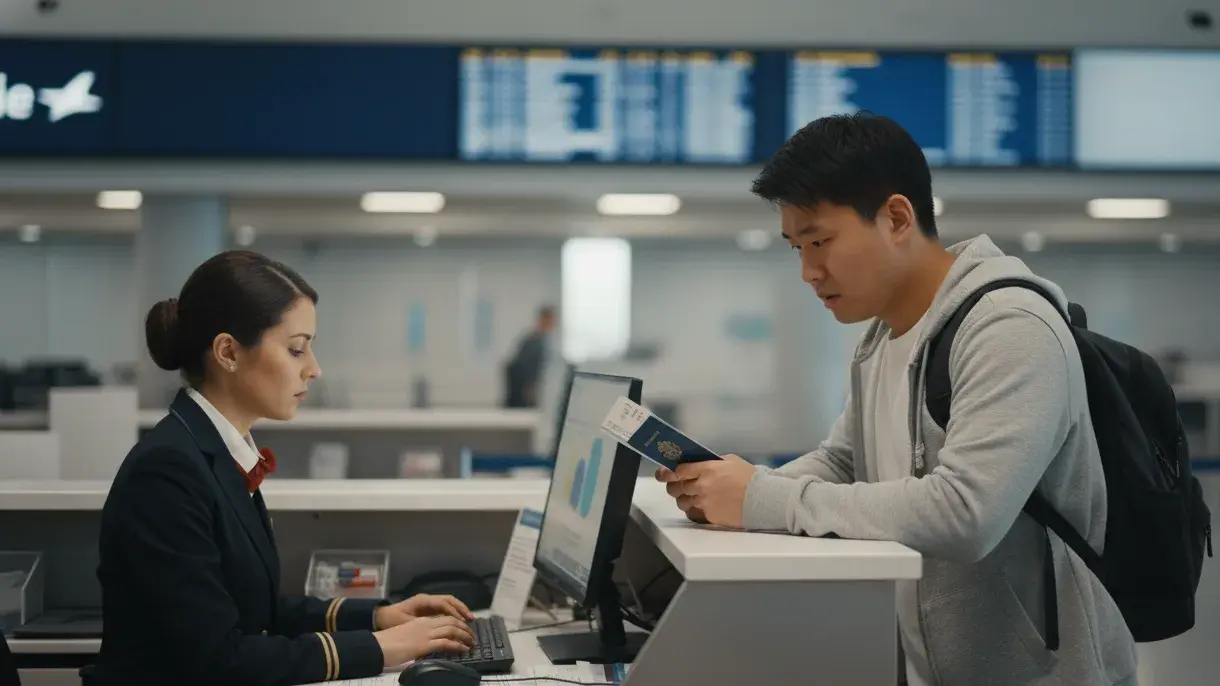
Two travelers can both say “immigration refused me” and still face completely different ticket problems. The point where you were stopped often decides whether the booking is clean, damaged or already moving toward automatic cancellation.
Refused before airline check-in finished
This is usually the least damaging version. If check-in was never completed, your ticket may still be sitting in the system as an unused booking. The outbound sector may not yet be consumed, the boarding pass may not be issued, and airport handling may not have pushed the PNR into a more serious status.
That does not mean you can walk away. If departure time passes with no action, the airline may still treat the passenger as not having traveled. Contact the airline or issuing agent immediately and ask whether the first sector is still open, whether the booking can be changed, and what will happen if no action is taken before flight closure.
Stopped after check-in but before boarding
This is where confusion begins. From your side, you were present and ready to travel. From the airline’s side, the system may still see a checked-in passenger who did not board. If immigration refuses departure and nobody records the situation carefully, the missed flight can fall into ordinary no-show logic.
Once check-in is complete, your baggage may be tagged, seat assigned and boarding pass issued. The airline must reconcile the record when the aircraft departs. A good staff remark can protect later action. A vague or missing remark can make the system treat the case as if you simply failed to travel.
Refused during transit
Transit refusal is more complicated because part of the journey may already be used. The first coupon may be flown, but the next sector is blocked. Now the question is whether the onward sectors can be rebooked, refunded, reticketed or preserved. Codeshares and interline tickets can make this harder because more than one airline may be involved.
Refused on arrival
If you are refused entry after the outbound flight was already used, the ticket issue changes again. The airline may need to handle return transport or carrier-liability procedures depending on the route and facts. Your original return ticket may or may not remain useful depending on fare rules, immigration handling and the airline’s actions.
Why this is not one ticket situation
“Immigration refusal” is not a single airline status. It can be pre-check-in refusal, post-check-in offload, gate denial, transit refusal or arrival refusal. Each version affects the ticket differently. That is why your first step is always to identify the exact point of refusal before arguing about refund or rebooking.
For a future file, this distinction also matters because the replacement travel proof should answer the right problem. If you were stopped before departure, the next dummy ticket should show a corrected outbound plan. If you were refused during transit, the next onward ticket may need to explain where you go next. If you were refused on arrival, the new itinerary must avoid looking like a repeat of the same weak route.
| Where the refusal happened | Ticket risk | Best immediate action |
|---|---|---|
| Before check-in finished | Lower risk, but the ticket can still become no-show if ignored. | Contact airline or issuer before departure closes. |
| After check-in, before boarding | Higher risk because the passenger may look checked in but absent from the aircraft. | Ask for an accurate PNR remark and remaining-sector protection. |
| During transit | Complex risk because part of the journey may already be used. | Confirm which coupons remain open and which airline controls the fix. |
| On arrival | The outbound was used, so refund and return handling become route-specific. | Get immigration paperwork and airline handling notes before leaving the airport. |
Why Your Ticket May Be Marked No-Show Even When Immigration Caused It

Airline systems are built around coupon status, not emotional fairness. If a passenger does not fly and the record is not protected, the system may mark the sector as missed or no-show. That can happen even when the underlying reason was immigration refusal.
PNR notes versus e-ticket coupon status
The PNR may contain notes explaining what happened. The e-ticket coupons control whether each sector is open, used, exchanged, refunded, suspended or lost. A helpful note is valuable, but it does not always stop fare rules from applying. You need both: a clear staff remark and quick action on the ticket.
No-show, offload and denied boarding are not the same
No-show usually means the passenger did not travel as booked. Offload can mean the passenger was removed from the flight process after check-in. Denied boarding can have a specific regulatory meaning in oversales cases, but immigration refusal is usually not the same as being bumped because the airline oversold the flight.
This distinction matters because compensation and refund rights depend on the reason. If the airline refused you because of oversales, the rules may be different. If immigration or document control stopped the trip, the airline may treat the ticket under fare rules instead.
Why staff remarks matter
Ask the airline to record what happened: immigration refusal, offload before boarding, document issue, passenger present at airport, or whatever description matches the facts. You do not want the record to say only “passenger no-show” if you were physically present and stopped by an authority.
Codeshares and interline tickets make it harder
If your ticket involves multiple airlines, one carrier may control check-in while another issued the ticket. The operating carrier may know what happened at the airport, but the ticketing carrier or agent may need to process the change. That delay can allow automatic cancellation to spread through the itinerary.
When the booking looks dead but value remains
A dead booking does not always mean the ticket has zero value. Taxes, unused coupons, fare credit, partial refund or reissue value may still exist depending on the fare. The mistake is assuming either extreme: that everything is safe, or that everything is worthless.
Think of the PNR as the booking record and the ticket coupons as the commercial value. The PNR may look cancelled while unused taxes remain refundable. Or the visible itinerary may still appear online while the fare rules make changes expensive. That is why the question to ask is not only “is my booking cancelled?” It is “which coupons are still open, and what value remains on the ticket?”
If you need a new dummy ticket for visa or onward ticket later, do not copy the old damaged route blindly. Build the new document around the corrected travel plan. The new document should solve the old weakness: better date alignment, cleaner route logic, more realistic exit proof, and no contradiction with the refusal timeline.
Citation-ready baseline: after immigration refusal, the airline ticket outcome depends on coupon status, fare rules, timing and whether the airline or agent protects the remaining sectors before no-show or sequence rules damage the booking.
How One Missed Sector Can Wipe Out the Rest of the Booking

Many airline tickets are priced and controlled as a sequence. If you miss the first sector, later sectors can be cancelled automatically or become invalid unless the airline protects them. This is why return flights often disappear even though they are days away.
The first flight is usually the trigger
The first coupon often controls the rest of the ticket. If the passenger does not travel on that sector and does not contact the airline in time, the remaining itinerary may be treated as broken. Some airlines explicitly say onward or return reservations can be cancelled if the passenger does not show up without advance notice.
Return flights can disappear
A traveler may think, “I only missed the outbound. My return is still valid.” That is often wrong. On a round-trip ticket, the return may depend on the outbound being used in sequence. Once the first coupon fails, the whole fare construction can collapse.
Onward and multi-city tickets are fragile
Onward segments, married segments and multi-city trips can be more fragile than they look. A missed immigration-blocked sector can affect the next city pair, return journey or partner-airline segment. This is especially important when the ticket was also used as visa support.
Separate tickets reduce one risk and create another
Separate tickets can reduce chain damage because one missed flight may not automatically cancel another booking. But they create new risks: missed connections, baggage issues, separate check-in, and no through-protection if the first problem delays the second trip.
Agency and group bookings follow different rescue logic
If an agent, company or group desk issued the ticket, the passenger may not be able to fix everything directly with the airline. The issuing source may need to revalidate, reissue, refund or preserve the booking. Contact both airport staff and the issuer quickly.
This matters most when the airline says, “contact your agent.” That does not always mean the airline is refusing to help; it may mean the ticket stock, payment control or fare authority sits with the issuer. In that case, the airport desk can still add useful notes, but the agent may need to perform the actual change, refund request or reissue.
If you bought through an online travel agency, gather screenshots before the booking disappears from your account. If it was a corporate ticket, alert the travel desk immediately. If it was part of a group booking, ask whether your missed sector affects only your passenger record or the wider group record.
How Much Money Can You Still Recover After the Ticket Locks
Refund and recovery depend on what remains unused, what fare rules allow, and how quickly action was taken. A fully unused ticket, partially used ticket, dead booking and refundable credit are different things.
Nonrefundable does not always mean worthless
Even if the base fare is nonrefundable, taxes may be refundable. Some fares allow credit after fees. Some airlines may show flexibility if there is proof of immigration refusal or airport offload. Do not assume the ticket is worthless until the airline or issuing agent confirms the actual coupon and refund status.
Timing decides many outcomes
The best time to protect the ticket is before departure time or immediately after refusal. The second-best time is before the system auto-cancels remaining sectors. The worst time is after the entire trip has been marked no-show and archived without useful notes.
Charge disputes are not always the right battle
If the airline operated the flight and the passenger could not travel because of immigration refusal, a card dispute may fail or complicate the case. Start with airline or agent rebooking, refund, credit or insurance channels first. Escalate only with a clear reason and documentation.
A payment dispute is usually strongest when the merchant failed to provide the purchased service under the terms. Immigration refusal is different because the flight may have operated and the airline may argue that the passenger could not travel for document or authority reasons. That does not mean you have no options; it means the cleaner path is usually fare-rule handling, unused-tax refund, credit, reissue, travel insurance or formal complaint with evidence.
Keep the money question separate from the next-travel question. You can pursue refund or credit on the damaged ticket while also preparing a clean dummy booking for the next file. Mixing the two can slow both processes because the airline is dealing with the old ticket while the visa file needs a simple forward-looking itinerary.
What to Say at the Airport Before the Booking Collapses
Your first goal is not to win an argument with immigration. It is to protect the ticket record before it falls into no-show logic. Stay calm, get facts, and make the airline record what happened.
Ask for exact status
Ask: “Can you confirm whether my first sector is still open, offloaded, no-show, suspended or cancelled?” Then ask whether the return or onward sectors are still active. Those words matter because they tell you whether the booking can still be saved.
Request protection of remaining sectors
Say: “I was stopped by immigration before boarding. Please note this in the PNR and help preserve the remaining sectors if possible.” If staff cannot do it, contact the issuing agent immediately while still at the airport.
Gather proof before leaving
- Boarding pass or check-in proof.
- Immigration refusal paper, if issued.
- Airline offload or service note, if available.
- Screenshot of booking status.
- Name of desk or department contacted.
- Any baggage removal or airport handling receipt.
Do this before you leave the controlled area if possible. Once you go home, it becomes harder to get a clear airport note. A small proof trail can make the difference between a normal no-show dispute and a documented immigration-refusal case.
Use a calm script
Try this: “I was present at the airport and stopped by immigration before boarding. I need the booking marked accurately and the remaining sectors protected if the fare allows it. Please confirm the current coupon status and tell me whether I must contact the issuing agent.”
If the first staff member cannot help, ask which desk controls ticketing or disruptions. Do not spend the whole window arguing about who caused the refusal. Your practical goal is to stop the system from treating the case as a silent no-show. The more calmly you ask for exact ticket status, the more likely you are to receive usable information.
When a Fresh Reservation Is Safer Than Reviving the Old One
Sometimes the old ticket is technically alive but strategically useless. The dates are wrong, the immigration refusal changed the travel story, or the old route now creates more questions than it answers. In that case, a fresh dummy ticket or onward ticket may be cleaner for the next file.
Rebooking without creating a messy record
Your next itinerary should match the new story, not the failed plan. If the first trip failed because documents were incomplete, the new dummy booking should show a better timeline: corrected dates, cleaner onward proof, matching hotel and insurance, and no conflict with the refusal explanation.
When a visa reapplication needs a fresh document
If the next visa application asks for travel proof, do not reuse a damaged itinerary that belongs to the refused attempt. A fresh dummy ticket can make the new file easier to read, as long as the explanation of the previous refusal is honest and the new route is realistic.
Do not carry two live narratives
Do not submit one ticket story to the airline, another to the visa office, and a third in your explanation. Decide whether you are salvaging the old ticket, using credit, requesting refund, or starting fresh. Then make every document match that decision.
This is where many applicants create avoidable risk. They keep the old paid ticket because it looks expensive, then add a new dummy ticket because the dates are better, then explain a third route in the cover letter. That makes the file harder to read. A stronger approach is to choose one clean travel plan and make the dummy ticket, dummy hotel, onward ticket and explanation follow the same calendar.
If the refusal happened because the first route looked weak, the new route should not be a cosmetic edit. It should be a better plan. A realistic arrival date, sensible stay length, matching accommodation, and a clear onward movement can make the next file more coherent without pretending that any travel-proof document controls the final decision.
Need a cleaner rebooking document after immigration refusal? Prepare a fresh dummy ticket, dummy hotel or onward ticket that matches your next application and route logic.
Prepare Your Dummy TicketWhat Matters After Immigration Refusal Is the Ticket Status
Use this decision matrix:
- If check-in was not completed, contact the airline or agent before departure time.
- If you were offloaded after check-in, ask for a PNR remark and coupon-status confirmation.
- If onward or return sectors still exist, ask whether they can be protected.
- If the ticket is dead but has residual value, ask about refund, credit or reissue.
- If the route is now messy for a future visa file, use a fresh dummy ticket instead.
- If the next trip needs exit proof, add a clean onward ticket that matches the new plan.
The strongest move is speed plus clarity. Immigration refusal does not always kill the ticket instantly, but airline systems move fast. Protect the booking if it can be saved. Start fresh if the old itinerary will damage the next file. Either way, your travel proof should be cleaner after the refusal than it was before.
Frequently Asked Questions
Can an airline cancel my ticket after immigration refusal?
Yes, it can happen indirectly. Immigration refusal may not cancel the ticket instantly, but missed-sector, no-show or coupon-sequence rules can cancel onward or return sectors if the booking is not protected.
Is immigration refusal the same as airline denied boarding?
Not always. Immigration refusal, airport offload, no-show and oversales denied boarding are different situations. Refund and compensation rules depend on the exact reason and airline conditions.
Can my return flight be cancelled if I miss the outbound?
Yes. Many tickets must be used in sequence, and missing the first sector can cause return or onward sectors to be cancelled unless the airline preserves them.
What should I ask the airline after immigration refusal?
Ask for the exact coupon status, whether the missed sector is marked no-show or offload, whether remaining sectors are active, and whether the PNR can be noted and protected.
Can I get a refund after immigration refusal?
It depends on the fare rules, coupon status, timing and airline or agent policy. Even nonrefundable tickets may have refundable taxes or residual credit in some cases.
Should I use the old ticket for my next visa application?
Only if it still matches the new travel plan and remains clean. If the old ticket is damaged, mismatched or tied to the failed attempt, a fresh dummy ticket may be safer.
Can a dummy ticket help after immigration refusal?
A dummy ticket can help support a fresh future travel-proof file. It cannot reverse the immigration refusal, restore the old paid ticket or promise approval or boarding.
When should I use an onward ticket after refusal?
Use an onward ticket when the next route needs proof of planned exit or onward movement. It should match the new visa story, hotel dates and travel timeline.
What proof should I collect at the airport?
Collect boarding pass, refusal paper if issued, airline offload note if available, booking-status screenshots, baggage handling proof and the name of the airline department contacted.
What is the safest next step?
Confirm ticket status immediately, protect remaining sectors if possible, collect proof, then decide whether to salvage, refund, credit or restart with a clean new reservation.
Friendly reminder: DummyFlights provides temporary travel-proof documents for planning and application support. Requirements vary by destination, airline, route and applicant situation. A dummy ticket can support a file, but it does not promise approval, boarding or entry.