Short answer: Bolivia's written border list for visa-free travellers names no onward ticket, but Group II and III visa files list an itinerary or return tickets, and officers can ask how you will leave. An onward ticket from DummyFlights costs $15 per person, carries a real PNR and stays valid 48-72 hours.
Bolivia wants to see how you will leave, but the paperwork depends on your passport group and on who is asking. Visa applicants give the consulate an itinerary or return tickets.
Visa-exempt travelers usually show a valid passport at the border, and an airline or an officer can still ask for proof of onward travel. Those are separate checks, and a consulate paper is not the same as proof shown at the border.
This guide sorts the onward ticket for Bolivia, and the onward travel requirements around it, by entry category, evidence state, and checkpoint. Use it to decide what to carry for your own departure date. Bolivian rules move by decree, so the last part lists what to re-read before you fly. This guide is organised by checkpoint, from the consulate to the border; for the visa-group rules alone, see the Group II and III onward ticket guide.
Key facts
- Group I: no tourist visa; Groups II and III: visa, with an itinerary or return tickets in the file.
- Group III files need DIGEMIG approval before the consulate issues the visa.
- UK advice: 30-day stamps at the border; carry proof of first-night accommodation.
- Carriers set their own document rules; ask yours before you travel.
- Dummy ticket: flat $15 per person, real PNR, valid 48-72 hours; free date changes on the booking day only.
- For visa applications and onward proof at immigration, not for flying.
Need onward proof for immigration in Bolivia? Get an onward ticket with a real PNR, valid 48-72 hours, for $15 per person.
Get your $15 onward ticketIn This Guide
- Which Bolivian Entry Category Applies to Your Passport?
- Does Bolivia Actually Require an Onward Ticket?
- What Counts as Departure Evidence, and What Are Its Limits?
- Which Documents Do Carriers and Officers Ask For?
- How Should the Onward Ticket Match Your Passport and Itinerary?
- Why Is the Carrier's Check Different From Visa Application Papers?
- What Does a Fictional Bolivia Route Look Like in Practice?
- How Do Common Traveler Situations Change the Plan?
- What Happens If You Arrive Without an Exit Document?
- How Do You Check Current Rules Before You Fly?
- Which Checkpoint Reads Which Document on a Bolivia Trip?
- Which Official Sources Is This Guide Based On?
- What Should You Check at Each Bolivia Checkpoint?
- Frequently Asked Questions
Official-source check: Visa groups and requirements come from the Bolivian consular visa page published by the foreign ministry; stamp length and border checks come from UK travel advice for Bolivia. The latest group change comes from the foreign ministry's 1 December 2025 announcement.
Reviewed for: Bolivian visa groups, checkpoint-by-checkpoint document checks, stamp length, exit evidence and onward ticket facts.
Which Bolivian Entry Category Applies to Your Passport?

Bolivia sorts nationalities into three groups, and the group decides most of the evidence you carry. Group I travelers need no visa or entry authorization. Group II travelers need a visa or an entry authorization. Group III travelers need a visa that the migration authority approves after reviewing the file.
Everything else in this guide depends on which of those tracks is yours. Visa-free entry is a real category, but it does not mean evidence-free entry.
What Group I Travelers Show at the Border
Group I covers much of Europe and the Americas, along with Australia, New Zealand, and Japan. Since the change announced on 1 December 2025, it also includes eight more countries: South Korea, South Africa, Bulgaria, Malta, Romania, the United Arab Emirates, Israel, and the United States.
Holders of these passports do not apply for tourist visas. They present a national identity document or an unexpired passport at border control.
Mission pages list a short set of border items for this group. Passport validity comes first, with the expiry date at least six months after arrival.
A yellow fever certificate applies where the route calls for one, and there is no fee. Citizens of Andean, Mercosur, and associated states in South America can enter on an identity card. No ticket appears in that list.
UK travel advice says border officials issue 30-day stamps and that UK visitors can stay up to 90 days in a year without a visa; other nationalities can have different terms. Your permitted stay is whatever your own stamp or authorization says, and any exit date you show should fall inside it.
Where Groups II and III Meet the Itinerary Requirement
Group II and III travelers need a visa, or for some Group II passports an entry authorization. The consulate that issues the visa lists an itinerary or return tickets among the papers for tourist visas, besides funds and lodging documents. Those items belong to applications, which sit outside this guide.
Entry authorization is where the question can move to the border. For some Group II passports, the migration authority can issue an entry authorization at a land crossing or an airport, with the same effect as the visa and the same documents behind it.
So the itinerary question can arrive at a counter in Bolivia instead of a consulate abroad. Group III is stricter. The file needs the migration authority's approval first, and issuance at the border happens only by exception.
How the Three Tracks Differ Where Evidence Is Concerned
A side-by-side view helps before the detail starts.
- Group I: passport or identity card at the border, no ticket named in the published border items, and an airline that may still ask for an exit record before departure.
- Group II: a visa or entry authorization, with an itinerary or return tickets inside the file, and the same question possible again at the border.
- Group III: the migration authority reviews the file before the consulate issues anything, and the airline stage comes afterward like everyone else's.
Every track meets a carrier before it meets Bolivian border control. That order is why the airline question gets so much space later in this guide.
Nationality, Residence, and the Handling Consulate Are Three Questions
Nationality, meaning the passport you will present, decides the group. Residence decides which consulate takes a visa application, because missions serve the area where you live and some ask for a residence permit in their own country. The handling mission decides forms, appointments, and exact wording.
An onward ticket requirement does not apply to Bolivian citizens and permanent residents. Bolivian citizens enter on papers that prove their nationality, and permanent residents hold a standing status. Every other traveler, including long-term residents of other countries, is a foreign visitor for this purpose.
The destination country matters in a third way. Bolivia writes its own group list by decree, so a traveler cannot reason from the rules of a neighboring country, even one that shares the same borders and the same airlines.
Why Two Consulate Pages Can Disagree About Your Group
On 1 December 2025, Bolivia's foreign ministry announced that eight countries were moving into Group I, including the United States, Israel, South Korea and the United Arab Emirates, and some consulate pages still show older lists. Check the date on any page you read, and when two pages disagree, ask the consulate that handles your passport.
Read the page of the consulate that will handle you, note its edit date, and compare it with the foreign ministry's latest announcement. If they disagree, write to the consulate before you buy anything that costs money. The newer ministry announcement is the better guide, since decrees set the list.
Does Bolivia Actually Require an Onward Ticket?
Treat the rule as simple: Bolivia requires proof of onward travel for entry. The published wording is narrower than that sentence, and the gap matters.
Visa applicants must give the consulate an itinerary or return tickets. Group I travelers have no ticket listed in the border items, yet officers and airlines still ask. Knowing which layer you sit in tells you what to carry.
What the Published Wording Says, Layer by Layer
Layer one is the tourist visa track. The consulate page lists an itinerary or return tickets for Groups II and III. The regulation behind it is looser, since it accepts an itinerary, an invitation from a person with legal domicile in Bolivia, or a lodging reservation.
A transit visa differs again and calls for tickets showing that the final destination is a third country.
Layer two is Group I at the border. Bolivian law asks for a national identity document or passport, and mission pages add the yellow fever certificate and six months of validity. No ticket appears in that wording.
Layer three is practice. Visitors may be asked to show a plane or bus ticket out of Bolivia, and proof of accommodation, at least for the first night. Practice describes what officers do, which can run wider than the written text.
Who Can Ask: Airlines or Officers at the Border
Travelers may be asked for proof of onward travel by either airlines or border officials. The two asks come at different times and carry different consequences. An airline decides whether you depart. Border control decides whether you enter. Passing the first gives no promise about the second.
Immigration may ask for onward travel proof upon arrival in Bolivia. Officers at airports and land crossings hold the power to admit or refuse, and Bolivian law lists missing requested documentation among the grounds for refusal. A refusal sends the traveler back to the country of origin or a third country that will take them, with no appeal.
Immigration officers can send travelers back if they lack onward proof. Travelers may be detained for hours without onward proof. Plan as if the question will be asked, because the cost of being unprepared falls on you.
Why Airlines Enforce It Before Anyone Reaches Bolivia
Carriers generally must check travel documents, and a visa where one applies, before they carry a foreign passenger, and they can be made to fly an inadmissible passenger back out at their own cost.
That cost explains the caution at the desk. Airlines enforce the onward ticket requirement strictly before departure. Airlines often check onward tickets before departure flights to Bolivia, and a flagged passenger without one is the passenger most likely to be stopped.
Airlines face fines if they allow a passenger to depart without proof of onward travel. Bolivian regulation also fines carriers that serve foreign passengers without valid travel documents or the visa or permission that applies, so the exposure is real even where no ticket is named. Airlines may refuse carriage without proof of onward travel.
What the Fines and Returns Mean for You
Bolivian law sets its own fines in housing-fund units for matters such as irregular stay, and those scales apply once you are inside the country. Neither scale is a reason to gamble on a quiet desk.
What Counts as Departure Evidence, and What Are Its Limits?

Evidence of departure comes in states, and each state proves a different amount. A reservation shows an intention recorded in a booking system. An issued ticket shows a paid contract with an airline. A flown ticket and an exit stamp show that the departure actually happened. The checkpoint in front of you decides which state you need.
Why a Reservation Differs From an Issued Ticket
A flight reservation is a seat held under a booking reference. A paid or issued ticket is a reservation that has been paid for and numbered by the airline. Many providers sell the first and describe it as a flight itinerary for visa and border use. The product does not carry the same rights as the second.
DummyFlights sells the first kind: a dummy ticket with a real PNR, valid 48-72 hours, for a flat $15 per person. It is not an issued airline ticket and it is not for flying. That difference is why this guide keeps naming evidence states rather than saying ticket everywhere.
A confirmed flight reservation can be looked up by an agent who has system access. A reservation that was never ticketed can lapse, and some carriers release it after a set time. A traveler relying on one should read its status line and its expiry notes.
Which State Fits Which Checkpoint
An airline agent at check-in wants to see that you have a lawful way to leave. The agent may look at a return ticket or an onward booking and compare it with the data on screen. Carriers set their own document rules, so check with your carrier; a dummy ticket is onward-travel proof for immigration, and we make no claim that it satisfies a carrier's check.
Border officials can look at the same paper again on arrival. Their question is about admission rather than departure. They may also ask about funds, lodging, and the purpose of the trip. A reservation helps with the first of those questions and does nothing for the other three.
Departure evidence is something else again. A departure document for the flight out, or an exit stamp at a land crossing, proves that you left. It matters when a later visit, an extension, or a visa application asks for your history in Bolivia.
What a Reservation Cannot Prove
A reservation cannot prove that you will fly. It cannot prove that the airline will carry you, or that border control will admit you. It cannot create permission to stay beyond the dates on your stamp.
Treat it as one document among several. It sits beside a valid passport, a hotel booking for the first nights, and a sensible answer about what you plan to do. Documents that agree with each other are easier to accept than documents that each stand alone.
DummyFlights makes no promise of approval or entry. A dummy ticket is for visa files and is used as onward proof at immigration, where the officer decides. That limit applies to every provider of reservations, so it belongs in your plan too.
Why Some Providers Describe These as Temporary
Timing matters more than speed. A dummy ticket stays valid 48-72 hours, so order it close to your arrival in Bolivia, when an officer may ask, and check that the reference resolves before you travel.
A temporary reservation also has a life. Check how long yours remains active and make sure the record will still exist on the day it may be checked. A reservation remains active only as long as the issuing system keeps it.
Temporary reservations must be verifiable in the airline's system. An agent who searches the booking reference and finds nothing will treat the document as unsupported. A verifiable flight reservation avoids that outcome because the reference resolves to a record.
The Prices You Will See
The price is a flat $15 per person, with free date changes on the booking day only. After that, a new date means a new dummy ticket, so fix the date against your stamp and your plans first.
A low price is not a defect, but the price should be read with the features. A provider that sells a record without a working reference gives you paper and nothing else. The reference is what an agent will test.
Paid fares sit in a different range. A flexible paid ticket costs more than a reservation and ties up your money, and its fare conditions decide what you can change later. Others prefer the reservation for immigration proof, because it does not tie up funds.
Why Evidence Needs to Be Consistent
Every record you show should tell the same story. The name, the dates, the route, and the booking reference should match across documents. When a hotel booking shows ten nights in La Paz, and the exit record shows departure on night three, the agent notices.
Consistency also protects you later. If a border officer asks questions, your answers should match what is on paper. You do not need a long story. You need a short one that does not change.
Which Documents Do Carriers and Officers Ask For?
Accepted proof includes a flight reservation or bus ticket, and the written sources point the same way. The difference lies in who accepts which one, and at which checkpoint. This part compares the common forms and says what each does and does not do.
Can a Booked Seat Serve as Exit Evidence?
A flight reservation is the form agents most often expect. Confirmed flight tickets to a foreign destination are accepted as proof of onward travel. The word foreign matters, because an exit that leads to another Bolivian city shows no departure from the country.
A dummy ticket sits one step below a paid ticket. It shows a planned exit for immigration, not a ticket for flying, and the officer decides. A reservation with a live booking reference and a passport-matching name is the strongest version of that document.
The route should make sense. A one-way ticket out of Bolivia to a neighboring country is a normal exit plan. A flight to a distant destination with no connection to your trip raises questions.
Does a Road Exit Work Too?
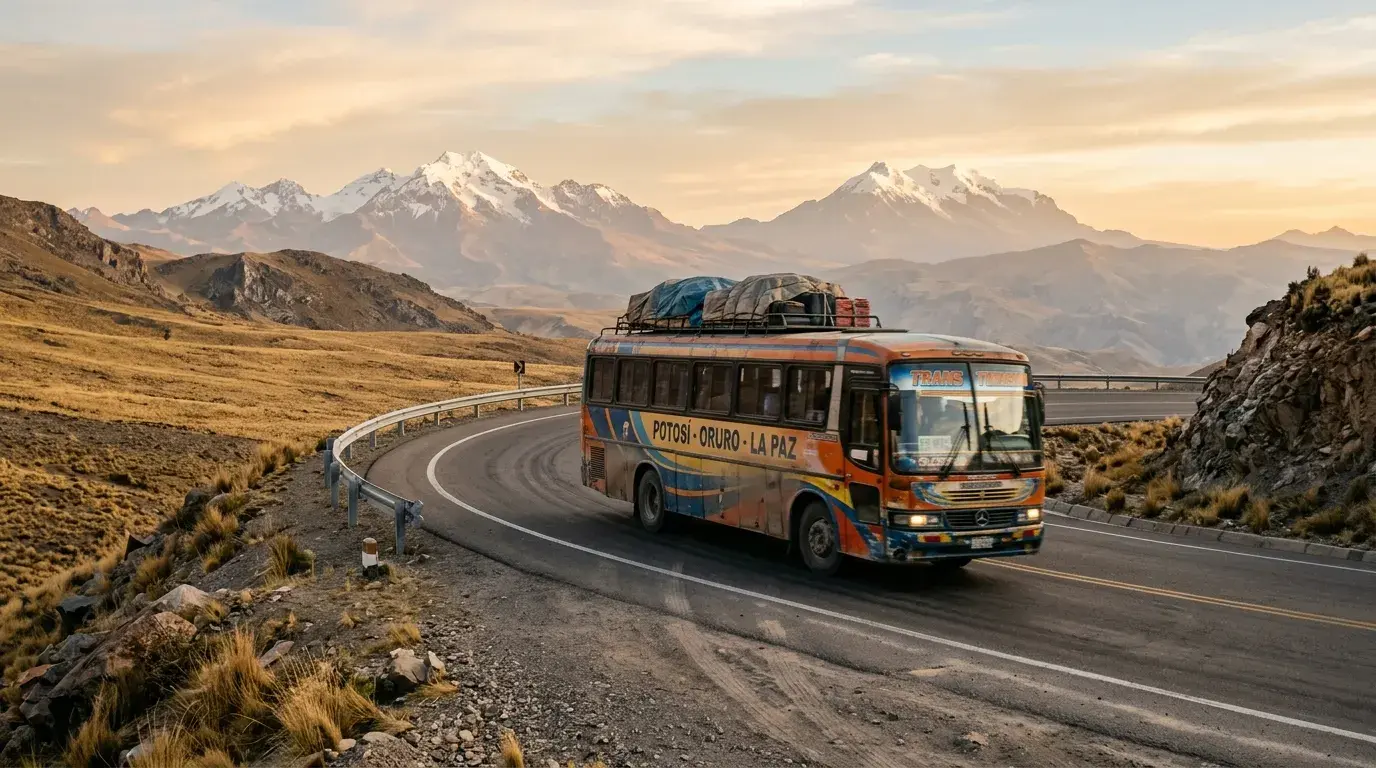
A valid onward ticket can be a flight or bus reservation. Bolivia shares land borders with Brazil, Argentina, Chile, Peru, and Paraguay, and many visitors leave by road. A bus reservation for an international crossing fits that pattern.
International bus tickets are commonly accepted as proof of onward travel at land borders. A bus exit is easy to explain to an officer at a crossing, who sees travelers on that route every day. An international bus booking from a licensed operator, showing the crossing and a date, is the document to carry.
Airlines behave differently. Airlines may reject land transport tickets in favor of flight itineraries. An agent checking you in for a flight to La Paz may want an onward flight, and a bus reservation may not satisfy that agent even when Bolivian law would allow it.
Why the Airline Prefers Flights
An agent works from a screen and a manual. The manual tells the agent which documents are enough, and a flight itinerary is easy to check. A bus reservation is a PDF from a company the airline has never dealt with.
Your own preference does not change the manual. A traveller who plans to leave by bus should ask the carrier before travel what it wants to see. Carriers set their own document rules, so check with your carrier; a dummy ticket is onward-travel proof for immigration, and we make no claim that it satisfies a carrier's check. The bus ticket then serves at the land border.
Carry both forms when your plan involves both. That costs little and covers two checkpoints.
How Do Round Trip and Return Documents Compare?
A round trip ticket proves that you intend to come back to where you started. A return ticket proves the same thing for a single leg. Both are accepted evidence because they show a departure from Bolivia on a fixed date.
Their weakness is flexibility. A round trip fits a traveler who is arriving and leaving from the same airport. A traveler on a multi-country trip may enter Bolivia from Peru and leave to Chile, and a return to the first airport does not match that route.
A return flight to a third country is a different matter. It fits the traveler who ends the trip somewhere else, and the departure city need not be the arrival city.
What Do Travelers Changing Planes Need?
Transit passengers have a separate rule. A transit visa asks for tickets showing that the final destination is a third country. A traveler who is only changing planes in Bolivia and stays airside may need no entry permission at all, though the carrier still checks documents for the next leg.
Transit passengers should read the rules for their own connection. The airline that issues the through ticket will know how its itinerary is treated.
Are Lodging and Funds Part of the Picture?
Officers may ask for more than a ticket. A hotel booking for the first night is a common request, and sufficient funds can come up too. A bank statement or a card with a visible limit is the usual way to show funds.
These are separate pieces of travel evidence. They do not replace an exit document, and an exit document does not replace them. Together, they answer the three questions an officer is likely to ask: where will you sleep, how will you pay, and how will you leave.
Keep them in a folder on your phone and a printed copy in your hand luggage. Phones die, and a counter queue is a poor place to hunt for a signal.
What About Documents for Different Nationalities?
The proof an agent asks for can change with your passport. Some nationalities draw more attention than others, and agents act on internal notes that the public never sees. You cannot predict the note, so you carry the full set.
Visa-exempt travelers still meet the question, even though the written border list is short. The list says what the law requires on paper. The agent's screen says what the carrier requires today.
What Names Do Different Documents Go By?
Providers and officials use many labels for the same idea. You will see an onward reservation, an onward journey record, an exit ticket, or an onward travel ticket. Some pages say onward evidence, and some say onward proof. Each points to a document showing how you leave.
Read what a requirement asks for, not the label. Airline staff and immigration officials may use the labels loosely, and a flight reservation, a bus ticket, or a paid fare can answer any of them. Ask which form they will take, and carry it.
Government pages that list onward travel rules rarely name a document type. They speak of means to leave, and the staff who apply them decide what counts. A valid ticket is one that an agent can read, match to your passport, and find in a system.
How Much Weight Does a Single Document Carry?
No single document settles the matter. An agent weighs the passport, the visa status, the exit plan, and the story together. A weak exit document can be carried by strong supporting papers, and a strong exit document can be undone by an inconsistent story.
That is the reason to build the whole set, rather than hunting for one magic paper.
How Should the Onward Ticket Match Your Passport and Itinerary?
A document that does not match you is worse than no document, because it invites a closer look. Names, dates, and routes must line up with your passport and with each other. This part walks through the matching checks that agents and officers use.
Does the Name on Flight Reservation Have to Match the Passport Exactly?
The name on the ticket must match the passport exactly. That means the same spelling, the same order, and no nicknames. A middle name that appears in the machine-readable lines of the passport should appear on the booking too, unless the provider's form has no field for it.
Check the data page rather than your memory. Many passports carry a long surname, a compound name, or accents that booking forms strip out. Copy the characters from the machine-readable zone, which uses plain capital letters and a single filler between name parts.
If you find an error after ordering, fix it on the booking day, when date changes are free. After that, order a new $15 dummy ticket with the corrected details rather than travelling with a mismatch.
Do the Dates Have to Follow Your Itinerary?
Onward tickets must match your travel itinerary and dates. A valid onward ticket must match your travel itinerary dates, and a valid onward ticket must match the travel itinerary dates in every document you show. Three dates matter most: your arrival, your intended departure, and the end of your permitted stay.
The exit date should come after arrival and fall within the days your stamp allows. UK advice describes 30-day stamps at the border; an exit booked months out looks wrong against that, and an exit the day after arrival may look odd against a long hotel booking.
Choose a departure date that fits the real plan. If you are unsure how long you will stay, pick a date well inside your expected stamp, because after the booking day a new date means a new dummy ticket.
What Should the Route Look Like?
The route should start in Bolivia. An agent reading it expects a departure airport in the country, such as La Paz, Santa Cruz, or Cochabamba, or a land crossing named on a bus ticket. A departure city outside Bolivia tells the agent nothing about leaving.
The destination country should be another country. It may be a neighboring country, or a far-off one, as long as it sits outside Bolivia. Travelers moving through South America often exit to Peru, Chile, or Argentina. Travelers on a longer route may fly from Bolivia toward Central America, including Costa Rica, or onward to Southeast Asia.
A plausible route reduces questions. A route that jumps across the world on the same day looks like a placeholder, and officers have seen many placeholders.
How Does an Agent Verify a Reservation?
An officer or agent may type the booking reference into a reservation system and see whether a record comes up. If the record shows your name and the dates, the check is usually short.
Speed cuts both ways. A genuine record clears quickly, and a missing one is found just as fast. The reference on the page has to match a live record in the airline's system.
Ask your provider how the reference works, which systems it appears in, and how long it stays. A provider that cannot answer is not one to rely on.
What Does a Strong Document Look Like?
A strong document shows the traveler's full name, the booking reference, the route, the dates, and the status. It uses the airline's own code for the reservation and names a real flight on a real schedule. It is readable on a phone screen, and it prints cleanly.
A weak document is vague. It may hide the booking reference, show a route that no airline flies, or carry a status that says nothing. Agents learn to spot these in seconds.
A real airline booking, even an unticketed one, produces the strongest version of the document, because the data came from the airline's own system. A legitimate booking can be inspected, and that is the point.
Should You Keep Digital and Paper Copies?
Keep both. A PDF on your phone works until the battery fails or the signal drops. A paper copy in your hand luggage works in every queue.
Save the booking confirmation email in an offline folder too. Some agents prefer the email, since it shows the sender and the time. Save the reservation details as a screenshot, and do not rely on an app that needs a login at the counter.
What If the Details Change After You Book?
Plans change. A new exit date, a different crossing, or a corrected name should lead to a corrected document. Update the reservation before you fly, then replace every copy you carry.
Do not carry two versions with different dates. An officer who sees both will ask which is true, and the honest answer is that the old one is out of date. Delete it.
Should the Name Match Other Papers Too?
The hotel booking, the visa file, and the payment card should carry the same name. Small mismatches happen, such as a missing accent, and travelers usually explain them without trouble. Large mismatches, such as a different surname, call for an explanation in writing.
If your name appears differently in different places, bring the document that explains why. A marriage certificate or a name-change record is enough.
Why Is the Carrier's Check Different From Visa Application Papers?
Documents that helped a consulate approve your visa do not automatically satisfy the airline. The two decisions come from different people, under different rules, at different times. A traveler who treats them as one decision is the traveler who gets stopped at the gate.
What Does a Visa File Prove?
A visa file proves to a consulate that you meet the conditions for a visa. For tourist visas, those conditions include an itinerary or return tickets, lodging evidence, and sufficient funds. The consulate reads them, decides, and returns your passport with a sticker or a refusal.
That decision stays with the consulate. It does not bind an airline, and it does not bind a border officer. A visa is permission to apply for entry at the border, and it does not guarantee entry.
Visa compliance is therefore a first gate, not the last. The papers that got you the visa may have been a dated itinerary prepared for the consulate. They may no longer match your real plan by the time you fly.
What Does the Airline Check Instead?
The airline checks whether it may carry you. At airline check-in, the agent looks at your passport, your visa or authorization where one applies, and your exit plan. The agent works from a manual and from the carrier's exposure to fines and return costs.
That is why the airline's question is practical. It does not matter to the agent that the consulate was satisfied. It matters whether the agent can defend the departure decision if an officer in La Paz turns you away.
Airlines flying into Bolivia therefore ask for the exit document even from travelers who already hold a visa. A visa shows that Bolivia was willing to consider you, and the exit document shows that you will leave.
Where Does Each Check Happen?
The order of events is fixed. First comes the consulate, if you need one. Next comes the airline desk at your departure airport. Then comes the transit airport if you change planes, and last comes Bolivian border control on arrival.
Each stage has its own authority and its own evidence. Passing one stage does not carry over to the next. The paper that opens the door at the consulate may mean little at the check-in desk.
For land arrivals, the airline stage disappears. The bus or border station becomes the first checkpoint after the consulate. An officer there can ask for the exit document directly.
Can a Visa Application Itinerary Be Reused?
Sometimes, but with care. An itinerary built for a consulate may be only a plan, and it may not hold a booking reference an agent can look up. If you reuse it, confirm that it still matches your real dates and that the reference resolves to a record.
When it does not, a fresh reservation costs little and avoids the problem. Do not alter dates on an old document by hand, since altered paper does more harm than a missing one.
This guide does not cover how to prepare a visa file. It treats those documents only as something the airline may or may not accept. For the visa process itself, follow the instructions of the consulate that handles your case.
Does a Lodging Reservation Replace an Exit Plan?
No. A hotel booking shows where you will stay, and it answers a different question. Officers often ask for it, and agents sometimes do too, but neither treats it as a substitute for exit plans.
A hotel booking can still help. A stay of seven nights and an exit on night eight tell a consistent story. A hotel booking of seven nights with no exit plan leaves the question open.
How Do Unlinked Bookings Complicate Things?
A traveler on separate tickets holds two or more bookings that the airlines treat as unrelated. The first airline sees only its own leg. It cannot see the onward leg, and it cannot assume you will make it.
This is a common cause of check-in problems. The agent on the first leg has no way to know that the second booking exists unless you show it. Carry the second booking in a form the agent can read, and show it before being asked.
If the first leg lands in a country that also checks onward travel, expect the same question twice. The answer should be the same on both occasions.
What Do Travelers Heading Overland Need?
Travelers heading to Bolivia by land skip the airline stage. They reach the border station with a bus ticket, a passport, and whatever else the officer asks for. The officer makes the entry decision on the spot.
These travelers still benefit from an exit document. An international bus booking out of Bolivia is the natural choice. A traveler who plans to leave by plane can carry a flight reservation instead.
What Should You Do If the Two Checks Seem to Conflict?
Sometimes the airline asks for something the border does not. The airline wins at its own desk, because departure is its decision. Meet the request, depart, and sort out the difference later.
Do not argue the written rule at the counter. The agent may be right that the carrier's policy is stricter than the law. Time at the desk is better spent supplying the document than debating it.
What Does a Fictional Bolivia Route Look Like in Practice?
A worked example shows how the pieces fit. The traveler, route, and records below are invented for illustration, and no real person, airline code, or booking is meant. The source column names the kind of authority or supplier behind each row, in plain text.
The Fictional Traveler and Route
Imagine a traveler called Ana, who holds a Group I passport and plans three weeks in Bolivia. She flies from a European city to Lima, changes planes, and lands in La Paz on day one. She plans to travel south by road, cross into Argentina at the end of week three, and fly home from there.
Her departure airport is in Europe, and her destination country is Bolivia. Her exit leaves Bolivia on the land route to Argentina. Her actual route therefore contains two flights in and a bus out, with the flight home bought separately.
Ana holds a valid passport, with more than six months left past the day she plans to leave. She has no visa to apply for. Her question is what to show at three checkpoints: the airline desk in Europe, the transit stop in Lima, and the airport in La Paz.
The Record Comparison
The table compares the records Ana could carry. Each row is fictional.
| Record | Evidence state | What it shows | Who may ask for it | Source (plain text) |
|---|---|---|---|---|
| Flight reservation, La Paz to a city in Argentina, day 21 | Reservation with a live booking reference | A planned exit by air | Airline agent, border officer | Supplier booking system and the carrier's reservation record |
| Paid and issued one-way ticket out of Bolivia | Issued ticket | A paid contract to leave | Airline agent, border officer | Airline ticketing record |
| International bus reservation, Villazon crossing, day 21 | Reservation or bus ticket | A planned land exit | Border officer at a land crossing; sometimes an airline agent | Licensed bus operator booking |
| Hotel booking, first three nights | Booking confirmation | Where she will stay | Border officer, sometimes the agent | Hotel booking record |
| Bank statement | Financial record | Sufficient funds | Border officer | Her bank |
| Passport data page | Identity document | Passport validity and name | Everyone | Issuing government |
| Entry stamp, day one | Entry evidence | A lawful arrival and a date | Later officers | Bolivian migration authority |
| Exit stamp or departure document, day 21 | Departure evidence | That she left on time | Later officers and consulates | Bolivian migration authority, carrier |
The first three rows are alternatives, and the rest support them. Ana does not need all three exit records. She needs one that suits the checkpoint, and she may choose a second as a backup.
What Ana Chooses and Why
Ana expects the desk in Europe to ask how she will leave. She asks her carrier before travel what it wants to see. For immigration in La Paz she orders a dummy ticket from La Paz to an Argentine city, dated day 21, and checks that the name matches her passport exactly.
She also buys the bus seat for the crossing, since that is how she truly plans to leave. The bus ticket goes in her folder for the land border and for any officer in La Paz who wants to know how she will travel.
The two documents describe two possible exits, and she explains that the flight reservation is a backup.
Her reservation remains active for the whole trip, and she checks that on the day before departure. She prints one copy, saves one to her phone, and keeps the confirmation email offline.
What Happens at Each Checkpoint
At the desk in Europe, the agent asks where she is going after Lima and how she will leave Bolivia. Ana shows her exit plan and her documents. What the carrier accepts is its own decision; she asked in advance and she carries a fallback.
At the transit stop in Lima, nothing special happens, because she stays airside. At La Paz, the border officer looks at her passport and asks how long she is staying. Ana says three weeks. The officer asks about lodging, and she shows the first three nights.
The officer does not ask about the exit. Ana still holds it ready. The stamp gives her thirty days, which covers her plan with margin. If the officer had asked, she would have shown the bus reservation first, since it matches the plan she describes.
What If the Agent Refuses the Reservation?
An agent can still say no. Acceptance rests with the person at the counter. Ana's reservation might fail the agent's own checks, or the agent might want a paid ticket.
Her fallback is a flexible paid ticket out of La Paz, bought on her phone if needed. She pays more, and the fare conditions decide what she can change later. She has planned for that cost.
A traveler without such a fallback stands at the counter with a closing flight and no options. That is the situation to avoid.
What the Example Does Not Show
The example does not show how to apply for a visa. It does not show the group assigned to any passport, since the list moves. And it does not tell you which airline or fare to choose.
It shows a pattern. Match the record to the checkpoint, keep the story consistent, and have a fallback one step stronger than the first plan.
How to Adapt It to Your Own Route
Replace Ana's dates and route with yours. If you enter by land, drop the airline row and put the bus row first. If you exit by air, put the flight row first. If your passport needs a visa, add the visa to the folder, and read the earlier parts of this guide on how that paper differs from the carrier's check.
Then run the same exercise with your list of checkpoints. Write down who will ask, what they will ask for, and what you will show. A short list made at home is worth more than a long one made in a queue.
How Do Common Traveler Situations Change the Plan?
Not every trip looks like Ana's. Different routes and passports put the question in different places. This part runs through the situations that come up most often, and says what each one changes.
What If You Arrive by Air From a Nearby Country?
A traveler flying into Bolivia from Peru, Chile, or Argentina faces the airline desk at the departure airport and border control at the arrival airport. The desk may ask for the exit, even though the flight is short. The carrier carries the same risk on a regional flight as on a long one.
Show the document you plan to use at the border. A bus reservation out of Bolivia fits a regional itinerary. Carriers set their own document rules, so check with your carrier; a dummy ticket is onward-travel proof for immigration, and we make no claim that it satisfies a carrier's check.
Regional travelers sometimes assume that a short hop means no questions. That assumption is the reason they are surprised.
What If You Are Visiting Several Countries?
A multi-country trip raises the stakes, since each country may ask for its own exit. A traveler moving from Peru to Bolivia to Chile may hold three overlapping bookings. Keep them in one folder, in the order of the route.
Make sure each exit points to the next country, not back to where you started. An agent looking at a return to the first country will wonder where the Bolivia exit is.
If you are touring Central America first, or heading on to Southeast Asia afterward, the same logic holds. Each leg needs a way out, and the chain of exits should read without gaps.
What If You Are Visa Exempt but Unsure of Your Stay?
Visa-exempt travelers commonly arrive with no fixed return. The written rules for Group I do not list a ticket, yet the airline may. If you do not know how long you will stay, choose a date within thirty days.
Then adjust it. The reservation can change, and the stamp can be extended at an immigration office. This is the cheap and honest path for travelers who plan as they go.
Avoid booking an exit after the ninety-day limit. It reads as a plan to overstay, which is the thing the checks exist to catch.
What If You Have a Visa or an Entry Authorization?
A visa holder arrives with a stamp in the passport and a file behind it. The airline agent may still ask for the exit, because the visa is not the agent's decision. The border officer may ask too.
Bring the exit document that matches the itinerary in your visa file, or update both if the plan has changed. A mismatch between the file and the reservation is the sort of thing an officer notices.
Travelers who hold an entry authorization issued at the border face the question there. They should carry the same documents the consulate would have asked for.
What If You Are Traveling With Children or a Group?
Each traveler needs their own record, with their own name and passport. A single reservation for a family can work if every name is on it, but individual documents are easier to check.
Group leaders should collect every name early and check the spelling against each passport. A single misspelled name causes delay for the entire party. Hold a master list, and give each person a copy of their own record.
What If You Plan to Leave by Sea or Another Odd Route?
Bolivia has no coast, so most exits go by air or land. A traveller who plans to leave on a river boat or in a private vehicle can struggle to find a document an officer will recognise. A dated flight reservation is the easiest exit plan for an immigration officer to read.
Explain the real plan if asked. Honesty works better than a clever story, and the reservation is only a record that shows you have a legal way out.
What If Your Plans Are Open-Ended?
Open-ended travel is the hardest to document. The traveler has no date, no route, and no wish to spend money. The honest answer is to pick the most likely exit, reserve it, and be ready to change it.
A one-way ticket without an exit is the thing that raises concern. Pair it with an onward record, and the concern goes away in most cases.
If you use a dummy ticket, free date changes are possible on the booking day only, so settle the exit date first.
How Should You Think About Risk Across These Cases?
The cases differ, but the logic does not. Know the checkpoints on your route. Know what each is likely to ask. Carry the lightest document that satisfies each. And keep a stronger one in reserve.
The cost of carrying one extra record is small. The cost of lacking it at the wrong moment is high.
What Happens If You Arrive Without an Exit Document?
Some travelers decide to skip the exit document and hope no one asks. The cost of being wrong lands at the worst moment, far from a printer and often far from home. This part sets out what can follow, in the order it tends to happen.
Is Gambling on Not Being Asked Worth It?
Hedging bets on not being asked for an onward ticket carries risks at departure points. The first risk sits at the airline desk, where the question is routine. The agent has no reason to take your word, and a refusal there ends the trip before it begins.
The odds are not even. A traveler who is asked and has nothing pays the full cost. A traveler who is not asked saves the price of a reservation. The saving is small, and the loss is large.
The global list of countries that require proof of onward travel shows how common the check is across the world, and Bolivia sits in the same pattern, so a plan that works in one place may still be tested in another. Read the countries that require proof of onward travel list for the wider picture.
What Can Happen at the Airline Desk?
The agent can ask for the exit document, and a traveler without one may be refused. Airlines may refuse carriage without proof of onward travel. The agent may also send you to buy a ticket at the counter, which is the slowest and costliest way to solve the problem.
Prices at the desk run high, and the time to departure runs short. Some travelers miss the flight while they sort out payment. Others pay more than the ticket is worth, because they have no choice.
The agent has a reason for the caution. Carriers pay when a passenger is turned away on arrival, and the rules push them to check first. Your cooperation shortens the process.
What Can Happen at Bolivian Border Control?
An officer can also ask, and a traveler without proof can be turned back. Immigration officers can send travelers back if they lack onward proof. The flight home is on your account or on the carrier's account, depending on the case.
Delay is the other cost. Travelers may be detained for hours without onward proof, in a waiting area, while the officer decides. Hours in such a room, after a night flight at altitude, are a bad start to any trip.
Not every officer asks, and not every arrival is tested. When one does, it is rarely a surprise to the officer.
Are There Fines?
Airlines can face penalties too, and those shape what the agent does at the desk. No official page we checked sets a fixed fine for travellers who lack an onward ticket, so treat any figure you see online with care.
Fines vary by case and by how an authority applies them. Treat any figure as a guide rather than a schedule, and read the current rules before you rely on one. The higher costs are the missed flight, the lost bookings, and the days of delay.
Why Do Officers Refuse Admission?
Bolivian law lets officers refuse entry to a foreigner who cannot show the documents requested. The reasons on paper are general, such as missing documents or doubt about the purpose of the visit. An exit plan is one document among those.
A refusal is rarely a judgment about you. It is a response to a gap in the file, and filling the gap beforehand removes the cause. Officers want a clear and consistent picture, and a missing exit makes the picture unclear.
What Should You Do If You Are Stopped?
Stay calm and polite. Ask what document the officer needs, and show what you have. If you hold a reservation, offer the booking reference and the confirmation.
If the officer asks for something you do not have, ask whether you can buy it. A flexible paid ticket may solve the problem on the spot, and a polite request often works better than an argument. Keep your answers short and consistent, and do not guess at rules.
If you are refused anyway, ask for the reason in writing, and note the time, the place, and the officer's name if you can. These notes help with a later complaint or a consular inquiry.
How Do You Reduce the Odds of Being Stopped?
Prepare before you leave. Check the rules for your passport group, confirm the current carrier policy, and build a small folder of documents. Match every date and name. Carry copies on paper and on your phone.
Check that the booking reference resolves before you travel. Keep a fallback ticket in mind, and know how to buy it. These steps take an evening and remove most of the risk.
What About Honest Mistakes?
Everyone makes mistakes. A name is misspelled, or a date is off by a day. If you catch the error before travel, correct it. If you catch it at the desk, say so plainly and ask the agent how to fix it.
Agents deal with errors all the time. What they do not like is a story that changes. An honest correction tends to go better than a defensive one, and it keeps the queue moving.
Does a Reservation Remove All the Risk?
No. A reservation lowers the risk without removing it. Acceptance rests with the person at the desk or the checkpoint, and the rules can change between your booking and your flight.
That is why this guide keeps stressing the current source. The last parts show how to check it.
How Do You Check Current Rules Before You Fly?
Rules for Bolivia move by decree, and carriers move on their own timetable. A checklist that you run in the week before departure catches most of the surprises. This part sets out what to read, in what order, and what to write down.
Which Sources Should You Read First?
Start with the authority that decides entry. The Bolivian migration authority, DIGEMIG, publishes the entry rules, and the foreign ministry publishes the visa group list. Then read the page of the consulate that serves you, and note when it was last edited. Next, read your own government's travel advice for Bolivia.
Finally, read your airline's travel documents page, or ask the airline directly. The carrier's rules control departure, and the carrier is the first checkpoint on most trips.
Write down the date you read each source. A note that says read on a given day is worth more than a memory that says it was fine last month.
What Should You Confirm About Your Passport Group?
Confirm which group your passport belongs to today. Compare the foreign ministry's latest announcement with the consulate page, and trust the newer one when they differ. If you cannot tell, write to the consulate and keep the reply.
Then confirm what the group means. Check whether you need a visa, an entry authorization, or nothing. Check the stay your stamp is likely to give, and the extension rules, so that your exit date fits.
Passport validity is part of this step. Check that your valid passport has at least six months left after arrival, and that it has blank pages for the stamps.
What Should You Confirm About the Exit Document?
Check the name against the data page, character by character. Check the date against your itinerary and your permitted stay. Check the route, so that it leaves Bolivia for another country.
Then test the reference. Look it up on the supplier's page or the airline's manage booking page, and confirm that the record appears. If your reference does not resolve, ask the supplier to fix it before you travel.
Note when the reservation expires. If you booked a temporary reservation, make sure the reservation remains active until you have passed every checkpoint, including the last border.
What Should You Confirm With the Airline?
Ask the airline whether it requires an exit document for Bolivia and what forms it accepts. Ask whether a bus ticket is enough, or whether it needs a flight. Ask whether a reservation will do, or whether it wants a paid ticket.
Keep the answer in writing, with the date and the name of the person who gave it. If the answer comes by phone, note the time. A written reply from the airline helps at the desk, because an agent can see that the question was asked.
If you hold separate tickets, ask each carrier about its own leg and about the baggage and connection terms.
What Should You Pack?
Pack the folder in one place, and keep it in your hand luggage. The folder holds the following items:
- Your passport, with the expiry date and blank pages checked.
- Your visa or entry authorization, where one applies.
- The exit reservation, on paper and on your phone.
- A bus reservation, if you plan to leave by land.
- A hotel booking for the first nights.
- A bank statement or card proof of funds.
- A yellow fever certificate, where the route requires one.
Add a flexible paid ticket as a fallback, and know which card you would use. If you only need onward proof for immigration, a dummy ticket for the exit leg costs $15 per person and keeps your cash for the trip.
What Should You Do on the Day of Travel?
Check the reservation again in the morning. Reach the airport early, and go to the desk with the folder in your hand. Show the passport first, then the exit record, and let the agent lead.
Answer short questions with short answers. Say where you are going, how long you will stay, and how you will leave. Keep the record open on your phone until the agent has finished with it.
At Bolivian border control, repeat the same pattern. Do not offer more than is asked, and do not hide anything that is asked.
What Should You Keep After You Enter?
Keep the entry stamp page and the exit record until you leave. When you leave, keep the departure document or the exit stamp. These are the departure evidence that a later visit or visa file may ask for.
If you extend your stay, keep the extension receipt with them. A clean paper trail makes the next trip easier.
How Often Should You Repeat the Check?
Repeat it for every trip. Rules change, carriers change their policies, and your own situation changes. A check that took ten minutes last year may need an hour this year, because a decree has moved your passport into a different group.
Treat the checklist as a habit, not a document. The habit costs little and pays off every time the rules shift.
What Does a Short Version Look Like?
If you only have a minute, ask four questions. Which group is my passport in today? What does my airline want to see? Does my exit document match my passport and dates? Do I have a stronger fallback?
If you can answer all four, you are ready. If you cannot, go back through the steps above before you pay for anything else.
Which Checkpoint Reads Which Document on a Bolivia Trip?
Each checkpoint asks a different question. Put the right document in front of each one.
| Checkpoint | Who decides | What it usually reads | Where a dummy ticket fits |
|---|---|---|---|
| Consulate (Groups II and III) | Consular officer; DIGEMIG for Group III | Itinerary or return tickets, lodging, funds | Itinerary proof in the visa file |
| Carrier desk at departure | The airline | Passport, visa where needed, exit plan | Carriers set their own rules; ask before you travel |
| Arrival in Bolivia | Border officer | Passport, entry stamp, often first-night lodging | Onward-travel proof at immigration |
| Exit from Bolivia | Border officer | Entry stamp and the stay you were given | Not needed once you leave |
This page is organised by checkpoint. For the separate question of whether your passport group needs a visa at all, see the guide on Bolivia onward ticket rules for Group II and III visas. If you will leave overland, the land-border guide covers bus records and crossings.
Which Official Sources Is This Guide Based On?
The entry categories and visa requirements come from the Bolivian foreign ministry's consular pages, for example the Consulate General of Bolivia in Los Angeles visa page, which lists a travel itinerary or return tickets for Group II and III applicants. The latest group change is set out in the foreign ministry's 1 December 2025 announcement, which moved eight countries into Group I and said implementation would be gradual. Stamp lengths and the accommodation check at the border come from UK travel advice for Bolivia.
Carrier practice, such as how agents treat a reservation, varies by airline, airport and officer, and no public rule fixes it. The migration authority (DIGEMIG) and the consulate that handles your case are the final word for entry.
What Should You Check at Each Bolivia Checkpoint?
Bolivia's written entry rules and the checks you meet in practice are not the same thing. Visa applicants give a consulate an itinerary or return tickets. Visa-free travelers may show only a passport on paper, and airlines and officers can still ask for an exit.
Keep three ideas in mind. Match the exit record to the checkpoint: a dated flight reservation or bus ticket as your exit plan, and the carrier's own rules at its desk. Make every name and date agree with your passport and your stay. And carry a stronger fallback than your first plan.
Before you pay for anything, answer four questions on paper: which group your passport sits in today, what your airline wants to see, whether your exit record matches your passport and dates, and what stronger document you would buy if an agent said no. Two minutes spent on those answers settles most arguments before they start.
Treat the fictional route as a pattern rather than a script. Your departure airport, your border, and your carrier will differ from Ana's, but the order of checks will not. The airline decides first, border control decides second, and a consulate decision does not move either of them.
A reservation is a record, not a promise. It helps at the desk when it resolves in the system, and it fails when it does not. Read the current rules in the week you fly, and write down what you found.
Building your Bolivia exit plan? Show a dated onward ticket at immigration: real PNR, valid 48-72 hours, $15 per person.
Get your $15 onward ticketFrequently Asked Questions
Does Bolivia require an onward ticket for visa-free travellers?
Bolivia's published border items for Group I travellers do not name an onward ticket, but officers can ask how you will leave, and UK advice says you may be asked for first-night accommodation. Carriers set their own document rules, so ask yours before you travel.
Which Bolivian visa groups must show an itinerary?
Group II and Group III applicants list a travel itinerary or return tickets in the visa file, with lodging, funds and a passport valid for six months. Group III files also need approval from the migration authority, DIGEMIG, before the consulate issues the visa.
How long is the entry stamp in Bolivia?
UK travel advice says border officials issue 30-day stamps and that UK visitors can stay up to 90 days in a year. Other nationalities can have different terms, so read your own stamp and make sure any exit date you show falls inside it.
How much does an onward ticket for Bolivia cost?
A DummyFlights onward ticket is a flat $15 per person. It carries a real PNR, stays valid 48-72 hours and can be issued while you are at the embassy. It is onward-travel proof for immigration and visa files, not a paid ticket for flying.
Can I change the date on my Bolivia onward ticket?
Yes, on the booking day: free date changes are possible on the booking day only. After that, a new exit date means a new $15 onward ticket. Fix the date against your expected stamp and your hotel bookings before you order.
What if two consulate pages show different visa groups?
Group lists move by decree, and the foreign ministry announced on 1 December 2025 that eight countries, including the United States, were moving into Group I. Some pages still show older lists, so check the page date and ask the consulate that handles your passport when two sources disagree.
Friendly reminder: DummyFlights provides dummy tickets and dummy hotel bookings to support visa applications and onward-travel proof at immigration. Requirements vary by destination, consulate, visa category and traveller situation. A dummy ticket supports your file; it is not a paid ticket for travel and does not guarantee visa approval or entry.