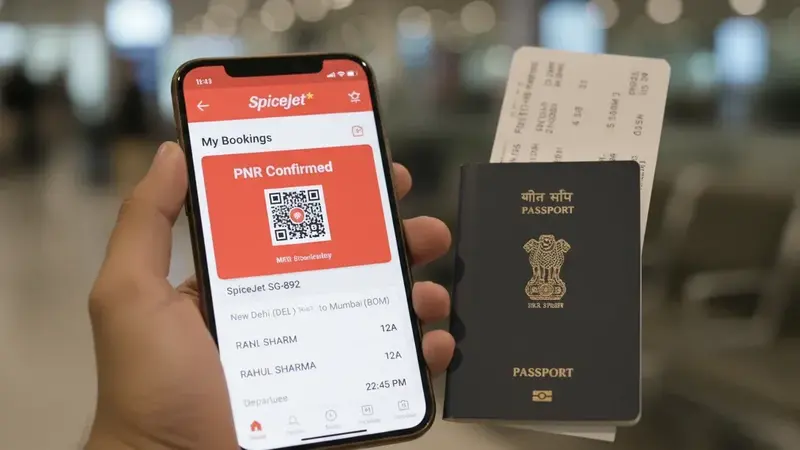
A SpiceJet dummy ticket helps Indian travellers show planned domestic, onward, or multi-airline travel without buying the final ticket too early. The safest proof is a current, PNR-verifiable reservation with passport-matching details, realistic route logic, and a validity window that covers the upload, appointment, or likely review date.
Table of Contents
- How Can You Get a SpiceJet Itinerary Fast for Visa Proof?
- How Do OTA and Third-Party Holds Work for SpiceJet Plans?
- What Fine Print Matters With SpiceJet Holds and Itineraries?
- Myths vs Facts: SpiceJet Dummy Tickets
- How Do You Choose the Right SpiceJet Strategy?
- What Is the Smart SpiceJet Dummy Ticket Option?
Key Takeaways #1: SpiceJet fast-track choices
- SpiceLock-style holds can work when you only need a short, timely itinerary.
- A named hold is usually stronger for visa files than a nameless fare lock.
- Flexible or refundable tickets can be useful when the review window is longer than a 48-hour hold.
- The booking should stay active during the upload, appointment, or likely review window.
You have your visa checklist open, your documents in neat little stacks, and then you hit the same question every Indian traveller faces: “What do I show for my SpiceJet flight booking?” You don’t necessarily want to pay for a full ticket yet, but you still need a clean, verifiable itinerary that will keep the airline, VFS, and the visa file consistent. A dummy ticket can be the perfect solution here.
That is where choosing the right type of SpiceJet “dummy” booking really matters. Between SpiceJet’s own fare-hold tools, refundable tickets, OTA holds, and professional reservation services, you actually have more control than it first appears. In this guide, we walk you through those options like a seasoned friend who has already been through the queues, the checklists, and the fine print, so you can pick what fits your situation, not someone else’s.
When planning your travel, especially for visa purposes, having the right documentation is crucial. Many travelers opt for a dummy ticket to satisfy requirements without committing to a full purchase upfront. This approach allows flexibility while ensuring consistency with visa-document guidance.
Understanding the nuances of SpiceJet's booking system can save you time and money. Whether you're flying domestically or internationally, knowing your options empowers you to make informed decisions.
The International Air Transport Association recognises held bookings created through professional reservation systems as a standard part of global airline distribution (iata.org).
A SpiceJet dummy ticket should fit the wider dummy ticket for visa 2026 strategy, not just solve one urgent upload. The complete guide explains how temporary reservations work, why PNR verification matters, when a reservation is safer than buying a paid ticket, and how to align flights, hotels, forms, and travel-purpose evidence. For SpiceJet, that framework helps you decide whether a short fare hold, a refundable fare, an OTA booking, or a specialist reservation makes sense. Use the guide before choosing a domestic feeder route, building a multi-airline itinerary, or deciding how much money you are comfortable blocking before your visa decision.
How Can You Get a SpiceJet Itinerary Fast for Visa Proof?
| SpiceJet proof option | What it gives you | Best for | Main risk | Decision rule |
|---|---|---|---|---|
| SpiceLock or fare hold | Short hold with itinerary and PNR where available | Immediate uploads, employer approval, and very near document deadlines | Short validity and route eligibility limits | Use only when the hold overlaps the likely check window |
| Flexible or refundable SpiceJet ticket | Paid ticket with stronger status and change or refund options | Likely travel, strict file requests, or high-stakes routes | Full fare exposure, service fees, and refund timing | Use when plans are mostly firm and fare rules are clear |
| OTA hold or OTA refundable fare | Platform-managed booking, hold, or protection add-on | Travellers who want app dashboards, INR payment, coupons, or multi-carrier options | Extra OTA fees and possible ticketing delays | Use after checking whether the PNR appears on the airline side |
| Specialist dummy ticket reservation | Short-term verifiable reservation designed for visa-document proof | Shifting VFS dates, budget limits, and multi-carrier visa routes | Provider quality varies | Use when the PNR, active period, and reissue terms are clear |
When you just want a clean SpiceJet itinerary for your visa file or internal decision, you do not have time to experiment. You need something that generates a proper PNR, looks professional on paper, and does not trap you in unnecessary costs.
The quickest routes usually fall into two buckets: a short-term hold on the fare or a fully paid booking that you can later cancel or change if needed. Once you understand how each option behaves, choosing the right one for your situation becomes surprisingly simple.
This is particularly useful for travelers who are still finalizing their plans or waiting for decisions.
Lock In Your SpiceJet Fare Before It Slips Away
SpiceJet’s own hold feature, often referred to as SpiceLock, is the fastest way to secure a SpiceJet itinerary without paying the full fare immediately. It lets you freeze the fare for a short period while still getting a PNR and itinerary that you can use for basic documentation.
In practice, it works like this for most travellers in India:
-
You search for your flight on the SpiceJet website.
-
At the payment stage, you select the hold or fare lock option instead of paying the full ticket price.
-
You pay a small hold fee.
-
You receive a booking confirmation with a PNR that you can view under Manage Booking and download as an itinerary.
For many visa uploads or employer decisions that only need a snapshot of your intended travel, this 48-hour window is more than enough. It is particularly handy when you have to submit documents to a portal today, but you will only know your final plans a week later.
The catch is timing and eligibility. SpiceJet usually allows fare holds only if your domestic trip is at least a few days away and your international trip is at least a couple of weeks out. Very close travel dates or aggressive promo fares may not offer the hold option at all. So you cannot rely on SpiceLock for ultra-last-minute plans.
Travelers should also be aware that while the fare is locked, availability isn't supported if the flight sells out during the hold period.
Name consistency is one of the easiest SpiceJet dummy flight ticket problems to prevent. Before creating or ordering the reservation, review the guide on whether dummy ticket names must match the passport exactly. It explains surname order, middle names, initials, spacing, and airline-system truncation. Indian passports can include long names, initials, or different surname placement, and SpiceJet itineraries may display passenger details in airline format. Use the passport as the master source, then compare the reservation, visa form, hotel proof, insurance, and cover letter before you upload or print.
“With Name” Or “Without Name”: Which Hold Makes Sense For You
When you use a hold service, you often see two choices that confuse people: hold with passenger name or hold without passenger name. The difference matters a lot when you are thinking about visa use.
A hold with the passenger's name means you input your details exactly as per the passport. The PNR and itinerary show your name, route, and schedule. For visa files, this is usually what you want, because the visa office can clearly match your passport to the booking. The trade-off is that you cannot casually swap names later. If plans change, you normally have to cancel and start fresh.
A hold without a passenger name gives you breathing room. You lock the fare and the timing, but you can decide the actual traveller later, depending on the rules that apply when you finally ticket the booking. This is useful if you are still finalising which family member or colleague will actually travel, or if your HR or travel desk is waiting for internal decisions.
For visa purposes, though, a nameless hold is weaker. Some visa offices want to see your exact name on the itinerary. If you are submitting documents in your own file, a hold with your name is usually the smarter bet, even if it feels slightly less flexible.
Using Refundable Or Flexible SpiceJet Tickets As Your “Backup Plan”
Sometimes a 48-hour hold is just too short. Your visa appointment might be a week away, or the visa office could be known for asking for updated tickets halfway through processing. In those cases, a paid ticket that you can later change or cancel can actually be more practical than cycling through multiple holds.
Here is how that typically looks with SpiceJet and popular Indian routes:
-
You pick a fare category that is flexible or refundable, or you add products like zero cancellation or a flexi plan on top of a regular fare.
-
You pay the full ticket amount upfront.
-
You receive a confirmed e-ticket and PNR that are valid right through your visa process, not just for 48 hours.
-
If the visa is refused or your plans change, you cancel or change the ticket according to the rules that came with that fare or add-on.
On routes like Delhi to Mumbai or Bengaluru to Goa, you will often see a big price gap between the rock-bottom non-refundable fare and the more forgiving flexible or refundable option. The same is true in international sectors such as Delhi to Dubai or Chennai to Colombo.
At first glance, paying several thousand rupees more feels painful. But compare that to these scenarios:
-
You keep buying new dummy tickets or holds because the visa office keeps asking for “fresh” dates.
-
Your basic non-refundable ticket needs to be changed, and the airline’s change fee plus fare difference ends up close to what a flexible fare would have cost in the first place.
-
You actually end up travelling and now wish you had the freedom to change dates without a heavy penalty.
In all of those, a slightly more expensive flexible ticket often works out cheaper and far less stressful. You get a clear document for your visa file, and you keep your options open if the outcome or timing is different from what you planned.
Where OTAs Slot In When You Want A Refundable SpiceJet Ticket
Online travel agencies in India, like MakeMyTrip, Cleartrip, Yatra, and Ixigo, sit in the middle of all this. You can book a SpiceJet flight directly on the SpiceJet website, or you can book the same flight through an OTA that adds its own tools on top.
On OTAs, you might see:
-
Different fare families that clearly mark what is refundable and what is not.
-
Value adds like zero cancellation, date change protection, or travel insurance.
-
Platform offers such as bank discounts or coupon codes that soften the blow of paying for a flexible fare.
The trade-off is complexity. When you cancel or change a ticket booked via an OTA, both the airline rules and the OTA’s own service fees apply. Refunds might take longer to reflect, and you may have to coordinate with both parties if something goes wrong.
So a simple rule of thumb helps. If you want the most straightforward relationship and you are comfortable with SpiceJet’s own flex products, booking directly is clean and fast. If you want to stack bank offers, combine multiple airlines, or add extra protection layers, an OTA can give you more tools, as long as you are willing to read a bit more fine print.
Reservations of this kind are generated through the same Global Distribution Systems — such as Amadeus and Sabre — used by licensed travel agents worldwide.
Key Takeaways #2: OTA and third-party checks
- Some OTA references are provisional until ticketing is complete, so verify the airline-side record where supported.
- Multi-airline itineraries can be cleaner than separate screenshots when SpiceJet is only one leg of the journey.
- Third-party reservations can give longer validity, but only if the provider shares a checkable PNR.
- A refundable ticket is sometimes smarter when the file specifically asks for paid proof.
How Do OTA and Third-Party Holds Work for SpiceJet Plans?
_converted.webp)
Once you understand SpiceJet’s own holds and flexible tickets, the next question is natural. Should you bring OTAs, travel agents, or third-party dummy services into the mix, or is that just making life complicated?
The truth is, these extra options can give you a lot more breathing room, especially when your visa timeline and SpiceJet’s 48-hour hold do not match. The trick is knowing where each one shines.
When An OTA Hold Buys You Breathing Room
Indian OTAs love “hold now, pay later” style products. You see them under labels like “lock this fare”, “pay later”, or “hold for X hours”. Behind the marketing, the idea is simple. You put down a small amount to freeze the fare for a set period and get some form of booking reference in return.
For your SpiceJet plans, these OTA holds are useful when:
-
Your appointment is a few days away. A 48-hour SpiceJet hold might be too short, but a 3-day OTA hold fits nicely.
-
You are still comparing dates and routes. You can lock one option while you check leave decisions or compare with other airlines.
-
You want one dashboard. Many travellers prefer seeing all their holds and bookings inside a single OTA app instead of juggling multiple airline logins.
What you need to watch is the quality of the “booking” you receive. Some OTAs generate a PNR that can be checked on the airline website during the hold period. Others issue more of a provisional reference that becomes a real PNR only after full payment. For visa use, that difference is huge.
If your visa office or VFS centre is known to check PNRs, you are safer using OTA holds that generate a live airline record, not just a generic reservation ID in the OTA system.
Multi-Airline Itineraries That A Single SpiceJet Ticket Cannot Cover
Many Indian visa journeys are not simple point-to-point trips. You might be:
-
Taking SpiceJet from a tier 2 city to a hub like Delhi or Mumbai.
-
Then continuing to Europe, the UK, Canada, or the Gulf on a different airline.
If you try to build that entire plan directly with a single airline, you will hit limitations quickly. This is where OTAs and traditional travel agents really earn their keep.
They can:
-
Combine SpiceJet with other carriers into a single, clean itinerary PDF.
-
Show proper connections and layovers in one document that looks neat in a visa file.
-
Mix and match different fare types so that your domestic leg uses one rule set and your long-haul leg uses another.
For your visa, this matters because you get one consolidated document that tells a clear story. The reviewer sees how you will leave India, connect, and return, instead of a scattered collection of separate screenshots.
If your routing is really complex, an experienced offline agent can still beat most apps. They know which combinations are realistic, which airlines play nicely together, and which segments should be on separate tickets to keep costs under control.
For international standards on travel documentation, refer to resources from authoritative bodies like the IATA.
Third-Party Reservation Services: Longer Holds, More Flexibility
Then there are dedicated flight reservation services. Unlike OTAs that also sell paid tickets, these businesses focus heavily on short-term reservations and dummy itineraries.
Here is what usually sets them apart from standard airline or OTA holds:
-
Longer validity. Instead of 24 to 48 hours, you may get several days of PNR validity, which better matches real visa timelines.
-
Stronger control over names and dates. You can often request changes without paying a full airline change fee each time.
-
Multi-carrier options. They can place a temporary hold on SpiceJet along with other airlines in one go, using GDS tools rather than consumer websites.
For you, this is especially useful when your appointment is, say, one week away and you want one solid PNR that will definitely still be live on the day you show it.
However, quality varies a lot. Before trusting any service, make sure that:
-
You can verify the PNR on the airline’s own website or through the manage booking section.
-
The dates and routes are realistic and available to the public.
-
You receive a proper PDF itinerary with booking references, not a low-resolution screenshot.
If a provider refuses to share the PNR or tells you not to “check it yourself”, treat that as a hard red flag.
When Paying For A Refundable Ticket Is The Grown-Up Choice
So, where does a fully refundable or flexible ticket fit into all this? Think of it as your safety net when the stakes are high and the rules are strict.
A refundable ticket often makes more sense than any dummy option when:
-
The visa office or employer insists on a paid ticket. Some categories are very clear about this.
-
You plan to travel regardless of the visa outcome. For example, you will still attend a conference or family event, even if the visa date shifts slightly.
-
You cannot risk a last-minute scramble. Maybe your route has limited frequency or tends to sell out.
In those situations, paying more for a flexible SpiceJet fare or a refundable itinerary via an OTA is basically an insurance policy. You show a paid ticket in your file, but you are not locked into a single, unforgiving date.
Think about common Indian scenarios:
-
A student heading to Canada for the September intake, waiting on both visa and university confirmations.
-
A family planning a multi-leg Europe trip where hotel and tour bookings are already in place.
-
A professional with limited leave who has to align travel with project timelines and client decisions.
In each case, the cost of rebooking, losing non-refundable hotels, or missing the trip entirely is much higher than the difference between a basic and a flexible ticket.
How To Mix Holds, Dummies, And Real Tickets Smartly
The smartest travellers rarely stick to a single strategy. They mix and match based on timing.
You might:
-
Start with an inexpensive SpiceJet or OTA hold while you secure an appointment.
-
Move to a stronger third-party reservation or multi-carrier itinerary once your dates are fixed.
-
Upgrade to a flexible or refundable ticket only if the visa office demands it or once your visa is issued and you know you will travel.
When you think of these tools as steps rather than rivals, the path becomes clearer. You are simply choosing how much money, flexibility, and risk you are comfortable holding at each stage of your visa journey.
The European Commission's Schengen visa guidance advises applicants not to purchase non-refundable travel tickets before receiving a visa decision (home-affairs.ec.europa.eu).
Key Takeaways #3: Timing and fine print
- Hold fees buy time, not part of the final fare.
- A held booking is not enough for boarding; it must be paid and ticketed before travel.
- Work backwards from biometrics, upload, or interview dates before choosing a validity window.
- Keep copies of terms, PNR checks, and the latest itinerary version for your own records.
What Fine Print Matters With SpiceJet Holds and Itineraries?
_converted.webp)
A SpiceJet hold or refundable booking looks simple on screen, but the rules behind it decide whether your flight is smooth or stressful. Think of this section as the fine print that separates a harmless document from a real flight ticket.
Most visa offices treat your itinerary as supporting proof in the larger puzzle of visa files, and they care about dates, names, and status more than logos or colours. If you know how the airline’s rules work in the background, you can pick the option that does its job without causing surprises later.
Who Can Use SpiceJet Holds On Which Routes
SpiceJet does not let you hold every single route on every single date, so you need to know where the tool fits your plans. The hold feature is most reliable when you are flying out of major Indian cities on regular domestic flights or common international sectors that still have decent seat availability.
In simple terms, a hold works best when there is a comfortable gap between the day you pay the hold fee and your onward travel. You usually need your trip to be at least a few days away for domestic sectors and even further out for international ones. If you are already too close to your travel window, the system often refuses the hold option automatically.
For visa files, the key is alignment. Suppose you plan to attend a meeting in Bengaluru and then continue to Singapore. If your SpiceJet domestic leg has a hold option, you can use that to lock the timing of your first hop while you finalise the international segment. Just remember that the airline expects you to confirm or release that booking well in advance of your actual departure.
The hold tool is a convenience facility, not a promise that a seat will exist forever at that price. Routes, public holidays, and local events can all affect availability, and the airline policy is usually clear that every hold is subject to inventory limits. When you see the option during booking, grab it quickly instead of assuming you will see the same choice tomorrow.
What You Actually Pay In Fees, Refunds And Hidden Costs
When you pay a hold fee, you are not pre-paying part of your fare. You are buying time. If you confirm within the allowed period, you then pay the full ticket price separately. If you do nothing, the hold expires, and your fee is gone. It is simple, but a lot of travellers still misread it.
On top of that, you may be dealing with different layers of rules. The airline has its own refund and change policy. An OTA or travel agent may add their service charges on top. Local taxes sometimes behave differently for refunds compared with the first purchase. When you put all of this together, the “small” fee can feel larger than you expected.
SpiceJet’s own conditions often state that the airline does not support a fixed fare until you actually purchase the ticket. While a valid hold strongly reduces the chance of sudden changes, last-minute adjustments can still happen around tax updates or system issues. In most cases, the airline will try to protect customers, but permissiblely, you are responsible for reading the fare rules at the time of booking.
That is why we always suggest you treat holds and flex products as tools, not miracles. Use them to buy clarity while you line up leave decisions, hotel plans, or sponsor letters, but do not assume they will erase all risk or financial responsibility if your plans keep changing.
Turning A Hold Into A Real Ticket Before You Fly
A held booking is only half the job. Before you can use the itinerary for anything beyond paperwork, you eventually need to convert it into a confirmed ticket. The steps are usually straightforward.
You return to the airline or OTA website, pull up your held booking, and complete the payment within the deadline. Once the system processes it, you receive a new confirmation email that includes an e-ticket number. From that point, you can treat it like any standard booking and move toward online check-in.
Many travellers get confused here. A dummy or held booking is not enough to get a boarding pass at the airport. Airline staff will only let you board the aircraft once payment is complete, the booking is ticketed, and all operational checks for that flight are clear. If you are planning complex connecting flights, this timing becomes even more important because one delay in confirmation can trigger missed connections across the whole route.
For your visa, though, you normally do not need to go that far. The itinerary and PNR from a valid hold are usually enough. You only move to full ticketing once your plans are firm and you are ready to travel. Until then, treat the document as a planning tool, not as your onward ticket for the trip itself.
How Visa offices Read Your SpiceJet Booking
From a visa office’s perspective, your itinerary answers a few simple questions. How do you plan to leave India? Where will you go, and when do you aim to return? The booking helps reviewers plan security checks, appointment loads, and immigration capacity for busy seasons.
Most missions do not require a paid ticket at the initial stage, but they still want a document that looks professional. Your name should match your passport. The dates should be realistic for your purpose of visit. The route should make sense given your destination and any transit points. If all of those lines up, the itinerary is more likely to be usable as genuine.
If anything in your file is unclear, you should be prepared to contact the relevant VFS centre or visa office for guidance. Their staff cannot book tickets for you, but they can explain what level of documentation they expect. Airline customer care can also assist with simple questions about booking status and whether your PNR is currently active.
The big picture is simple. Your SpiceJet document helps you show intent, not entitlement. It supports your story in front of immigration authorities without promising that the airline or visa office will approve every plan exactly as you have written it.
Timing Your Booking So Your PNR Stays Alive
The last piece of the puzzle is timing. A lot of stress comes from PNRs that expire a day before an appointment or from travellers who realise too late that their hold period ends during a weekend or public holiday.
Work backwards from your key dates. Look at the day of your biometrics, interview, or document submission. Then count how many days your preferred hold or reservation option will remain valid. If the numbers do not line up, you are better off choosing a longer-valid itinerary or a flexible ticket instead of gambling on last-minute extensions.
This planning matters even more for passengers travelling from tier 2 and tier 3 cities, where options are thinner, and seats can sell out fast. If you wait too long to confirm, you risk higher fares or awkward timings, even if your visa is granted on time.
The more you respect these timelines now, the less you will need to adjust later. A well-chosen hold or flex booking should quietly sit in the background, doing its job, while you focus on getting your application right the first time.
UK Visas and Immigration confirms that confirmed travel bookings are not required before a visa decision is issued (gov.uk).
Myths vs Facts: SpiceJet Dummy Tickets
A SpiceJet hold is the same as a paid ticket.
A hold can show planned travel, but it must be paid and ticketed before it becomes a real travel ticket for boarding.
Every OTA reference is a live airline PNR.
Some OTA references are internal until ticketing, so the safer approach is to verify the airline-side booking where supported.
The cheapest SpiceJet fare is always best for visa proof.
Cheap fares can be restrictive, while flexible or temporary reservations may fit uncertain visa timelines better.
A dummy ticket replaces the real ticket forever.
A dummy ticket is visa-document proof; before travel, passengers still need a valid paid ticket that meets airline and entry rules.
How Do You Choose the Right SpiceJet Strategy?
By now, you have seen every option from quick holds to fully flexible tickets. The final step is deciding which one fits your risk, budget, and timeline so you are not overpaying or over-promising in your visa file.
A helpful way to think about it is this: one plan for getting the visa, another for the trip you may actually take. Sometimes they are the same booking, sometimes they are not, and that is perfectly fine. Make your next visa file smoother by finishing your dummy ticket booking ahead of time.
Start With Your Real Goal, Not Just The Lowest Fare
Before you touch any booking site, pause and fill three blanks on a notepad: when you want to travel, when your appointment is, and roughly when you expect a decision. Once those dates are on paper, your options narrow.
If you only need an itinerary to support your paperwork, your focus is simple: a clean booking that stays live until your appointment without locking up too much money. A short SpiceJet hold, a longer third-party dummy, or a basic multi-carrier reservation all fit that job.
If you already know you want to fly as soon as the visa is issued, the calculation changes. Now you care about what happens if dates move. In that scenario, flexible or refundable tickets are worth a look because they can absorb changes around departure slots without hammering you with multiple change fees.
In some categories, your employer or sponsor may treat certain documents as effectively mandatory. Before you commit, read their instructions carefully and check whether they are asking for a paid ticket, a reservation, or just proof that you have planned a realistic route.
Matching Each Option To The Trips You Actually Take
Examples make this much clearer.
Imagine a Mumbai to London trip, with a SpiceJet leg to a Gulf hub and another carrier onward. For your visa file, a single dummy booking that shows the full journey on one page is often better than three separate screenshots. Once a decision arrives, you can either ticket that plan or switch to a better deal, because your visa is not tied to any specific PNR or actual travel booking yet.
Now take a quick work visit on a busy metro route. A flexible ticket costs more, but it buys you one big advantage: you are free to nudge your dates if the client meeting slides by a day without rebuilding your booking from scratch. You can even start with a dummy in the early stage, then convert to a flexible ticket once both the meeting and appointment are confirmed.
For long, multi-city holidays, constantly re-issuing dummies is usually a false economy. Every time a hold expires, you invest time again, and rising fares quickly eat whatever you “saved.” A smarter move is a mix of longer-valid reservations plus at least one flexible leg that can move if a hotel, tour, or internal flight shifts.
And when standard 24 or 48-hour holds are too short, a professional dummy-ticket provider can bridge the gap. For instance, at dummyflights.com, we can issue a verifiable reservation for a small fee that stays valid long enough for most visa-document checks, so you are not hunting for a new itinerary the night before biometrics.
When Your Dummy Booking Turns Into The Blueprint For Real Travel
If your visa is issued and the dates still work, it is natural to let your dummy booking evolve into the trip you actually take. At that point, you need to zoom back into practical details so the airport feels calm, not chaotic.
Start with baggage. Check the rules for cabin baggage and check-in baggage on every sector. Low-cost carriers are strict on size and weight, so last-minute arguments at the counter rarely go your way. Remember that batteries and power banks are usually expected in hand baggage for safety reasons, not in checked bags.
Next, focus on the day-of-travel rhythm. Plan your web check-in as soon as the window opens, especially if you are travelling with children, seniors, or anyone who might need extra assistance. Reconfirm the flight departure time the previous evening, note the boarding gates in your app, and give yourself a buffer so you are not sprinting to security while final calls are already echoing through the terminal.
Behind the scenes, every flight is a tightly timed operation. SpiceJet reserves the right to close counters and gates early when queues are long, and the airline cannot always hold an aircraft because a few late passengers are still in the food court. If you fail to reach the gate on time, even the best-planned itinerary cannot rescue the situation.
Simple Habits So Your Booking Strategy Does Not Backfire
Whatever mix of holds, dummies, and flexible tickets you end up using, a few habits keep things under control.
First, communicate early. If anything important changes, notify your agent and inform the airline instead of waiting until the last minute. You stand a much better chance of being re-accommodated if you reach out prior to travel rather than after a no-show.
Second, think about what you actually carry. Keep passports, money, and medication in your hand baggage rather than checked bags, and save PDFs of your bookings on your phone in case mobile data drops. If you need special seating or help, mention it during booking so the system can flag it for the crew as part of their duties, instead of springing it on them at the gate.
Finally, stay realistic about who is responsible for what. Airlines, agents, and dummy-ticket services are there to help, but they cannot read your mind. You still control when you book, how closely you read the conditions, and whether your itinerary matches your real plans. When those are aligned, your SpiceJet dummy ticket stops being a headache and becomes a simple, confident bridge between paperwork and the journey you are hoping to take.
What Is the Smart SpiceJet Dummy Ticket Option?
At this point, you know there is no single “best” SpiceJet dummy ticket. You have quick options like fare holds, more solid choices like flexible or refundable tickets, and add-ons from OTAs and third-party services when timelines get tight. The right move depends on your visa rules, your route, and how much money you are comfortable locking in before anything is issued.
If you map your dates first, then match a tool to each stage, the whole process becomes calmer. Use short holds when you just need to upload something, longer reservations when appointments are fixed, and flexible tickets when you are close to actually travelling. Plan backwards from your visa timeline, and your itinerary will quietly do its job while you focus on your journey.
Frequently Asked Questions
What is a SpiceJet dummy ticket?
A SpiceJet dummy ticket is a temporary travel reservation or itinerary used as proof of planned travel before you buy the final ticket. The safer version includes passport-matching details, realistic dates, and a PNR or booking reference that can be checked where supported.
Can I use a SpiceJet dummy ticket for visa applications?
Yes, a SpiceJet dummy ticket can support a visa file when it is genuine, current, and aligned with your passport, visa form, hotels, and travel dates. It should not be a fabricated PDF or an expired booking.
How long is a SpiceJet fare hold valid?
SpiceJet-style fare holds are often short, commonly around 48 hours, but the exact window depends on route, timing, availability, and product rules. Check the active-period details before relying on it for a visa upload or appointment.
Is a named SpiceJet hold better than a nameless hold?
Yes, a named hold is usually better for visa files because the itinerary can be matched to your passport. A nameless hold may help with fare planning, but it is weaker when the document must prove your personal travel plan.
Are OTA SpiceJet bookings safe for visa files?
They can be useful, but only after you understand whether the OTA has created a real airline-side PNR or only an internal reference. Verify the booking where supported before submitting it.
How much does a SpiceJet dummy ticket cost?
DummyFlights.com lists verifiable dummy ticket reservations at $15 per reservation, with instant PDF delivery and free date reissues. Airline holds, OTA fees, and flexible tickets vary by route, timing, and fare rules.
Can I change dates on a SpiceJet dummy ticket?
Date changes depend on the booking type and provider. Airline holds may require a new booking, flexible tickets may involve fare differences, and specialist services may offer reissues when your visa timeline moves.
How do I verify a SpiceJet PNR?
Use SpiceJet Manage Booking where supported and enter the booking reference and surname exactly as shown on the itinerary. Check passenger name, route, date, and status before upload or printing.
What if my SpiceJet hold expires before visa review?
Request a fresh reservation or reissue that keeps the same broad travel story and updated dates. Do not manually edit the old PDF, because that can create document-risk signals.
Is acceptance of a SpiceJet dummy ticket guaranteed?
No. Requirements vary by visa category, nationality, route, document timing, and submission channel, and no provider can guarantee a positive visa decision. Follow the official checklist and keep every document consistent.
Why Travelers Choose DummyFlights.com
DummyFlights.com focuses exclusively on verifiable dummy ticket reservations. Every reservation is generated through legitimate airline reservation systems and includes a stable PNR that you can verify yourself before submission. Documents are delivered instantly as a PDF after secure online payment, reservations can be reissued with new dates at no extra cost if your plans change, and support is available 24/7 at any stage of the visa process. Transparent pricing: $15 per reservation, no hidden fees.
Visa-Ready in Minutes
Instant, verifiable dummy ticket for visa — unlimited reissues, no hidden fees.
About the Author
Visa Expert Team — Our editorial team specializes in creating verifiable flight and hotel itineraries for visa applications, aligning documentation with embassy and immigration standards.
Editorial Standards & Experience
Our content is based on real-world visa application cases, airline reservation systems (GDS), and ongoing monitoring of embassy and consular documentation requirements. Articles are reviewed and updated regularly to reflect current practices.
Trusted & Official References
- U.S. Department of State — Visa Information
- International Air Transport Association (IATA)
- UK Visas and Immigration
- European Commission — Applying for a Schengen Visa
- Amadeus
- Sabre
Important Disclaimer
While our flight and hotel reservations are created to meet common embassy requirements, acceptance is not guaranteed and may vary by country, nationality, or consulate. Applicants should always verify documentation rules with the relevant embassy or official government website prior to submission.