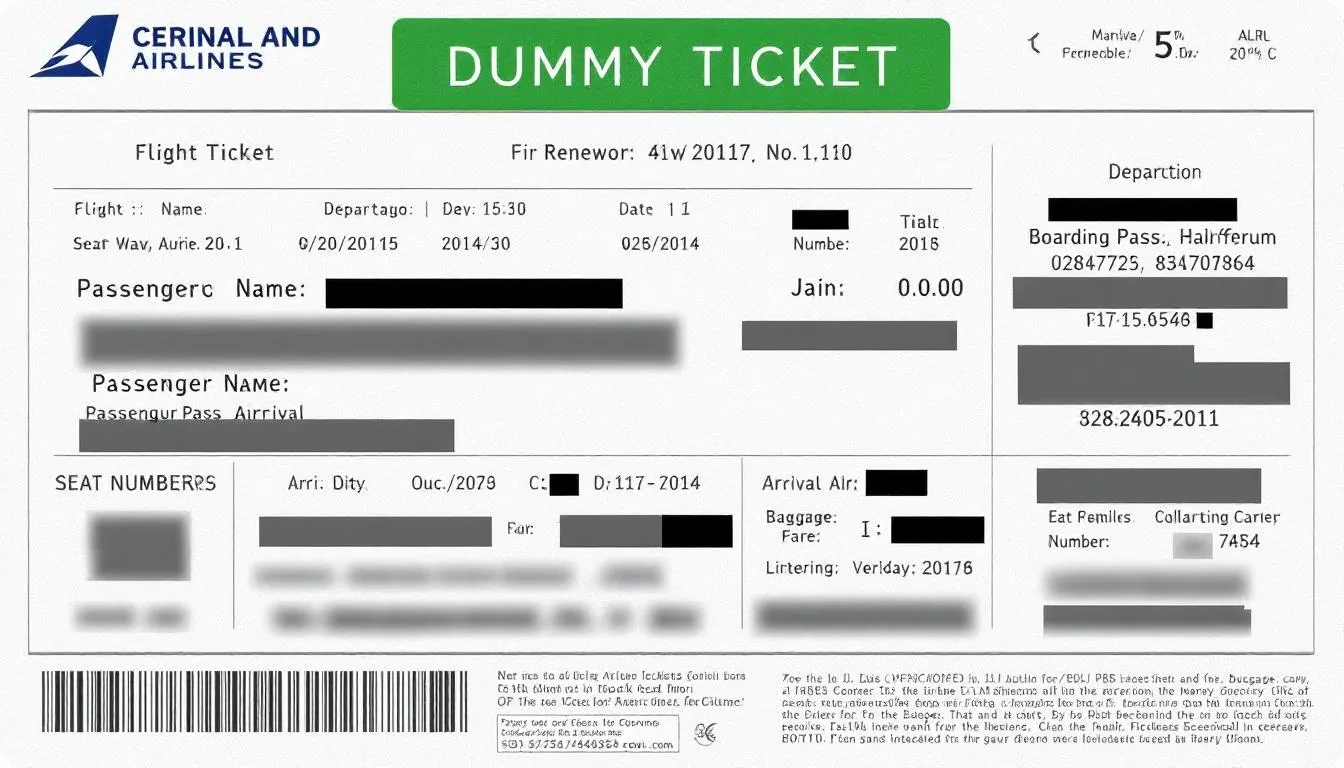

Short answer: An exit ticket can sit in a different app from your inbound booking if both records show the same passenger name, route logic, dates and retrievable references. Save the exit proof in one phone folder and carry a print copy. A temporary onward-ticket service may support truthful proof where permitted, but it cannot guarantee boarding, entry or approval.
Key facts:
- The airline will not automatically see an exit booking stored in another app.
- Passenger name, route, exit date and reference must agree across both records.
- Keep PDFs, confirmation emails, screenshots and reference codes in one offline folder.
- Airline and border requirements can differ; check both before departure.
- A reservation or bus leg is acceptable only where the relevant carrier and destination rule permits it.
Need onward proof that is easy to retrieve at check-in? Keep your inbound and exit records together, with names, dates and references checked before you join the queue.
In This Guide
- Why the Counter Agent Never Sees the Exit Ticket Waiting in Your Other App
- Making Two Separate Bookings Read Like One Trip
- Choosing What Goes in the Second App: Reservation, Paid Fare, or Bus Leg
- Keeping Both Bookings Working Once You Are Moving
- Your Exit Ticket Can Live in Another App and Still Clear Every Checkpoint
- FAQ
Official-source check: Confirm current onward-travel, transit and document requirements with the destination authority and each airline. Use the IATA Travel Centre for passport, visa and carrier-facing checks; the issuing airline and border authority make final decisions.
Reviewed for: split-app booking visibility, passenger-name matching, PNR retrieval, permitted-stay dates, printed and offline copies, separate-ticket buffers and truthful onward-proof claims.
Split-booking evidence check:
- Open each record and compare the full name, route, date and reference.
- Save both confirmations offline and place a printed copy in hand luggage.
- Check the carrier and destination rules again before the first check-in.
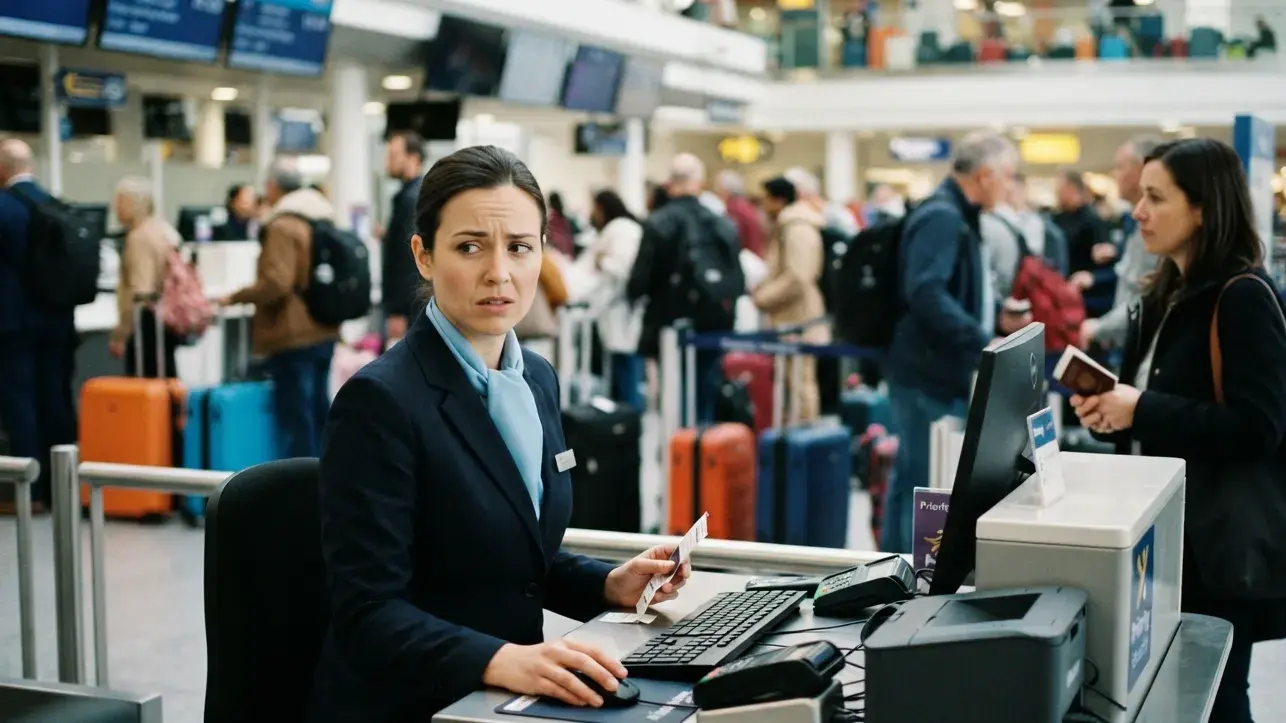
The agent at the counter asks for your exit ticket, and you open a different app from the one holding your inbound flight. Now the queue watches while you scroll. That small moment decides whether you board or step aside.
Splitting bookings across apps is normal, and it works when the paperwork agrees with itself. This guide shows how to make two separate reservations read as one plan. We cover what agents can see, which details must match, what to book in the second app, and how to protect the trip once you are moving.
Decide early which exit ticket suits your route, then build your folder around it. A verifiable dummy ticket for visa planning with a PNR keeps your second booking easy to show at check-in.
Why the Counter Agent Never Sees the Exit Ticket Waiting in Your Other App
Your inbound flight and your exit ticket can sit in two different apps, and the airline only ever sees one of them. That gap causes most counter delays.
What Appears on the Agent's Screen and What Does Not
When you reach the desk, the airline check-in agent opens your reservation inside the airline's system. That record shows your passenger details, your flight number, and your inbound booking confirmation. It shows nothing about a ticket you bought elsewhere.
The agent then asks you to prove the exit. Airline agents check for proof of departure quickly and efficiently. They expect an answer in seconds, not after a long search through your inbox.
Picture Sophie Miller flying from London to Delhi. Her exit flight to Bangkok sits in a booking app she rarely opens. The agent sees only London to Delhi, so Sophie must prove the rest. She has the answer, but it takes four minutes to find.
If your phone holds the exit booking only as an email, pin or star that email. Digging through promotions and receipts is where those four minutes disappear.
Lead with the exit booking, not the inbound one. The agent already has the inbound record. One clear page showing your name, route, date, and reference answers the question faster than three half-visible screens.
Airlines may check onward proof at check-in or boarding. If a required document is missing, boarding may be refused under the carrier's policy.
Agents also look for a route that leaves the destination country. A flight to a neighboring country counts. A route that loops back into the same country does not answer the question.
Have this ready on your phone before you join the queue:
-
Your full name, spelled as it appears on your travel document
-
A flight number and a departure date
-
A PNR code the agent can verify
-
A route that leaves the destination country
A smooth airline check-in still ends with the same question. Online check-in only moves it to the gate.
Countries That Ask for the Onward Ticket Before Anything Else
Many countries require proof of onward travel before allowing entry. Many destinations may require proof of onward travel, and enforcement varies by route and status. Check the current rule before departure.
Southeast Asia has its own reputation here. Some destinations, including the Philippines, may apply strict onward-ticket checks; verify the current rule before departure. A one-way ticket into Manila without an exit invites questions.
Latin America and Central America follow a similar rhythm. Costa Rica and other destinations may request onward-travel documentation, depending on the route and status. Colombia may request onward proof from one-way travelers; confirm the current carrier and entry guidance.
Farther afield, the pattern continues. New Zealand, the USA and other destinations may require onward proof in particular circumstances. Visa-free entry usually carries an exit condition too, and a tourist visa does not cancel the rule by itself.
Land arrivals face the same check. A bus into the country from a neighbor can still end at a desk where an officer asks how you plan to leave.
Airline agents use their current document guidance and destination information, so the first check may happen before an officer is involved. That is why the question often lands at the origin airport, not in the arrival hall.
Read the onward travel rules for your destination country before you book anything, because the wording differs by border. Check them again a few days before you fly, since border policies change. Over the past few years, frequent travelers have noticed the question arriving earlier, often at the departure gate.
The Penalty Behind Every Strict Boarding Gate
Airline staff are not being difficult. Airlines can face penalties under applicable carrier and immigration rules for transporting a passenger who lacks required documents, so the gate follows the rule.
Border officers work from a simple test. Immigration agencies check for tickets that show the person is leaving the country. An officer may refuse entry when required onward evidence is missing or does not meet the destination rule.
Each side has its own reason to ask. The airline protects itself from a fine, and the officer protects the border from overstays. One clear booking can satisfy both.
Immigration officials do not care which app holds your ticket. They care that it exists, matches you, and can be verified. A retrievable reference may help an authorized check, but the required document and lookup method vary.
Travelers who are denied entry are sent back toward their home country. A refused entry record can also complicate later visa applications. Neither outcome is worth risking over a ticket hiding in the wrong app.
Fixing this at the desk rarely goes well. You are buying under pressure, with a queue behind you and a boarding time ticking. Fixing it at home, calmly, takes ten minutes and one folder.
Once you know what the desk and the border expect, the next job is making two unrelated bookings read like one plan.
Making Two Separate Bookings Read Like One Trip
Two apps mean two records, and neither record knows the other exists. Your job is to make the documents agree before anyone asks.
Names, Codes, and Flight Reservation Dates That Must Line Up Exactly
Start with the name. Travelers need to ensure names on tickets match passports exactly. Documentation should show the passenger name matching passport details for both bookings. An onward record should match the traveler's name and the actual itinerary.
Say Emily Carter enters India on one booking and holds an exit ticket in another app. If one booking reads Emily and the other reads Emilie, the agent has a reason to pause. A single letter can turn a quick glance into a manual review.
Ask a travel partner to read both names against your travel document. A second pair of eyes catches a swapped letter in seconds.
Watch name order and hyphens too. One app may offer separate name fields, while another gives you a single line. A double surname squeezed into one field on the first booking and split on the second can look like two different people. Copy the name from your travel document, letter for letter, into both.
Then check the codes. Both tickets should display a valid Passenger Name Record (PNR). A reservation used as travel proof should have a reference that is retrievable through the stated system. Open each booking confirmation and find the six-character reference.
Some apps show only an internal order number. The airline cannot search that number. If your app offers nothing else, ask its support team for the airline reference before you travel.
Dates come last, and they cause the quietest failures. An onward ticket must match your travel plans and dates. Your onward ticket's departure date must fit within your permitted stay. If your permission allows 30 days, an exit on day 45 contradicts your own paperwork.
Time zones can also shift a date. A flight leaving just after midnight departs on the next calendar day. Read the date as printed on the ticket, then compare it with your entry date.
The same logic applies if you applied for a formal visa with an itinerary attached. Your exit ticket should tell the same story as the application. Visa approval opens the door, but it does not replace the exit check at the desk.
If either booking changes, update the other the same day. A moved inbound flight can push your exit date past your permitted stay without anyone warning you.
Travelers with fixed plans can match dates exactly. Everyone else should pick an exit date that makes logical sense to a stranger reading it for ten seconds.
Run this quick check before you leave home:
-
The name matches the travel document on both bookings
-
The reference code is visible on both bookings
-
The exit date sits inside the permitted stay
-
The route leaves the destination country
One Folder for Both Bookings
Separate apps invite scattered proof. Keeping separate bookings organized requires verifying details independently. Keep both bookings centralized to avoid issues at check-in or immigration.
Build one folder on your phone. Save each PDF, each booking confirmation email, and one screenshot per booking. Both digital and physical copies of tickets should be easily accessible. A dead signal at a remote post should not leave you empty-handed.
Digital nomads and long-term travelers often hold many bookings at once, so name files clearly. "Delhi Inbound" beats "ticket final 2" when a queue is waiting behind you.
Add one note listing both reference codes and both airline phone numbers. If an app crashes, you can still read a code aloud to an agent.
Share the folder with one trusted person at home. If your phone fails or your battery dies, they can send the files back within minutes.
Why Printed Pages Still Win at Small Border Posts
Travelers should print physical tickets, as many agencies require hard proof. Phones die, and some counters have no Wi-Fi. A printed page never asks for a password.
Land posts matter most. At an overland border crossing, immigration officers may hand your phone back and ask for paper. Print both bookings, one page each, and keep them with your entry documents. Carry a second copy in your cabin bag.
Keep the pages flat in a document sleeve. A crumpled sheet with a smudged code is hard to scan.
Print the day before, at a hotel desk or a print shop. Airport printing costs more and adds one more thing that can go wrong.
Frequent travelers often carry a single folded sheet for the whole trip. It weighs almost nothing and saves an argument.
Once the paperwork agrees, the remaining question is what belongs in the second app in the first place.
Choosing What Goes in the Second App: Reservation, Paid Fare, or Bus Leg

The second app can hold three very different things, and each suits a different traveler. Pick based on how firm your plans are and how strict your border is.
Three quick questions narrow the field:
-
Do you know the exact day you will leave?
-
Does your border accept only a flight, or will other transport count?
-
Is your budget better spent on the trip than on a fare you may never fly?
When a Temporary Reservation Covers the Gap
With loose plans, the simplest option is a temporary flight reservation. A temporary flight reservation can serve as proof of onward travel. It gives you a document you can show on demand without tying up your budget.
A temporary reservation should identify the issuing carrier, route, passenger and reference clearly. Check the actual record through the stated retrieval method and save the PDF for your folder.
A reservation does not need to be flown, and that freedom is the point. Your real plans stay flexible while the document does the border work.
A temporary reservation has provider-set pricing and a limited validity window. Confirm the expiry terms and order it close enough to the check window for the record to remain retrievable.
The Philippines is known for strict onward ticket enforcement. Travelers there often want a verifiable reservation that an agent can confirm in seconds. Frequent travelers like this route because it lets them save money on trips that may still change.
Before you pay, compare the reservation type with this flight reservation for visa guidance, then ask what the document shows. It should list your name, route, date, and PNR on a single page. Open the PDF on your phone and zoom in to confirm every letter.
A fake ticket is a different story. It has no PNR behind it, so no airline record supports it. A real flight reservation is one the airline can pull up by PNR. Only a real reservation survives a quick lookup.
When the Second Booking Should Be a Paid Fare
Sometimes a reservation is not the right tool. If your route is fixed and your dates are firm, a paid fare may serve you better. Prices on separate tickets can vary significantly based on airlines and routes.
A real airline ticket makes sense when you truly plan to fly out on that date. A one-way flight may fit a genuine onward route; compare the fare and change terms with your actual plan.
Suppose Ethan Brooks plans to leave Mumbai for Singapore on day 20 of a 30-day stay. His date is fixed, and his budget is steady. A one-way fare on that day gives him a ticket he will actually use.
Some travelers add a return ticket to satisfy the rule. A return flight raises the price, so compare it with a one-way ticket before you pay.
A refundable ticket sits between the two options. You pay the full ticket price up front and reclaim the money later, so read the refund rules and timing first. Cash tied up in a plane ticket matters when your budget is tight.
Even a paid fare on a large carrier such as American Airlines follows its own change and refund rules. Read them before you buy, not after your plans shift.
A valid ticket is one the airline can open by PNR. The onward date should leave the destination within the permitted stay when that condition applies. Having onward proof ready before arrival can reduce avoidable delay, but it cannot guarantee processing time.
Book a paid flight only when you are ready to take it. Airlines may ask you to provide onward tickets at the desk, so keep the confirmation open. Your onward flight should be the natural next step of your onward journey. A random route invites follow-up questions.
Whichever flight ticket you choose, keep the exit proof in your folder before the trip starts. Travelers who hold onward proof early rarely need to argue at the desk.
When a Bus Leg Does the Job
A bus ticket may be accepted as onward proof in some destinations, but the airline and border authority may apply different standards. This helps overlanders in Central America and Southeast Asia, where buses cross borders daily. A bus ticket to the neighboring capital shows an actual route out.
Ask the operator for a ticket that names you, the date, and the border town. A verbal booking or a handwritten slip is much harder to defend.
Check before you rely on it, because airlines apply their own policy at check-in. Some carriers want to see a flight before they board you. Keep the operator's confirmation and a printout of the seat booking.
If the airline will not accept it, a flight reservation fills the gap. That is another reason to keep the reservation option ready in your folder.
Whichever you pick, the real test comes later, when both bookings have to work together on the road.
Keeping Both Bookings Working Once You Are Moving
Getting past the desk is only half the job. Two unrelated bookings need attention while you travel, because no system will reroute you if one slips.
Connection Buffers Between Unrelated Bookings
Connection times must be generous for separate bookings to avoid missings. Allow extra time between flights when using separate tickets.
On a single ticket, the airline rebooks you after a delay. On separate tickets, the second airline may owe you nothing.
Say Oliver Grant lands in Mumbai on one booking and connects to a second flight on another booking. A late arrival and a slow baggage belt can erase a tight layover. Many travelers add several hours, and more if bags need rechecking.
Work backward from the second flight's deadline to check in, not its departure time. Then add the minutes for baggage, immigration, and any transfer between terminals or airports.
Remember that you leave the secure area to collect and recheck bags. That step may mean passing immigration in the connecting city. Confirm whether a transit visa applies before you commit to a short layover.
Avoid connections that land after midnight. A late arrival can leave you with no transport and no open hotel desk. Pay a little more for a daytime connection if you can.
Baggage, Status Alerts, and the Cost of Coordination
Separate tickets mean travelers may need to check in separately and collect baggage. Separate tickets require extra coordination during travel. The only downside is the admin, and a routine handles most of it.
Build that routine around three habits:
-
Check baggage policies for each airline when using separate tickets.
-
Monitor flight statuses independently when bookings are separate.
-
Recheck the entry rules for your next destination before every leg.
Each airline sets its own deadline to check in, and separate tickets mean two deadlines. Write both down. Arriving on time for one and late for the other still leaves you without a seat.
Even a low-cost airline may charge a higher bag fee at the desk than online. Add each allowance to your notes before you fly.
Frequent travelers keep a note from their last trip that lists each airline's allowance, then reuse it. Rules in other countries may differ, so reread them at each border. Separate bookings suit international travel best when every leg has a buffer and a backup.
Ask each airline whether a bag can be checked through. On unrelated tickets, the answer is usually no, so pack essentials in your cabin bag.
Turn on notifications in both apps, and add each flight to your phone calendar. A delay on one booking is your cue to check the other, since neither airline will do it for you.
Cover for a Missed Leg
Travel insurance may be necessary to cover missed connections on separate tickets. Read the policy for what counts as a covered delay, and confirm it applies to separately booked flights.
Buy the policy before you leave home. Cover bought after a problem starts usually excludes that problem. Keep the insurer's emergency number beside your reference codes, so one note holds everything at 2 a.m.
A missed leg can also break your proof. If the exit ticket depended on the flight you missed, the next desk will ask again. Airlines can face penalties under applicable carrier and immigration rules, so they may repeat the document check.
Keep receipts for meals, hotels, and rebooked flights, and screenshot the delay notice. Claims move faster when every cost has a paper trail.
Save the second airline's customer service number, and ask about rebooking fees before you leave the desk.
Keep a backup ready. If a temporary reservation expired while you rebooked, issue a fresh one for the new date. Then update your folder so both bookings tell the same story again. With cover in place and a backup ready, the exit ticket can live in any app you like.
Your Exit Ticket Can Live in Another App and Still Clear Every Checkpoint
Two apps do not have to mean two problems. Match the names, codes, and dates. Keep both bookings in one folder and print what matters. Pick the reservation, paid fare, or bus leg that fits your plans.
Many destinations may require proof of onward travel; check the current rule for your route. That makes this small habit worth repeating on every route. Keep your onward proof truthful, retrievable and subject to the current provider terms.
Ready to carry a clear exit record? Keep the second-app booking retrievable, truthful and consistent with the inbound trip and permitted stay.
Frequently Asked Questions
Can my onward ticket be in a different app from my inbound booking?
Yes, if both records identify you and describe one coherent route. Save them together and make the exit record easy to open at check-in.
What details must match across separate bookings?
Check the passenger name, route, travel dates, airline or operator and retrievable reference. Explain any genuine timing or city difference.
Will the airline automatically see a ticket from another app?
Usually the agent sees the booking in the airline’s own system, not every record on your phone. Show the exit confirmation and offer its reference for a permitted lookup.
Should I carry printed proof when the exit ticket is digital?
Yes. Keep an offline PDF or screenshot and a printed copy because signal, battery and access can fail at a counter or land border.
Can a bus booking serve as onward proof?
It may in some destinations, but the airline may require a flight or another specific record. Confirm the carrier and destination rules before relying on a bus leg.
Does split-booking proof guarantee boarding or entry?
No. It addresses one document question only. Airlines and border authorities can request more evidence and retain final discretion.
Friendly reminder: DummyFlights provides temporary travel-proof documents for planning and application support. Requirements vary by destination, airline, route and applicant situation. A dummy ticket can support a file, but it does not guarantee approval, boarding or entry.