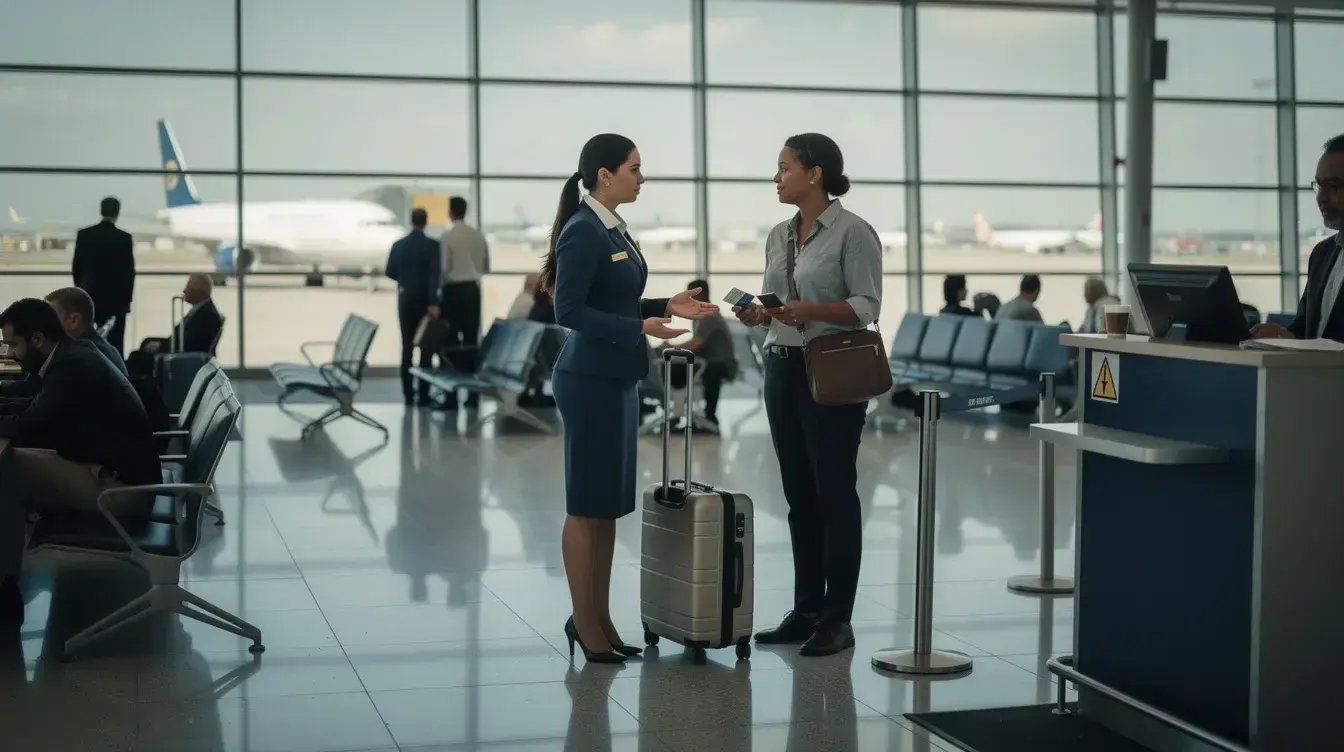

A valid student visa can still leave practical questions unanswered. If your semester was delayed, your admission was deferred, or you are taking a gap period before classes begin, an airline agent or border officer may wonder whether your travel still matches the academic purpose.
The issue is not that students cannot travel before a course starts. The issue is whether the trip looks planned, temporary and connected to a real academic timeline. A clean onward ticket gives the travel story an endpoint while your school documents explain the delayed start.
- Your student visa or approval does not automatically explain a changed academic timeline.
- Your onward ticket date should be chosen from the school timeline, not only the visa expiry date.
- Carry the school document that proves deferral, delayed start or updated enrollment.
- Your route should make the student purpose look stronger, not secondary.
- A short, clear explanation is safer than a long story with inconsistent dates.
Create an onward ticket with route, date and passenger details aligned to your school timeline and travel plan.
Create Your Onward TicketWhy a Valid Student Visa Can Still Leave Your Travel Story Looking Unfinished
A student visa, study permit or student-entry approval tells the border system that you were approved for an academic purpose. It does not always explain what changed after approval. If the semester start moved, the course was deferred, or you are entering early for a gap period, the travel story can look open-ended unless your documents close the loop.
How a deferred start changes the meaning of your onward ticket
For a standard student route, the school start date anchors the trip. Arrival, accommodation, funds and travel proof all make sense because classes begin soon. A deferred start weakens that anchor. Suddenly, the officer or airline agent may see a student visa but a travel plan that does not immediately lead to school.
This is where the onward ticket becomes useful. It can show that the pre-semester period has a planned endpoint: returning home before the new start date, continuing to another country during the gap, or leaving after a short visit if the academic plan is not immediate.
The onward ticket should not pretend the student trip is already active if the course is delayed. It should help explain the gap honestly and make the route feel controlled.
Why officers may ask more questions when your school timeline has moved
When the course date changes, the officer may ask why you are traveling now, where you will stay before classes, how you will fund the gap, and whether you are still expected by the school. These are normal questions. They are not automatically negative.
The risk appears when your documents do not answer them. A visa with one timeline, a school email with another timeline, and an onward ticket with a third timeline can make the trip look careless. A clean onward ticket should support the updated timeline, not compete with it.
The difference between “I have a visa” and “my trip still makes sense”
“I have a visa” is not the same as “my trip still makes sense today.” The visa or permit is one document. The officer still evaluates the current travel situation: route, purpose, funds, accommodation, school status and whether anything changed after approval.
A deferred-start student should be ready to show that the academic purpose remains real. The onward ticket is not the main proof of study. It is supporting travel proof that helps show the gap period is finite and organized.
The hidden risk of entering without an academic anchor
The weakest version of this file is a student traveler entering long before classes with no updated school letter, no realistic accommodation plan, no clear funds story and no onward ticket. That combination can make the student purpose look secondary to open-ended travel.
The stronger version is simple: updated school proof, clear gap explanation, funds for the gap, accommodation for the first period, and an onward ticket date that makes sense beside the new academic timeline.
Choosing an Onward Ticket Date When Your Semester Start Is Delayed
The date on the onward ticket is the most important part of the document. A believable route with the wrong date still creates problems. Choose the date from the academic reality first, then fit the travel proof around it.
Start with the academic date, not the visa expiry date
Do not choose the onward ticket date only because the visa or permit allows a long stay. Start with the updated course date, orientation date, enrollment deadline, deferral letter or school email. Those documents explain when the academic purpose becomes active.
If classes begin in six weeks, an onward ticket after eight months may look disconnected unless the visa category clearly supports that stay. If the gap is short and planned, the onward date should reflect that short-term logic.
Match the onward date to your real gap-semester explanation
Your gap-semester explanation should come before the onward ticket. Are you visiting family before the course starts? Touring nearby cities? Waiting for housing? Returning home before the new intake? Attending orientation later? The date should match the answer.
If you say you are using the gap to visit family for three weeks, an onward ticket around that period makes sense. If you say you are waiting for a deferred intake in four months, the file needs stronger school and funding proof than a generic onward ticket alone.
Avoid onward dates that make the stay look unlimited
Open-ended travel is the enemy of a deferred-start file. An onward ticket that pushes the latest possible date without a clear reason can make the stay look improvised. Officers may wonder whether you are really preparing for school or simply using the student document to enter early.
A shorter, more intentional date often performs better. It tells the checker that the gap has a defined shape. The onward ticket becomes proof of control rather than evidence of uncertainty.
Use a short-stay date when the purpose is pre-semester travel
If the purpose is a short pre-semester trip, choose a date that reflects that. A one-week or three-week onward plan is easier to explain than a full permitted-stay stretch. This is especially true when accommodation is booked only for the first few nights.
The onward ticket should work with your arrival plan. If you land in the student destination, spend two weeks settling logistics, then return home or continue elsewhere before the new start, the document should show that sequence clearly.
Use a later date only when you can support the reason
A later onward date can still make sense when the reason is documented. Examples include a school-approved deferred intake, required placement, housing arrangement, family stay, research preparation, medical reason or formal orientation window.
The later the onward date, the stronger the supporting evidence should be. Funds, housing, school communication and written explanation matter more when the gap is long.
- Use the updated course date as the anchor.
- Keep the onward date inside the permission or visitor stay window.
- Match the onward date to the gap explanation.
- Avoid stretching the date without school or funding proof.
- Make sure hotel, housing and travel dates do not contradict each other.
Building a Flight Route That Does Not Undermine Deferring College Admission
The route on the onward ticket matters as much as the date. A deferred-start student should not choose a random destination only because it is cheap. The route should make the academic purpose easier to believe.

Why the destination on your onward ticket matters
A good onward destination answers “what happens next?” without creating more questions. Home country, country of residence, a nearby regional stop, or a destination tied to the gap plan can all make sense. A random route to a country you cannot enter weakens the file.
If the next destination requires a visa, make sure you can explain eligibility. An onward ticket to a country where you have no entry right can create a new problem while trying to solve the first one.
When a return-home reservation creates the cleanest story
For many deferred-start students, a return-home onward ticket is the cleanest option. It says the early travel is temporary and that you will come back when the school timeline is ready. This works especially well when the deferral is long or the school has not issued updated final documents yet.
A return-home route can also support the idea that you are not trying to remain open-ended before the course begins. It gives the file a conservative, easy-to-understand endpoint.
When a third-country onward ticket can still make sense
A third-country onward ticket can work when the route is believable. For example, a student may visit a neighboring country during the gap, attend a family event, travel regionally before returning for orientation, or continue to a country where they have permission to enter.
The route should be easy to explain in one sentence. “I am visiting Singapore for ten days before returning for orientation” is stronger than a complex multi-country story with no documents.
Avoid routes that make the student purpose look secondary
The onward ticket should not make the trip look like long tourism with school as an afterthought. If the route shows months of travel before classes and the school documents are vague, the file may drift away from the student purpose.
Keep the academic anchor visible. The best route says: this student is traveling during a defined gap, still connected to school, and able to leave or continue if needed.
Align the route with what your documents already say
If your school letter names a city, your accommodation should make sense for that city or the explained gap plan. If your funding proof covers a limited period, the onward date should not imply a longer unsupported stay. If your deferral letter gives a new start date, your travel route should not ignore it.
| Student situation | Stronger onward ticket logic | Riskier version |
|---|---|---|
| Short pre-semester visit | Onward date after the short visit, with hotel dates aligned. | Onward date months later with no reason. |
| Deferred intake | Route matches updated school letter and funding proof. | Old school date, new travel date and no explanation. |
| Gap-semester travel | Third-country route is realistic and legally accessible. | Random cheap destination that creates entry questions. |
| Return before course begins | Return-home onward ticket creates a clean endpoint. | No departure proof because “I already have a student visa.” |
Pairing Your Onward Ticket With the Right Explanation and Documents
An onward ticket is strongest when it supports the rest of the file. It should not carry the whole explanation by itself. Deferred-start students need the academic story and the travel story to meet in the middle.

Treat the onward ticket as supporting evidence
The school document explains why the student is eligible. The accommodation proof explains where the student will stay. Funds explain how the stay is supported. The onward ticket explains the exit or continuation plan. When each document answers its own question, the file becomes easier to understand.
Do not make the onward ticket do everything. If the school start changed, carry the deferral letter or updated school email. If housing is temporary, carry the first accommodation proof. If the gap is long, carry funds that make the gap believable.
Create a one-sentence travel explanation before booking
Before choosing the onward ticket, write the explanation in one sentence. For example: “My semester was deferred to January, so I am visiting for three weeks now, then returning home before the new start date.”
That sentence tells you which onward ticket date and route make sense. If you cannot explain the gap in one sentence, the document may not fix the problem.
Carry the school document that explains the deferred start
The most important supporting document is the school communication showing the changed start date. This can be an updated enrollment letter, deferral approval, revised intake email, orientation notice or official portal update.
If the officer asks why you are arriving before classes, this document answers the academic side. The onward ticket then answers the travel side.
Make your funding story match the length of the gap
A short gap needs basic travel funds. A long gap needs a more serious funding explanation. If your onward ticket leaves months later, but your funds only support a few weeks, the file becomes weak.
Student travelers should be especially careful here because funds often relate to tuition, living expenses and return transportation. If your plans changed, make sure the money story still supports the new timeline.
Prepare airline questions separately from border questions
The airline may ask for onward proof because it wants to avoid carrying a passenger who could be refused admission. The border officer may ask deeper questions about the student purpose, school timeline and admissibility. Same trip, different gatekeepers.
At airline check-in, the onward ticket may be the key document. At the border, the school letter and explanation may matter more. Carry both, and keep them easy to open.
Mistakes that make a deferred-start onward ticket look staged
- Using an onward date that conflicts with the new course date.
- Showing accommodation that ends far before the onward date with no explanation.
- Choosing a next destination you cannot legally enter.
- Relying on the visa alone when the school timeline changed.
- Giving a spoken answer that does not match the onward ticket.
None of these mistakes is complicated. They are mostly alignment problems. Fix the alignment before travel and the onward ticket becomes far stronger.
Final pre-travel review before presenting the onward ticket
Review the file like a stranger would. Does the visa or permit match the school document? Does the school document explain the delay? Does the onward ticket date fit the gap? Does accommodation cover the first stay? Are funds realistic? Is the route easy to explain?
If the answer is yes, the deferred-start story looks planned. If the answer is no, adjust the document that creates the contradiction before you reach the airport.
Make Your Deferred-Start Travel Story Look Planned, Not Open-Ended
A deferred start does not automatically make student travel risky. It simply removes the clean timing that normally connects arrival to classes. Your job is to rebuild that timing with documents that agree.
The strongest file usually has four pieces: updated school proof, realistic accommodation, funds that support the gap, and an onward ticket that gives the travel plan a clear endpoint. When those pieces align, the trip looks organized instead of improvised.
The onward ticket is not a magic document and it does not promise entry. It is a credibility tool. Used well, it shows that the student has a real academic anchor, a defined gap period and a believable plan to leave or continue if needed.
Use DummyFlights to prepare an onward ticket, dummy ticket or ticket onward document that matches your deferred-start timeline, route and passenger details.
Create Your Onward TicketFrequently Asked Questions
Do deferred-start students need an onward ticket?
Not always, but an onward ticket can help when the student visa exists and the academic start date has moved. It gives the travel plan a visible endpoint while school documents explain the deferral.
What date should a gap-semester student use for onward proof?
Use the updated school timeline first. The onward date should match the gap explanation, stay permission, accommodation and funds instead of simply using the latest possible visa date.
Can I enter before my student course starts?
It depends on the country and visa conditions. For example, UK Student visa guidance sets limits on how early students can arrive before a course, and Canada says officers decide admissibility at arrival. Always check your specific documents and official guidance.
Should the onward ticket be a return-home ticket?
A return-home ticket is often the cleanest route for deferred-start students, especially when the gap is long. A third-country onward ticket can still work if it is realistic, legally accessible and supported by the explanation.
What school document should I carry with my onward ticket?
Carry the document that explains the changed start date, such as a deferral approval, revised intake letter, updated enrollment email, orientation notice or official student portal update.
Can an airline ask for onward proof even if I have a student visa?
Yes. Airlines may check documents before boarding when they are concerned about entry requirements or inadmissible-passenger risk. A student visa helps, but the airline may still ask for route or onward proof depending on the itinerary.
What makes a deferred-start onward ticket look weak?
Weak proof includes an onward date that conflicts with the school timeline, a random next destination, no deferral document, accommodation gaps, weak funds or spoken answers that do not match the document.
Does an onward ticket guarantee entry as a student?
No. An onward ticket can support the travel story, but entry depends on the full situation, including passport, visa or permit, school documents, funds, admissibility, route and current rules.
Friendly reminder: DummyFlights provides temporary travel-proof documents for planning and application support. Requirements vary by destination, airline, route and applicant situation. An onward ticket can support a file, but it does not promise approval, boarding or entry.