

Your corporate travel desk may have booked the main flight perfectly, but the check-in counter can still stop the trip if the onward plan is unclear. A company-paid ticket shows that the employer arranged part of the journey. It does not always show how you leave the destination country or continue to the next business stop.
This guide helps corporate travelers prepare for that exact moment. We’ll look at why one-way corporate itineraries create questions, what airline staff usually accept, how the onward ticket should match your passport and business route, what to show first, and what not to say when the onward proof is separate from the company booking.
- Your company travel approval does not replace onward ticket proof.
- Airline staff usually care about passenger name, route, date and eligibility.
- The onward ticket should not contradict the corporate main ticket.
- A clean PDF is easier to review than a long corporate email thread.
- Payment ownership matters less than reservation clarity.
Create an onward ticket with route, date and passenger details aligned to your business trip.
Create Your Onward TicketWhy Airline Staff May Question an Onward Ticket Even When Your Main Flight Was Corporate-Booked
A corporate booking can look complete inside your company’s travel portal, but the airline counter works from a different checklist. Before boarding you to destinations such as Thailand, Indonesia, Singapore, the UAE or the Philippines, staff may still ask how you plan to leave.
The check-in counter is not reviewing your corporate travel policy
At the airport, your employer’s approval process matters less than the destination’s entry conditions. The airline staff member is not checking whether your manager approved the trip, whether finance paid for the ticket, or whether the travel desk used the correct cost center. They are checking whether the passenger can be carried without creating document risk on arrival.
That difference matters. Your company may book London to Bangkok for a client meeting, but if the airline’s document system asks for proof of onward travel, the agent may still need to see a route leaving Thailand. A company travel confirmation alone may not answer that requirement.
Think of the counter check as a fast document review. Staff may only see your passport, main ticket, destination, entry permission if required, and any return or onward proof. They may not see your meeting calendar, assignment contract, HR letter or internal travel notes.
Why a company-paid ticket can still leave a proof-of-exit gap
Corporate travel often creates flexible itineraries. That flexibility is useful for work, but it can look incomplete at check-in. The company may book the outbound sector first and wait to confirm the return after project dates, client needs or internal approvals settle.
This issue is common with relocation travel, consulting assignments, regional business trips, training programs, conference travel, probation travel and onboarding trips. Inside the company, a delayed return booking may be normal. At the airline desk, it can look like a one-way trip without visible onward movement.
The agent is not rejecting corporate travel. They are trying to confirm that the trip does not appear open-ended. A clear onward ticket closes that gap without requiring the corporate desk to finalize every later sector too early.
What airline staff usually want to confirm before issuing the boarding pass
When airline staff ask for onward proof, they usually want details that can be checked quickly. The strongest onward ticket is simple to read and consistent with the trip. It helps the staff member make a fast decision without scrolling through long email chains or asking extra questions.
- Your name exactly as shown on your passport.
- A departure route from the destination country or a logical nearby airport.
- A travel date inside the allowed stay.
- Airline name and flight number where relevant.
- Booking reference or PNR when available.
- A clear PDF or itinerary format.
- No obvious conflict with the corporate main ticket.
For example, if your company booked Delhi to Kuala Lumpur for meetings, an onward reservation from Kuala Lumpur to Bangkok within the permitted stay period is easier to understand than a disconnected route from another country with no visible link.
Why “my company booked everything” may not be enough
Saying “my company booked everything” sounds reasonable, but it does not give airline staff the flight details they need. If the agent asks for proof of onward travel, they are usually asking for an actual reservation, not a verbal explanation.
A better answer is calm and direct: “My company booked my main business flight, and this is my onward reservation for entry requirements.” That sentence gives context without inviting a long discussion about corporate policy.
Avoid opening your travel desk portal at the counter and searching through multiple tabs. Avoid forwarding internal approval emails while the agent waits. Keep the onward ticket ready as a PDF on your phone, with the route, date, name and booking reference visible.
The Corporate Travel Desk Details That Can Make an Onward Ticket Look Strong or Suspicious
Corporate travel desk bookings often involve more than one system, one approver and one document format. That is where small mismatches can make a perfectly reasonable onward ticket harder for airline staff to accept quickly.
Name matching matters more than the company name
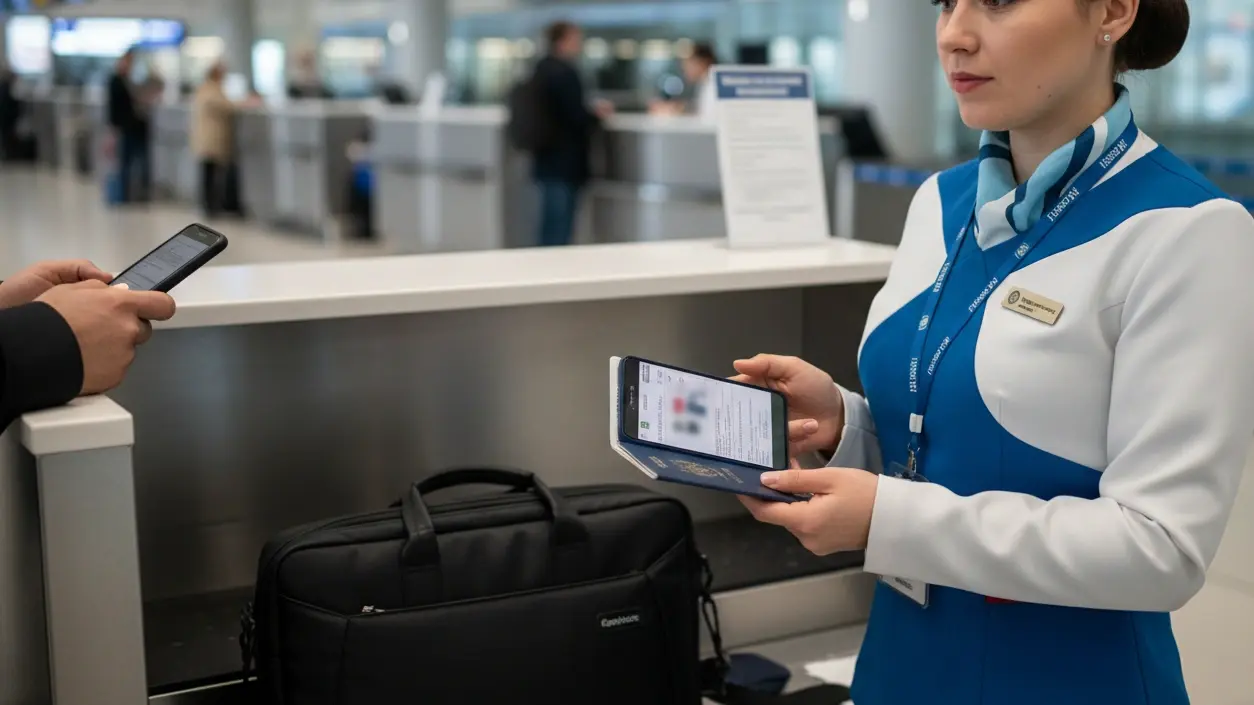
At check-in, your passport name carries more weight than your employer’s name. If your corporate profile says “Sam Khan” but your passport says “Muhammad Sami Khan,” the airline staff member may pause when reviewing the onward ticket. The same issue can happen with shortened first names, missing middle names, reversed surname order or married names not updated in the company travel portal.
Your company name does not fix a passenger-name mismatch. Even if the main ticket was booked through an approved corporate travel desk, the onward reservation should still show you clearly as the traveler.
- Passport name versus corporate ticket name.
- Passport name versus onward ticket name.
- Middle name placement.
- Surname order.
- Spelling across all PDFs and emails.
- Use of initials instead of full names.
The onward route should make sense with the business itinerary
The onward route does not need to live inside your corporate booking system, but it should make sense for the work trip. If your company books Doha to Singapore for a five-day client workshop, an onward reservation from Singapore to Kuala Lumpur after the workshop is easy to understand. If the onward ticket shows departure from Jakarta with no visible connection from Singapore, the agent may ask more questions.
A strong onward route usually has one of these patterns: departure from the same arrival country, departure from a nearby business hub, departure after a logical regional movement, a route that fits your meeting or conference location, or a destination that does not conflict with your entry conditions.
Dates should support entry compliance, not corporate convenience alone
Corporate travel dates often follow project needs. Airline document checks follow entry rules. Your employer may want you available in Dubai for an open-ended assignment, but the check-in desk may still need to see onward travel inside the stay period allowed by your entry category.
Watch for date problems: onward departure after the allowed stay, onward departure before arrival, a return date that conflicts with the meeting invitation, a reservation created for the wrong month, or a date based only on company approval rather than entry timing.
Treat the onward date as a boarding-support detail, not only a travel preference. Your corporate desk may adjust later business flights, but the document shown at check-in should support your right to board that day.
Payment ownership is less important than reservation clarity
Airline staff usually care more about the reservation details than who paid for the ticket. Your main flight may be charged to a company card, agency account or central billing profile. Your onward ticket may be arranged separately because the company has not finalized the return sector yet. That payment split is not automatically a problem.
What matters is whether the onward document is clear: name, airline or transport details, travel date, departure and arrival points, booking reference when available, and readable itinerary format.
Corporate desk emails are not a replacement for a clean onward reservation
Corporate travel emails can be useful, but they are not always easy to review at the airport. A travel desk confirmation may include approval codes, cost centers, internal notes, employee IDs, agency references and multiple itinerary versions. That may help your finance team, but it can slow down a check-in agent who only needs proof that you will leave the destination country.
A cleaner setup is easier: one PDF for the corporate main flight, one PDF for the onward ticket, one business invitation or assignment letter if needed, offline copies saved on your phone, and printed copies for airports with manual document checks.
What Airline Staff Are Most Likely to Accept When They Ask for Your Onward Ticket
At check-in, airline staff want proof they can read fast and trust enough to issue the boarding pass. When your corporate travel desk booked only the first sector, your onward proof must answer the exit question without adding confusion.
A verifiable PNR carries more weight than a static screenshot
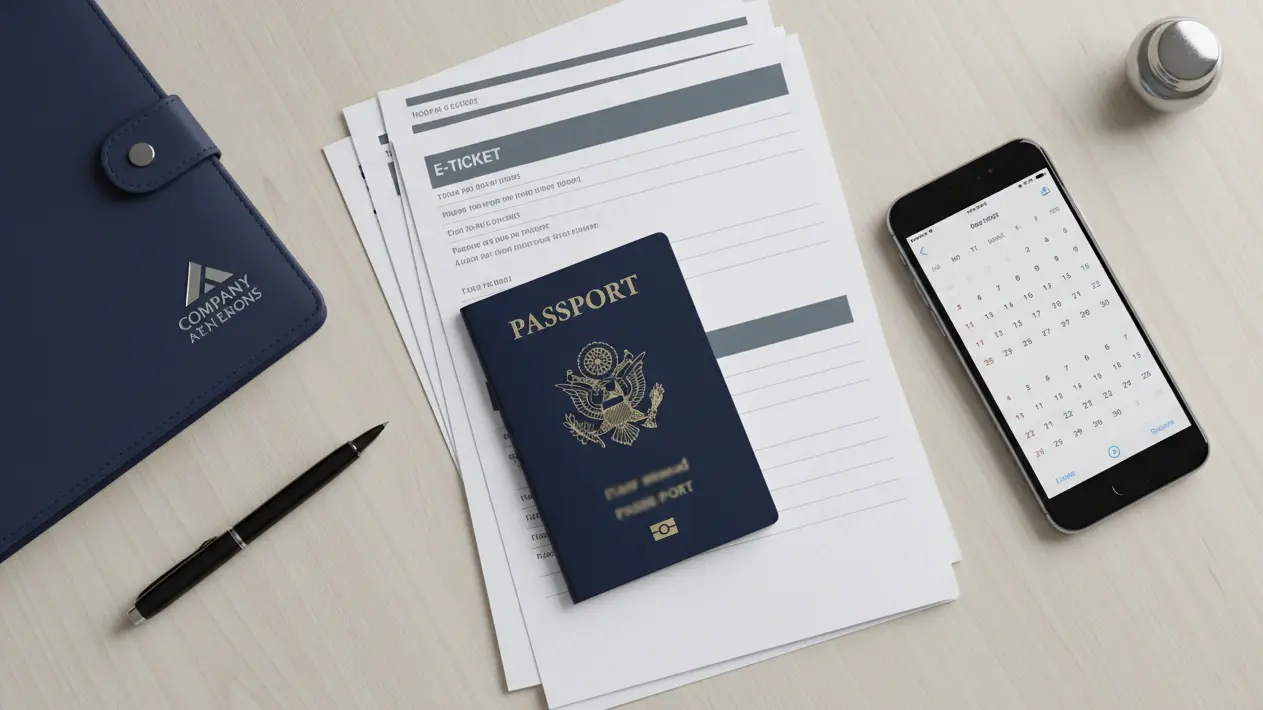
A clear booking reference or PNR gives airline staff something concrete to review. It supports the onward ticket better than a cropped image saved from a chat or forwarded from a travel coordinator.
A screenshot can work against you if it hides the route, name or booking reference. Staff may not call it fake, but they can treat it as incomplete if it looks edited or unclear. A verifiable onward ticket is especially useful when you arrive on a one-way ticket for business travel, relocation or a project visit.
A PDF itinerary is easier to review than a long email thread
A PDF is easier for check-in staff than a chain of corporate emails. Your company travel desk may send several messages about approvals, invoices, cost centers and pending return options. Those messages may help internally, but they are slow at the airport.
Save the PDF offline before you leave for the airport. If you travel often for work, keep a simple “Airport Documents” folder with your passport copy, corporate ticket, entry document if needed, and onward reservation. The less searching you do at the counter, the cleaner the interaction feels.
The onward ticket should be separate from the corporate main ticket, but not contradict it
A separate onward ticket can fit corporate travel well as long as the details do not conflict with your main booking. The problem is not separation. The problem is contradiction.
If your corporate ticket shows arrival in Bangkok on July 8, your exit proof should not leave Kuala Lumpur on July 7. If your business invitation says you will attend meetings in Dubai for five days, an onward reservation three weeks later may need stronger explanation if your entry conditions allow only a shorter stay.
The reservation should still be active when the check-in agent looks at it
Timing can decide whether onward proof helps or creates stress. If you generate a reservation too early, it may no longer be active when airline staff review it. If you wait until the airport queue, you risk mistakes in names, dates or route details.
A practical flow works better: check entry requirements before departure, prepare the onward ticket close enough to the trip that it remains useful, open the PDF before leaving for the airport, and verify the name, route and date one more time before check-in.
| Check-in issue | Stronger onward ticket setup | Weaker version |
|---|---|---|
| Company booked outbound only | Separate onward ticket with clear route and date. | “Return pending” corporate email. |
| Name mismatch | Passport name matches both tickets. | Corporate nickname on one document. |
| Flexible project end | Onward date inside allowed stay. | Open-ended stay with no exit proof. |
| Manual document check | Downloaded PDF and printed backup. | Long email thread or cropped screenshot. |
How to Prepare for the Check-In Conversation When Corporate Travel and Onward Proof Are Separate
The document can be correct, but your explanation still matters at the counter. When the main flight comes from a corporate travel desk and the onward ticket comes from a separate source, you need a simple way to present both without creating doubt.
What to say if staff ask why the return flight is not on the corporate booking
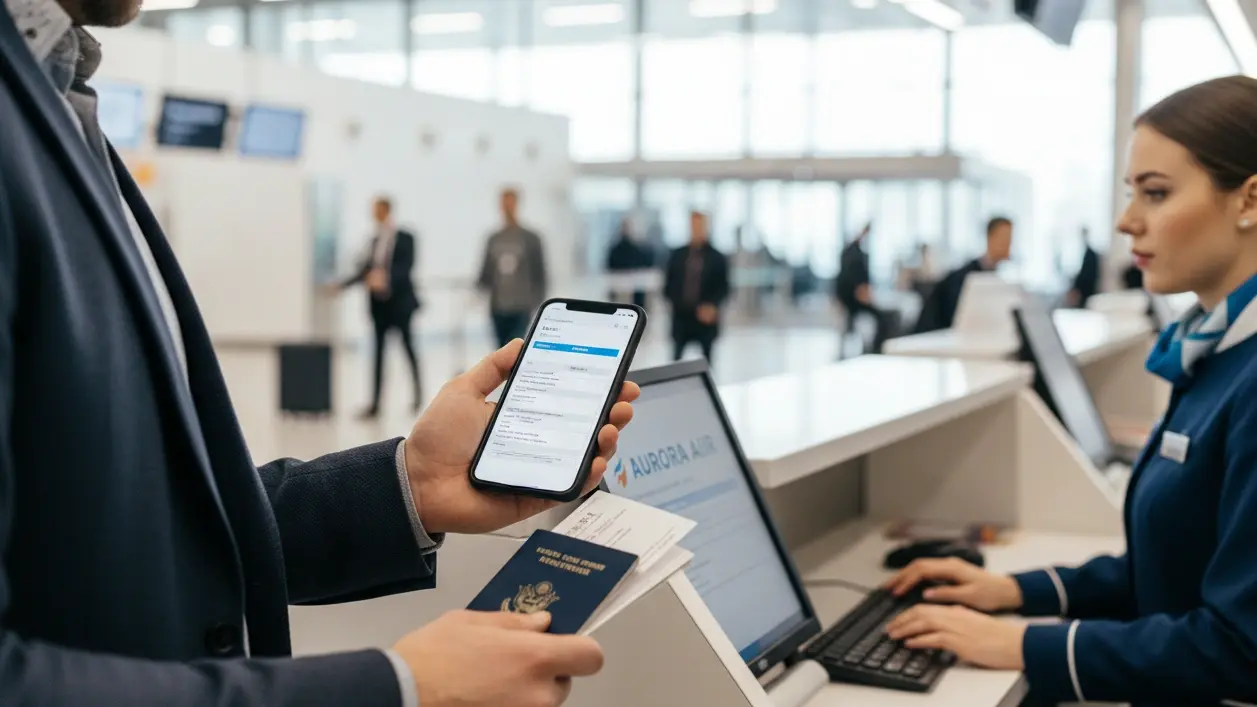
Airline staff may ask why your return or onward route is not inside the company booking. That question is normal on corporate trips with flexible travel dates. Keep the answer short and factual.
You can say: “My company booked the main business sector. This onward reservation is separate because I need proof of exit for entry requirements.” That explains the split without turning the conversation into a company policy discussion.
Do not start with reimbursement details, internal approval delays or travel desk limitations. Those details may be true, but they do not help the airline decide whether to board you.
What to show first if the airline desk asks for proof of exit
Show the cleanest flight document first. Do not hand over a stack of unrelated corporate papers. A good order is passport, entry document if required, main corporate ticket, separate onward ticket, then business invitation or assignment letter only if asked.
This order helps the agent follow the trip logically. They see who you are, where you are going, how you are entering, and how you plan to leave. A return ticket can also work if it matches your work schedule and permitted stay, but for corporate trips with uncertain end dates, a separate onward reservation is often more practical.
How to handle a staff member who wants to verify the booking
Some staff members glance at the document. Others check the reservation number, route or status more closely. Stay calm if they verify it. That does not mean there is a problem.
Point to the key fields: full name, flight route, departure date, booking reference, airline and flight number, and destination after exit. If the agent asks whether the document is active, answer based on what you can show. Do not guess.
If they cannot verify the reservation right away, ask politely which detail they need. Do not argue about the airline’s right to check. Staff can deny boarding if they believe the onward proof does not satisfy the destination requirement.
What to avoid saying at the counter
The wrong wording can turn a clean document into a longer conversation. Avoid phrases that make the onward ticket sound uncertain, disposable or disconnected from the trip.
- “It is only for formality.”
- “We will cancel it after arrival.”
- “The company will decide later.”
- “The travel desk said it should be fine.”
- “It is not a real trip.”
- “Can you just accept it?”
These phrases shift attention away from the document details and toward your intention after arrival. At the counter, the onward ticket should speak through its route, date, passenger name and booking reference.
Final pre-airport checklist for corporate travelers
- Your passport name matches both bookings.
- Your corporate ticket and onward ticket do not overlap incorrectly.
- Your onward departure date sits inside the allowed stay period.
- Your next destination is logical for the work route.
- The reservation number is easy to find.
- The PDF opens offline.
- You have a printed copy if manual checks are likely.
- Your business letter does not contradict the flight dates.
Real reservations are easiest to present when every field lines up. You should not need a long explanation if the name, date, route and reference are clear.
Leave the Check-In Counter With a Clear Onward Plan
Corporate travel desk bookings can be valid, organized and still leave airline staff asking for onward proof. What matters at check-in is clarity: your passport name, corporate flight, onward ticket, route, date and stay limit should all support the same travel story.
When those details line up, you can answer questions without overexplaining company approvals or flexible return plans. Keep the PDF ready, check the booking details before departure, and present only what the airline needs. That is how corporate travel and onward proof work together instead of creating friction at the counter.
Use DummyFlights to prepare an onward ticket, dummy ticket or ticket onward document that supports your corporate route, dates and passenger details.
Create Your Onward TicketFrequently Asked Questions
Can airline staff ask for an onward ticket on a corporate trip?
Yes. A company-booked main flight does not always prove how you will leave the destination. Airline staff may ask for onward ticket proof when destination rules or airline systems require visible exit evidence.
Does a corporate travel desk confirmation replace onward proof?
Not always. Corporate confirmations may show approval, payment or itinerary notes, but they may not show a clear departure route from the destination country. A separate onward ticket is easier for airline staff to review.
What should the onward ticket show for corporate travel?
It should show your passport-matching name, route, departure date, next destination, booking reference when available, and no conflict with the company-booked main ticket.
Can the onward ticket be separate from the company ticket?
Yes. The onward ticket can be separate as long as it does not contradict the corporate main ticket. Payment ownership matters less than clear passenger, date and route details.
What should I say if the airline asks why the bookings are separate?
Keep it simple: “My company booked the main business sector, and this onward reservation covers the proof-of-exit requirement.” Avoid long explanations about internal approvals or reimbursement.
Is a PDF better than a corporate email thread?
Yes. A clean PDF is easier to review at check-in than a long email chain with cost centers, approval notes and internal travel-desk comments.
When should I prepare onward proof for a corporate trip?
Prepare it before reaching the airport, but close enough to departure that the details remain useful. Open the PDF before check-in and confirm the name, route, date and booking reference.
Does an onward ticket guarantee boarding or entry?
No. An onward ticket can support your document check, but boarding and entry depend on the full situation, including passport, eligibility, route, destination rules and airline processes.
Friendly reminder: DummyFlights provides temporary travel-proof documents for planning and application support. Requirements vary by destination, airline, route and applicant situation. An onward ticket can support a file, but it does not promise approval, boarding or entry.