
Short answer: 2026 jet-fuel volatility can influence airline capacity and schedules, but a fuel-price change does not directly tell you the status of a dummy ticket. For visa use, verify the actual flight number, operating day, connection, passenger details and live booking state. If the carrier changes your route, ask the issuer for an authentic updated itinerary and follow the visa authority’s update rules.
Key facts
- IATA has reported fuel-price pressure and some airline schedule curtailments in 2026; that is industry context, not a diagnosis of one PNR.
- A changed flight detail or segment state is actionable; a fuel headline alone is not.
- An unticketed reservation has its own time limit, independent of the market price of fuel.
- Use the visa authority’s current checklist and update process. No reservation guarantees approval or boarding.
In This Guide
Reviewed for: a 2026 airline-schedule-change question prompted by fuel-cost news. This guide does not claim fuel prices cause a specific PNR status. For the separate question of a hold’s lifecycle, read how long dummy tickets stay valid in GDS systems.
Official-source check: IATA’s June 2026 outlook notes airline schedule curtailments and selective capacity changes under fuel pressure. Its Q2 chartbook documents jet-fuel price volatility. These sources do not link a particular price movement to a particular traveler’s booking.
| Signal | Meaning for your visa itinerary | Next step |
|---|---|---|
| Fuel-price headline | Industry context only | No PNR conclusion; check the actual itinerary on schedule. |
| Airline schedule notice | A flight detail may have changed | Compare all legs and application dates. |
| Canceled or missing segment | The submitted route may no longer be supported | Contact the issuer for correction or replacement. |
A visa-purpose flight reservation can become outdated after an airline changes a schedule. In 2026, fuel-cost pressure is one reason airlines have adjusted networks, but a fuel price does not directly change an individual PNR. The traveler’s job is to compare the actual booking with the current flight schedule and the visa file.
This guide distinguishes industry-level fuel news from actionable booking evidence: a changed flight number, retimed arrival, removed segment or revised connection. We show when to check, what to ask the issuer, and when a corrected reservation is needed.
Jet Fuel Volatility and Flight Schedules: What Is Known
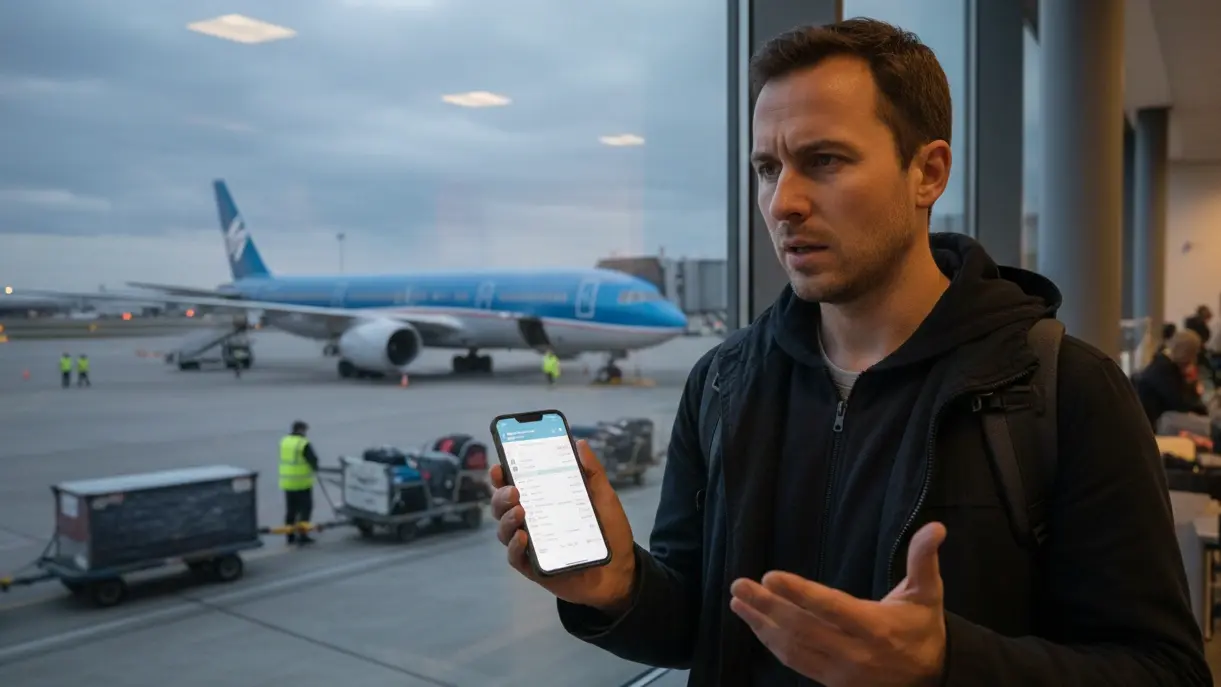
Fuel is a major airline operating cost, and 2026 price pressure has influenced network decisions. That does not mean every route or booking is unstable. Treat a reported market trend as context; act only on a change affecting your itinerary.
How Airline Cost Pressure Turns Into Schedule Trims, Aircraft Swaps, And Inventory Reshuffling
IATA’s June 2026 outlook describes schedule curtailments and selective capacity adjustments during the fuel-price shock. Those are industry-level observations. They cannot identify why one airline changed one flight or predict the status of your record.
Your PDF is a snapshot of an itinerary. If a carrier later changes a flight, the source booking can differ from the document. Check the actual flight numbers, local dates, routing and segment states rather than inferring trouble from fuel headlines.
A low-frequency or multi-stop route may offer fewer convenient alternatives after a cancellation. That is a practical resilience issue, not proof that fuel costs will cause a specific leg to disappear.
An aircraft swap can change equipment without necessarily changing your visa itinerary. Focus on whether the flight number, date, operating carrier, connection and live booking have changed in a way relevant to the application.
Why Some Dummy Tickets Look Stable On Day One But Become Vulnerable By Review Day
The first check is rarely the most important one. Many applicants create a reservation, confirm that the PNR appears correctly, save the PDF, and move on. That is only the start of the risk window.
A submitted itinerary may be examined later, but there is no universal consular review timetable and no guarantee a temporary hold remains active throughout processing. Check the checklist and issuer’s time limit, then update the authority if it permits or requests revised travel evidence.
A reservation can weaken in small ways before it fails in obvious ways. The departure time shifts. The operating carrier changes. A connection becomes tighter than it was when you first generated the booking. None of those changes looks dramatic at first glance, but together they can make the itinerary look older, less current, or less aligned with the trip you presented.
That is why a dummy ticket should be treated as a time-sensitive document, not a one-time download. The day you receive it is not the day that matters most.
Which Flight Structures Need Extra Checking After a Schedule Change
The following structures can create more points to verify after any airline schedule change. They are not proven to react first to fuel prices in every market.
The riskiest structures usually include:
-
Low-frequency international sectors where schedule trimming is easier
-
Seasonal routes that sit close to weaker demand periods
-
Codeshare-heavy combinations where one carrier markets and another operates
-
Multi-stop itineraries with unnecessary complexity
-
Tight same-day connections that leave little room for timetable movement
-
Secondary airport pairings with less operational depth
If your route includes several carriers or thin connections, plan a clearer verification process. Direct routing can be simpler but may not be available or appropriate. Choose the route that reflects your real intended trip.
Codeshare-heavy plans deserve special attention. They can still work well, but they are more exposed to small coordination changes between marketing and operating carriers.
Carrier coordination and schedule changes can create mismatches on codeshares. The cause may be operational, commercial or regulatory; do not attribute a specific record change to fuel without carrier evidence.
The same logic applies to trips that try to look overly clever. If your itinerary crosses extra transit points without a strong reason, you are adding moving parts to a document that should stay boring and stable.
Why Visa Applicants Should Care More About Reservation Drift Than About Fare Headlines
Fuel and fare news can explain a broad business environment. Your visa document turns on narrower facts: does the flight still operate on the stated day, does the booking remain usable, and do your other documents still match?
A rising fare does not automatically create a visa issue. Reservation drift can. That is the distinction worth keeping clear.
You need not monitor oil markets to validate a visa-purpose itinerary. Watch your airline or issuer notifications and verify the record at relevant submission checkpoints.
Use 2026 fuel volatility as background for why schedules may shift, not as a predictor of your PNR. A changed flight detail calls for checking the booking; an unchanged fuel headline does not.
Match a Reservation to the Visa Submission Window

A strong visa-purpose itinerary is one that matches your current intended travel and the authority’s document instructions at the time it is submitted. A temporary reservation may later expire even when the planned trip remains genuine.
Why A Valid PNR At Submission Is Not The Same Thing As A Safe Reservation At Adjudication
A file submitted on Monday may be reviewed later, after an unticketed hold expires. Do not assume the authority will run a live lookup at a known time or that the issuer can promise a hold through the decision date.
That gap matters most in visa systems where document intake and document review happen on different timelines. A visa center may collect your passport, forms, and supporting documents quickly, then pass the file to the embassy later. In that delay, your itinerary ages.
Record the issuer’s known ticketing deadline and your own submission timeline. If the itinerary changes materially or the authority asks for updates, provide a corrected authentic document through the proper channel.
A safe reservation timing strategy depends on three moving parts:
-
Your submission date
-
The likely review date
-
The route’s stability over that gap
If those three do not line up, you can end up with a reservation that was correct too early.
How To Align Your Reservation Lifecycle With Biometrics, Interviews, And Silent Processing Gaps
Visa processes differ. The document-upload or interview stage may matter, but do not guess when a caseworker will examine the file. Follow the authority’s instructions and ask the issuer about the reservation’s known validity.
For example, your biometric appointment may only confirm identity capture and file intake. Your travel documents may not be reviewed in depth until later. In an interview case, an officer may focus on the itinerary on the interview day itself. In a paper-file case, the ticket may be examined after transfer from a visa center to the embassy.
Map known checkpoints rather than predicting a hidden review day. Confirm the itinerary is accurate at submission and be prepared to update it if the authority permits or requests a newer version.
A practical way to do that is to split the process into checkpoints:
-
Online application stage
Use your intended dates and route logic to shape the file, but do not assume this is the final timing anchor. -
Document upload or file assembly stage
This is often where applicants rush. If the review will likely happen much later, an early reservation can become stale. -
Biometric or VAC appointment
Helpful for timing reference, but not always the point of itinerary scrutiny. -
Interview date
In interview-based systems, this is often the moment when your route, travel dates, and overall plan need to look especially consistent. -
Post-interview processing
Even after the conversation ends, the file may sit for additional checks. If the route is fragile, that extra time matters.
Plan the reservation around known application steps and the issuer’s time limit. Do not promise that a booking will remain live for an unknown adjudication window.
What Applicants In Slow-Moving Or High-Queue Visa Systems Should Do Differently
Where processing time is uncertain, avoid making a short-lived hold months before it is needed. Keep a genuine intended travel plan and use a reservation when the checklist requires one.
The goal is not to keep an unticketed PNR alive indefinitely. The goal is to submit accurate evidence at the required point and respond truthfully if the plan changes.
That changes how you should think about preparation.
Instead of asking, “How early can we prepare this?” ask:
-
How long will the file probably wait before review?
-
Will the embassy see this before or after my appointment?
-
Is my route simple enough to survive that wait without looking stale?
-
Would a later refresh reduce risk more than an early submission?
This is especially relevant for applicants dealing with:
-
Student visa seasons with heavy queues
-
Schengen peaks before summer
-
Family visit files submitted through third-party collection centers
-
Interview-waiver cases where review timing is less visible
-
Consular posts handling multiple jurisdictions with uneven workloads
In these cases, timing discipline matters more than document speed. A neat reservation printed too far ahead of scrutiny can create more work later.
When Refreshing A Reservation Is Smarter Than Defending An Old One
An old PDF is not sufficient evidence that the underlying booking remains current. Check the route, local dates and live status, then ask the issuer whether it can be updated or must be replaced.
Refreshing is usually the better move when:
-
Your appointment was rescheduled
-
Embassy review is taking longer than expected
-
Your intended departure window shifted
-
The route now looks less clean than it did at creation
-
The file moved from fast-track expectations into a slower queue
Replace the document when a material schedule or route change means it no longer describes your intended trip. If an authority has already received the old version, follow its process for updates instead of silently submitting conflicting copies.
A good refresh decision is not reactive panic. It is file maintenance. You are keeping the travel proof aligned with the administrative reality of the case.
Booking Signals That Matter More Than Fuel Headlines

After a reservation is created, monitor the actual itinerary rather than the daily fuel price. A schedule change, removed segment or new connection can matter; the macroeconomic cause usually does not.
How To Read Cancellation, Unable-to-Confirm, And Schedule-Change Signals Without Overreacting
Not every update inside a reservation means trouble. What matters is whether the change weakens the itinerary you plan to show a consulate, embassy, or visa center.
If a flight segment cancels, ask the carrier or issuer about alternatives and obtain a revised document. IATA reports fuel-price volatility at industry level, but that report does not establish why your individual flight canceled.
Unable-to-confirm messages should also be treated seriously, but calmly. They do not always mean the entire booking has collapsed. Sometimes they show that a segment needs fresh confirmation after a schedule move, inventory reset, or carrier coordination change.
Airline capacity decisions have many causes. A schedule update in your reservation is actionable; speculation about the carrier’s cost pressure is not.
Schedule changes need a more careful read than most applicants give them. A fifteen-minute shift may not matter. A new departure time that breaks your onward connection or pushes arrival into the next date can matter a lot.
A changed journey can require a new document even when the cause is unrelated to fuel. Compare the current booking with the version filed for the visa.
The key is to separate noise from structural change. Public headlines about crude oil, heating oil, or price spikes do not tell you whether your PNR is still acceptable. The status movement inside the booking does.
What To Check Beyond the Status Line Itself
A clean-looking status line can still hide a weaker itinerary. That is why you should inspect the reservation as a full travel record, not as a single code.
Start with the flight number. If it changes, do not assume the route stayed functionally the same. A new flight number can signal a retimed service, a different operating setup, or a flight that now sits on a different day pattern.
For a Schengen file, a UK visit visa case, or a student visa application, this can create date mismatches between your flight proof and the rest of the documents.
If the operating carrier changes, check whether the route and connection remain intact. Do not assume this is caused by fuel volatility or that every codeshare change invalidates your application.
Then look at timing integrity:
-
Departure date
-
Arrival date
-
Layover length
-
Terminal or airport changes
-
Same-day connection logic
-
Total journey time
A reservation that now requires a risky transfer is no longer as embassy-friendly as it was when first issued. That is especially true when your file already depends on tight trip dates around a conference, family event, or admission start date.
Regional disruption or operational limits can affect schedules. Verify only the route you intend to use and avoid broad claims about which markets will change next.
Air-cargo and ocean-freight cost stories do not establish the status of a passenger’s booking. Use the issuing channel and carrier notices instead of unrelated market indicators.
A Monitoring Rhythm That Matches Real Visa Risk, Not Travel Enthusiasm
Checking too often can make you anxious without improving your file. Checking too rarely can leave you with an outdated reservation at the wrong moment. A better approach is to tie monitoring to your visa timeline.
A useful rhythm looks like this:
-
One check soon after issuance
-
One check before submission or biometrics
-
One check near interview day, if your visa process includes an interview
-
One follow-up check if the case runs longer than expected
These checkpoints track document accuracy, not a predictable fuel-to-PNR chain. Check more often only when the airline notifies you of a change or the authority requests an update.
Do not infer booking risk from an airline’s hedging strategy. It is rarely visible to the traveler and does not tell you whether a specific flight leg remains confirmed.
You do not need to monitor every barrel of oil or every commodity swing per barrel. You do need to know whether your reservation is moving closer to review with the same level of clarity it had when created.
Your verification record should help you stay organized, not make the application messy. Keep a simple note of the dates you checked the booking, what changed, and whether the itinerary still matched your file.
Keep a dated note of your own checks and issuer messages. Industry stories about sustainable fuel or cargo markets are not substitutes for the live reservation record.
The useful discipline is simple: compare the document, booking and application whenever a material flight change occurs.
Build a Resilient Itinerary Without Guessing at Oil Prices
Build an itinerary around the trip you actually intend, with connections and dates that fit the rest of the visa file. No route structure can eliminate airline schedule changes.
Choose Itinerary Shapes That Are Less Likely To Be Reworked Mid-Process
A simpler route may be easier to review and update, but “safest” depends on the specific airport, carrier, ticket arrangement and travel purpose.
Direct travel is not always possible, but clean routing still matters. A one-stop path with a sensible layover is usually easier to defend than a multi-stop plan built only to mimic a bargain fare pattern. When airlines adjust schedules under fuel pressure, complicated paths tend to show strain earlier because more segments have to remain aligned.
A more stable itinerary usually has these traits:
-
One clear outbound path and one clear return path
-
Reasonable connection times
-
No unnecessary airport swaps
-
No extra transit city inserted just to fill space
-
Travel dates that fit the purpose of the trip
More frequent service may offer alternatives after disruption, but that does not guarantee a particular unticketed reservation lasts longer. Ask the issuer about its actual time limit.
Do not generalize about Europe or any other region from fuel prices alone. Compare the schedule of your own proposed route against your application.
Avoid Self-Created Risk: Unrealistic Dates, Overbuilt Routes, And Itineraries That Invite Questions
A stable reservation can still become a weak visa document if the travel plan itself looks forced. Many problems are not caused by the airline. They are created by the applicant during trip design.
Unrealistic dates are one of the fastest ways to make a file look less coherent. If your travel window is too tight for the stated purpose, the reservation may feel assembled rather than planned. The same applies when the return date leaves no room for the event, visit, or meeting you say you are attending.
Overbuilt routes create another kind of trouble. If your trip could logically be shown with one simple connection, but the reservation uses several segments, the file starts carrying extra operational risk for no real visa benefit. A complex path can also make the trip purpose harder to understand at a glance.
Watch for these self-created issues:
-
Arrival too close to the stated event or appointment
-
Return too soon to match the declared stay
-
Overnight layovers with no practical reason
-
City pairs that do not support the rest of the application
-
A route that consumes a substantial portion of the trip in transit time
You should also keep your supporting documents in sync with the itinerary logic. If your cover letter, leave dates, invitation timing, or event schedule point one way and the dummy flight reservation points another way, the issue is not only operational. It becomes narrative. A clean GDS status cannot fix a trip plan that no longer reads naturally.
When A Flexible Reissue Option Is The More Sensible Visa Move
Sometimes the smartest strategy is not to lock yourself into one version of the itinerary too early. If your appointment date is still moving, your departure window is not fully settled, or your review timing looks uncertain, flexibility becomes part of document quality.
If dates may shift, ask the issuer what changes are allowed, what they cost and whether a replacement booking is needed. Do not assume the original PNR can always be reissued.
Before ordering a visa-purpose flight reservation, confirm the current product terms, price, change policy, verifiability path and expected hold deadline. Do not rely on a fixed price, unlimited changes or universal acceptance without current written terms.
Your Final Keep, Refresh, Or Replace Checklist Before You Submit
Before submission, use a simple judgment test. You are not asking whether the reservation exists. You are asking whether it still serves the case you are about to present.
Keep it when:
-
The dates still match your intended trip
-
The route remains simple and readable
-
The segments still support the same travel logic
-
The review window is close enough that the reservation still feels current
Refresh it when:
-
Your submission or appointment date has moved
-
The file is taking longer than expected
-
The reservation still makes sense, but the timing is now older than you would like
-
Small flight changes have appeared, but the overall route is still usable
Replace it when:
-
The path now looks awkward or fragile
-
A segment change affects the credibility of the itinerary
-
The dates no longer fit the purpose of travel
-
The reservation now asks the reviewer to ignore too many moving parts
Keep, Update, or Replace the Reservation
A dummy-ticket itinerary should match the current travel plan and the visa checklist at submission. In a year with airline schedule adjustments, recheck real flight details and record status; do not use fuel headlines as a proxy for your PNR.
If a flight changes, ask the issuer for a corrected authentic document and update the visa authority as its rules allow. That is more useful than guessing which industry cost pressure caused the change.
Need an itinerary for a moving travel plan? Confirm the dates your visa checklist asks for and the issuer’s current terms. Review a visa-purpose flight reservation only when it matches your genuine intended route.
Frequently Asked Questions
Does a rise in jet-fuel prices cancel my PNR?
No. An industry fuel price is not a booking status. Check the live reservation and any carrier notice.
Can fuel pressure lead airlines to change schedules?
It can be one factor in network decisions; IATA reported schedule curtailments in 2026. The cause of a specific flight change requires carrier evidence.
What matters most after a schedule change?
Check dates, flight numbers, operating carrier, connection, segment state and consistency with the rest of the visa file.
Should I replace my itinerary when fares increase?
Not for a fare headline alone. Replace or correct it when the live booking or intended travel plan materially changes.
Can I keep an expired hold in my application?
A past PDF does not prove a current reservation. Check the authority’s document instructions and ask the issuer for an accurate replacement if needed.
Will a fresh reservation guarantee visa approval?
No. A coherent reservation is only one supporting document and is not a boarding entitlement.
Reminder: Airline schedules, reservation terms and visa requirements change. Confirm the current position with the carrier, issuer and relevant visa authority.