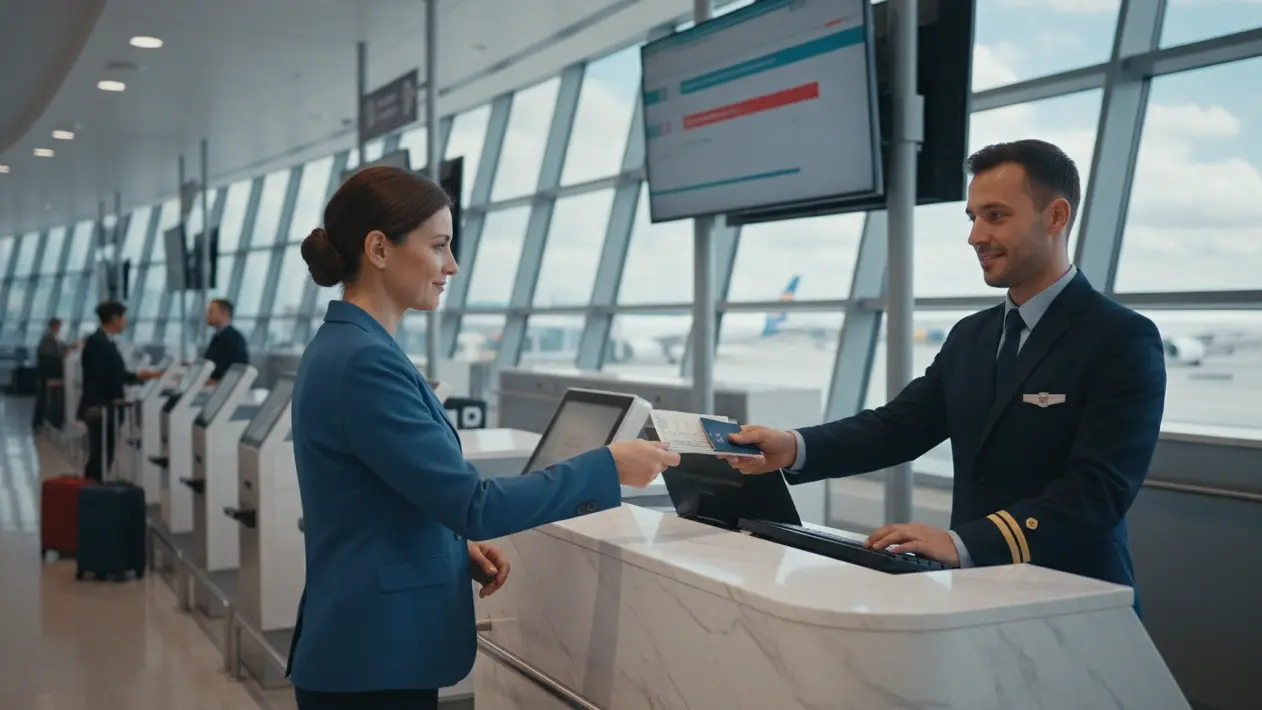
You open your dummy flight ticket and your name looks wrong. Instead of your full legal name, the PDF shows something clipped, compressed, or reduced to an initial where your middle name should be. Your visa appointment is close, the rest of your file is already prepared, and now you are wondering if this small formatting quirk could turn into a rejection, a correction request, or an awkward question at the counter.
Here is the cleaner way to think about it: a shortened name is not automatically dangerous, but ignoring it is careless. Airline reservation systems, passport machine-readable zones, visa forms and embassy checklists do not always display names in the same human-friendly way. What matters is whether the reservation still points clearly to you and whether the name stays consistent enough across the full visa file.
This guide shows you how to read a shortened name properly, when it is usually safe, when it needs fixing, and how to request a correction before your appointment. You will leave knowing how to check your ticket, spot a real mismatch, and avoid turning a tiny formatting issue into a document-consistency problem.
Key Facts
- A shortened middle name or missing suffix is usually lower risk than a changed surname or swapped name order.
- Your passport should be the anchor document for the name on every visa-support document.
- Airline systems may compress names because of character limits, special characters, hyphens, or two-field booking formats.
- A dummy ticket should still show a recognizable passenger name, realistic route, travel dates, carrier details and booking reference.
- If the name could plausibly belong to another person, request a correction before you submit the visa file.
Need a cleaner travel-proof PDF before submission? Create a name-consistent dummy flight ticket with your passport spelling, route, date window and downloadable PDF aligned before you attach it to your visa file.
Create Your Dummy Flight TicketIn This Guide
Official-source check: Airline and border-document checks are built around identity, travel-document validity and entry-document requirements. IATA’s Timatic is used by airlines and travel handlers for real-time document requirements, GOV.UK carrier guidance says carriers must check that a passenger has an acceptable travel document and is the rightful holder, and TSA identity guidance shows why name details, suffixes and acceptable ID checks can matter at the airport. Sources: IATA Timatic, GOV.UK carrier document checks and TSA acceptable identification guidance.
Reviewed for: passenger-name formatting, passport-name consistency, PNR terminology, FNU/LNU wording, airline-counter practicality, visa-file document matching and safe dummy-ticket claims.
Why Your Name Might Look "Wrong" on a Dummy Flight Ticket
You glance at your dummy ticket expecting to see your full name exactly as it appears on your passport. Instead, you see something clipped, spaced oddly, compressed into one field, or missing a piece entirely. Before you assume something went wrong with the booking, it helps to understand how airline systems actually handle passenger names behind the scenes.
The Character Limit Most Booking Systems Won't Tell You About
Airline reservation systems are not designed like a passport page. They are built around structured fields, booking codes, airline formats and downstream systems that may not display every character exactly the way you typed it. Long compound surnames, multiple middle names, double-barrelled family names and names with special marks can all become awkward once they move from the booking form into a final PDF or PNR record.
For someone with a short, simple name, this never becomes visible. For travelers with long legal names, the difference can appear immediately. You may type the full passport name into the form, hit confirm, and only discover the truncation when the generated document shows a middle name reduced to an initial or a final surname segment cut short.
This is why the final PDF matters more than the checkout screen. Some booking forms display the full name while you are entering details, then generate a shortened version when the reservation is issued. That does not always mean the document is unusable. It means you need to check whether the shortened version is still obviously connected to your passport name.
The safest habit is simple: open the actual document, not just the confirmation page. Read the passenger field slowly. Compare it against your passport, your visa form and your hotel or host proof. If the shortened version preserves the core given name and surname, the issue may be only formatting. If the shortened version drops the part that identifies your family name, it deserves correction before submission.
This becomes especially important for routes where airline or security checks rely heavily on the travel document name. For visa files, the practical rule is simple even when the exact system differs: use the passport as the anchor and keep every supporting document as close to it as the booking format allows.
What Happens to Middle Names, Suffixes, and Hyphens
When a system cannot display the full name neatly, it usually does not stop the booking. It shortens, removes punctuation, compresses spacing, or prioritizes one part of the name over another. That is where applicants get nervous, because the ticket may look less polished than the passport even when the identity is still clear.
Typically, the first pieces to change are the least essential identity markers. Middle names may become initials or disappear from the display. Suffixes such as Jr., Sr. or III may be removed because many systems do not treat them as core identity fields. Hyphens may be replaced with spaces, so a surname like Garcia-Lopez may appear as Garcia Lopez. Accents and apostrophes may also disappear because some reservation systems do not support those characters consistently.
The important question is not whether the ticket looks typographically identical to your passport. The important question is whether it still identifies the same traveler without hesitation. If your passport says Maria Isabel Garcia Lopez and the ticket says Maria Garcia Lopez, most people can immediately see the connection. If the ticket says Isabel Lopez and drops the primary given name or primary surname, the connection becomes weaker.
If you are still clarifying how a temporary reservation is supposed to look, it helps to understand what is a dummy ticket before judging a name field in isolation. A proper dummy ticket is not just a name printed on a page. It should also include realistic route details, airline information, travel dates and a booking reference that fit the wider travel story.
There is also a practical difference between a harmless system convention and a user-created shortcut. If the system removes a hyphen, shortens a middle name, or strips an accent, that is usually easier to explain. If you typed a nickname, casual spelling, incomplete surname, or different legal name because it was faster, that is no longer a system limitation. That is a preventable inconsistency.
Single-Name Passport Holders and the FNU/LNU Workaround
Some travelers face the opposite issue. Instead of a name that is too long, their passport shows only one name with no separate first-name and last-name fields. This can confuse airline-style booking systems because most of them expect two name fields, even when the traveler’s passport does not divide the name that way.
The common travel-industry workaround is to use a placeholder such as FNU, meaning First Name Unknown, or LNU, meaning Last Name Unknown, depending on how the system handles the missing field. It can look strange if you have never seen it before, but the point is to satisfy the booking system’s two-field structure while preserving the name shown in the passport.
If your ticket reflects a recognized placeholder convention, do not panic simply because it looks unusual. The real risk is an invented workaround that creates a new name, duplicates the wrong field, or makes the document look like it belongs to someone else. A familiar placeholder is usually cleaner than a creative substitute.
For single-name travelers, the best move is to be consistent everywhere. Use the same passport-based format on the dummy flight ticket, visa application form, accommodation proof and cover letter. If the visa form has specific instructions for single-name applicants, follow that first and make the travel-proof documents support that same logic.
Every one of these formatting quirks exists for a practical reason rooted in how travel systems store identity. Once you know what to look for, spotting a real discrepancy on your own ticket becomes much easier than it first seems.
How Visa Officers Actually Read a Passenger Name (It's Not Always "Exact Match")
Once you have spotted a shortened or unusual name on your dummy ticket, the next question is obvious. Does it actually matter to the person reviewing your visa file? The answer depends less on the ticket alone and more on how the full document set reads together.
What the Passport's Machine-Readable Zone Has to Do With Your Ticket
Visa officers, airline staff and border officers do not read a name only as a nice-looking line of text. They compare identity across documents: passport biodata page, machine-readable zone, visa form, travel reservation, insurance, invitation letter, hotel proof and sometimes older travel records. The passport remains the anchor because it is the travel document that establishes who is applying.
The machine-readable zone at the bottom of the passport can already simplify names in ways that look different from the printed name area. Special characters may be converted, spacing may shift, and long names may be represented in a more standardized way. Reviewers who handle travel documents regularly are used to seeing these small technical differences.
This is why a flight reservation with a slightly shortened name does not automatically raise a flag. What matters more is whether the reservation, taken as a whole, lines up with the rest of the visa application. A useful travel-proof document should show a recognizable passenger name, a specific route, clear dates, carrier details and a booking reference or PNR that does not contradict the rest of the file.
Think about an applicant using a Delhi to Amsterdam itinerary for a Schengen appointment. If the reservation clearly lists the airline, flight number, departure airport, arrival airport, travel date and return plan, a missing middle initial may not become the focus. But if the passenger name is shortened, the hotel confirmation uses another spelling, the insurance policy uses a married name, and the visa form uses yet another version, the file begins to feel unstable.
That is why name review should not happen in isolation. It should be part of the same consistency check you already do for route, dates, accommodation and purpose of travel. When the article topic moves beyond a dummy ticket into broader embassy travel-document structure, a dedicated flight reservation for visa guide is the cleaner place to study that BookForVisa-owned layer.
The Difference Between "Shortened" and "Inconsistent"
There is a meaningful difference between a name that is shortened and a name that is inconsistent. This distinction is where many travelers overthink the problem or, worse, underreact to a real one.
A shortened name is still clearly traceable back to the passport. A missing middle name, a middle initial instead of a full middle name, a hyphen replaced by a space, or a suffix removed may fall into this category. An inconsistent name is different. It is a changed spelling, reversed first and last name, missing primary surname, nickname, unrelated surname, or a version that could reasonably look like another passenger.
Use this quick test before you submit the document:
- Place your passport and ticket side by side.
- Read the passenger name on the ticket without explaining it to yourself.
- Ask whether the connection to the passport is immediate and obvious.
- If yes, it is probably a shortening issue.
- If you need to explain why the names match, request a correction or prepare the file more carefully.
This distinction matters because discrepancies in travel documentation can trigger follow-up questions during the visa application stage and later at airport or border checks. An officer comparing a passport, visa, boarding pass and onward proof wants the same quick identity match. A genuine inconsistency can turn a routine review into a longer question trail.
A dummy flight ticket is, by design, a temporary reservation used to support travel intent or onward-travel proof. It should not be treated as a decorative PDF. The name, PNR, route, dates and passenger details all need to make sense together. For visa-specific use, the broader dummy ticket for visa pillar is useful when you want to understand how the reservation fits into the wider application file.
Why Some Consulates Are Stricter Than Others
Not every visa processing center reviews flight reservations with the same level of detail. Some checklists simply ask for a reservation, itinerary, booking proof, return ticket, onward ticket or travel plan. Others compare the flight document closely against the visa form, passport, invitation, accommodation and insurance. You cannot know in advance how careful the reviewer will be, so the safe approach is to prepare as if every field may be compared.
For a simple visit visa file, a minor middle-name truncation may pass without comment if the route, dates and passport details are otherwise coherent. For a stricter Schengen-style file, a reviewer may compare the ticket name against hotel proof and insurance in the same sitting. If each document formats the name differently, even a small issue can look larger than it really is.
Some applicant situations also invite closer review. Family travel, sponsored trips, business travel, students, applicants with old and new passports, recently married applicants and travelers applying from a third country all have more moving parts. In those files, a shortened name is not automatically fatal, but it is one more detail that should be cleaned up before submission.
It also helps to check the consulate’s own document checklist before you finalize your packet. Some checklists use strict wording around passport-name matching or identity-document consistency. If a checklist says details must match the passport exactly, you should not rely on the reviewer’s tolerance. Fix what can be fixed, and keep unavoidable system limitations easy to understand.
The strongest file is not the file with a perfect-looking ticket in isolation. It is the file where the dummy ticket, passport, form, accommodation proof, insurance and travel purpose all tell the same story without forcing the reviewer to solve a puzzle.
Fixing a Shortened Name Before You Submit Your Visa Application
Spotting a name issue on your flight document is only half the job. What you do next determines whether it becomes a non-issue, a small correction, or a delay in your visa timeline.

The Quick Three-Point Check Before You Attach the Ticket
Before your flight itinerary goes anywhere near your visa form, run it through three checks. This takes only a few minutes, and it catches the kind of mistakes that are annoying to fix after submission.
First, compare the reservation against your passport, not your memory. Pull out the actual passport and place it next to the flight document. Many applicants assume they remember their own name formatting correctly, but passports often include spacing, order, transliteration or surname conventions that are easy to overlook.
Second, confirm the name order. If your passport clearly separates surname and given names, make sure the reservation has not reversed them in a way that creates confusion. Some systems display surname first, which is fine when the label is clear. The risk is when first and last names are placed in the wrong fields and the ticket no longer reads like the same traveler.
Third, watch for special characters. Accented letters, apostrophes, hyphens and non-Latin transliterations may be stripped or substituted by the booking system. That may be acceptable when the base letters remain clear, but it should still be checked against the passport and application form.
This check matters even more when other documents are already tied to the same travel window. If your insurance certificate, hotel booking, cover letter and application form all use one version of the name, the flight document should not introduce a new unexplained version. Consistency across the file is what keeps a small ticket issue from becoming a bigger document issue.
Requesting a Corrected Reservation Without Losing Money or Time
If your check turns up a real inconsistency, do not panic and do not assume you are stuck with it. Legitimate reservation providers and travel agents expect name questions to come up because booking formats vary, applicant names vary, and passport conventions are not always friendly to airline fields.
Ask for the correction as soon as you notice the issue. Do not wait until the night before the visa appointment, after you have already printed the file and matched every document to the wrong version. A correction request is usually easier before the travel window has been locked into insurance dates, accommodation proof and a cover letter.
When you request the correction, provide the passport name exactly as it appears on the biodata page. Do not paraphrase it. Do not write “same as passport” without sending the actual spelling. If your passport has a long name, give the provider the full order and ask how the final ticket will display it if the system shortens the field.
It is also worth understanding why this matters financially. On a fully paid airline ticket, name correction rules can be strict and fees may apply depending on the airline, route and ticket conditions. A dummy ticket used for visa documentation is not supposed to lock you into that kind of expensive final-travel commitment. The point is to support the visa file while your real ticket purchase remains flexible.
That flexibility is one reason travelers choose a proper dummy ticket instead of editing a screenshot or using an unreliable free template. If the passenger name needs adjustment, route dates shift, or your appointment changes, the document should be corrected cleanly rather than patched in a way that makes the file look weaker.
What to Do If the Airline's System Physically Won't Fit Your Full Name
Sometimes the issue is not a data-entry mistake at all. The system simply cannot display every character in the full passport name. When that happens, trying to force a perfect visual match may be less useful than preserving the most important identity fields.
Prioritize the core first name and surname. If something must be shortened, a middle name or suffix is usually less risky than the surname that anchors the traveler’s identity. Keep the route, dates, passport number if used, passenger count and booking reference clean so the document does not accumulate multiple small doubts.
If the unavoidable shortened version still looks odd, keep your explanation simple. You do not need a dramatic note inside the article, ticket or cover letter. You just need to know what happened: the reservation system shortened the display, but the passenger name remains traceable to the passport. If asked during an interview or document check, answer calmly and point back to the passport spelling.
This scenario comes up often with long compound names, applicants from countries with different naming conventions, and family members whose names share repeated surname segments. It can also appear when a child or infant is added to a booking, because passenger type labels and name fields sometimes display differently. The solution is not to over-explain every technical quirk. The solution is to keep the document set organized enough that the identity remains obvious.
For broader timing and file-strength decisions, compare the ticket name with the full travel-proof plan, not only the PDF. The dummy ticket for visa 2026 complete guide is the better place to think about timing, validity windows, PNR checks, route logic and supporting document alignment together.
Once your flight itinerary is consistent with the passport and other documents, the remaining question is what happens when your name situation does not fit neatly into any standard category.
Special Name Situations That Confuse Embassy Reviewers
Some naming issues go beyond a dropped middle name or a character limit. These situations involve legitimate ambiguity about what the correct name even is, and they call for a different kind of attention.
Transliteration Differences: When Your Name Has More Than One "Correct" Spelling
If your name originates in a non-Latin script, you already know there may be more than one reasonable Latin spelling. Passport authorities, airline systems, banks, employers and older travel documents may transliterate the same name slightly differently.
For visa purposes, do not try to make the flight reservation reconcile every historical spelling. Match the current passport. If the passport says one Latin spelling and an old bank statement or employment record uses another, the flight reservation should follow the passport because that is the document used for travel and identity verification.
This is especially important when the rest of the itinerary is being reviewed for consistency. If your passport, ticket and visa form use one spelling, but your accommodation proof uses another, that second document may need a note or correction. The ticket should not copy the weaker document just to make two non-passport documents match each other.
A practical approach is to treat your passport spelling as the single source of truth across every document tied to the trip. That includes the dummy flight ticket, hotel proof, invitation references, insurance certificate and cover letter. If any document cannot follow the passport spelling exactly because of system limits, make sure the variation is small and understandable.
Surname-First vs. Given-Name-First: When Culture and Software Disagree
Passports from countries where the surname traditionally comes first can clash with booking systems built around a first-name-then-last-name assumption. The result is not always a missing name. Sometimes both names are present and spelled correctly, but they sit in the wrong fields.
This is easy to miss because the ticket can still look correct at a glance. You see both name parts and move on. The problem only becomes visible when you check which name sits in the first-name field and which name sits in the surname field.
A reversed name order can look, at first glance, like a fake or carelessly generated ticket rather than a legitimate reservation affected by a cultural naming convention mismatch. That is why this one line deserves attention before submission. It takes seconds to check and can prevent a reviewer from having to interpret the name themselves.
If your passport clearly labels surname and given names, follow those labels rather than your normal social-name order. If your visa form asks for surname first, use the same logic across the form and travel proof. Consistency of fields matters more than how the name sounds in everyday conversation.
Married Names, Maiden Names, and Which One Belongs on the Ticket
Recently married applicants often hold documents in two names at once. A passport may still show a maiden name while a bank statement, employer letter, spouse document or invitation letter already shows the married name. That split can make the flight reservation feel confusing, but the rule is still simple.
Your dummy flight ticket should match the travel document you are using for the application, which is usually the current passport. If your passport is still under your maiden name, the reservation should normally use that name. If your visa form has been filled using a married name that no longer matches the passport, fix the application-form logic before blaming the ticket.
Name-linking documents can help explain a genuine transition, such as a marriage certificate or legal name-change record, but they are not a reason to make the flight document casual. The ticket should still follow the passport unless the consulate gives a different instruction.
This kind of situation often surfaces around event-based travel: weddings, family visits, funerals, business events or other trips where invitation details and accommodation details are already sensitive. In those cases, check the entry date, exit date, hotel nights, insurance dates and passenger name together. A name mismatch can become more noticeable when it sits beside date mismatches or inconsistent travel purpose wording.
Whether you are traveling on a round trip, one-way itinerary, multi-city route or onward-ticket plan, the principle stays the same. Every document in the file needs to point to the same person, traveling during the same window, for the same purpose, using the passport name as the anchor.
Getting Your Name Right Before It Becomes a Problem
A shortened name on your dummy ticket is not something to panic over. It is something to check, understand and fix if it needs fixing before it reaches a visa officer, airline counter or border-control desk.
You now know what causes truncation, how reviewers tend to evaluate a mismatch, and what to do for trickier cases like transliteration, single-name passports, name order and married-name transitions. That is more clarity than most applicants have when they first open the PDF and see a name that looks slightly different from their passport.
The working rule is plain: the passport is the anchor. If the shortened ticket name still clearly maps to the passport, and the rest of the file supports the same traveler and same route, the risk is usually manageable. If the name looks like a different person, drops the core surname, reverses fields, uses a nickname, or conflicts with other documents, fix it before submission.
Do not let a small, correctable name issue sit inside an otherwise strong visa file. Review the ticket today, compare it with the passport, check it against the visa form and supporting documents, and make the correction while there is still time.
Ready to create a cleaner ticket? Use DummyFlights to prepare a dummy flight ticket with passport-based passenger details, realistic route dates and a downloadable PDF for your visa or onward-travel file.
Get Your Dummy Flight TicketFAQ
Is a shortened name on a dummy flight ticket automatically a visa problem?
No. A shortened name is not automatically a visa problem if it is still clearly traceable to the passport. The risk increases when the shortened version removes the main surname, changes the spelling, reverses name fields, or conflicts with other documents in the visa file.
Should my dummy flight ticket match my passport exactly?
It should match the passport as closely as the booking system allows. Minor formatting changes, such as removed hyphens or middle-name initials, may happen in travel systems. The core identity should still be obvious without requiring a long explanation.
Is a missing middle name usually serious?
A missing middle name is usually less serious than a missing surname or changed first name, especially if the passport, visa form and other documents still identify the same traveler clearly. If the consulate checklist demands exact matching, request a corrected reservation.
What if my surname is too long for the booking system?
If the system cannot fit the full surname, ask the provider how the final ticket will display the name and whether a cleaner version can be issued. Do not intentionally shorten the surname yourself unless the provider explains the system limitation and the name still remains clearly linked to your passport.
Can I use a nickname on a dummy ticket?
No. A nickname creates an avoidable mismatch. Use the legal name shown on your passport, not a casual name, shortened social name, or spelling used only in everyday life.
What does FNU or LNU mean on a ticket?
FNU means First Name Unknown and LNU means Last Name Unknown. These placeholders may be used when a passport has only one name but the booking system requires both first-name and last-name fields.
Should married applicants use maiden name or married name?
Use the name on the passport you are submitting with the visa application. If other documents use a married name, include the required name-linking documents or correct the supporting paperwork so the identity remains clear.
What should I do if my ticket name and hotel name are different?
Check which document follows the passport. If the flight ticket follows the passport but the hotel booking uses another name, correct the hotel booking or prepare a clear explanation. If both documents differ from the passport, fix them before submission.
Can a name mismatch make a dummy ticket look fake?
Yes, if the mismatch is large enough. A ticket with a different spelling, swapped name order, missing surname or unrelated name can look carelessly prepared even when the booking itself is real. Clean name alignment helps protect the document’s credibility.
When should I request a corrected dummy flight ticket?
Request a correction when the name could be read as another person, the surname is missing, the first and last name are reversed, the ticket uses a nickname, or the consulate checklist requires passport-exact details. Correct it before printing or uploading the visa file.
Friendly reminder: DummyFlights provides temporary travel-proof documents for planning and application support. Requirements vary by destination, airline, route and applicant situation. A dummy ticket can support a file, but it does not guarantee approval, boarding or entry.