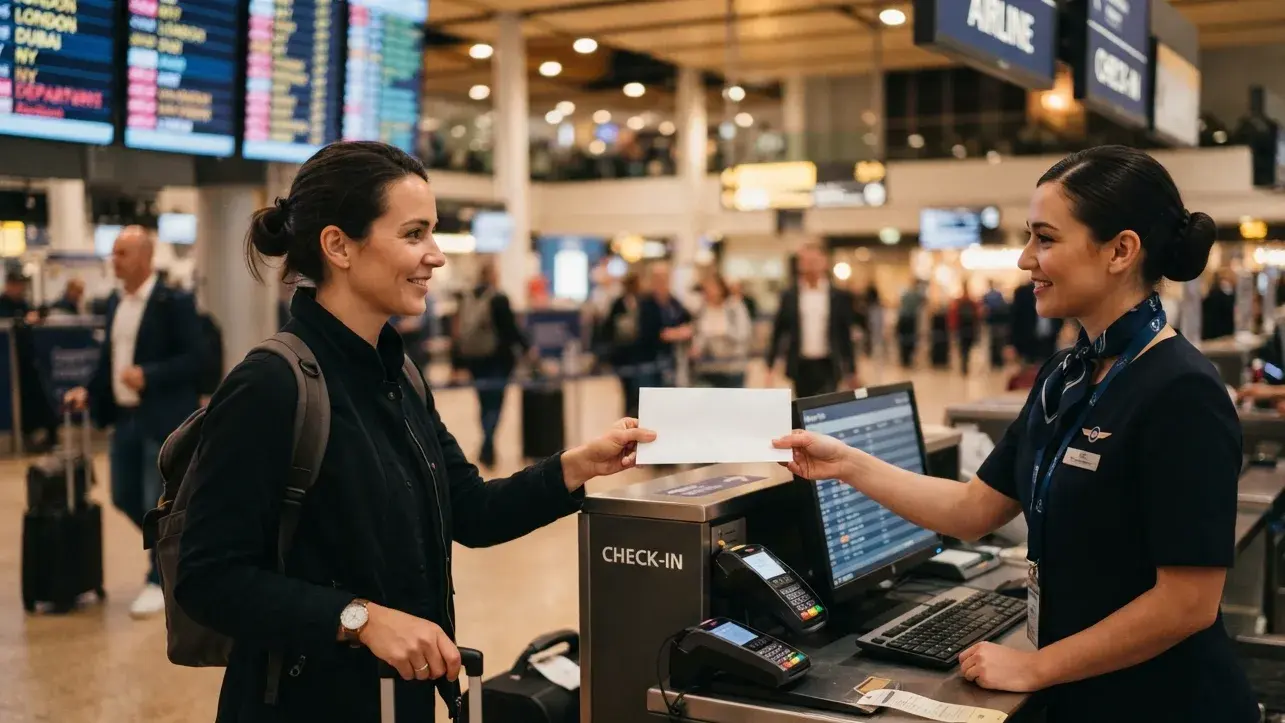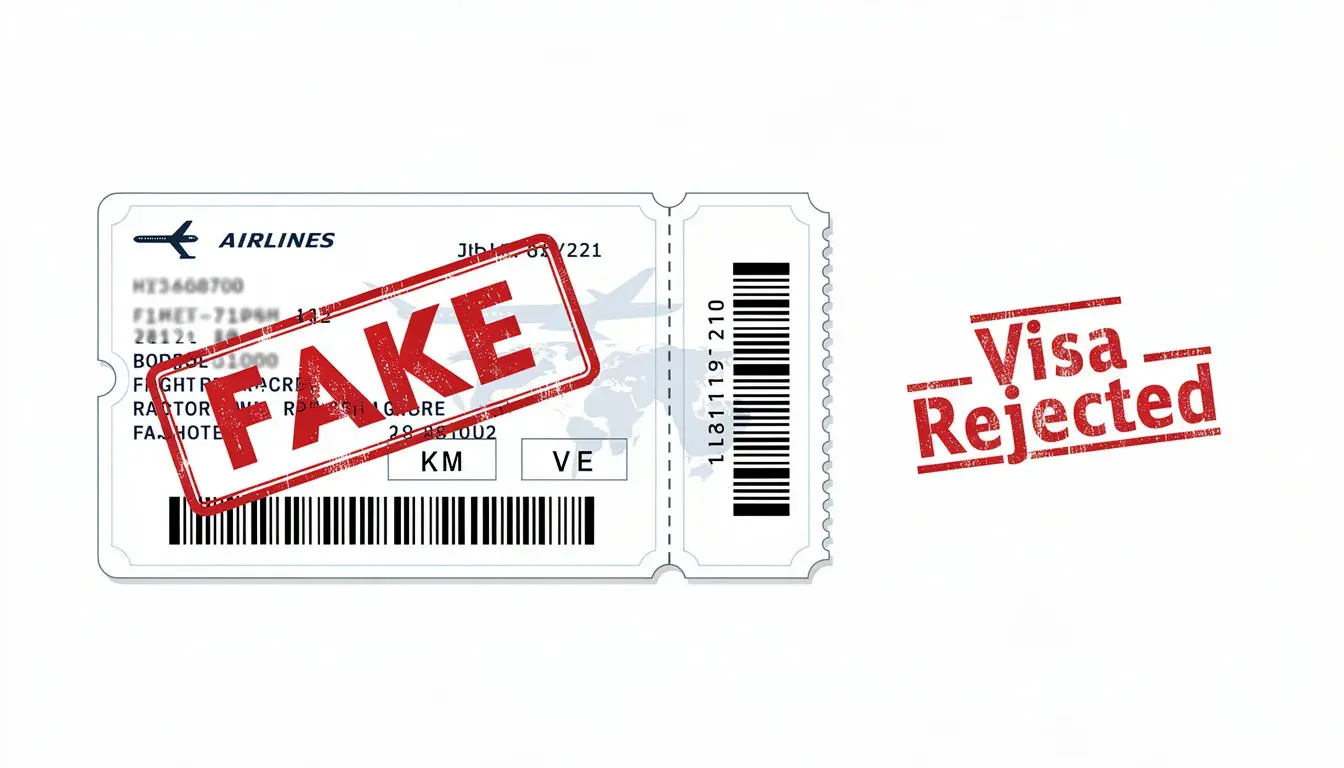
Yes, airlines can ask for proof of return or onward travel before boarding, especially when you fly one-way, enter on a short-stay visa, travel visa-free, or transit through a strict hub. A clean onward ticket gives the counter a fast answer: your name, route, exit date and booking reference are visible before the airline decides whether to print the boarding pass.
Check-in opens, you tap through the airline app, and the screen suddenly asks for proof of onward travel. Or the counter agent pauses with your passport, looks at the destination rules, and asks where your return ticket is. When you are traveling during a visa process, that moment can decide whether you fly today or start solving documents at the airport.
This guide explains where airlines verify return or onward plans, why the answer can change between online check-in, counter check-in and the gate, what proof usually passes review, and how to prepare a boarding-ready file without locking yourself into a non-refundable ticket too early. The point is not to panic-buy the most expensive ticket. The point is to carry proof that looks current, consistent and easy to read under pressure.
Key facts before flying without visible return proof:
- Airlines can ask for return or onward proof before boarding when destination rules or carrier-risk checks require it.
- One-way tickets, short-stay visitor entries, visa-free travel and self-transfer routes trigger the most questions.
- The strongest proof shows passenger name, route, exit date, carrier details and a readable reference.
- A cropped screenshot or unclear email can fail even when your travel plan is genuine.
- A temporary dummy ticket or onward ticket works best when it is verifiable, current and logically dated.
- Your proof should answer the airline’s question in seconds: where do you go next, and when?
Flying one-way or entering a country that may ask for exit proof? Create a clean onward ticket with DummyFlights before check-in turns a simple trip into an airport argument.
In This Guide
Official-source check: airline proof-of-return checks are tied to destination-entry and carrier-risk logic, not only airline preference. Singapore ICA tells short-term travellers to have sufficient cash and proof of onward travel where applicable; UK visitor rules require the applicant to show they can pay for return or onward travel; European Commission Schengen guidance says applicants may need evidence of purpose, accommodation, financial means and intention to return. Sources: Singapore ICA entry requirements, UK Visitor Rules Appendix V and European Commission Schengen visa guidance.
Reviewed for: airline proof-of-return wording, onward-ticket check-in practicality, carrier-risk logic, visa applicant date alignment, temporary reservation claim safety, self-transfer scenarios, family-route clarity and official-source alignment.
When Airlines Actually Check for Return Proof
Airlines do not usually ask for return proof at random. The question appears at predictable moments when your passport, destination, route and ticket type are checked against the rules the carrier must follow. If the system or agent sees a possible documentation gap, your boarding pass can pause until you show how you plan to leave.
The confusion comes from the fact that different checkpoints feel like different rules. Online check-in might let you through, but the counter may still ask. The counter may clear you, but the gate can still recheck documents. That does not mean someone changed their mind for no reason. It usually means a second layer of the trip was reviewed.
The three checkpoints that trigger questions
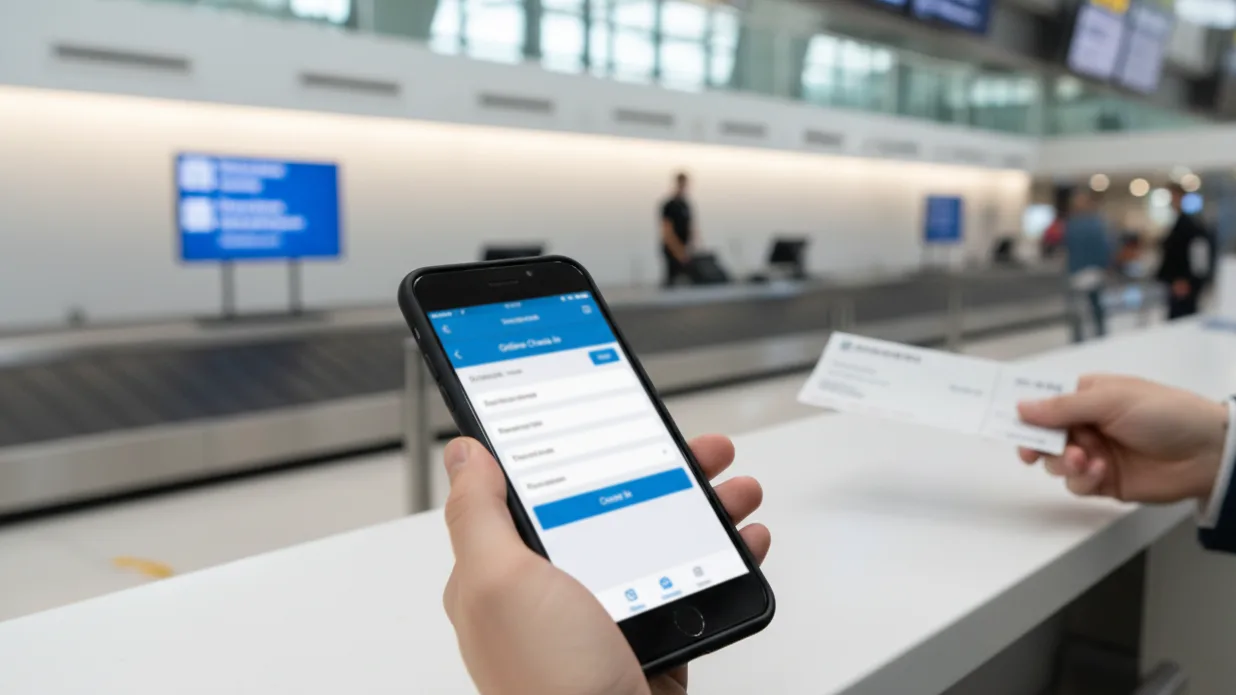
Online check-in is the first filter. If you are flying one-way to a country where onward travel is commonly checked for visitors, the app may block your boarding pass until you upload documents, confirm onward details or present yourself at the airport counter. This often happens on tourist-style routes where the booking record does not show a return segment.
The counter is the human filter. Even if the app checks you in, the desk agent can still ask when your profile looks incomplete for the destination. A common example is a Schengen-bound itinerary where your visa is valid but the booking is one-way and your return plan is not visible in the airline record.
The gate is the final filter. Gate checks can happen when a flight has strict documentation screening, a route has a history of offloads, or a supervisor wants a last-minute review before departure. By that stage, you want a document that opens fast, reads clearly and does not require a long explanation.
Why airline staff follow rule screens, not memory
Most airline staff do not decide destination-entry rules from memory. They follow the documentation prompts their system shows for your passport, destination, nationality and route. If the screen indicates onward or return proof is needed, the agent treats it as a compliance step, not a personal judgment about your trip.
Airlines also have financial exposure if they carry a passenger who is refused entry on arrival. That is why a check-in agent may ask for onward proof even when your visa looks fine. From the carrier’s view, the risk begins before departure. If the arrival officer refuses you, the airline may need to manage the return movement, penalties or administrative burden.
This is why the same traveler can get different treatment on different routes. A direct flight to one country can process smoothly, while a route with a transit, self-transfer or separate onward booking can trigger a second rule set. The question is not only “where are you going?” It is also “which checkpoints does this routing create?”
One-way tickets, long stays and unclear intent get flagged first
One-way travel is the biggest trigger because the booking itself does not show how you leave. If you are entering as a visitor, tourist, digital nomad, student arriving early, business traveler with flexible plans, or backpacker moving regionally, the airline may ask for proof simply because the itinerary looks unfinished.
Long stays can also trigger questions even when you hold a visa or valid entry permission. If the allowed stay is short but your documents imply a longer, looser plan, the agent may want to see the exit point. If your return date is far beyond your stated itinerary, the dates invite follow-up because they do not look aligned.
Unclear intent often comes from small mismatches:
- A return date that conflicts with the stay period or visa validity window.
- An onward route that departs from a different country with no connecting plan.
- A name format that does not match the passport order exactly.
- A booking that looks cropped, edited, expired or incomplete.
- A route that makes the airline guess whether you are leaving the destination country or only moving domestically.
These are not always fatal problems. They are friction points. When the airport is busy and the agent needs a fast decision, friction turns into delay.
Transit can create a second set of rules
Your final destination is not the only place that matters. A transit point can create a separate document check, especially when you must clear immigration, collect bags, change terminals or self-transfer. A route that looks simple on a booking site can become more complex at the counter if the connection requires entry into the transit country.
Even when you remain airside, routing can matter. The airline has to ensure that your passenger profile fits the applicable conditions at each step. If disruption forces a last-minute reroute through a different hub, a new transit rule can appear at the desk. That is why travelers sometimes get surprised even when the final destination has not changed.
The fastest way to keep the process smooth is to show proof that can be verified in seconds: your name matches the passport, the onward date looks realistic, and the route clearly shows exit from the country or travel zone you are entering.
What Counts as Proof to an Airline
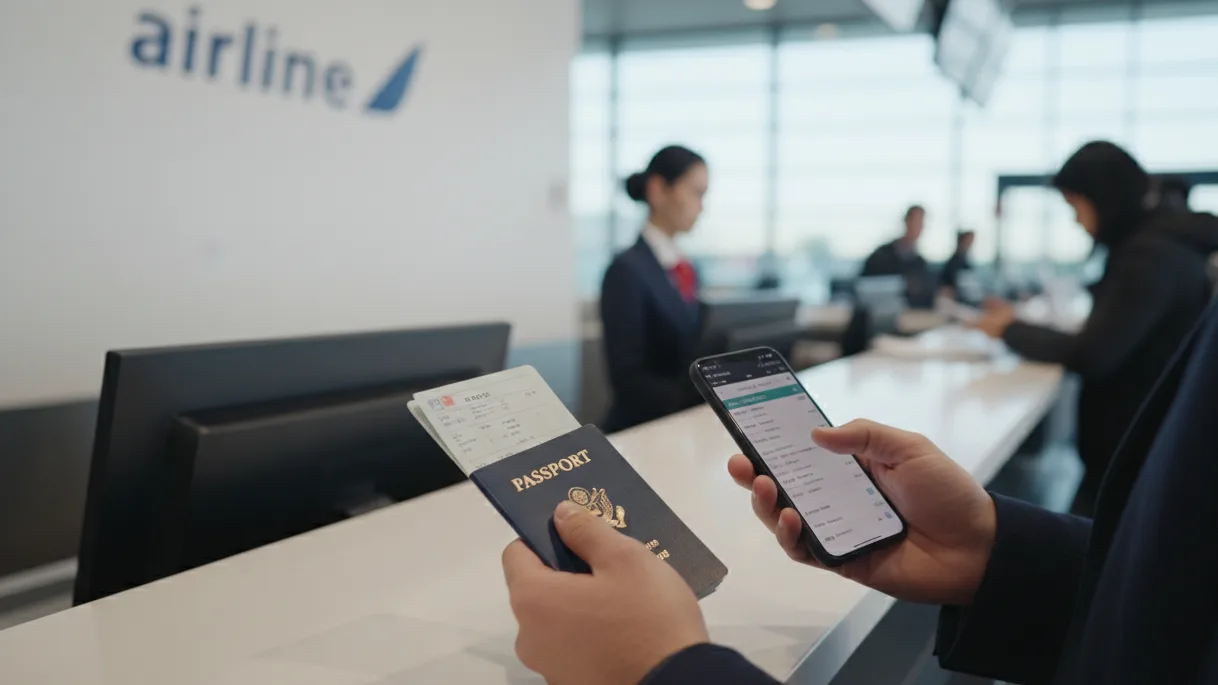
When you are flying on a visa-driven or visitor-style itinerary, the airline wants a return or onward document it can trust quickly. The agent is not trying to read your whole life story. They are trying to answer a narrower boarding question: does this traveler have a believable way to leave?
The proof hierarchy at check-in
On routes where onward travel is frequently checked, the desk usually prefers what can be confirmed quickly. The strongest proof is not always the most expensive proof. It is the proof that is complete, current and readable.
In practice, return or onward proof usually ranks like this:
- A ticketed return or onward segment visible in the same airline booking.
- A ticketed onward flight on another booking when the details are complete.
- A confirmed reservation with a clear reference, used while final dates are still moving.
- A clean PDF itinerary that shows name, dates, route and booking reference on the first page.
- A vague email, cropped screenshot or partial app view with missing passenger or reference details.
If your onward proof is on a different airline, make the carrier, flight number, date and reference easy to read. If the agent has to pinch-zoom, scroll through screenshots or ask what the document means, you have already made the check harder.
If you are still learning the document category, the what is a dummy ticket guide explains how temporary travel proof differs from a fully paid final ticket. For airport purposes, the same practical test applies: the document must look coherent beside your route and entry conditions.
The non-negotiables: names, references and date logic
Airline checks usually fail for three reasons: the name does not match, the record is not easy to verify, or the dates do not fit the stay. Each issue can be small by itself. Together, they make the agent slow down.
Your proof should show:
- Full passenger name aligned with passport spelling and order.
- Departure and arrival cities.
- Travel date and time.
- Carrier or transport provider.
- Flight number or route reference when applicable.
- Booking reference, PNR or confirmation number in a normal location.
Date logic matters most for short-stay arrivals. If your trip plan is two weeks, an exit date months later can look inconsistent. If your visa ends on a specific date, your onward proof should not sit awkwardly outside that window. If your accommodation ends early, the exit date should still have a believable explanation.
Screenshots, emails, PDFs and app views
Agents approve what they can read without friction. A PDF is usually the easiest format because it puts the key fields in one stable view. An airline app screen can also work if it clearly shows the itinerary and reference. An email confirmation works best when opened directly to the itinerary block, not the marketing header or payment receipt.
Screenshots can work, but they are fragile. Cropping that hides the reference, cuts off the date, removes the passenger name or shows only a payment page can turn a quick check into a longer conversation. A printed copy can help when your phone battery is low, airport Wi-Fi is weak, or the agent wants to pass the document to a supervisor.
If you carry several files, name them clearly on your phone. “Onward ticket PDF,” “return proof,” “passport copy” and “visa approval” are easier to find under pressure than a downloads folder full of random filenames.
Red flags that make proof weak in seconds
Some documents invite scrutiny because they look incomplete for the destination’s entry rules. The agent might not accuse you of anything. They may simply ask for a stronger version before boarding.
Common red flags include:
- Status wording that sounds unresolved, such as pending, awaiting payment or request received.
- A hold that expires before departure or before the appointment window that matters.
- A route that does not show exit from the destination country or travel zone.
- Passenger details that do not match the passport exactly.
- Odd spacing, inconsistent alignment or cropped fields that make the document look edited.
- Multiple versions with different dates and no clear explanation.
When these appear, the counter often asks for the same thing in clearer form: current proof, readable fields and a route that matches your travel story.
Make a temporary reservation counter-friendly
A temporary onward or return reservation is useful when your visa timeline is still moving and you do not want to lock money into final airfare too early. But it only helps if it behaves like a normal travel document at check-in. A messy temporary file is worse than no preparation because it creates questions at the moment you have the least time.
Use a dummy ticket for visa style document when the purpose is travel-proof support, not final travel purchase. Keep the route realistic, keep the date inside the stay window, and make the booking reference visible. If your plan is to leave by bus, ferry or train, the proof should still show a clear exit from the country or zone, not just vague movement to another city.
The better your proof is organized, the less you need to talk. At the counter, silence is often a good sign. The agent checks the document, reads the date, confirms the route and prints the boarding pass.
A Pre-Boarding Game Plan for Visa Applicants

The easiest check-in is the one you prepare before the airline system starts asking questions. A few small steps can turn a stressful document request into a fast scan.
Build a boarding folder before check-in opens
Treat return and onward checks like a document inspection, not a debate. Create one folder on your phone and one backup in email before online check-in opens. Put only the files that help the airline understand your route, stay and exit plan.
Include:
- Your main flight ticket or booking confirmation.
- Your onward ticket or return proof as a clean PDF.
- Your visa, eVisa, approval letter or entry permission when relevant.
- Accommodation proof if it helps explain the stay window.
- Travel insurance if it is part of your destination-entry file.
- A short note with your arrival date, exit date and next destination.
If your onward proof is not a flight, add the document that shows the exit method. On some routes, onward travel can be a bus, ferry or train booking, but only use that if it is genuinely your plan and fits the destination rules. Do not force a land-exit document into a route where airline staff are likely expecting a flight out.
If your embassy process needs a wider planning framework, BookForVisa’s flight reservation for visa complete guide is the cleaner place to understand visa-file reservation strategy. For this DummyFlights article, the active airport question is narrower: what proof will satisfy the airline before boarding?
Choose the right onward date
Airlines do not judge your travel style. They check whether the exit date makes sense for the permission you are using. If you say you are staying two weeks, show an exit date that supports that. If your visa-free stay is 30 days, do not show a vague exit plan far outside the window unless your documents explain why.
Use a simple logic check:
- Does the exit date fit the stay you can explain in one sentence?
- Does the route show departure from the country or zone you are entering?
- Do the cities match the route shown on your main ticket?
- Does the document stay valid long enough for the check-in moment?
- Can you open it quickly without relying on airport Wi-Fi?
If your plan is flexible, use an exit date that is plausible rather than extreme. A digital nomad, backpacker or one-way traveler can still look organized when the onward proof reflects a real regional plan.
Answer the counter without oversharing
The goal is one clean answer and one clean document. Long explanations often create new questions. If the agent asks why your main booking is one-way, stay tied to the proof:
- “I have onward travel on this date. Here is the confirmation.”
- “I am staying until this date, then leaving for this destination.”
- “My return is on a separate booking. The PDF shows the reference.”
- “The visa covers this stay window, and the exit date is before it ends.”
Avoid phrases that make the document sound disposable or uncertain:
- “It is only for formality.”
- “I will probably cancel it.”
- “The real plan is different.”
- “I used this because immigration never checks.”
Those lines shift attention away from the document and toward your intention after arrival. Let the itinerary do the work. If the route, date, name and reference are clean, the conversation usually stays short.
Where Airlines Get Strict
Some routes trigger tougher checks because airlines expect the destination country, transit point or arrival officer to care about exit proof. You cannot control the counter agent’s screen, but you can control how prepared the file looks.
Visa-in-process travel
If your visa date, employer leave, school start, family event or embassy appointment is still shifting, you may not want to buy a fixed return ticket yet. That is normal. The airline still needs visible proof that you are not arriving with no exit story.
Choose an onward date that fits the permission you expect to use. Keep the departure city logical. Keep the document current at check-in time. If the agent asks, answer from the document rather than explaining every uncertainty behind the trip.
Low-cost carriers and self-transfer routes
Low-cost carriers often enforce document prompts tightly because they process passengers quickly and want fewer exceptions. A cheap one-way ticket plus a separate onward booking can work, but the documents must connect logically. If the agent sees two unrelated bookings, they may treat your route as incomplete until you show the exit proof clearly.
Self-transfer itineraries create extra risk because you may need to enter the transit country to collect bags or re-check with another airline. That can turn a simple connection into a new border-entry question. If your route has a self-transfer, prepare proof for both the final destination and the transit reality.
Family travel, group bookings and mixed passports
Groups create counter confusion when one traveler has clear proof and another does not. If family members travel on different dates, hold different passports, or have separate onward routes, prepare one clean file per traveler. The agent should not have to guess which PDF belongs to which passport.
Before leaving for the airport, confirm:
- Every traveler’s name matches the passport.
- Each person has a visible exit date if required.
- Children and infants appear correctly on the relevant booking.
- Mixed-nationality travelers have documents that fit their own passport rules.
- The group story still makes sense if one person exits earlier or later.
Travel insurance and hotel bookings help the wider travel file, but they do not replace return or onward proof when the airline specifically asks where you go next.
“I was allowed last time” is not a boarding strategy
Past experience does not override today’s route, passport, airline system or destination-rule screen. You might have entered the same country before without being asked for exit proof, then be asked on the next trip because the booking type changed, the airline changed, the transit changed or the rules screen updated.
The safer mindset is simple: if you are flying one-way, arriving as a visitor, or entering a country that often checks onward travel, prepare as if the question will come. If nobody asks, fine. If they ask, you are ready.
For broader current-year planning that connects dummy tickets, PNR wording, visa timing and route consistency, use the dummy ticket for visa complete guide as your deeper support page. For the airport moment, keep the proof smaller: clean file, clear date, readable reference.
Board With Confidence When Return Proof Gets Checked
Airlines can ask for proof of return or onward travel before you ever reach immigration. The request can appear in the app, at the check-in counter, at document verification, or at the gate. It is most common when your main ticket is one-way, your stay looks flexible, your route involves a strict destination, or your transit creates a second layer of rules.
The strongest response is not drama. It is preparation. Carry proof that shows your name, exit date, route and reference clearly. Make sure the date fits the stay. Keep the file accessible offline. Answer calmly and briefly. Do not rely on “I will book later” when the airline wants proof before boarding.
A good dummy flight ticket or onward ticket is not a magic approval tool. It is a practical travel-proof document that helps the airline see a believable exit plan. When that proof matches your passport, route and permitted stay, the check-in conversation becomes much easier.
Need return or onward proof before check-in? Create a clean DummyFlights onward ticket with readable route, date, passenger details and booking reference before the counter asks.
FAQ
Do airlines ask for proof of return before boarding?
Yes. Airlines can ask for proof of return or onward travel before boarding when destination-entry rules, visa-free conditions, one-way travel, transit checks or carrier-risk screens make an exit plan relevant.
Is proof of return the same as proof of onward travel?
Not always. Proof of return usually means travel back to your home country or residence country. Proof of onward travel can show that you leave the destination for another country. The right proof depends on the destination rules and your real route.
Can an airline deny boarding without a return ticket?
Yes, if the airline determines that your documents do not satisfy the destination or transit requirements for boarding. This is more likely on one-way visitor routes where the traveler cannot show a believable exit plan.
What proof is strongest at check-in?
The strongest proof is complete, readable and current. It should show your passport-matching name, route, exit date, carrier details and booking reference or PNR in a format the agent can review quickly.
Can I use a temporary onward ticket?
Yes, many travelers use temporary onward proof when final travel dates are not fixed. It should be verifiable at the time of check-in, logically dated, and consistent with your stay window and destination rules.
Do low-cost carriers check onward proof more strictly?
They can. Low-cost carriers often rely heavily on system prompts and fast document checks, so a one-way booking without clear onward proof may be questioned more directly at the counter or gate.
What if my return date is not final yet?
Use a realistic onward date that fits the stay you can explain. Avoid showing a far-off exit date that conflicts with visa validity, accommodation dates, school timelines, work leave or your stated trip purpose.
Should I show proof before the airline asks?
Usually no. Keep it ready and answer when asked. If the agent requests exit proof, open the clean PDF or app view immediately and keep your explanation short: where you are going next and on what date.
Friendly reminder: DummyFlights provides temporary travel-proof documents for planning and application support. Requirements vary by destination, airline, route and applicant situation. A dummy ticket can support a file, but it does not guarantee approval, boarding or entry.