
Your itinerary can look perfectly legal on paper and still fail at the check-in desk if a transit stop raises questions about onward proof. That is the trap with connecting through another country. You may never plan to enter, but airline staff, transit control, or even a visa officer can still focus on what happens after that layover.
We need to read transit plans the way border systems read them, not the way we hope they will. In this guide, you will sort clean airside connections from risky self-transfers, separate tickets, and overnight stops, so you can decide when skipping onward proof is reasonable and when it could derail the whole trip before boarding, during transit, or at the visa review stage for your route entirely. If your transit route looks exposed, keep a verifiable dummy ticket ready before check-in.
Key takeaways:
-
Airside transit is lower drama only when you do not pass border control, collect bags or rebuild the route at the transfer airport.
-
Landside transit often requires stronger proof because you may technically enter the transit country before continuing.
-
Official UK guidance shows transit travellers may be asked to prove a booked or confirmed onward journey.
-
EU guidance confirms some travellers need an airport transit visa even for the international transit area of Schengen airports.
-
The safest proof is one current onward booking that matches passport, visa, final destination and baggage-transfer reality.
Not sure if your transit will stay airside?
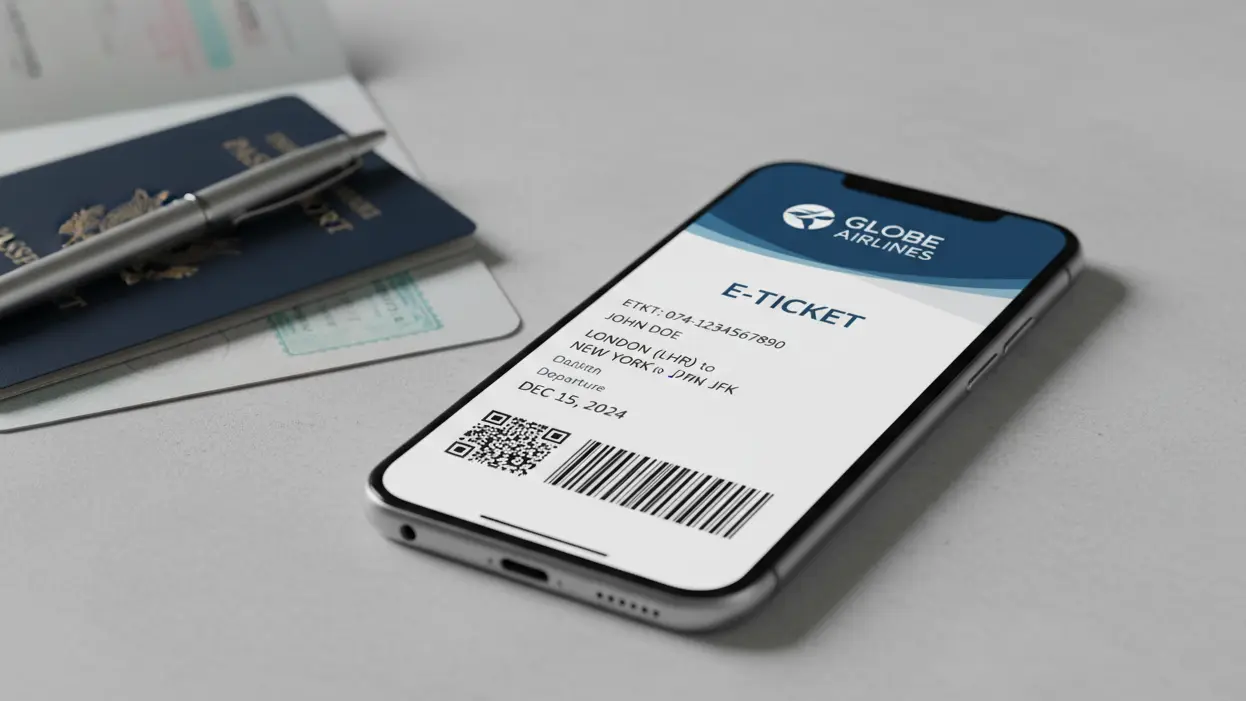
Create one clean dummy ticket that shows your next flight clearly before check-in staff ask for onward proof.
Create Your Dummy TicketOfficial-source check: Transit rules are route-specific, not universal. GOV.UK explains that UK airport transit can be airside, where you do not pass border control, or landside, where you pass through border control and leave again within a short time. GOV.UK’s transit visa page says travellers may be asked to prove their onward journey is booked or confirmed, using evidence such as a flight booking email, ticket, boarding pass or travel-agent confirmation. The European Commission says some non-EU nationals must hold an airport transit visa when connecting through international transit areas of Schengen airports, and IATA says its Travel Centre / Timatic data is used by virtually every airline for passport, visa and health-document requirements. Sources: GOV.UK layovers and transiting, GOV.UK transit visa application guidance, European Commission Schengen visa guidance and IATA Travel Centre / Timatic.
Reviewed for: airside versus landside transit clarity, onward-journey proof wording, airline document-check logic, self-transfer and baggage-risk framing, transit-visa claim safety, PNR terminology and safe dummy-ticket use.
In This Guide
The Real Issue Is Whether Your “Transit” Stays A Transit On Paper

A transit plan only works without onward proof when every part of the journey supports that story. The problem is not what you call the layover. The problem is whether your route still looks like a true transit once airline staff and border systems examine the details.
When An Airport Connection Quietly Becomes An Entry Problem
A lot of travelers assume a few hours in another country is automatically harmless because they do not plan to leave the airport. That is not always how the trip gets assessed. What matters is whether you can stay inside the transit flow from arrival to the next boarding gate.
The moment your connection requires any of the steps below, your transit can start looking more like a partial entry:
-
collecting checked baggage
-
changing terminals through landside areas
-
rechecking onto another airline
-
switching airports in the same city
-
staying overnight between flights
Once that happens, the question changes. It is no longer just, “Are you connecting?” It becomes, “Can you legally and practically move through this country and continue onward?”
That is where onward proof starts carrying more weight. Even if the country allows certain transit movements, staff may still want to see that your next flight exists and fits the same travel logic. A missing onward segment can make a perfectly reasonable plan look unfinished.
This is especially true when the connection depends on timing, staying perfect. If one delay could force you out of the transit zone, your file is no longer being judged as a clean, contained stop.
Why Airside Transit Is The Only Low-Drama Version Of This Plan
The safest version of transit without onward proof is simple and controlled. You arrive, remain airside, and board the next flight without needing any new document event in between. That kind of itinerary creates the fewest questions because the route still behaves like one continuous movement.
Airside transit becomes more convincing when these conditions line up:
-
Your bags are checked through
-
Your next flight is already linked or clearly secured
-
The layover is short and practical
-
You do not need to pass immigration
-
The airport does not require a terminal exit to continue
That does not mean nobody will ever ask questions. It means the itinerary does not invite extras.
The less friction your route creates, the less likely you are to be treated as someone who may get stuck in transit. If your boarding passes, baggage status, and next segment all point in the same direction, onward proof becomes less urgent because the journey already looks complete.
But even a clean airside connection can become unstable if the airport has strict transit handling, if the next segment sits on a separate booking, or if staff cannot quickly verify what happens after the layover. That is why “airside” helps, but it does not automatically remove the need for a documented next step.
Separate Onward Tickets, Self-Transfer, And Long Layovers Change The Risk Completely
This is where most problems begin. Separate tickets may save money, but they also remove the protected structure that makes transit easy to defend. If your first airline is only taking you to the transit point, the rest of the trip can look like your personal plan rather than a secured onward journey.
Self-transfer adds another layer of doubt. If you must retrieve bags, check in again, or clear security from scratch, you are no longer moving through a seamless transit channel. You are handling a new departure inside a country you said you were only passing through.
Long layovers create the same issue in a different way. A ten-hour or overnight gap can prompt practical questions:
-
Will you stay inside the transit zone the whole time?
-
Are transit facilities even open for that duration?
-
What happens if the next flight changes?
-
Would you need entry permission just to complete the connection?
A Simple Decision Filter Readers Can Apply Before They Book
Before you assume onward proof is optional, test your route against the actual pressure points. You do not need a legal memo. You need an honest read of how the journey will behave on travel day.
Ask these questions:
-
Will you remain airside from arrival to departure?
-
Are your bags checked through to the next destination?
-
Is the onward flight already secured and easy to verify?
-
Does the route involve a terminal or airport change?
-
Could one delay force you through immigration or out of the transit zone?
If your answers stay clean, the transit story is stronger. If even one answer looks messy, the absence of onward proof becomes harder to defend.
The First Person Who May Care About Onward Travel Proof Is Usually The Airline Staff

Most travelers picture a border officer asking the hardest questions during transit. In practice, your trip can be stopped much earlier. The first serious test often happens at the airline counter, where your route must look complete enough to board without creating a problem later.
Why Check-In Staff Often Make The Real Decision Before Your Trip Even Starts
Check-in staff does not look at your itinerary the way you do. You may see a straightforward connection. They see a chain of obligations that must hold together from departure to final destination.
That changes everything.
If your route includes a transit country, staff are not only checking the first boarding pass. They are checking whether carrying you creates a document risk. They want to know whether you can legally continue once you land at the transit point, and whether your next step is secure enough to avoid disruption.
This matters most when the onward part of the trip is not obvious on the booking in front of them.
A clean transit story is easy for an airline to process. A messy one forces staff to slow down and ask more questions. That is why travelers with separate tickets, long layovers, or loosely connected onward plans often feel pressure before they ever reach immigration.
From the airline’s side, a missing or weak onward segment can raise practical concerns:
-
Will you be allowed to board the next flight?
-
Will you need to enter the transit country after all?
-
Could a delay leave you stranded without the right documents?
-
Is the itinerary complete enough to carry safely?
You may still have a valid plan. The issue is whether that plan can be understood and cleared quickly at the desk.
How Airline Systems Treat Incomplete Or Exposed Transit Plans
Airline staff do not rely only on conversation. They also work within systems that flag risk by pattern. Those systems do not care that you intend to explain your route at length. They react to what the booking shows.
Certain patterns make a transit plan look exposed:
-
a one-way international sector with no visible continuation
-
separate bookings on unrelated airlines
-
a self-transfer with a tight connection
-
a long gap before the next flight
-
a route that depends on rechecking baggage
-
a final destination with strict entry or boarding checks
None of these automatically means you cannot travel. But each one reduces the margin for doubt.
A protected connection on one booking tells a stronger story because the route looks finished inside the reservation flow. A fragmented itinerary tells a weaker story because the airline may only see the part it is operating. If the next segment is elsewhere, staff may treat your onward movement as unconfirmed until you can provide clear proof.
This is why travelers sometimes say, “But I have the next flight on my phone,” and still get pulled into a longer review. The problem is not only whether the onward flight exists. The problem is whether it fits the transit logic well enough for the airline to rely on it.
The same issue appears when your timing leaves no room for error. Even if your onward booking is real, staff may question whether the route remains workable if the first flight runs late. Once the transit plan starts, depending on perfect timing, onward proof becomes part of a broader credibility check.
Why Visa Officers May Still Care Even If The Proof Of Onward Travel Is “Only For Transit”
Transit proof is not always just a boarding-day issue. In some cases, it also shapes how your visa file is read.
A visa officer reviewing your itinerary is not only checking whether the destination makes sense. They are also checking whether the route looks controlled. If your trip passes through another country and the onward step seems thin, delayed, or disconnected, the itinerary can look less deliberate than it should.
That does not mean every visa application needs a fully locked transit file. It means your route must still make sense as a sequence.
A visa officer may notice problems like these:
-
transit timing that looks too loose for the stated journey
-
a stop that appears to require entry even though the file presents it as a simple connection
-
an onward segment that does not match the travel dates elsewhere in the application
-
a routing choice that looks improvised rather than planned
This matters because visa files are read for consistency. If the route says one thing and the booking structure suggests another, the traveler ends up carrying the burden of explanation.
That is especially relevant when the transit country is not the final focus of the trip, yet the transit itself introduces most of the uncertainty. A weak connection plan can make the overall application look less disciplined, even when the main destination documents are strong.
The Three Different Questions Each Gatekeeper Is Asking
The same transit itinerary can be judged three different ways depending on who is looking at it.
Airline staff ask whether they can carry you without creating a document problem. Their concern is operational and immediate. They want confidence that the route is boardable from start to finish.
Transit authorities ask whether you will remain within the permission your route relies on. Their focus is movement through the airport, not just the existence of a ticket.
Visa officers ask whether your itinerary is coherent, realistic, and internally consistent with the rest of the file. Their concern is whether the travel plan holds together on paper before the trip even begins.
The Riskiest Transit Plans Are The Ones That Look Fine Until The Last Minute

Some transit plans fail not because they violate a rule on paper, but because they appear unstable once someone checks the route closely. This is where a traveler with a workable itinerary can still run into trouble at the check-in counter, at passport control, or at the final boarding gate.
The One-Way Trap: When The Route Makes Sense To You But Not To The Person Checking Documents
A one-way ticket can be easy to justify in your head. You may plan onward travel by bus, train, or a later plane ticket once you arrive. But the person reviewing your documents is not judging your flexibility. They are judging whether your route looks complete right now.
That gap matters most during international travel.
A check-in agent or immigration officer does not see your future intentions. They see the booking in front of them, the transit point, and the destination country you are trying to reach. If your file shows a one-way flight with no documented proof of what happens next, the route can look unfinished even when your plan is reasonable.
This gets riskier when a few countries apply a strict onward travel rule. In those cases, proof of onward travel is not treated like a nice extra. It becomes part of basic admissibility. If you cannot provide proof quickly, staff may worry that you could be denied entry, left at your own expense, or flagged for weak compliance with local immigration rules.
That is why travelers who intend to travel overland later often need to think harder than travelers holding a return flight. A bus ticket or onward travel ticket may help in some scenarios, but only if it fits the timing and the route in a believable way. A vague plan to sort it out after arrival rarely helps when countries require proof before departure.
Overnight Transit, Airport Changes, And Missed-Connection Exposure
A short, same-airport transit is one thing. An overnight layover, terminal change, or cross-city airport transfer is another. These plans look manageable when everything runs on time. They look fragile the moment one piece shifts.
Overnight transit raises immediate questions. Will you remain inside the transit area? Will you need to clear passport control? Will the airport even allow you to stay airside that long? If the answer becomes uncertain, a valid onward ticket matters more because it shows your next step is already secured.
Airport changes are even harder to defend. If you land at one airport and depart from another, you are usually no longer dealing with a clean transit ticket scenario. You are dealing with movement through a country, not just across a gate area. The same applies when checked baggage must be collected and rechecked.
Missed-connection exposure creates another weak point. Even a real flight on the next sector may not calm concerns if the timing is too tight. Many airlines and immigration officials look at the itinerary as a practical chain, not a technical one. If one delay could force you landside, your proof needs to be stronger because your transit may turn into an entry issue very quickly.
This is where travelers sometimes focus on the cheapest option and ignore the cost of instability. A cheap ticket with poor timing can create more pressure than a slightly stronger booking with cleaner transfer logic.
Low-Cost Combinations And Self-Built Routes Create More Document Pressure
Budget routing often looks smart at the search stage. It can look weak at the airport.
When you build your own route across many airlines, low-cost carriers, or separate reservations, you lose the benefit of one protected journey. That means the first carrier may only care about its own segment, while you are left proving the rest. If the second booking does not look easy to verify, the whole route can come under pressure.
This happens often with travelers heading through Southeast Asia, Central America, or South America on flexible plans. Someone may book into Panama City, Costa Rica, or another regional hub with fixed plans still undecided. That may work for personal travel style, but it can create friction if the route does not clearly show a return date, return ticket home, or onward ticket beyond the transit point.
The same logic applies to digital nomad travel. Open-ended movement can make sense for you. It does not always satisfy entry requirements when a check-in counter agent sees no return ticket, no onward ticket, and no easy way to confirm the next step.
This is also where travelers get tempted by the wrong fix. A fake ticket is not a stability tool. What helps is a real flight reservation that can be checked and understood quickly. Some travelers try a refundable ticket or a fully refundable booking to manage risk. That can work, but only if you understand cancellation policies, possible cancellation fees, and whether the ticket remains usable long enough for the transit window that matters.
When Skipping Onward Proof Is A Calculated Choice And When It Is Just Gambling
Skipping proof is a calculated choice only when your route stays strong without extra explanation. You are in safer territory when the connection is short, airside, on one logic, and unlikely to trigger extra review from immigration officials or customs agents.
It becomes gambling when your plan depends on any of the following:
-
a self-transfer with tight timing
-
an overnight connection
-
a one-way ticket into a transit-sensitive route
-
unclear proof of onward travel
-
a last-minute exit ticket bought under pressure
-
a booking that only works if nobody asks follow-up questions
A traveler trying to enter Thailand on a tourist visa, for instance, may still face document scrutiny long before the final destination. The same pattern shows up in other countries where staff require proof that you will leave on time.
Good travel tips are usually simple here. If your route needs a long verbal explanation, the booking is not doing enough work for you. If the only time your plan looks complete is after you explain all that from personal experience, you are relying on luck, not structure.
If your “transit” proof is being prepared for a visa file rather than an airport desk, compare the broader flight reservation for visa 2026 complete guide before choosing your evidence. If the question is simply whether your onward proof can be temporary, the dummy ticket for visa guide explains how to use a reservation without drifting into fake-ticket territory.
How To Build A Transit-Safe Flight File Without Overcomplicating The Trip
Once your route has any transit pressure, the goal is not to collect random paperwork. The goal is to make your next movement easy to verify, easy to understand, and hard to question when someone reviews your file quickly.
Match The Strength Of Your Onward Proof To The Weakness Of Your Transit Plan
Not every transit plan needs the same level of support. A short, airside connection on a stable booking does not need the same backup as a self-transfer with a long layover and separate carriers.
That is where many travelers go wrong. They either overbuild the file with irrelevant papers or underbuild it and hope the route explains itself. A better approach is to match the proof to the actual pressure point in the itinerary.
If your connection is simple, your onward evidence can stay simple too. If the route includes exposure, your file should address the weak spot directly.
A practical way to think about it is this:
-
Low-friction route: short airside stop, no baggage issue, no terminal transfer, no overnight gap
-
Medium-friction route: separate booking, longer layover, less obvious onward segment
-
High-friction route: self-transfer, airport change, overnight break, route that may require landside movement
The weaker the route looks, the more your onward flight needs to do the work for you.
This does not mean turning a transit into a paperwork exercise. It means using one clear onward reservation instead of relying on a verbal explanation. In many countries, staff respond better to a clean booking record than to a long story about why the route should be fine.
What Should Actually Line Up Across Your Booking, Visa File, And Check-In Story
A good transit file is not just about having a flight reservation. It is about consistency.
Your onward segment should line up with the rest of the journey in ways that feel operationally normal. When dates, airport logic, and traveler purpose match, your file reads as controlled. When they do not, questions start early.
Check these points closely:
-
Timing: your onward flight should leave within a transit window that makes sense for the airport and route
-
Airport logic: arrival and departure points should support the same transit story
-
Passenger details: name format, passport details, and travel dates should match across documents
-
Trip purpose: the onward movement should fit the reason you gave for travel
-
Route flow: the next stop should make geographic and practical sense
What creates trouble is often not the absence of proof. It is a contradiction.
For example, if your visa file suggests a tightly planned business trip but your transit segment looks open-ended, the route can feel improvised. If your trip timing looks formal, but the onward movement looks loose, the mismatch stands out. Even small details matter when the person reviewing your file only has a short time to decide whether your itinerary is credible.
That is also why appearance and delivery matter at the airport. You do not need to present yourself in a stiff business casual style or over-explain your route. You need a calm answer, a coherent booking, and documents that support the same story without friction.
When A Flexible Flight Reservation Solves More Than A “Rule” Problem
A flexible onward booking helps because it does more than satisfy a rule. It reduces uncertainty at the exact points where transit plans get tested.
If staff ask for your next movement, you can show it immediately. If the route is reviewed during visa processing, the itinerary looks more complete. If your first flight changes, you still have a structured onward record instead of an improvised plan on your phone.
That is useful because airlines can be held liable when they carry travelers whose routes collapse mid-journey. A clean reservation lowers that concern. It also helps if your onward movement is not with the same operator. Whether the first leg is with American Airlines or another carrier, the issue is not the brand. The issue is whether the onward step is visible and believable.
Some travelers prefer flexible paid bookings, especially when they want a full refund option after the key travel stage passes. Others look at cancellation terms more closely and choose a reservation that fits the date window without forcing fixed plans too early. The right option depends on how much flexibility you need and how exposed the transit route really is.
A practical option here is DummyFlights.com, especially for transit-heavy or visa-sensitive routes. It offers instantly verifiable reservations, a PNR with PDF, free date changes within the same day of booking, transparent pricing at $15 (~₹1,300), accepts credit cards, and is trusted worldwide for visa use. Used properly, that kind of reservation functions as a supporting travel resource for a route that needs cleaner documentation.
A Final Go/No-Go Checklist Before You Decide To Transit Without Onward Proof
Before you finalize anything, test the route as if you were the one reviewing it at the counter.
Ask yourself:
-
Can you show the next flight in a form that staff can quickly verify?
-
Would the route still make sense if someone asked where you go after the transit stop?
-
Could a delay force you into a situation that changes your document needs?
-
Does your onward movement fit the timing and purpose of the trip?
-
Would you still feel comfortable defending this route if you were sent back to your home country because the connection was judged incomplete?
If those answers feel solid, your transit plan is likely structured well enough to travel without adding extra layers.
Let Your Transit Route Decide The Documentation
Transiting through another country without onward proof can work, but only when your route stays clean from check-in to final boarding. If the connection is airside, short, and operationally simple, you may not need extra proof. If the itinerary relies on separate tickets, airport changes, overnight gaps, or baggage recheck, the safer move is to support the route before travel day.
The key is to judge the trip the way airline staff, transit control, and visa reviewers will judge it. When your onward plan is easy to verify and matches the rest of your itinerary, you can move forward with far more confidence.
Keep your transit proof ready before the route gets complicated.
Use one verifiable dummy ticket that shows where you go next, when you leave, and why the transit still makes sense.
Get Your Dummy TicketFAQ
Can you transit through a country without onward proof?
Sometimes, but only when your route, ticket type, baggage transfer, visa status and final-destination documents satisfy the transit country and airline. If any part is unclear, onward proof may be requested.
What is the difference between airside and landside transit?
Airside transit usually means you remain in the international transit area and do not pass border control. Landside transit means you pass border control before continuing, which can trigger stronger documentation checks.
Can a transit country ask for onward proof?
Yes. Official UK guidance says transit travellers may be asked to prove the onward journey is booked or confirmed, using a booking email, ticket, boarding pass or travel-agent confirmation.
Do Schengen airports require airport transit visas?
Some non-EU nationals must hold an airport transit visa even when connecting through the international transit area of a Schengen airport. Requirements depend on nationality and route.
Why does the airline ask for onward proof before transit?
Airlines use document-check systems and carry risk if passengers cannot meet destination or transit requirements, so staff may ask before issuing a boarding pass.
Is a dummy ticket useful for transit proof?
A dummy ticket can help when it clearly shows the next flight, passenger name, dates, route and booking-reference support. It should not be fake, edited or inconsistent with the route.
Is self-transfer riskier for onward proof?
Yes. Self-transfer often means you may need to collect bags, pass border control and recheck in, which can turn a simple connection into a new entry-document check.
Can separate tickets create transit problems?
Yes. Separate tickets can hide the onward leg from the first airline, so you may need to show proof manually at check-in, transfer desk or gate.
Should onward proof match my final destination visa?
Yes. If your next country requires a visa or entry authorization, staff may ask whether you are allowed to travel there, not just whether you have a flight.
Can a dummy ticket guarantee transit or boarding?
No. It can support onward-proof checks, but boarding and transit depend on airline policy, official requirements, your nationality, baggage route and officer review.
Friendly reminder: DummyFlights provides temporary travel-proof documents for planning and application support. Requirements vary by destination, airline, route and applicant situation. A dummy ticket can support a file, but it does not guarantee approval, boarding or entry.