Short answer: A completed campsite reservation may document a camping trip where the applicable visa checklist accepts accommodation evidence; a shopping-cart hold or waitlist place is not a confirmed stay. Verify the operator’s booking status, cover every intended night, and match the campsite timeline to your flight reservation. Public park systems have different payment, confirmation and cancellation rules.
This guide separates a real camping reservation from a temporary site selection. It keeps the original route, group, season and document workflow while correcting the misleading idea that campgrounds generally offer unpaid 24–48-hour “dummy” holds.
Key facts
- Parks Canada requires payment at the transaction and issues a booking number for a completed reservation.
- Recreation.gov describes a short checkout-cart lock; a cart item is not a completed campsite reservation.
- Canada visitor guidance may use itinerary and accommodation proof; Schengen lists vary by consular post.
- A flight PNR is a record locator, not proof of payment, ticket issuance or visa acceptance.
In This Guide
- Can a Campsite Reservation Count as Accommodation Proof for Your Visa?
- What a Dummy Booking at a Campground Really Is (And Isn't)
- How Visa Officers Read a Campsite Booking in Your File
- Matching Campsite Dates to Your Itinerary and Appointment
- When Campground Rules Turn a Placeholder Into a Problem
- Holding a Peak Season Site Without Gaming the System
- Pairing Your Campsite Plan With a Flight Reservation That Holds Up
- False Documents and Verification Risks
- Assembling Your Visa File Around a Camping Itinerary
- Your Campsite Plan, Ready for the Visa Desk
- Frequently asked questions
Official-source check: Read Parks Canada’s reservation policy, Recreation.gov’s cart guidance, IRCC’s visitor-visa evidence guide, and the applicable Schengen local checklist before deciding what to submit.
Reviewed for: campground transaction status, visa-list differences, operator terms and flight-record limits on 20 October 2026
Keep the route on one calendar. Check the actual campsite confirmation and your flight record against the same local arrival, overnight and departure dates. A DummyFlights reservation can support provisional flight details only where the relevant checklist accepts that format.
Can a Campsite Reservation Count as Accommodation Proof for Your Visa?
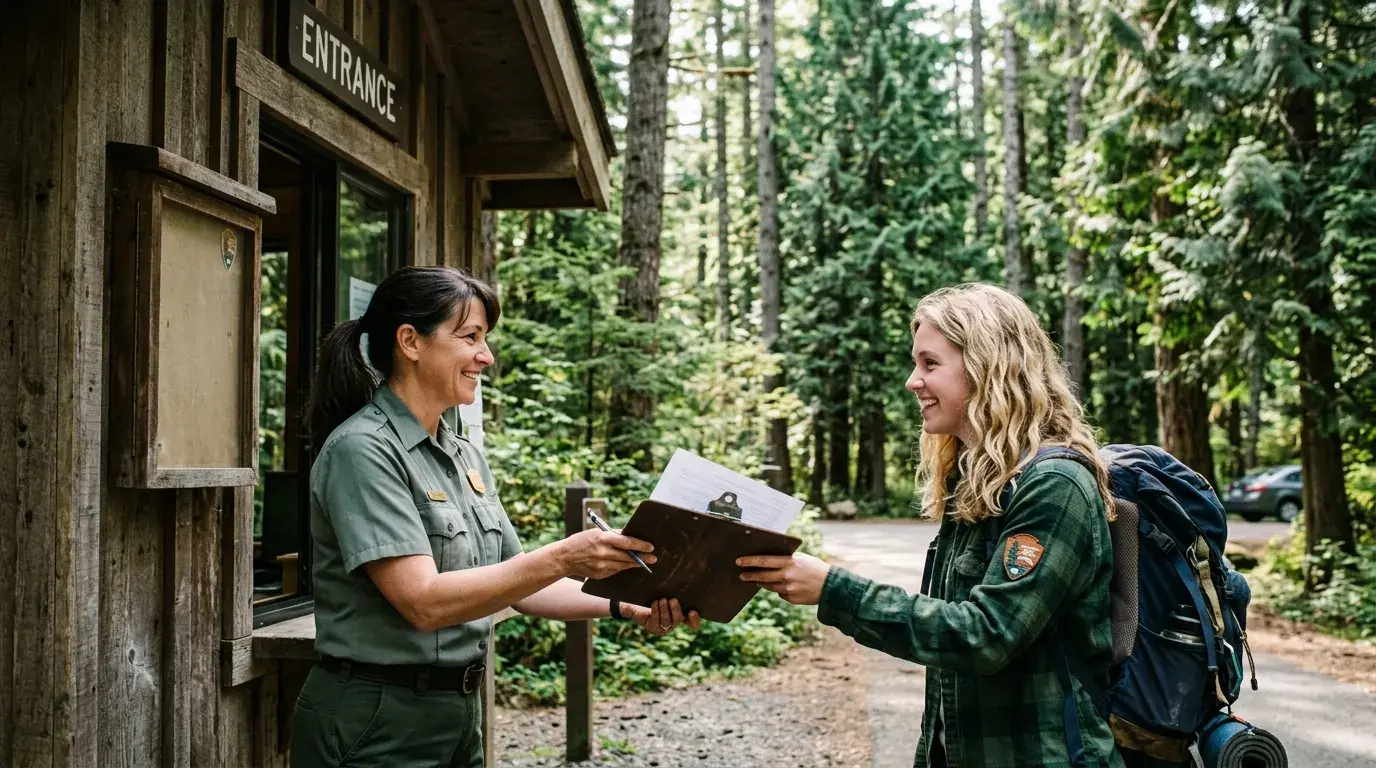
A real campsite reservation may help document a camping itinerary if the destination’s visa checklist asks for accommodation evidence. A shopping-cart hold or speculative placeholder is not the same thing. The accepted format depends on the jurisdiction and application channel.
What Visa Officers Look for in Accommodation Evidence
Read the official document list first. Where accommodation evidence is requested, a campsite record is most useful when it identifies the place, intended dates, traveler or lead guest, reservation status and any reference provided by the operator.
A campground near the activities on a real hiking itinerary can make practical sense. That does not mean an officer will prefer camping or treat the document as a substitute for the other required evidence.
Your planned accommodation should also match the story in the rest of your file. A camper who lists a tent site but shows no route, no gear, and no budget for park fees invites questions. A clear plan answers those questions before anyone asks.
Strong accommodation proof usually shows:
-
The campground name and full address
-
Your name as the lead guest
-
Arrival and departure dates
-
A booking reference or confirmation number
-
Payment and cancellation terms
Treat this list as a minimum. Extra detail, such as site type or park entry passes, makes the document feel lived in rather than assembled for the occasion.
Which Visa Categories Tolerate a Tent Instead of a Room
Your visa category shapes how much weight a campsite carries. A short leisure trip is the easiest fit. Visitor visa applicants heading to national parks often attach campsite confirmations without trouble, because the purpose of travel and the lodging tell the same story.
For a US visa, consular staff focus mostly on your ties to home and your funds. Lodging plays a supporting role. A campsite in Zion or Yellowstone shows a defined itinerary, and that helps. Keep the document consistent with what you plan to say at the interview.
Canada’s visitor-visa guidance lists an itinerary, including flight details or proof of accommodation, among recommended supporting documents. Follow the personalized online checklist and make the campsite record understandable without assuming every applicant must book a hotel.
Some Schengen supporting-document lists expressly include camping among types of accommodation. Others use broader language, such as a document from the establishment or another appropriate description of the planned stay. Check the member state’s current local checklist; do not add a hotel booking over the same nights just because the stay is a campsite.
Where Dummy Hotel Bookings Fit Beside a Campground Stay
A temporary hotel reservation can document genuine city nights before or after a camping trip. It should not be used to hide camping nights or duplicate nights already covered by a campground reservation.
Picture Daniel flying from Delhi to Calgary. He camps for eight nights in Banff, then spends two nights in the city before flying home. His campground booking covers the park. A temporary hotel reservation covers Calgary.
That mix is easy to read. Each night has a place. Each place has a document. Nothing is missing, and nothing overlaps.
A cancellable city hotel booking may limit financial exposure while travel plans are provisional, but its status, payment and cancellation terms still matter. A fabricated hotel PDF is not an acceptable substitute for a real reservation.
Keep the roles clear. The campground confirmation shows your outdoor plan. The placeholder room shows your city stop. Neither should pretend to be something else.
The Real Question Behind Your Booking
Accommodation evidence explains where you intend to sleep; return plans, funds and purpose of travel are separate questions. Do not ask one campsite confirmation to prove the entire visa case.
A paid reservation can be useful, but payment is not an across-the-board visa requirement. A provisional record may be adequate only where the operator has actually issued it and the relevant checklist permits that form of evidence. Never present an unconfirmed cart item as a confirmed stay.
That is why the visa application process rewards clarity over cleverness. You do not need to impress anyone. You need every document to agree with every other document.
Run a quick test before you submit. Read your itinerary, your campsite confirmation, and your visa form side by side. If one date, name, or place differs, fix it today.
A Quick Self-Audit for Campers Applying From Delhi or Mumbai
Applicants from large Indian cities often file from far away, with little chance to correct mistakes after submission. That makes a self-audit worth the time. Spend twenty minutes on it before you book an appointment.
Start with a blank sheet and list your trip in plain words. Write where you land, where you sleep each night, and where you fly home from. If you cannot fill every line, your plan is not ready for an officer yet.
Next, ask three questions about each document:
-
Does it show my name exactly as in my passport?
-
Do the dates match my application?
-
Could a stranger understand it without my help?
If the answer to any question is no, fix that page first. A weak page drags down the strong ones around it.
Budget for site fees, park entry, equipment, transport and food. Camping may cost less or more than a hotel depending on location and gear; use figures that fit the actual plan rather than trying to send a particular financial signal.
Finally, check your reasons to return. Mention your job, your family and your commitments at home. Accommodation proof only answers half of the question. Your file must answer the other half as well.
Once you know where a campsite fits in your file, you need to understand exactly what kind of booking you are holding.
What a Dummy Booking at a Campground Really Is (And Isn't)
The phrase sounds simple, but campgrounds use it loosely, and that confusion can hurt your application. Let us separate the real meaning from the myths.
A Placeholder Site Without Full Payment
“Dummy campsite booking” has no standard meaning. A campground may offer a completed reservation, a short checkout cart window, a waitlist place, or an inquiry. Only the operator’s actual status controls what you hold. For example, Parks Canada says a booking number is issued for a completed reservation and payment is made at the transaction; a cart hold is not that reservation.
Do not assume selecting a campsite creates a visa-ready document. Read the operator’s checkout and payment terms, and use the confirmation only after a reservation is genuinely complete.
A temporary selection window can help you finish checkout, but it may not produce a usable booking reference. If the site is still in a cart, describe it only as a plan, not an accommodation reservation.
Never present a hold as a paid stay. If the document says "pending" or shows an unpaid balance, describe it that way in your cover letter. Honest labels protect you far better than polished wording.
Why Campers Hold a Spot While Plans Settle
Some reservation systems briefly protect a selected campsite in a shopping cart while checkout is completed. That is a transaction workflow, not a general right to hold a site until a visa decision.
Peak-season release windows can be competitive. For instance, Recreation.gov describes a 15-minute cart lock for some sites, while Parks Canada requires completed payment for a reservation. Check the particular campground rather than relying on a universal hold period.
A visa appointment may occur before a preferred site becomes available. If so, use the accommodation or itinerary evidence the consular checklist actually permits. Do not manufacture a reservation or repeatedly occupy scarce sites you do not intend to use.
If you have a genuine operator-issued hold, note its expiry and whether it may be renewed. If not, plan around a completed cancellable booking, an available alternative or a truthful written itinerary where the checklist allows one.
What a Hold Never Gives You
A pending cart, waitlist place or expired hold does not grant a right to occupy a site. A completed booking still depends on its terms and any required check-in. Confirm the record in the operator’s account before relying on it.
Do not carry a pending checkout screen as proof of a confirmed campsite. It may be useful only as a planning note if the receiving authority accepts a proposed itinerary.
Think of three levels:
-
Pending hold: the site is reserved for you for a short time, with no payment completed.
-
Confirmed reservation: payment is complete, and the site is yours for the dates shown.
-
Checked-in stay: you have arrived, registered, and received your site permit.
A completed reservation generally gives the rights stated by that operator, subject to arrival, identification and cancellation rules. A check-in record is different again. Read the actual status displayed for your site.
How Long a Genuine Temporary Hold Lasts
There is no universal 24-to-48-hour campsite hold. Recreation.gov may hold an item in a cart for about 15 minutes, and Parks Canada issues a booking number for a completed, paid transaction. A private operator may have different rules; use its published timer and status.
Do not infer validity from a countdown alone. Confirm whether the timer protects a cart item or an issued reservation, and whether payment or a separate approval is still required.
Keep the operator’s confirmation, account status, booking number if issued and payment or cancellation terms together. Those records are more useful than a self-created screenshot.
You can review a campground’s checkout flow without claiming an uncompleted transaction as a reservation. If you need visa accommodation evidence, use the operator’s real confirmation or the alternative the official checklist accepts.
Group Trips and Shared Reservations
Camping rarely happens alone. Friends and family often share one site, and one person usually makes the reservation. That detail matters for your visa file, because the booking may carry only the lead guest's name.
If your name is missing from the confirmation, ask the booker to add it, or request a short letter from them. The letter should state the dates, the site, and the names of everyone staying. Attach it beside the confirmation.
For group travel, check whether the operator lists only a lead permit holder or permits additional guest names. If a visa checklist requires proof for each applicant, obtain an issuer record or explanatory group itinerary rather than altering the booking yourself.
Guest and vehicle limits vary by campground and site. Check the actual rule for the specific pad and season before using one record for a group.
Agree on cost sharing and cancellation responsibilities within the group. That helps prevent a reservation from lapsing, but it is not itself a visa criterion.
Reading the Fine Print on Hotel Night Counts
Some parks bundle camping with lodge nights, so your hotel reservation and your tent nights may live in the same account. Check how each hotel night is counted and whether tent nights follow a separate rule.
A night-count mismatch can make the route hard to understand. If the campsite record shows seven nights but the itinerary shows eight, identify the extra night and supply the appropriate accommodation or travel explanation.
Questions to Ask Before You Click Reserve
A few quiet checks save a lot of stress. Ask them before you press the final button on any campground page.
First, ask how long the hold lasts. If the page shows no timer, find the help section or email the operator. An unknown expiry makes planning impossible, and it can leave you with a document that has already lapsed.
Second, ask what happens at expiry. Some systems release the site quietly. Others send a reminder and give you a short grace period. Knowing which one applies tells you how closely to watch your inbox.
Third, ask whether the system allows a hold without payment details. Many require a card on file even for a pending reservation. If so, check whether the card will be charged automatically.
Fourth, ask whether the confirmation page can be exported as a PDF. A clean export is much easier to attach than a phone screenshot.
Last, ask yourself if you could realistically use the site. If the answer is yes, you are holding it honestly. If the answer is no, choose another form of proof for those nights.
Your next challenge is understanding how the person on the other side of the desk reads all of this.
How Visa Officers Read a Campsite Booking in Your File

There is no published “ten-second” campsite check that applies to every visa office. Build a document that can be understood without guesswork: identify the operator, site, traveler, dates and current booking status.
What to Check on a Campsite Confirmation
Check the traveler name or lead permit holder, campground and site location, check-in and checkout dates, site type, party size and issued reference. The local visa checklist determines which of those details must be submitted.
A missing reference slows everything down. A reference that looks too short or oddly formatted draws attention. Use the exact confirmation text the campground sends, and avoid retyping it into a new template.
Make sure the guest name matches your passport spelling. A nickname or a missing middle name creates avoidable doubt. Check it twice, because small mismatches often start larger questions.
Keep the operator document readable and complete. A clear export or confirmation email should show the campground identity, dates and actual reservation status; avoid cropping away payment or cancellation conditions that explain the record.
How to Verify a Campsite or Hotel Record
Hotel and campground references are verified in different systems. Some hotel records can be checked directly with the property, while others are managed through an agency or platform. Parks Canada directs travelers to their account or reservation service to confirm a completed booking. Do not state that all “dummy” hotel bookings are unverifiable.
A document with unclear status should be corrected at the issuer. Pair genuine accommodation proof with the transport, funds and purpose documents requested for your case; one weak page is not repaired by adding unrelated PDFs.
A campground confirmation behaves differently. Many campground systems let staff or the public look up a reservation by number. A verifiable reservation of this kind is easier to trust than a free-standing PDF.
If the record is only an inquiry or provisional plan, label it accurately. Do not call it confirmed when the operator has not confirmed it.
Schengen Accommodation Rules: Check the Local List
Schengen requirements vary by consular post. Some official supporting-document lists request accommodation evidence and explicitly include camping; others accept an appropriate description where a reservation is not available. None creates a blanket rule accepting a fabricated or expired hotel document.
The campsite dates and route should be consistent with the intended trip. Payment, confirmation status and documentation requirements depend on the checklist and operator terms; no neat booking can guarantee a visa.
For a Schengen application, use the relevant official supporting-document list and the member state’s local consular checklist. One EU list explicitly names camping as accommodation; the required evidence may differ elsewhere.
Do not make a universal legal claim about every temporary booking. Use an operator-issued record, respect its terms and describe it truthfully. False documents can have serious immigration consequences under the applicable law.
Details That Raise Eyebrows Faster Than You Expect
Inconsistent dates, names or seasonal availability can make the itinerary difficult to verify. Correct the booking with its issuer and update the travel plan before submission rather than editing the PDF yourself.
A closer look is not the end, but it is expensive. It can mean an extra interview, a request for more documents, or a longer wait. Avoid it with a final proofread.
Look for these common slips:
-
A campground that is shut for the season
-
Dates that cross a booking window the park does not offer
-
A site type that cannot hold your group size
-
A city listed as the destination that differs from the campground location
Fix each one before you file. A tidy file earns trust, and trust moves your case toward visa approval faster than any extra page ever could.
Writing Notes That Help the Reader Trust Your Placeholder
A short note can distinguish “completed reservation,” “waitlist,” and “planned alternative.” Those labels matter because they tell the reader what has actually been secured.
Place a single line under each booking in your itinerary table. For a campground, write "Confirmed, paid in full" or "Held, payment due on arrival." For a hotel placeholder, write "Temporary reservation for visa purposes." Plain labels like these remove guesswork.
Use the same wording every time. If one page says "hold" and another says "reservation" for the same thing, the reader may think they are two different bookings. Pick one term and keep it.
Remember that hotel proof carries more weight when it is paired with other evidence. A placeholder room, a campground confirmation, and a flight reservation together tell a fuller story than any one of them alone.
Keep the notes short. One line per booking is enough. A page crowded with explanations looks nervous, while a page with clean labels looks organized.
If the visa office publishes an itinerary template, follow its required fields. Keep operator-generated confirmations in their original form.
Now that you know how the document is read, the next job is making every date agree.
Matching Campsite Dates to Your Itinerary and Appointment
Dates cause more trouble than any other detail. A campsite that starts one day early or ends one day late can make an otherwise strong file look careless.
Lining Up Hotel Dates With the Visa Form
Match the itinerary’s local dates to the visa form, flight reservation, campsite record and any city-hotel nights. A booking need not begin on the flight’s departure day; it should reflect where the traveler will actually sleep.
Start with the intended arrival and departure dates, then map each overnight stay. An overnight flight or host stay should be named rather than concealed by an extra hotel booking.
Your passport and visa form also carry details that must agree with your bookings. Name spelling, date of birth, and passport number should match across every page. A single swapped digit can pull an officer out of the flow of your file.
If you are applying months ahead, remember that your intended travel dates may shift. Pick dates you can truly keep. Changing them after submission creates more paperwork than choosing carefully at the start.
Counting Every Hotel Night Between Arrival and Departure
Count every intended night yourself. Do not assume an officer uses one fixed review sequence, but make the accommodation timeline clear enough that anyone can understand it.
Take Emma, who lands in Vancouver on a Friday and plans six nights at a campground in Whistler. She then spends two nights in Vancouver before flying out. Her list reads like this:
-
Nights 1 and 2: temporary hotel reservation in Vancouver
-
Nights 3 to 8: campground booking in Whistler
-
Nights 9 and 10: second temporary hotel reservation in Vancouver
That is ten nights, ten covered, no gaps. If one night is missing, add a note or a short placeholder stay. Never leave a night unexplained, because gaps invite questions about where you will actually sleep.
Campgrounds also use their own counting rules. Some count nights by check-in date, others by checkout date. Read the policy page so your list matches the park's system.
Setting a Hotel Checkout Date That Matches Your Flight
Your hotel checkout date should land on the day you fly out, or the day before if the flight leaves early. A checkout two days before departure leaves a hole in your plan.
The same applies to camping. If your campground checkout is at 11 a.m. and your flight leaves at midnight, you have a gap of several hours. That gap is fine for a real traveler. On paper, it needs one line of explanation.
Add the flight dates to your trip summary so the officer can see the full picture. A short table or list works well. Show the flight in, the campsite nights, the city nights, and the flight out.
Do not stretch your hotel dates to fill space. Extra nights without a reason look odd. Cut extra nights and keep your plan tight, because a lean plan reads as honest.
A Worked Example for a Ten-Night Rockies Trip
Let us build a full example. Oliver lives in Mumbai and plans a ten-night trip to Alberta. He has a campsite in Jasper for seven nights and a placeholder room in Calgary for three.
His travel details look like this:
-
Flight into Calgary on the 4th
-
Calgary stay on the 4th, 5th and 6th nights
-
Drive to Jasper on the 7th, with seven camping nights
-
Flight home from Calgary on the 14th
Notice what happens. The destination city for the first leg is Calgary, and the campground sits in a different town. Oliver adds a one-line drive note to his itinerary: "Rental car from Calgary to Jasper, about five hours."
That small note answers the question an officer would otherwise ask. It also shows planning. Add a line like that whenever your lodging sits far from your arrival airport.
Use the local landing date and campground arrival window. A flight after midnight may require a city room for the previous hotel night or a later park arrival; confirm with both operators before setting the booking dates.
If the reservation will lapse before submission, do not plan to reuse an expired PDF. Obtain current evidence if the checklist requires it, and disclose changes using the official update process.
Time Zones, Late Arrivals and the Check-In Window
Long flights create small date traps. A flight that leaves Delhi late on the 3rd may land in Calgary on the morning of the 4th, and some itineraries cross midnight twice. Read the arrival date on your flight page, not the departure date, before you set your first night.
Campgrounds also close their gates at set hours. If your plane lands at night, you may reach the park after the office shuts. Many parks hold a late-arrival envelope, but some do not. Check the rule, and book a city room for the first night if your arrival falls outside the window.
Write the check-in window on your itinerary beside each campsite. A line such as "Check-in from 2 p.m., gate closes 9 p.m." shows that you planned the first day with care.
Adjusting Your Plan When the Appointment Moves
Embassy slots shift. A cancelled appointment or a new interview date can push your submission weeks later than you expected. When that happens, your planned travel dates may need a second look.
Start by asking whether the new submission date still leaves enough time before departure. Processing windows differ by country, and some are long. If the gap is now too small, move the whole trip rather than squeeze it.
Then update every document in the same order. Change the visa form first. Next, edit the flight reservation. After that, adjust the campground booking and any placeholder room. This sequence keeps your master dates at the top and your supporting pages in line.
Take Hannah, who planned a July camping trip but received an appointment in late June. Her campground opened for booking only in May, so she had held a site for early July. When her interview slipped by three weeks, she moved her trip to late July and rebooked a nearby site.
She kept the old confirmation out of the file. Only current pages went in. That choice avoided any mismatch between old and new dates.
Keep a version log with the date of each change. If an officer asks about a difference, you can answer in seconds.
Even perfect dates can fail if the campground itself changes the rules, so read its terms next.
When Campground Rules Turn a Placeholder Into a Problem
A campsite hold lives inside someone else's system. That system has rules, and breaking them can erase your reservation without warning.
Policies That Ban Speculative Holds
Some public and private campgrounds restrict speculative or duplicate reservations. Read the specific operator’s terms before using a temporary selection. Parks Canada and Recreation.gov have different reservation workflows.
Do not assume all campground systems permit unpaid holds. If payment, permits or approval are required, complete those steps before calling the site reserved.
Read the terms before you click. Look for phrases like "speculative," "reselling," "placeholder," or "intent to use." If the rules ban it, do not create the hold, and use a different type of proof for that stretch of your trip.
Reserve only a site you may actually use, and comply with the operator’s rules. A genuine, cancellable booking is different from a cart item held only to print a document.
How Accidental Bookings Happen With Saved Payment Details
Accidental bookings can occur if payment details are saved in profiles. This is a quiet trap. You click through a "hold" flow, your saved card appears, and the system treats your click as a full purchase.
The result is a fully paid hotel booking or campsite charge you did not plan. Refunds may be slow, and some operators charge fees when you cancel. A small slip can cost real money.
Protect yourself with a few habits:
-
Remove saved cards before you create any placeholder
-
Read each page before you press the final button
-
Watch your email for a payment receipt within minutes
-
Check your bank app the same day
Treat the confirmation screen as a legal document. If it says "payment received," you have a paid booking, not a hold. Act on that fact right away.
Free Cancellation Windows and Paid Booking Risks
A paid booking can still be safe if it includes free cancellation. Many campgrounds allow free cancellation up to a set number of days before arrival. Others charge a fee after the first night or after a specific date.
Compare real options: a completed reservation with its cancellation fee, a genuinely refundable booking if available, or a permitted written itinerary while sites are not yet released. A cart lock is not a zero-cost reservation lasting until a visa decision.
If you choose the paid path, record the cancellation deadline in your calendar. Pick a date that falls before your visa decision is due. That way, you can cancel in time if the answer is late or negative.
Some booking platform terms also deduct a service fee even when you cancel on time. Read the refund table before you pay. A low nightly price can hide a high cancellation cost.
What to Do If a Campground Cancels Your Site
If a campsite reservation is cancelled, check the notice and the operator’s account, then update the itinerary. Do not keep submitting a confirmation that no longer represents an active booking.
First, check whether the cancellation affects your visa file. If you already submitted the booking, you may need to update the officer. A short, polite message with a corrected document keeps your file accurate.
Second, replace the booking. Pick another campground or a hotel for the same dates, and update your itinerary. The new document should carry the same dates so your visa form stays valid.
Third, learn from the notice. A cancellation tells you how the operator sees your reservation. Use a different approach next time, such as a refundable booking or a hotel placeholder for those nights.
Protect your account too. Repeated cancellations can lead to blocks on the platform. Keep your name clean, because you may need that account for the real trip later.
Keeping a Paper Trail for Every Campground Account
Campground accounts hold more of your trip than you might think. They store your name, your payment cards, your dates, and your messages. Treat them like a small filing cabinet.
Create a folder on your device for each booking. Save the confirmation email, the PDF, the cancellation terms, and any payment receipt. Name each file with the park, the date, and the status, such as "Whistler-July-Paid."
Take a screenshot of the terms page on the day you book. Policies change, and your copy proves what applied when you reserved. If a dispute arises, that image can settle it quickly.
Log out of shared computers after every session. Public devices may save your login, and a stranger could cancel or alter your site.
Use one email address for all travel bookings. Scattered messages across several inboxes make it easy to miss a cancellation notice.
Finally, review your account weekly while your application is pending. A quick look takes two minutes and can catch a changed status before an officer does.
Rules shape what you can hold, and demand shapes how quickly you must act, which is the next piece to understand.
Holding a Peak Season Site Without Gaming the System
Camping demand is intense in summer. If your trip falls in that window, you need a strategy that respects both the park and your visa file.
Why Popular Campgrounds Vanish in Seconds
High-demand campgrounds can sell out within seconds during booking windows. Parks release dates on a fixed schedule, and thousands of campers log in at the same minute. By the time you reach checkout, the site may be gone.
Do not treat a checkout cart as a way to secure peak-season proof. It may expire within minutes; a completed booking is governed by the operator’s published launch, payment and cancellation rules.
If your visa file depends on a specific campsite, build in slack. Know your release date, log in early, and have your details ready. Keep your payment method clear of saved cards so you control each step.
Also keep a second site in mind. A neighboring campground in the same park can show the same route, the same dates, and the same activity plan. The visa file rarely needs one exact pad, only a credible stay.
Alerts can help you find a cancelled site, but they cannot turn an unissued campsite into a reservation. The Parks Canada reservation policy explains completed bookings, booking numbers, payment, changes and late arrivals.
Alternatives to dummy bookings include campsite alert services. These tools watch the booking system and message you when a canceled site appears. You then book it as a real reservation in your own name.
Alerts tell you when a site is available; they do not reserve it. Complete the operator’s booking process in your own name and verify the issued confirmation before using it as evidence.
Alerts work best for flexible dates. If you can shift a day or two, you will catch more openings. If your visa file needs exact dates, set the alert for those dates and add a backup option.
Keep expectations realistic. An alert is not a guarantee, and popular parks may release few cancellations. Use it alongside other tools, not as your only plan.
First-Come-First-Served Sites as Backup Plans
Another alternative is first-come-first-served sites. Many parks keep a share of their pads for walk-ups. You arrive, find a site, and pay on the spot. No online booking exists, so no confirmation is available beforehand.
That makes them tricky for visa files. You cannot show a document for a site you have not claimed. Instead, describe the plan in your cover letter and attach a hotel or a booked campground for the first nights.
First-come-first-served sites are a travel option but ordinarily cannot produce an advance confirmation. Explain them only where the visa instructions allow a planned itinerary instead of booked accommodation.
Check the park's own advice on arrival times. Popular first-come loops fill by mid-morning, so plan to reach them early in the day.
Packaging a Backup Plan for the Embassy
A backup itinerary can be helpful for your own planning, but do not submit several overlapping reservations as if all were confirmed. Label an alternative as an alternative and provide the evidence the checklist requests.
For example, Sophia plans a Yosemite trip and lists the valley campground as her first choice. She adds a nearby campground as her second choice and a lodge in Mariposa as her third. All three cover the same nights.
This approach shows planning without overpromising. It also protects her if the first site sells out before her appointment. Her travel plans stay intact, and her file stays consistent.
Label every document with the source and date. A reader should see at a glance which paper is a hold, which is paid, and which is an option. Clear labels save time and prevent suspicion.
Seasonal Timing for Mountain and Coastal Parks
Not every park runs on the same calendar. A mountain campground may open only from late May to early October. A coastal one may stay open all year but close its beach loops during storm season. Check the dates before you plan.
Release schedules also differ. Some parks open sites six months ahead, others four, and a few use lotteries. Mark the release date for your chosen park in your calendar, and set a second alarm for the hour.
Weather shapes your backup plan too. Fire closures, flooding, and snow can shut a road or a loop with little warning. A visa file with a lodge or hotel option for the same nights stays valid even if a campground closes.
Shoulder seasons offer an easier path. Late spring and early autumn have lower demand and still give good weather in many regions. If your leave dates are flexible, aim for those windows.
Whatever season you choose, say so in your cover note. A one-line mention of opening dates shows that you checked, and it prevents questions about whether the campground is actually open.
With your lodging structure set, you can turn to the other half of your itinerary, which is how you get there.
Pairing Your Campsite Plan With a Flight Reservation That Holds Up
A campsite record describes the intended overnight location; flights or other transport describe access and exit. Align their dates and routes without suggesting either document determines approval.
Why Your Tent Dates Need Matching Flight Details
Every campsite booking has an arrival night and a departure morning. Your flight details must sit just outside those edges. Land on or before the first campsite night. Fly out on or after the last one.
A gap of one or two days is fine when you add a city stay. A gap of a week needs an explanation. Officers wonder where you will be during that time, and an unexplained week weakens an otherwise tidy file.
Picture Michael, who plans a six-night camping trip in Utah. His campground starts on a Tuesday. He books a flight reservation that lands in Salt Lake City on Monday evening, giving him one night in a city room before the drive.
His return flight leaves on the Tuesday after the camping ends. That keeps the full trip at eight nights, with every night covered. His flight itinerary and campsite dates now fit together like two halves of one page.
Put the flight dates in the same table as your campsite nights. A single view of the trip lets the reader confirm the match in seconds.
Dummy Ticket Versus Actual Ticket
A temporary flight reservation, if genuinely issued, shows the itinerary and booking status for a limited period. A purchased ticket generally has a payment and e-ticket record. A reservation code alone does not prove a ticket was issued or that a seat remains held.
Compare cost and flexibility before buying travel. A reservation may reduce non-refundable exposure, but it can expire, change or be unsuitable for a specific visa or carrier requirement. A purchased ticket may also be refundable under its fare rules.
Some official checklists allow a flight reservation rather than a purchased ticket; others specify different evidence. Read the destination and visa-category instructions rather than assuming every embassy accepts a “dummy ticket.”
Think of the two as stages. The temporary version supports the application. The purchased version follows once your visa is approved. Do not buy the final ticket until you have your decision in hand.
Here is a simple way to compare them:
-
Dummy ticket: short validity, no payment, verifiable code, easy to change
-
Actual ticket: full payment, long validity, fare rules apply, harder to change
How Long a Flight Hold Lasts and How to Time It
Flight-reservation validity varies by fare, carrier, agent and booking channel. Do not rely on a generic 24-to-72-hour window; confirm the live status and expiry of the specific record before submission.
Work backward from the application date only after learning the reservation’s actual validity. For online submissions, consider whether a short-lived hold could expire before review and follow the authority’s update rules if plans change.
For Canada visitor visas, IRCC’s visitor guidance lists an itinerary with flight details and accommodation as supporting information. Check the personalized document checklist for your own application.
A reservation can document intended travel only while its underlying record is accurate. Save the issued PDF, but do not present an expired code as active proof.
Save a screenshot of the airline website page where the booking appears, if the system allows it. That image helps if an officer asks where you got the reference.
What a Flight Booking Reference Can and Cannot Prove
A passenger name record or booking reference identifies an airline or agency record; formats and retrieval methods differ. It does not itself prove payment, ticket issuance, a guaranteed seat or visa acceptability. Verify the route and status through the issuing channel.
Some carriers permit travelers to retrieve bookings online; others require an agency locator or additional identity details. If a code does not resolve publicly, ask the issuer how to check it. Never invent or alter a reference.
Compare operating carrier, route, dates, passenger names and segment status with the issued record. Do not promise that a specific airline will appear or that every agent can choose any carrier.
The distinction is between a genuine, accurately described reservation and a false document. Legal consequences depend on the country and facts; use official instructions and the issuer’s terms rather than a blanket statement that all “dummy tickets” are legal.
Adjusting Plans Without Starting Over
Change and cancellation rights are booking-specific. When a campsite date moves, ask the flight issuer whether the reservation can be changed, reissued or must be replaced, then recheck every document.
If your campground cancels a night, your flights may need to shift. A flexible reservation lets you move the date and keep the same document trail. You do not have to rebuild the file from scratch.
If a flight date changes, review the current DummyFlights service terms and the actual booking status before requesting a reissue. Do not assume a fixed price, instant delivery or unlimited changes without checking the live offer.
Change the flight first, then update the campsite note, then reprint your itinerary. That order keeps the most sensitive document, the flight, accurate before anything else moves. Always double-check that the final dates still agree with your visa form.
Choosing Between One-Way and Return Flight Proof
Many campers ask whether they need a return flight or just an onward ticket. The answer depends on your destination and your visa category. Check the embassy page, because rules differ by country.
Use the flight evidence the specific visa checklist requests. A return flight, an onward leg to a third country or a truthful proposed route may serve different cases; none is automatically safer solely because it is round-trip. Make the exit plan match the real camping itinerary.
Think about what the flight proof must show. It must show that you arrive near your first night and depart after your last one. It must also show a route that makes sense for your story. A camper heading to Alberta should not fly into Florida.
A dummy flight ticket online is quick to create, but check each field with care. Look at the passenger name, the dates, the airports, and the PNR. A single typo can make the page useless.
Some applicants search for a flight dummy ticket at the last minute, the night before an appointment. That works only when the provider delivers instantly, and the code can be verified. Leave a buffer of one day if you can.
Keep the booking synced with your campsite plan. If you extend your camping by two nights, extend the flight too. A changed pad without a changed flight is the simplest way to create a mismatch.
Finally, save the PDF and the PNR in your travel folder. If an officer asks for the reference, you can give it in seconds.
After flights, the biggest danger to your file is not an honest mistake but a fake one, which deserves its own look.
False Documents and Verification Risks
Not every booking is what it claims to be. A fake page can cost you the visa, your fees, and your travel reputation, so learn the warning signs.
Fake Dummy Tickets and the Verification Check
A fabricated flight or hotel confirmation can lead to refusal and other consequences under the relevant immigration rules. A valid booking record and an accurate document are different from a PDF with invented details.
If a reference cannot be verified, first check the correct retrieval method with the issuer; not all records are publicly searchable. A forged reference is a serious problem, but a failed public lookup alone does not prove fraud.
For a real reservation, compare the issuer’s live status, passenger names and route with the submitted page. No officer review time or outcome can be predicted from the presence of a code.
A fake hotel booking works in the same way. If the property cannot be found, or the confirmation lacks a real number, the page becomes a risk. Even a campsite confirmation can be fake if it was edited by hand.
Never edit a confirmation. Never change a date in a PDF editor. Never invent a reference. Each of these shortcuts turns a manageable file into a rejected one.
Unverified Sources and the Fraud Risk
Using unverified sources for dummy tickets increases the risk of fraud. Social media sellers, anonymous chat groups, and unknown websites may take your money and send a fake page. You then have nothing, and your name sits in a stranger's records.
Spot a risky source by its behavior. It may refuse to show a sample, offer no support contact, ask for payment by unusual methods, or promise approval. No seller can promise approval, because only the embassy decides.
Protect yourself with a short routine:
-
Search for the seller's name and read recent feedback
-
Ask how the PNR can be verified
-
Check that the site uses a secure connection
-
Pay with a method that offers dispute rights
A fraud case also affects your personal data. Your passport details, email, and phone number may be misused. If something feels wrong, stop before you pay, because recovering lost money is far harder than avoiding the loss.
Bans From Future Applications
Submitting a knowingly false document can have serious consequences, including refusal or future immigration restrictions where the law provides. The duration and reach of any penalty depend on the country and case; do not assume a universal multi-year ban.
A false document can affect future applications as well as the current one. It is better to provide a truthful plan or ask the authority what alternative evidence it accepts than to invent a reservation.
Keep copies of what you actually submitted and any subsequent correction. If asked later, accurate records make it possible to explain the change without speculation about how authorities share information.
That is why honesty is the best method here. Submit documents you can defend. If a page is a temporary reservation, call it one. A truthful label never harms you as much as a lie.
Inconsistent Details That Look Like Fraud
Inconsistent details in dummy bookings can raise suspicions, even when your intent is honest. A flight that lands after the campsite check-in closes, or a reservation in a different spelling of your name, can look like a forged page.
Read every document as if you were the officer. Ask whether each number, date, and name is believable. If something looks odd, ask your provider or campground to correct it before you submit.
Keep a log of each booking’s issuer, date and reference. If the visa office asks for clarification, describe the current status plainly and provide issuer records where requested; do not predict that a particular answer will influence the decision.
Safe Habits for Sharing Your Documents Online
Your visa file holds sensitive data, so protect it. A passport number, a booking code, and a home address are all useful to a scammer.
Send documents only through the official portal or the embassy email listed on its website. Be wary of messages that claim to be from an embassy and ask for payment or a new upload link. When in doubt, visit the official site by typing the address yourself.
Avoid posting booking pages on social media. A shared confirmation can show your name, dates, and reference, which helps strangers misuse it.
Use strong, unique passwords for your campground and email accounts. Turn on two-step login where it is offered. Your reservation emails often contain the reset link for your other accounts.
Store backups in two places, such as your device and a secure cloud folder. If your phone fails the day before an interview, you still have everything.
Delete old files you no longer need once your trip ends. Less data lying around means less to lose.
How to Respond if an Officer Questions a Document
If an authority questions a document, answer accurately and consult its official correction process. Do not guess about the reviewer’s intent.
If asked about a campsite hold, say what it is. "This is a temporary reservation for the first three nights. The rest is paid." Short, direct answers sound honest because they are.
If asked about a flight reservation, give the reference and the issuing channel, and explain its current status. Do not call an unpaid hold a ticket or assume the officer can retrieve the record on every airline website.
If asked about a date mismatch, do not guess. Say you will check and send a corrected page. A quick, accurate fix beats a rushed explanation.
Never claim that a placeholder is a paid stay. Never say you cannot remember where you got a document. These answers damage trust more than any mistake in the paperwork.
Bring printed copies to any interview. Phones fail, signals drop, and batteries die. Paper never does.
If the officer requests extra documents, send them within the deadline. A prompt reply signals that you take the process seriously.
Honest files that are clean and consistent give you the best chance at a smooth visa outcome. The last job is to assemble everything in the right order.
Assembling Your Visa File Around a Camping Itinerary
You now have a campsite plan, a hotel placeholder, and a flight reservation. Put them together so the reader moves through your file without effort.
Building Your Visa Checklist Around the Tent Plan
Start with a visa checklist that fits your case. Every embassy publishes its own list, so use that list as the base. Then add the camping pieces that explain your itinerary.
A solid set of visa documents for a camping trip includes:
-
Passport and visa form
-
Flight reservation for visa use
-
Campground confirmations with booking references
-
A temporary hotel reservation for non-camping nights
-
Bank statements and proof of employment
-
Travel insurance
-
A short itinerary table
Follow the portal’s requested upload categories and order. A convenient personal file order does not override the official checklist.
Your visa documentation should also respect the rules of your visa category. A tourist file needs different support from a family visit or a business trip. If you hold a mixed purpose, state the main one clearly.
Number the pages, and keep each document to one page where possible. A tidy visa file shows respect for the reader's time.
Writing a Cover Letter That Explains the Camping Choice
A cover letter is your chance to speak in your own voice. Use it to explain why you chose a campsite and how the pieces fit. Keep it to one page and write in plain language.
Open with your purpose, your dates, and your route. Then explain the lodging. For example: "We will camp in Jasper for seven nights and stay in Calgary for the first three nights. All bookings are attached."
Name each document and say what it is. If one is a temporary booking, say so. If one is paid, say so. Clear labels remove doubt.
Mention your ties at home in one short paragraph. Describe your job, family or studies, and say when you return. Officers care about your plan to leave as much as your plan to arrive.
Sign the letter and date it. A signed page feels real, while a loose page feels like filler.
Travel Insurance for Outdoor Trips
Travel insurance deserves extra thought on a camping trip. Many policies cover medical care but exclude hiking at altitude or backcountry camping. Read the exclusions before you buy.
Choose a plan that covers emergency care, evacuation, and the full length of your stay. Some regions require insurance for the visa itself. Schengen files, for example, ask for a minimum medical cover level.
Attach the policy certificate and highlight the dates. If your dates change, update the policy as well. A mismatch between insurance and itinerary is a common small error.
For an outdoor trip, compare insurance coverage and exclusions for hiking, altitude, rescue and camping. Purchase coverage that meets the visa requirement where applicable; it cannot by itself predict the decision.
What to Do After the Visa Decision
Once the visa decision arrives, your file has done its job. Now move from placeholders to real purchases.
If the visa is approved, buy your final ticket and confirm your campsite. Replace any temporary hotel reservation with a real booking, or cancel it. Update your final travel plans with the confirmed dates, and tell your travel companions.
Check the fare rules before you pay. A non-refundable ticket can save money, but it locks you in. Look at the change fee and the baggage rules, then decide whether to pay more for flexibility.
If the visa is refused, read the letter carefully. It may list reasons you can fix. Do not reuse a document you cannot defend. Correct the weak points, wait if required, and apply again with a stronger file.
Keep copies of every document, even after approval. Border staff may ask for your lodging and return plan on arrival, and a printed set keeps you calm at the desk.
A Final Read-Through Before You Press Submit
Set aside one hour for a last review. Print the full file, find a quiet spot, and read it from start to finish as if you had never seen it.
Start with names. Check every page against your passport, letter by letter. Then check numbers, such as passport digits, booking references, and flight codes. A single wrong digit can break a verification check.
Move to dates. Highlight the arrival and departure dates on your form, then find the same dates on each booking. If any page disagrees, mark it in red and fix it.
Next, read your cover letter aloud. Awkward sentences are easier to hear than to see. Cut anything that sounds like filler.
Ask a friend or relative to read the file too. Fresh eyes catch small slips. Ask them one question: "Does this trip make sense?" If they hesitate, find out why.
Then check the technical side. Each PDF should open, each image should be sharp, and each file should be small enough for the portal. Name files clearly, such as "01-Passport" and "02-Flight-Reservation."
Last, confirm the payment and the appointment. Keep your receipts together with the file. Once everything lines up, submit with confidence and let the paperwork speak for you.
Your Campsite Plan, Ready for the Visa Desk
A genuine campsite reservation can document intended accommodation when the applicable visa guidance permits it. Match the operator record, dates and traveler details to the trip, and distinguish a completed booking from a cart or waitlist.
Before submitting, count the nights, verify all issued references and correct any mismatch with the issuer. A truthful, coherent file is the goal; it cannot guarantee a visa or entry.
Before filing: open the operator account, confirm the campsite is issued rather than still in a cart, check its cancellation deadline, and compare the final night with the onward or return flight.
Frequently Asked Questions
Can a campsite reservation count as visa accommodation proof?
Sometimes. Check the specific visa checklist. Some Schengen supporting-document lists name camping, and Canada visitor guidance lists accommodation within itinerary evidence; the record should represent a real intended stay.
Is a campsite in my shopping cart a reservation?
No. A cart lock only gives time to complete checkout and may expire within minutes. Use the operator-issued confirmation after the reservation is complete.
Do Parks Canada sites offer unpaid 24-hour holds?
Parks Canada says costs are paid at the transaction and a booking number is supplied for a completed reservation. Read the current park policy for the particular site.
What if I cannot reserve the site before applying?
Follow the visa office’s instructions for planned itineraries or alternative accommodation evidence. Do not fabricate a campsite confirmation.
Does a flight PNR prove my onward ticket is issued?
No. A PNR identifies a booking record; ticketing and validity must be checked with the issuer. The visa office decides which flight evidence it accepts.
How do I show city nights beside camping nights?
Make a date-by-date table and provide a genuine hotel or host record only for the city nights you actually intend to use, without overlapping the campsite stay.
Friendly reminder: DummyFlights provides travel-planning documents; a temporary reservation is not a purchased ticket, a visa, a guarantee of accommodation, or permission to enter a transit country. Check the live booking and the applicable embassy, airline, airport and border rules before relying on it. No document guarantees a visa, boarding or entry.