Short answer: Guatemala lists a return air ticket or another transport mode that guarantees departure from the country. A bus into El Salvador can show an exit from Guatemala, but it may not restart your CA-4 stay period. A dummy ticket is a temporary reservation, not an issued seat; confirm your airline accepts it and that your real onward route is lawful.
The useful distinction is between leaving Guatemala and leaving the four-country CA-4 area. A Guatemala–El Salvador bus answers the first question, while a traveler close to the shared regional limit may also need proof of departure from CA-4. Verify passport-specific visas, transport status and the actual admission period before choosing the exit evidence.
Key facts
- Guatemala’s migration authority recognizes a return air ticket or another mode that guarantees departure from the country.
- A border trip to another CA-4 member is a country exit, not an automatic reset of regional time.
- UK guidance says British-citizen visitors need a visa for Honduras despite its CA-4 membership.
- A PNR can identify a reservation without establishing that an e-ticket was issued.
- Carrier acceptance of a bus, shuttle or temporary hold must be checked for the actual itinerary.
In This Guide
- Why Guatemala Immigration Wants To See Your Exit Plan
- Why Airlines Check Your Onward Ticket Before Immigration Does
- Picking The Right Proof For Your Route: Bus, Flight Or Shuttle
- Land Borders, Long Stays, And Tricky Itineraries
- Get Your Guatemala Onward Ticket Ready Before You Fly
- Frequently asked questions
Official-source check: Guatemala’s migration authority entry requirements list a return air ticket or another means of transport that guarantees departure from Guatemala. UK government Guatemala entry guidance explains the shared CA-4 clock for British-citizen visitors, the Honduras-visa exception, the entry/exit declaration and extension process. Check the rules for your own nationality; neither source guarantees acceptance of an unticketed hold.
Reviewed for: Guatemala exit versus CA-4 regional departure, individualized stay and visa conditions, actual land-border route, airline versus immigration evidence, booking versus ticketed status, and document recovery steps. Examples are illustrative.
Why Guatemala Immigration Wants To See Your Exit Plan

Guatemala’s migration authority lists a return air ticket or another transport mode that guarantees departure from Guatemala among entry requirements. This is a document check, not a promise that every booking type will be accepted. The separate CA-4 stay clock determines whether a later border hop gives you more time in the region.
What Guatemala Expects Before Your Passport Gets Stamped
Guatemala’s published entry list asks for a return air ticket or another means of transport that guarantees departure from the country. The precise evidence and visa requirements depend on your passport and admission category.
A visitor entering by air or land should be able to explain the real next movement and present relevant transport evidence if requested. Ask your operating carrier what it accepts before a one-way flight into Guatemala; its boarding check is separate from the border decision.
Proof of onward travel helps establish that a visitor does not intend to stay indefinitely.
Departure evidence helps establish the intended temporary trip. Immigration also reviews identity, visa status where required, travel purpose and other relevant factors. A matching date does not automatically settle admission.
Show where you actually plan to go, when you plan to leave Guatemala and how you expect to travel. If a booking is only a hold, describe it as provisional rather than as a paid seat.
Do not assume a weekend visitor is checked the same way as someone staying for months. Carry usable evidence for your own itinerary and category, regardless of how brief the visit is.
Immigration authorities require evidence of onward travel to prevent illegal overstays.
The official list allows an air return ticket or another transport mode that guarantees exit; it does not say one generic PDF clears every case. A carrier can ask for evidence in a different format at check-in.
How The CA-4 Agreement Changes Your Exit Math
The CA-4 arrangement adds a second question to the ordinary Guatemala exit check: after leaving Guatemala, are you still within the regional stay period?
The CA-4 area comprises Guatemala, El Salvador, Honduras and Nicaragua. For eligible visitors, time in those countries may be counted together; the exact permission and any visa requirement depend on nationality and status. UK guidance says British-citizen visitors have a shared 90-day period and need a visa for Honduras.
Crossing from Guatemala into El Salvador is a departure from Guatemala, but it does not reset the CA-4 clock for a visitor subject to the shared period. Keep these two facts separate: country exit evidence and lawful time remaining in the region.
A Guatemala exit document need not always leave the CA-4 zone. A trip to another member can show departure from Guatemala, while a traveler near the end of regional permission also needs a lawful plan to leave the CA-4 area or obtain an allowed extension.
Illustrative example: Daniel arrives in Guatemala and plans three weeks there before visiting El Salvador. His international bus ticket can show departure from Guatemala, but the time in El Salvador still counts against the regional stay available to him. If he has little regional time left, his file must also address the later exit.
A route to Mexico, Belize or Costa Rica would leave the CA-4 area if it is genuinely usable for your passport. It is not inherently better than a real Guatemala-to-El Salvador trip; choose according to the actual itinerary and remaining permission.
If the real next stop is inside CA-4, show that border movement truthfully. Separately track the ultimate departure from the shared area before the authorized period expires, and check next-country entry rules.
Record the first relevant CA-4 entry, later crossings and permission granted. Do not assume that leaving and re-entering through a neighboring member creates a new 90-day stay.
Which Documents Count As Valid Proof
Possible proof depends on the actual exit and on what the reviewing authority or operating carrier accepts. An issued flight, international bus ticket or shuttle confirmation can show different things; a temporary reservation may show only a planned route.
The Guatemalan migration authority’s entry page recognizes an air return ticket or another means of transport that guarantees departure from Guatemala. It does not publish a universal rule that every bus voucher, shuttle email or unticketed flight hold must be accepted.
A flight booking may document an intended exit, but a reservation reference is not the same as an issued e-ticket. If the operating airline requests a paid or ticketed journey, a temporary hold is not a substitute.
Whatever you choose, it should show:
- Passenger name matching the passport and carrier format
- Date inside the stay actually granted
- Real international departure from Guatemala
- Operator, route and current booking or ticketing status
- Next-country authorization where required
Requirements can differ by nationality, visa category and route. A trip into Honduras may require additional authorization even when CA-4 time remains; UK government guidance specifically warns British-citizen visitors about a Honduras visa.
Check the relevant visa and transport rules for your passport. Do not infer document acceptance from nationality stereotypes or another traveler’s smooth border crossing.
Spelling matters more than most people expect. A missing middle name or a swapped surname can make a good document look wrong. Copy your name from the passport photo page, not from memory.
Small Mistakes That Make A Good Plan Look Weak
An otherwise workable plan can fail a document check when the passenger identity, route, date, status or admission permission does not match. Diagnose the exact issue rather than assuming every refusal is a typo.
Watch for these common slips:
- Departure after the permitted stay
- Guatemala exit confused with a reset of the CA-4 clock
- Passenger identity or next-country permission mismatch
- Expired hold or unticketed booking shown as an issued ticket
- Domestic leg ending before the border
Resolve a mismatch through the issuer before departure. A new PDF should reflect the real booking, not a hand-edited version of an outdated record.
Read your document once as if you were the officer. Ask whether a stranger could see your name, your date, and your destination in five seconds. If the answer is no, simplify the file.
Check the operating carrier’s rule before travel. Its decision at the origin airport can differ from Guatemala’s entry evidence list, especially for a bus exit or temporary hold.
Why Airlines Check Your Onward Ticket Before Immigration Does
Airline check-in is one possible review point; Guatemalan immigration is another. Neither automatically replaces the other. Plan for both before the first flight.
Why Airlines Act As The Real Gatekeepers
Airlines may review onward or return transport before boarding when destination entry conditions require it. The format the airline accepts can depend on its own document-check process and the traveler’s route.
Do not assume carriers are always stricter than immigration or that one specific airline follows a universal rule. Ask the operating carrier about your passport, connection and proposed exit evidence.
The reason is money. Every carrier has a financial stake in who it boards.
A carrier may have duties and costs when a passenger is refused admission. That helps explain pre-boarding checks, but it does not prove an identical procedure at every counter.
Do not claim that every missing onward ticket triggers a fine for the airline. The immediate practical risk to the traveler is that check-in may stop while staff seek acceptable evidence.
A check-in agent may compare the reservation with the entry rule, available stay and next-country eligibility. Give them current, readable evidence and time to resolve discrepancies.
Do not promise that Avianca, United or any other carrier will check in the same way on every itinerary. Confirm with the operator of the actual flight.
The price of a fare does not by itself establish acceptability. Ticketing status, passenger name, route, date and admission permissions are more useful checks.
The safest preparation is to identify the document type the operating carrier requests and to preserve the current issuer record. If a reservation is only a hold, make that clear.
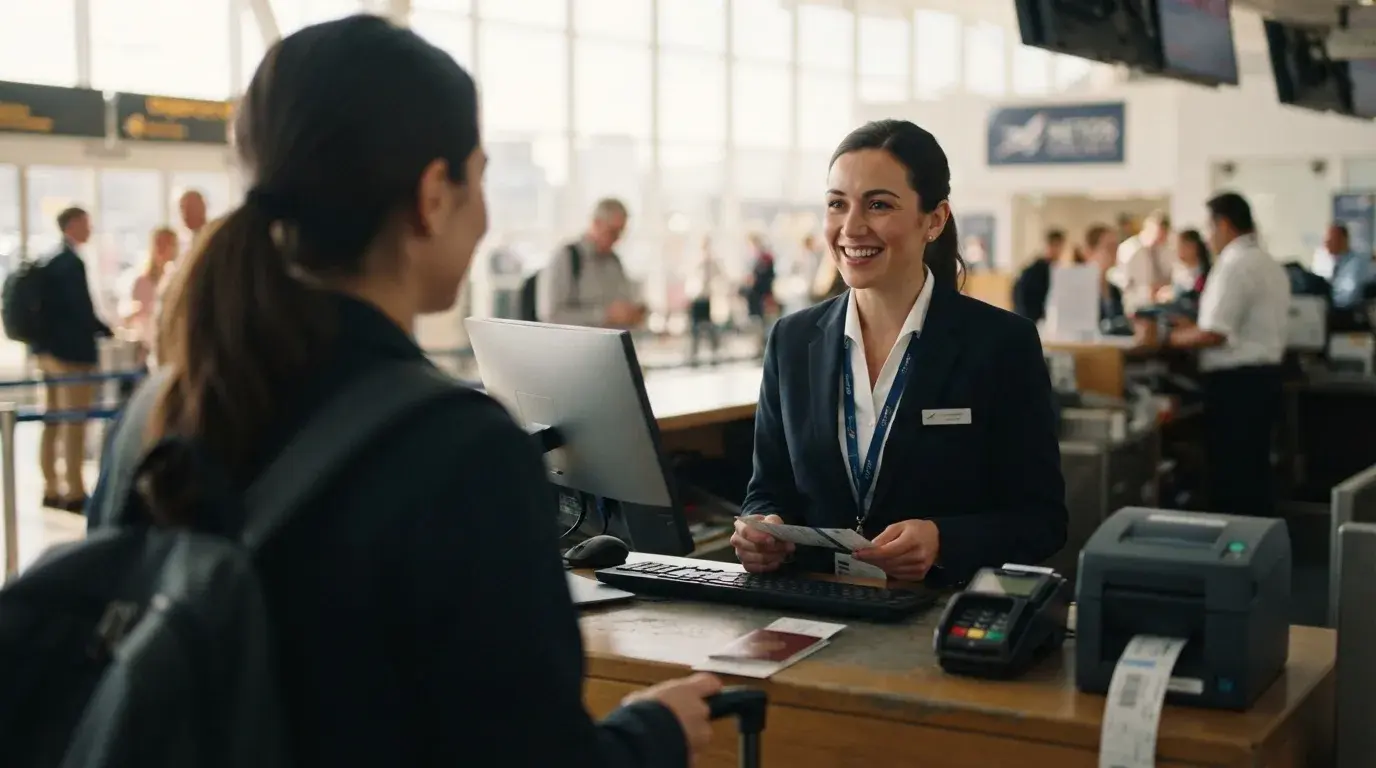
What Happens At The Check-In Desk
At check-in, the agent may review your passport, visa position and Guatemala exit plan. Some carriers can retrieve a booking; others may request an issued-ticket receipt or different evidence. No universal lookup time is guaranteed.
If staff cannot verify the record, ask which code or status they need. An agency reference, airline PNR and e-ticket number may differ. Contact the issuer rather than presenting the same failed screenshot repeatedly.
A successful lookup can confirm a reservation exists, but it does not by itself show that a ticket was issued, that the next country will admit you or that Guatemala will grant entry.
Airlines may deny boarding if passengers cannot provide proof of onward travel.
Failure to provide an onward ticket can result in denied boarding.
Illustrative example: Emily flies to Guatemala City via a connection and plans an overland exit. Before departure she confirms whether the operating carriers accept her named international bus booking, and she checks whether the next country will admit her.
If a carrier rejects the evidence, ask whether the issue is document type, passenger name, current status, date or route. A replacement purchased at the airport is not guaranteed to arrive or qualify before check-in closes.
A return flight from Guatemala is clear evidence when it is genuine and usable. A route to another CA-4 member may show exit from Guatemala without resetting the shared regional stay; a route outside CA-4 addresses both questions when it matches the real trip.
Connections add another layer. On a trip with a stopover, the check can happen at your first departure point, not the last. Have the document ready from the very first desk.
Arrive early enough to fix a small problem. A typo caught three hours before departure is an inconvenience. The same typo caught at the gate is a crisis.
Fixing Problems Before You Reach The Airport
The best time to test your document is days before departure, not at the desk. A short rehearsal exposes most issues while you can still solve them.
Start by opening the file on a different device than the one you booked on. If it loads cleanly, a stranger's screen will read it cleanly too. Then compare every detail with your passport and your flight to Guatemala.
Calculate time from the entry date and permission actually applicable to you. For many eligible CA-4 visitors the period is shared across member countries, but it is not a fresh 90 days each time they cross a border.
Finally, ask one question: could this plan realistically happen? A route that makes sense is easier to defend than one that looks random.
Correct the genuine issuer record before travel when possible. Do not rely on a promise that a revised file will always be available within minutes or guarantee boarding.
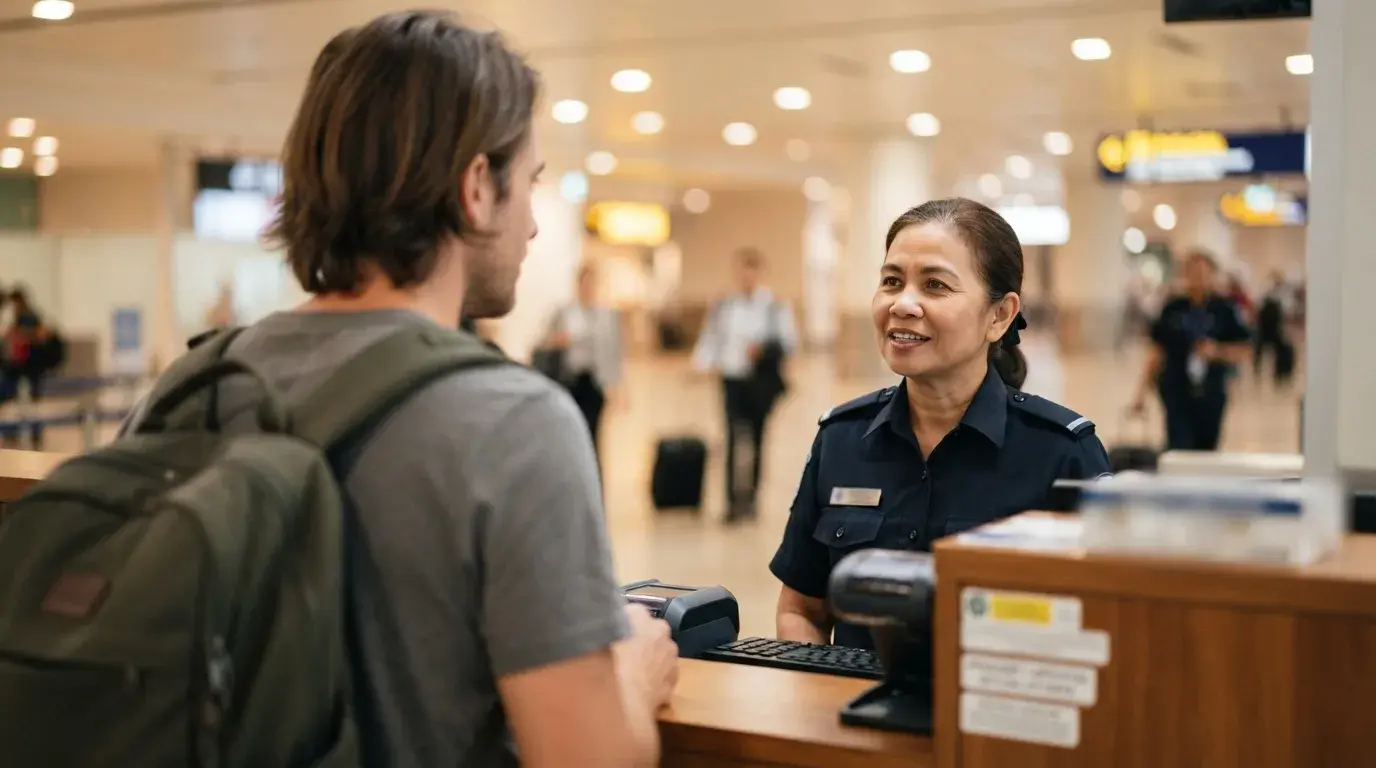
What Immigration Officers May Ask On Arrival
Guatemalan immigration may ask for transport that shows how you leave the country. Keep the current document and the real itinerary accessible for arrival.
Do not predict that immigration will be less thorough than check-in. Officers may ask about purpose, length of stay, accommodation, funds, visa status and departure evidence where relevant.
Keep a printed copy and a phone copy. Immigration officials also compare your stated stay with the dates on your paperwork. A mismatch invites more questions.
Expect short, direct questions such as:
- What is your visit purpose and first accommodation?
- When and how will you leave Guatemala?
- Can you enter the next country?
- How much CA-4 time remains, if the shared period applies?
Answer in one clear sentence each. Long explanations sound rehearsed, and rehearsed answers invite follow-ups.
An onward ticket does not guarantee entry into Guatemala or the next country. Confirm the next-country visa or authorization before using it as the destination in your route.
An officer can assess the full entry conditions and may refuse admission if they are not met. Ask for the decision basis and available official next steps if your evidence is questioned.
Answer truthfully, present the current issuer document and distinguish a provisional booking from an issued ticket. Calm communication helps clarity but does not determine the legal outcome.
A clean story and a clean document make the strongest pair. The next question is which kind of document suits your route.
Picking The Right Proof For Your Route: Bus, Flight Or Shuttle

Your route decides your best format. A traveler heading overland has different needs than someone flying out of the region in six weeks.
When An Intercity Bus Ticket Is Enough
A named international bus ticket may show a genuine road exit from Guatemala. A bus to El Salvador or Honduras exits Guatemala but generally does not reset the CA-4 stay clock for someone subject to the shared period. Carrier acceptance of a bus document must be checked separately.
Guatemala’s official entry list refers to an air return ticket or another transport mode that guarantees departure. That supports an actual international bus itinerary, not a blanket claim that every bus voucher meets every airline’s rule.
A bus can fit a real overland journey. If it goes to another CA-4 country, keep tracking the shared admission period. If your regional time is almost over, identify an exit beyond CA-4 or a lawful extension.
A named international bus to Mexico or Belize leaves both Guatemala and the CA-4 area. Verify that your passport permits entry to the destination and that the route and crossing are operating.
An airline may need additional clarity about a bus route. Ask it before departure; do not add a conflicting flight itinerary solely to make the evidence look simpler.
Before you rely on one, check three things:
- Named passenger and date
- Operator and actual international route
- Confirmation status and contact details
- Permission to enter the next country
Check whether the document identifies the passenger, date, operator and actual cross-border journey. A local service ending before immigration control may not prove departure.
Why A Flight Reservation Suits Longer Itineraries
A temporary flight reservation can describe a proposed exit when that evidence type is accepted. It must remain current at every relevant check. A PNR alone does not prove an e-ticket or a confirmed seat.
Ask the issuer how to verify the reservation and its expiry. The operating carrier may still require ticketed evidence or a different document; no reference code guarantees acceptance within seconds.
Look for these details:
- Current booking or ticket reference and e-ticket number if issued
- Passenger identity under carrier rules
- Flight leaving Guatemala for the real next stop
- Date within the applicable stay and, where relevant, CA-4 period
Check the passenger identity, cross-border route, date, operating airline and present ticketing status. If a flight is actually bought, retain the issued e-ticket receipt as well.
DummyFlights.com offers temporary reservations; confirm its current pricing, changes, validity and verification method before ordering. The dummy-ticket explainer distinguishes a hold from issued travel. Do not assume a fixed price or unlimited changes without checking the current terms.
Flexibility is useful only if the issuer can amend the current record in time and the new route matches the real trip. A change in your arrival city or dates can alter visa, transit and CA-4 calculations.
What Shuttle Bookings Add To Your Options
A named shuttle may help document the local route, but check whether it crosses the Guatemalan border and whether the reviewer accepts that format.
A shuttle ending at a Guatemalan border town is not itself proof of exit. A shuttle into El Salvador leaves Guatemala while keeping an eligible visitor in the CA-4 area.
Use a shuttle confirmation as supporting evidence when appropriate. Do not pair unrelated transport documents merely to create the appearance of a consistent plan.
Comparing Cost, Speed, And Risk Across Your Options
Compare the evidence against the actual itinerary, acceptance rule and validity period rather than treating price or delivery speed as a quality score.
| Real route | Useful evidence | Important limit |
|---|---|---|
| Flight outside Guatemala | Issued itinerary or accepted active reservation | PNR does not prove ticket issuance |
| Bus into another CA-4 member | Named cross-border booking | Exits Guatemala, but may not reset regional time |
| Bus to Mexico or Belize | International route confirmation | Check border operation and entry eligibility |
| Shuttle to border town | Support for local leg | Does not alone show international exit |
Advance availability varies by operator and provider. Check whether the transport document can be obtained before your first airline document review, not just before the land crossing.
Risk matters more than price. The cheapest document is the wrong one if it expires before you land or shows the wrong destination.
If uncertain, ask the carrier what exact record it needs. A fast lookup is not the only criterion: the document must describe a lawful, current and genuine exit.
How Temporary Ticket Rentals Work
Temporary reservation services can provide a proposed itinerary for a limited period, but they may not issue a ticket. Their usefulness depends on the reviewing authority accepting a reservation instead of paid carriage.
Read the actual expiry timestamp and compare it with check-in, transit and arrival. A reservation can cease to be useful if it expires before a required review.
Immigration may verify onward travel plans upon arrival in Guatemala.
Check the current issuer status immediately before travel. Keep an offline copy for access, but know that an old PDF cannot prove a hold remains active after expiration.
A visa application and a border check can require different evidence. Use a reservation in a consular file only where that consulate accepts one; the visa-reservation guide discusses that separate purpose.
Land crossings bring their own twists, which we cover next.
Land Borders, Long Stays, And Tricky Itineraries
Not every trip fits the standard airport arrival. Overland routes, remote work stays, and open-ended plans all need a bit more thought.
What To Carry At A Land Border
At a land border, complete the official immigration process at an authorized crossing. Guatemala’s exit requirements and the next country’s entry rules both matter; a bus ticket does not replace either procedure.
Border officials at a land crossing often work with simple tools. They look at your passport, ask a few questions, and want to see paper or a screen. A printed copy helps when signal is weak.
A cross-border bus ticket can explain the actual movement. If the destination is another CA-4 member, record the country exit and continue counting any shared regional stay.
Check how much of the regional period remains before entering from El Salvador or Honduras. UK guidance notes that the clock does not restart at an internal crossing for British-citizen visitors and that Honduras requires them to hold a visa.
Illustrative example: Oliver enters Guatemala from Honduras after two weeks in the CA-4 area. He can show a genuine next-country plan, but should also confirm his Honduras and Guatemala permissions and the overall regional deadline.
A saved PDF is only one part of preparation. Carry the valid passport, visa or permit where needed, current transport evidence and any entry or exit declaration confirmation.
Digital Nomads And Remote Workers Planning Long Stays
Digital nomads and remote workers often plan open-ended stays. That is exactly where exit plans get tested.
For an extended stay, count the permission actually granted rather than assuming a fresh period on each entry. Seek any allowed extension before expiry, and do not use a short border trip as an automatic reset.
If leaving and re-entering the region, check the applicable rules before travel. Movement between member countries does not itself reset a shared CA-4 stay.
If the genuine itinerary changes, update the issuer record and confirm the new status. A date-change policy must be checked with the provider; do not assume unlimited revisions.
A real bus journey and a provisional flight hold are different plans. Do not present them as interchangeable; ask which evidence type the relevant carrier or authority accepts and keep the later CA-4 exit plan clear.
Think about your seasons too. Many remote workers pick a base for the rainy months and move on when the weather or the rent changes. Your exit document should follow that rhythm, not fight it.
Remote work also means unpredictable income and clients. Choose proof that costs little to change, and save every version in one folder. Then you can show the latest file in seconds.
What To Do If An Officer Questions Your Document
A longer document review does not by itself tell you the outcome. Ask which particular route, date, permission or status needs clarification.
Stay calm and keep your hands visible. Offer the document again, and point to the date and destination. Short, factual answers work better than long explanations.
If the officer asks about a change, explain it in one sentence. For example, you might say your plans shifted from Delhi to a longer route, and the reservation reflects the new date.
Do not argue or raise your voice. Officers decide each case themselves, and a respectful tone helps your situation.
Offer any additional genuine document that addresses the officer’s question. Two inconsistent records can create more confusion than one accurate current record.
A Final Look At Your Reservation Details Before You Fly
Before you leave home, run through these key facts:
- Name and passport details align with issuer records.
- Guatemala departure falls inside permission granted.
- The next country can admit the traveler.
- Any CA-4 period is counted from the relevant first entry.
- Booking status and expiry are current at each review.
If you plan to transit through other countries, check what those countries want too. Other countries along your route may ask for their own proof. The same problem can show up at the next gate if you only prepare for one.
Check every one of your departure airports, since each may have its own agent. Share your departure plans clearly if asked, and keep the answers short.
Store a secure offline copy and a readable paper backup if useful. This prevents a dead phone from hiding the document, but does not extend a reservation or remove an entry condition.
Once your documents are ready, the only job left is to carry them calmly.
Get Your Guatemala Onward Ticket Ready Before You Fly
Guatemala’s published entry list includes a return air ticket or another transport mode that guarantees departure. Separately, eligible CA-4 travelers must monitor the regional stay clock. Prepare a real exit from Guatemala, check the next-country requirements and never treat a CA-4 border hop as an automatic extension.
A current issued flight, accepted international bus booking or permitted temporary reservation can play different roles. Choose the evidence that matches the actual route and carrier rule, and keep both the Guatemala exit and the later regional deadline visible.
Need a provisional Guatemala flight reservation? First confirm that your carrier accepts a temporary hold and that the route fits your genuine departure plan.
Review onward reservation optionsFrequently Asked Questions
Does Guatemala require proof of departure?
Its migration authority lists a return air ticket or another means of transport that guarantees departure from the country. The airline and border officer may review different evidence. Confirm the current rule for your passport and real route.
Does a bus to El Salvador count as leaving Guatemala?
It is an international departure from Guatemala if it crosses the border, but for an eligible visitor it does not automatically restart the shared CA-4 stay period. Check how much regional time remains and whether you can enter El Salvador.
Must an onward ticket leave the whole CA-4 area?
Not necessarily for the immediate Guatemala country-exit question. Near the end of an applicable CA-4 period, however, an itinerary only to another member does not solve the regional deadline. Plan a lawful later exit or extension.
Can a dummy ticket work for Guatemala?
Only where a temporary reservation is accepted by the reviewer. A booking reference does not itself prove a paid, issued ticket. Ask the operating airline what evidence it needs and verify the current hold and expiry.
Can a shuttle to a border town prove departure?
A service that stops before immigration control only documents a domestic leg. Obtain evidence of the actual international crossing or onward transport, and check the next country’s entry rules.
Does CA-4 give every visitor a new 90 days at each border?
No. For travelers subject to the shared CA-4 period, crossing between members does not restart the clock. Visa rules and the precise stay granted differ by nationality and status; confirm them before planning a long route.
Friendly reminder: DummyFlights provides temporary travel-proof documents for planning and application support. Requirements vary by destination, airline, route and applicant situation. A dummy ticket can support a file, but it does not guarantee approval, boarding or entry.